THE ADVENTURE COLLECTIVE® · Independent discovery and booking for outdoor travel

Escape Thamel’s traffic for a six‑hour loop that rides the high edge of Kathmandu Valley — visiting Budanilkantha, Gokarna, and Sundarijal. This approachable single‑day tour blends steady climbs, local temples, and watershed views with a guide and front‑suspension bike included.
Escape Thamel’s traffic for a six‑hour loop that rides the high edge of Kathmandu Valley — visiting Budanilkantha, Gokarna, and Sundarijal. This approachable single‑day tour blends steady climbs, local temples, and watershed views with a guide and front‑suspension bike included.
Morning light in Thamel is a bustle of stuffed rucksacks and chai stalls; the city still hums when the guide fits a helmet and leads the group out of the tourist grid into steep, green edges where Kathmandu’s sprawl gives way to terraced fields and rhododendron scrub. The Valley Rim ride pushes you uphill in stages — through Budanilkantha’s shaded temple approaches, past Gokarna’s quiet monastery tracks, and out to Sundarijal’s waterworks — a loop that reads like the city’s backstory written in stone and soil.
Verified experiences and guided adventures in the surrounding area.
Operated by Breakfree Adventures Pvt. Ltd. · Kathmandu, Bagmati Province
Morning light in Thamel is a bustle of stuffed rucksacks and chai stalls; the city still hums when the guide fits a helmet and leads the group out of the tourist grid into steep, green edges where Kathmandu’s sprawl gives way to terraced fields and rhododendron scrub. The Valley Rim ride pushes you uphill in stages — through Budanilkantha’s shaded temple approaches, past Gokarna’s quiet monastery tracks, and out to Sundarijal’s waterworks — a loop that reads like the city’s backstory written in stone and soil.
The route traces old service roads and pilgrimage paths that have connected hill settlements to the valley floor for centuries. Geologically, you’re pedaling the edge of a broad syncline: folded valley walls of Miocene-era sedimentary rock topped with thin soils that the Sherpas and Newar farmers have mined into stepped fields. Culturally, the trip stitches together Hindu shrines, Buddhist gompas, and small village teashops where locals still offer boiled milk and toasted maize.
Nature here has character: the Bagmati River systems dare you with their channels as gullies; the monsoon-season growth pushes trails into a bright, humid green while winter pulls the air thin and cold. In Sundarijal, a concrete reservoir keeps the city’s taps running; you’ll see why water management has long dictated Kathmandu’s growth and where urban demands meet fragile mountain hydrology.
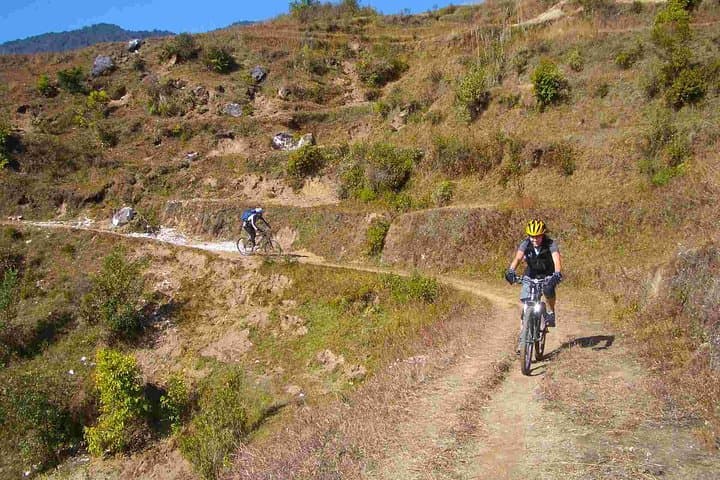
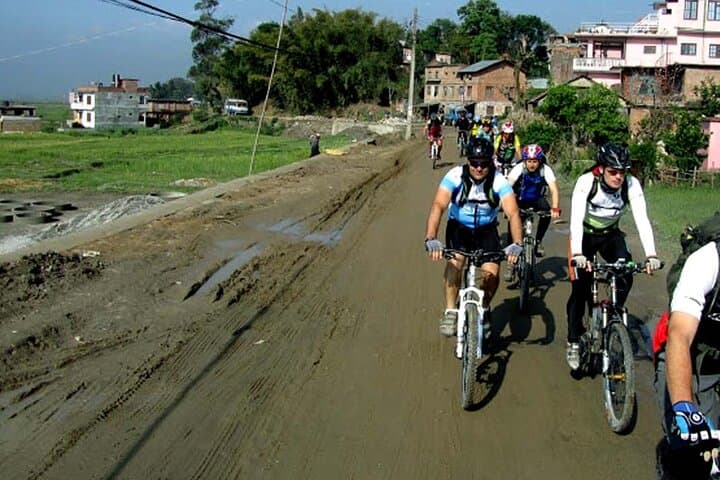
Practicalities take over calmly — this is a day tour, roughly 35 km with about 600–800 m of total climbing covered in 5–6 hours including stops. Expect a mix of paved climbs, packed-earth service roads, and short singletrack sections near the reservoirs. The operator supplies front-suspension Giant or Fuji bikes and helmets; guides double as mechanics and local interpreters.
Plan for variable weather and a steady climb: start early to avoid traffic and midday heat, carry at least 2–3 liters of water, and bring layered clothing for the ridge winds. Shoes with a firm sole are worth their weight in comfort; gloves and a small repair kit will keep minor flats or chain issues from turning into long delays. Respect local customs at temple stops — modest behavior and removing shoes when required goes a long way with hosts.
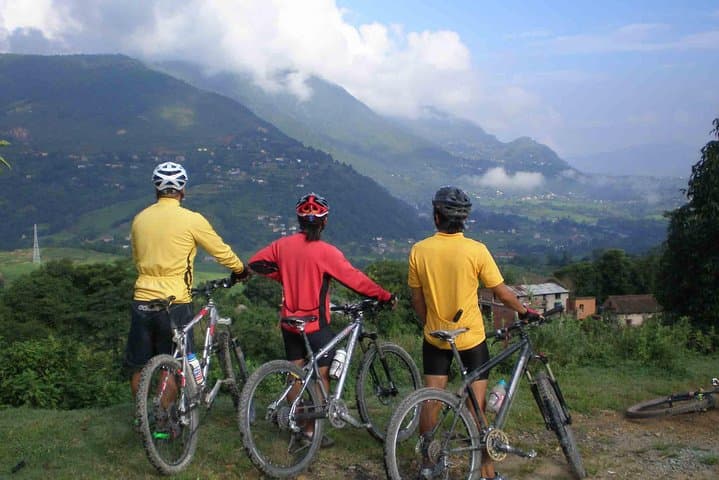
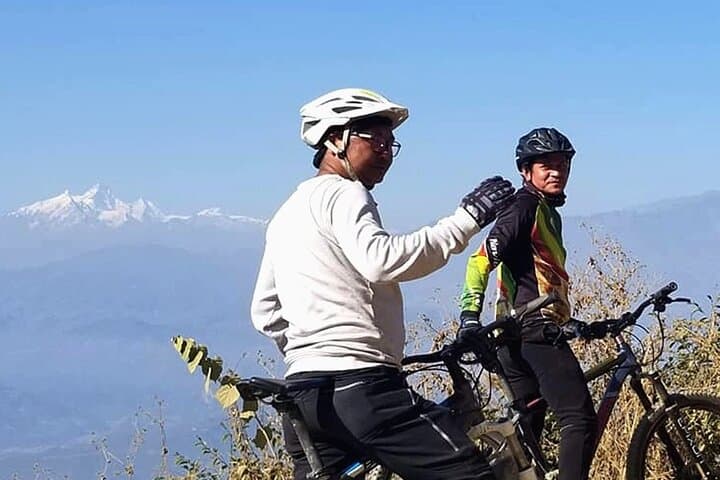
This ride is approachable for regular cyclists who are comfortable on hills and mixed surfaces, rewarding with frequent viewpoints back into the city and across the ring of higher Himalayan foothills. It’s a single-day immersion where Nepal’s urban pulse meets the quieter patience of the hills — fast enough to feel like an adventure, measured enough to leave time for a cup of tea and a story at the end.
moderate.
5–6 hours.
Suitable for riders with regular cycling experience and the ability to climb sustained hills for several hours.
The tour lasts about 5–6 hours covering roughly 30–40 km with 600–800 m of climbing; expect steady ascents and short technical sections suitable for fit recreational cyclists.
Yes — the operator supplies front‑suspension Giant or Fuji bikes and helmets; you can bring your own helmet if you prefer.
Water is not always provided — bring 2–3 liters; the tour stops at local teashops where you can purchase snacks and lunch depending on the package.
Riders with basic cycling experience who can sustain climbs are fine; complete novices should prepare with a few hill rides in advance.
Guides act as mechanics for common issues and carry spare tubes and tools; they also brief riders on group riding safety before departure.
Pickup from hotels in central Kathmandu is available; confirm pickup point when booking and expect a 10‑minute waiting window before departure.
The trail network follows centuries‑old routes linking hill settlements to the valley; Budanilkantha’s Vishnu temple dates back several hundred years and remains a living pilgrimage site.
Rides pass sensitive watershed areas — avoid littering, stick to established tracks, and use local guides to minimize erosion and cultural disturbance.
Breakfree Adventures Pvt. Ltd. operates guided outdoor trips and adventures with an emphasis on safety, stewardship, and memorable experiences.
Morning light in Thamel is a bustle of stuffed rucksacks and chai stalls; the city still hums when the guide fits a helmet and leads the group out of the tourist grid into steep, green edges where Kathmandu’s sprawl gives way to terraced fields and rhododendron scrub. The Valley Rim ride pushes you uphill in stages — through Budanilkantha’s shaded temple approaches, past Gokarna’s quiet monastery tracks, and out to Sundarijal’s waterworks — a loop that reads like the city’s backstory written in stone and soil.
Morning light in Thamel is a bustle of stuffed rucksacks and chai stalls; the city still hums when the guide fits a helmet and leads the group out of the tourist grid into steep, green edges where Kathmandu’s sprawl gives way to terraced fields and rhododendron scrub. The Valley Rim ride pushes you uphill in stages — through Budanilkantha’s shaded temple approaches, past Gokarna’s quiet monastery tracks, and out to Sundarijal’s waterworks — a loop that reads like the city’s backstory written in stone and soil.
The route traces old service roads and pilgrimage paths that have connected hill settlements to the valley floor for centuries. Geologically, you’re pedaling the edge of a broad syncline: folded valley walls of Miocene-era sedimentary rock topped with thin soils that the Sherpas and Newar farmers have mined into stepped fields. Culturally, the trip stitches together Hindu shrines, Buddhist gompas, and small village teashops where locals still offer boiled milk and toasted maize.
Nature here has character: the Bagmati River systems dare you with their channels as gullies; the monsoon-season growth pushes trails into a bright, humid green while winter pulls the air thin and cold. In Sundarijal, a concrete reservoir keeps the city’s taps running; you’ll see why water management has long dictated Kathmandu’s growth and where urban demands meet fragile mountain hydrology.
Practicalities take over calmly — this is a day tour, roughly 35 km with about 600–800 m of total climbing covered in 5–6 hours including stops. Expect a mix of paved climbs, packed-earth service roads, and short singletrack sections near the reservoirs. The operator supplies front-suspension Giant or Fuji bikes and helmets; guides double as mechanics and local interpreters.
Plan for variable weather and a steady climb: start early to avoid traffic and midday heat, carry at least 2–3 liters of water, and bring layered clothing for the ridge winds. Shoes with a firm sole are worth their weight in comfort; gloves and a small repair kit will keep minor flats or chain issues from turning into long delays. Respect local customs at temple stops — modest behavior and removing shoes when required goes a long way with hosts.
This ride is approachable for regular cyclists who are comfortable on hills and mixed surfaces, rewarding with frequent viewpoints back into the city and across the ring of higher Himalayan foothills. It’s a single-day immersion where Nepal’s urban pulse meets the quieter patience of the hills — fast enough to feel like an adventure, measured enough to leave time for a cup of tea and a story at the end.