THE ADVENTURE COLLECTIVE® · Independent discovery and booking for outdoor travel

Drive an hour north of Las Vegas to red sandstone waves, ancient petroglyphs, and short but satisfying hikes. This day trip blends easy scrambles, interpretive stops, and photographic highlights across Valley of Fire State Park.
Drive an hour north of Las Vegas to red sandstone waves, ancient petroglyphs, and short but satisfying hikes. This day trip blends easy scrambles, interpretive stops, and photographic highlights across Valley of Fire State Park.
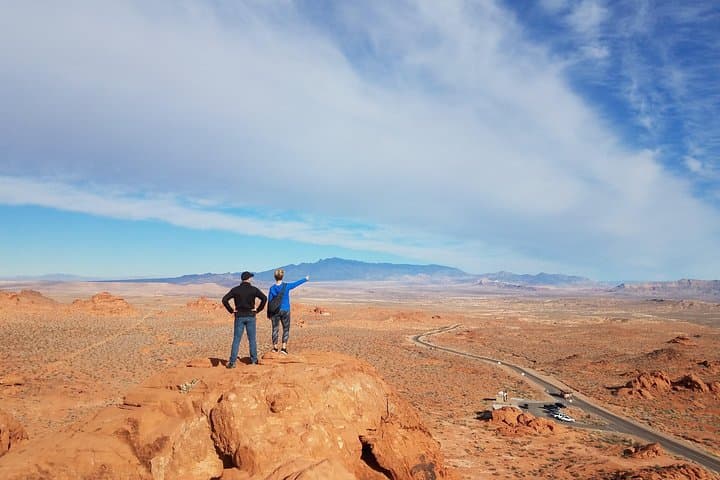
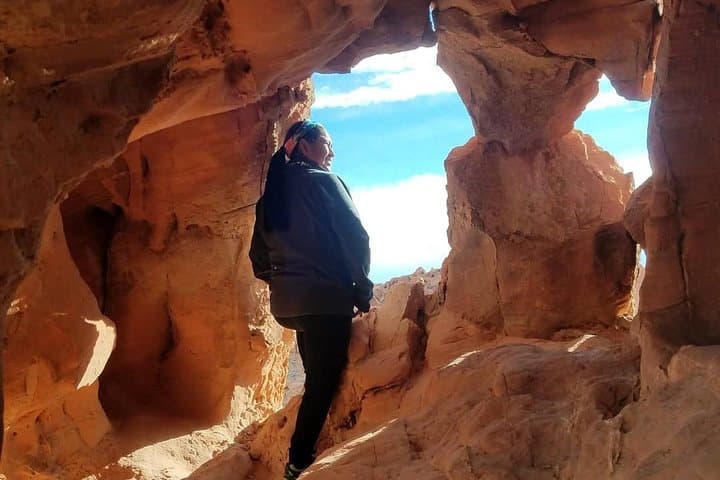
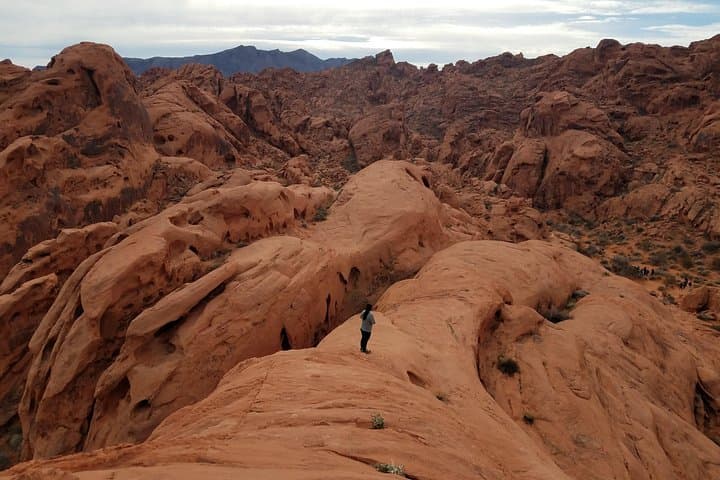
You climb out of the van and the desert hits like a warm hand — not unkind, but insistent. Red sandstone rises from the valley floor in fractured slabs and rounded domes, their surfaces pocked with wind-carved pockets that dare you to scramble. The tour drops you at the park’s main nodes and the air smells of sun-baked sage; every viewpoint seems to be trying to outdo the last.
Verified experiences and guided adventures in the surrounding area.
Operated by Desert Adventures · Overton, Nevada
You climb out of the van and the desert hits like a warm hand — not unkind, but insistent. Red sandstone rises from the valley floor in fractured slabs and rounded domes, their surfaces pocked with wind-carved pockets that dare you to scramble. The tour drops you at the park’s main nodes and the air smells of sun-baked sage; every viewpoint seems to be trying to outdo the last.
Valley of Fire State Park is a geologic page turned slowly over 150 million years. The Aztec sandstone here started as coastal dunes in the Jurassic; time and tectonics folded, faulted, and bleached layers into the furnace-red outcrops you walk across today. Human history is visible too — petroglyph panels etched by ancestral Indigenous peoples and Southern Paiute traces that speak to long desert knowledge. In the 20th century the area became a refuge for ranchers and later a draw for photographers and filmmakers; your picnic may be enjoyed in the same light that attracted Hollywood crews.
The typical day-trip from Las Vegas (about a 60–75 minute drive each way) gives you options: short interpretive walks such as Atlatl Rock (stairs to a petroglyph panel, under 0.25 mi), scenic loops like White Domes (≈1.25 mi) and the Fire Wave (≈1.5 mi round-trip), and longer backcountry routes that can stretch 3–4 miles with up to 300–400 ft of elevation gain where slickrock and loose gravel demand attention.
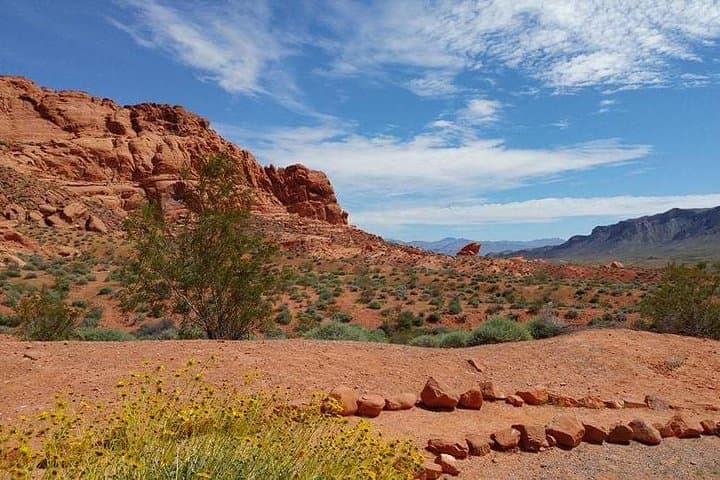
Terrain alternates between packed sand, slickrock with good traction, and occasional gravel slopes. Shade is scarce; the desert sun will be the dominant partner. Wildlife keeps a low profile — desert tortoises, collared lizards, and red-tailed hawks are most often glimpsed from a distance.
Practical planning matters. The guided day includes round-trip transport from Las Vegas, bottled water, a daypack, and a boxed lunch; expect a 9-hour outing with several short hikes and stops at key viewpoints. Start early in summer or pick late fall through spring for more temperate conditions. Bring layered clothing, sturdy trail shoes with grippy soles, 1–2 liters of water per person, sun protection, and a small first-aid kit. If you have spinal, heart, or pregnancy concerns note that some scrambling and vehicle time are required.
This is a park that rewards patient observation: watch how light travels across the domes as the afternoon slides toward sunset, how small plants anchor themselves in fractured stone, and how ancient marks in the rock connect present footsteps to human stories that have lasted far longer than any one visit.
moderate.
9 hours.
Suitable for travelers in general good health who can handle multiple short hikes (0.25–4 miles total) and some light scrambling.
The park entrance is roughly a 60–75 minute drive north of the Strip depending on traffic; this tour includes round-trip transportation.
Yes — admission to Valley of Fire State Park is included with the tour when indicated by the operator.
Families with children can join, but consider age and heat tolerance; the itinerary includes walking and short scrambles that may be challenging for very young kids.
Trails range from short paved approaches to slickrock and packed sand with occasional 200–400 ft elevation changes on longer routes; use caution on steep slickrock.
A boxed lunch and bottled water are provided as part of the day trip; options typically include ham, turkey, BLT, PB&J, or a chef salad.
Spring and fall offer the most comfortable temperatures; summer brings very high heat, and winter can be crisp but pleasant mid-day.
Petroglyphs in the park record millennia of Indigenous presence; the park’s Jurassic sandstones were deposited as coastal dunes before uplift shaped the present landscape.
Valley of Fire is fragile—stay on trails to prevent erosion and avoid touching rock art; water is scarce, so pack out trash and minimize footprint.
Desert Adventures operates guided outdoor trips and adventures with an emphasis on safety, stewardship, and memorable experiences.
You climb out of the van and the desert hits like a warm hand — not unkind, but insistent. Red sandstone rises from the valley floor in fractured slabs and rounded domes, their surfaces pocked with wind-carved pockets that dare you to scramble. The tour drops you at the park’s main nodes and the air smells of sun-baked sage; every viewpoint seems to be trying to outdo the last.
You climb out of the van and the desert hits like a warm hand — not unkind, but insistent. Red sandstone rises from the valley floor in fractured slabs and rounded domes, their surfaces pocked with wind-carved pockets that dare you to scramble. The tour drops you at the park’s main nodes and the air smells of sun-baked sage; every viewpoint seems to be trying to outdo the last.
Valley of Fire State Park is a geologic page turned slowly over 150 million years. The Aztec sandstone here started as coastal dunes in the Jurassic; time and tectonics folded, faulted, and bleached layers into the furnace-red outcrops you walk across today. Human history is visible too — petroglyph panels etched by ancestral Indigenous peoples and Southern Paiute traces that speak to long desert knowledge. In the 20th century the area became a refuge for ranchers and later a draw for photographers and filmmakers; your picnic may be enjoyed in the same light that attracted Hollywood crews.
The typical day-trip from Las Vegas (about a 60–75 minute drive each way) gives you options: short interpretive walks such as Atlatl Rock (stairs to a petroglyph panel, under 0.25 mi), scenic loops like White Domes (≈1.25 mi) and the Fire Wave (≈1.5 mi round-trip), and longer backcountry routes that can stretch 3–4 miles with up to 300–400 ft of elevation gain where slickrock and loose gravel demand attention.
Terrain alternates between packed sand, slickrock with good traction, and occasional gravel slopes. Shade is scarce; the desert sun will be the dominant partner. Wildlife keeps a low profile — desert tortoises, collared lizards, and red-tailed hawks are most often glimpsed from a distance.
Practical planning matters. The guided day includes round-trip transport from Las Vegas, bottled water, a daypack, and a boxed lunch; expect a 9-hour outing with several short hikes and stops at key viewpoints. Start early in summer or pick late fall through spring for more temperate conditions. Bring layered clothing, sturdy trail shoes with grippy soles, 1–2 liters of water per person, sun protection, and a small first-aid kit. If you have spinal, heart, or pregnancy concerns note that some scrambling and vehicle time are required.
This is a park that rewards patient observation: watch how light travels across the domes as the afternoon slides toward sunset, how small plants anchor themselves in fractured stone, and how ancient marks in the rock connect present footsteps to human stories that have lasted far longer than any one visit.