THE ADVENTURE COLLECTIVE® · Independent discovery and booking for outdoor travel

A two-hour guided UTV ride launches from Page and climbs slickrock benches to a panoramic overlook of Lake Powell. Perfect for travelers who want dramatic desert scenery without the hike—helmets, goggles and bottled water included.
A two-hour guided UTV ride launches from Page and climbs slickrock benches to a panoramic overlook of Lake Powell. Perfect for travelers who want dramatic desert scenery without the hike—helmets, goggles and bottled water included.
You meet at a small office in Page, Arizona, where the desert smells of hot iron and sage. Guides hand you a helmet and a pair of goggles, give a quick safety brief, and the low hum of UTV engines replaces the town noise. The ride peels away from pavement into a landscape of slickrock and sandy washes; wind and sun shape the sandstone here, and the vehicle’s suspension eats up hummocks and ruts as easily as a shoe eats grain.
Verified experiences and guided adventures in the surrounding area.
Operated by Page Adventure Company · Page, Arizona
You meet at a small office in Page, Arizona, where the desert smells of hot iron and sage. Guides hand you a helmet and a pair of goggles, give a quick safety brief, and the low hum of UTV engines replaces the town noise. The ride peels away from pavement into a landscape of slickrock and sandy washes; wind and sun shape the sandstone here, and the vehicle’s suspension eats up hummocks and ruts as easily as a shoe eats grain.
The route threads across the rim country above Glen Canyon, and in a few wide, breath-stealing turns the water of Lake Powell slides into view: a sheet of turquoise pinched by rust-colored cliffs. Geologically, you’re standing on Navajo Sandstone—dune deposits hardened into cross-bedded cliffs millions of years old—sculpted by wind and occasional flash floods. Lake Powell itself is a relatively recent actor, created in the 1960s when Glen Canyon Dam backed the Colorado River into a vast reservoir that now catches light and weather in dramatic ways.
This ground sits along the margins of the Navajo Nation; local guides will often point out cultural landmarks and the distant profile of Navajo Mountain. The human story here is as layered as the rocks—ranching, river exploration, and ongoing conversations about water, recreation, and river management inform the modern landscape.
Practical details: the shared ride-along tour runs about two hours and covers roughly 10–20 miles of desert trails, sandy washes and slickrock sections, with modest elevation change (expect under 400 feet of total gain when you climb viewpoints). No driving is required; guides handle all vehicle operation. Helmets, goggles and bottled water are provided. You’ll stop at a primary overlook for photos and a view of Lake Powell, with time to explore and shoot from multiple angles.
For comfort and safety plan ahead: sun protection is mandatory—sunscreen, a brimmed hat (worn under the helmet), and breathable layers. Sturdy closed-toe shoes are best for short walks at viewpoints. If you go in spring or fall, mornings and evenings can be cool; summer brings intense heat and reflected glare off the sandstone. Keep hydrated and protect electronics from sand.
This ride is ideal for travelers who want maximum scenery with minimal effort. It’s an efficient, sensory way to understand how water and stone meet in the Colorado Plateau—fast, comfortable, and framed by one of the West’s most photogenic reservoirs.
easy.
2 hours.
Minimal fitness required—tour is a seated ride with short, optional walks at viewpoints
No—this is a ride-along tour. Professional guides handle driving; passengers can relax and enjoy the views.
Yes, helmets and goggles are included and fitted before departure.
Children are allowed but must meet the operator’s safety and age/height requirements—confirm at booking.
Tours run rain or shine unless conditions become unsafe; check cancellation policy and contact the operator for last-minute updates.
Yes—bring a secure strap or dry pouch as wind and dust are common in open vehicles.
Facilities are limited on the trail; use restrooms in Page before departure and plan for minimal stops in the field.
Glen Canyon was flooded in the 1960s to create Lake Powell behind Glen Canyon Dam; the area still features petroglyphs, old ranching routes, and Navajo cultural sites nearby.
Recreation around Lake Powell affects fragile desert soils and archaeological sites—stay on marked routes, pack out trash, and follow guide instructions to minimize impact.
Page Adventure Company operates guided outdoor trips and adventures with an emphasis on safety, stewardship, and memorable experiences.
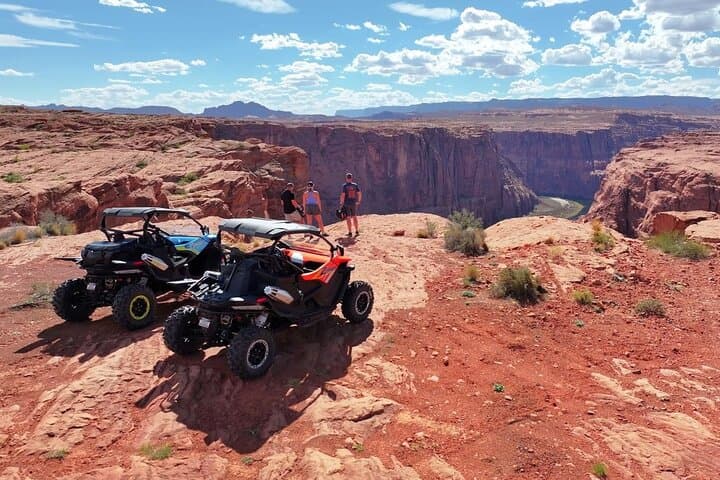
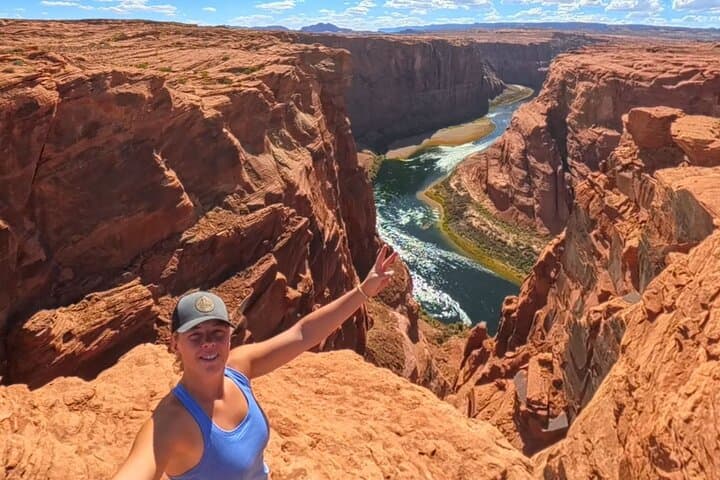
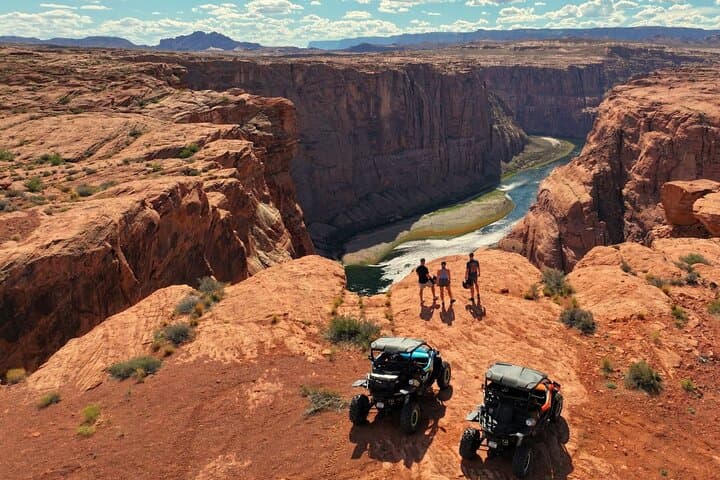
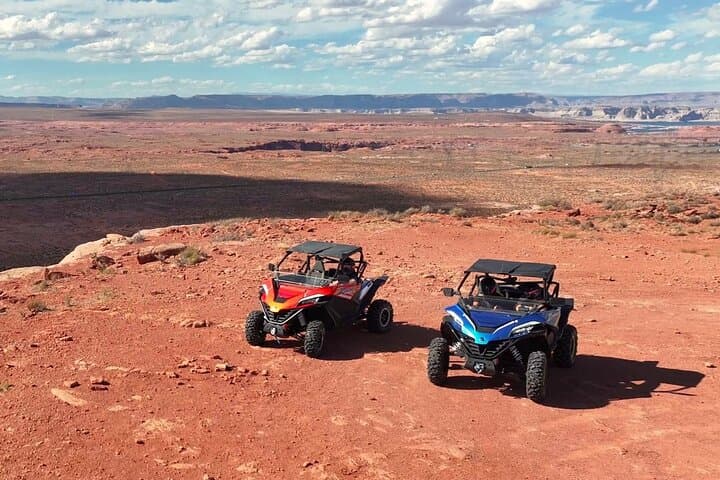
You meet at a small office in Page, Arizona, where the desert smells of hot iron and sage. Guides hand you a helmet and a pair of goggles, give a quick safety brief, and the low hum of UTV engines replaces the town noise. The ride peels away from pavement into a landscape of slickrock and sandy washes; wind and sun shape the sandstone here, and the vehicle’s suspension eats up hummocks and ruts as easily as a shoe eats grain.
You meet at a small office in Page, Arizona, where the desert smells of hot iron and sage. Guides hand you a helmet and a pair of goggles, give a quick safety brief, and the low hum of UTV engines replaces the town noise. The ride peels away from pavement into a landscape of slickrock and sandy washes; wind and sun shape the sandstone here, and the vehicle’s suspension eats up hummocks and ruts as easily as a shoe eats grain.
The route threads across the rim country above Glen Canyon, and in a few wide, breath-stealing turns the water of Lake Powell slides into view: a sheet of turquoise pinched by rust-colored cliffs. Geologically, you’re standing on Navajo Sandstone—dune deposits hardened into cross-bedded cliffs millions of years old—sculpted by wind and occasional flash floods. Lake Powell itself is a relatively recent actor, created in the 1960s when Glen Canyon Dam backed the Colorado River into a vast reservoir that now catches light and weather in dramatic ways.
This ground sits along the margins of the Navajo Nation; local guides will often point out cultural landmarks and the distant profile of Navajo Mountain. The human story here is as layered as the rocks—ranching, river exploration, and ongoing conversations about water, recreation, and river management inform the modern landscape.
Practical details: the shared ride-along tour runs about two hours and covers roughly 10–20 miles of desert trails, sandy washes and slickrock sections, with modest elevation change (expect under 400 feet of total gain when you climb viewpoints). No driving is required; guides handle all vehicle operation. Helmets, goggles and bottled water are provided. You’ll stop at a primary overlook for photos and a view of Lake Powell, with time to explore and shoot from multiple angles.
For comfort and safety plan ahead: sun protection is mandatory—sunscreen, a brimmed hat (worn under the helmet), and breathable layers. Sturdy closed-toe shoes are best for short walks at viewpoints. If you go in spring or fall, mornings and evenings can be cool; summer brings intense heat and reflected glare off the sandstone. Keep hydrated and protect electronics from sand.
This ride is ideal for travelers who want maximum scenery with minimal effort. It’s an efficient, sensory way to understand how water and stone meet in the Colorado Plateau—fast, comfortable, and framed by one of the West’s most photogenic reservoirs.