THE ADVENTURE COLLECTIVE® · Independent discovery and booking for outdoor travel

Walk Uppsala’s cathedral quarter, castle hill, and university core with a private guide who layers history with everyday Swedish life. This three-hour loop is light on elevation, rich in stories, and shaped by a city that quietly leads in sustainability.
Walk Uppsala’s cathedral quarter, castle hill, and university core with a private guide who layers history with everyday Swedish life. This three-hour loop is light on elevation, rich in stories, and shaped by a city that quietly leads in sustainability.
The Fyris River slides through the heart of Uppsala like a calm coach, setting an easy pace as cyclists whisper by and church bells test the morning air. On this private, three-hour walking tour, the city opens itself street by street: cobbles underfoot, brick spires overhead, and a lived-in rhythm that favors bikes, fika, and forward thinking. From Central Station, it’s an unrushed arc through one of Scandinavia’s oldest university towns, where history and modern life negotiate every block.
Verified experiences and guided adventures in the surrounding area.
Operated by Link & Learn International · Uppsala, Uppsala County
The Fyris River slides through the heart of Uppsala like a calm coach, setting an easy pace as cyclists whisper by and church bells test the morning air. On this private, three-hour walking tour, the city opens itself street by street: cobbles underfoot, brick spires overhead, and a lived-in rhythm that favors bikes, fika, and forward thinking. From Central Station, it’s an unrushed arc through one of Scandinavia’s oldest university towns, where history and modern life negotiate every block.
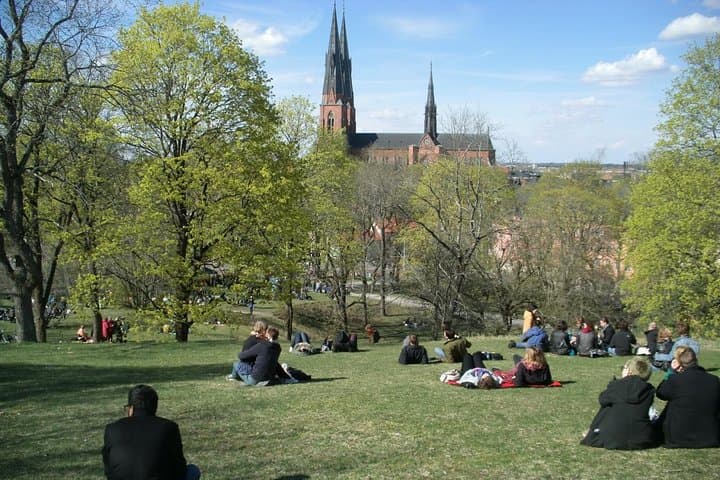
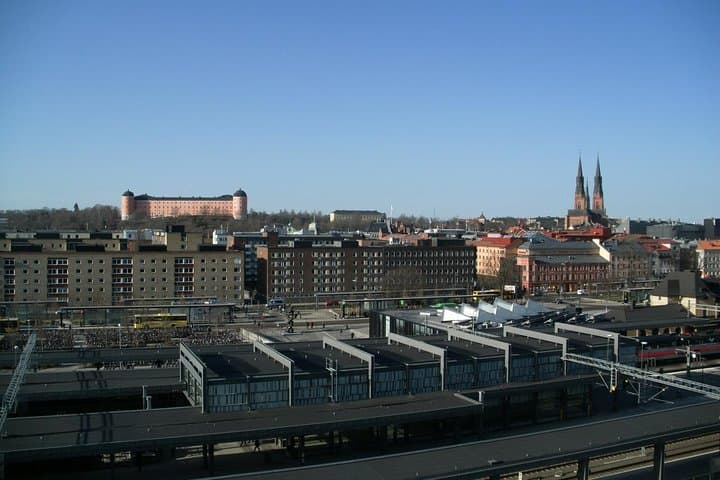
The route is compact—expect 3–4 kilometers on mostly flat terrain with a brief climb to the pink-walled Uppsala Castle. Uppsala Cathedral quickly commands attention, its twin towers pushing 118 meters into the sky. Inside, the cool hush steadies the senses while stories of saints, monarchs, and scientists linger in the side chapels. A few streets on, Uppsala University, founded in 1477, still hums with the energy of inquiry; its libraries and lecture halls have shaped Nobel laureates and reformers alike. The castle, ordered by Gustav Vasa and scarred by the 1702 fire, gazes down over the Botanical Garden, where neat allees and seasonal blooms show a city that planned for beauty as much as intellect.
Between landmarks, the tour moves through the Uppsala of today: buses running on biogas converted from household waste, cycle lanes that stitch together neighborhoods, and a social fabric grounded in gender equality you can actually observe—shared parenting on park benches, workplace schedules that make space for life. The river nudges along, inviting quick stops at pedestrian bridges where the city’s pastel facades reflect, and swans cruise like locals on their morning commute.
Practicality stays near the surface. Surfaces vary from smooth paths to old stone, so comfortable shoes are a must. Weather swings fast in Sweden; pack a light shell and a warm layer, even in summer. There’s minimal elevation gain—roughly 40–60 meters up to the castle terrace—rewarded with a broad view of the cathedral’s brick crown and the ordered geometry of the gardens below. Coffee breaks are built into the culture if not the itinerary; your guide can steer you to a quiet cafe that treats time with the same care it gives cardamom buns.
It’s an accessible way to see Sweden beyond Stockholm, just 40 minutes by train but worlds away in tempo. Uppsala doesn’t shout. It invites. The streets lead, the river coaxes, and the city’s sustainable habits quietly challenge you to imagine a better version of everyday life—even after you’ve stepped back on the train.
easy.
3 hours.
Comfortable walking for up to 3 hours with short pauses and one mild hill to the castle terrace.
Most groups cover 3–4 km (2–2.5 miles) on mostly flat streets with a brief hill to Uppsala Castle.
Entry is typically possible during visiting hours and is guided when schedules allow; closures for services may affect access.
Yes, pickup in central Uppsala or meeting at the Central Station is available—confirm your preference when booking.
Much of the route is smooth, but cobblestones and the castle hill can be challenging; discuss adaptations with your guide in advance.
Tours run in most weather; dress in layers with waterproof outerwear. Severe conditions may lead to rescheduling.
Yes, cafes and public facilities near the city center provide restroom access during brief stops.
Uppsala University, founded in 1477, is Sweden’s oldest, and the 1702 city fire reshaped both the castle and cathedral precincts.
Uppsala’s buses run on locally produced biogas from waste streams, and extensive cycling infrastructure reduces traffic and emissions citywide.
Link & Learn International operates guided outdoor trips and adventures with an emphasis on safety, stewardship, and memorable experiences.
The Fyris River slides through the heart of Uppsala like a calm coach, setting an easy pace as cyclists whisper by and church bells test the morning air. On this private, three-hour walking tour, the city opens itself street by street: cobbles underfoot, brick spires overhead, and a lived-in rhythm that favors bikes, fika, and forward thinking. From Central Station, it’s an unrushed arc through one of Scandinavia’s oldest university towns, where history and modern life negotiate every block.
The Fyris River slides through the heart of Uppsala like a calm coach, setting an easy pace as cyclists whisper by and church bells test the morning air. On this private, three-hour walking tour, the city opens itself street by street: cobbles underfoot, brick spires overhead, and a lived-in rhythm that favors bikes, fika, and forward thinking. From Central Station, it’s an unrushed arc through one of Scandinavia’s oldest university towns, where history and modern life negotiate every block.
The route is compact—expect 3–4 kilometers on mostly flat terrain with a brief climb to the pink-walled Uppsala Castle. Uppsala Cathedral quickly commands attention, its twin towers pushing 118 meters into the sky. Inside, the cool hush steadies the senses while stories of saints, monarchs, and scientists linger in the side chapels. A few streets on, Uppsala University, founded in 1477, still hums with the energy of inquiry; its libraries and lecture halls have shaped Nobel laureates and reformers alike. The castle, ordered by Gustav Vasa and scarred by the 1702 fire, gazes down over the Botanical Garden, where neat allees and seasonal blooms show a city that planned for beauty as much as intellect.
Between landmarks, the tour moves through the Uppsala of today: buses running on biogas converted from household waste, cycle lanes that stitch together neighborhoods, and a social fabric grounded in gender equality you can actually observe—shared parenting on park benches, workplace schedules that make space for life. The river nudges along, inviting quick stops at pedestrian bridges where the city’s pastel facades reflect, and swans cruise like locals on their morning commute.
Practicality stays near the surface. Surfaces vary from smooth paths to old stone, so comfortable shoes are a must. Weather swings fast in Sweden; pack a light shell and a warm layer, even in summer. There’s minimal elevation gain—roughly 40–60 meters up to the castle terrace—rewarded with a broad view of the cathedral’s brick crown and the ordered geometry of the gardens below. Coffee breaks are built into the culture if not the itinerary; your guide can steer you to a quiet cafe that treats time with the same care it gives cardamom buns.
It’s an accessible way to see Sweden beyond Stockholm, just 40 minutes by train but worlds away in tempo. Uppsala doesn’t shout. It invites. The streets lead, the river coaxes, and the city’s sustainable habits quietly challenge you to imagine a better version of everyday life—even after you’ve stepped back on the train.