THE ADVENTURE COLLECTIVE® · Independent discovery and booking for outdoor travel

A private, full‑day loop from Ubud that pairs the iconic Tegalalang terraces and sacred Tirta Empul with quieter jungle waterfalls. Expect a 10‑hour day with hotel pickup, lunch, entrance fees and a guide to navigate culture and terrain.
A private, full‑day loop from Ubud that pairs the iconic Tegalalang terraces and sacred Tirta Empul with quieter jungle waterfalls. Expect a 10‑hour day with hotel pickup, lunch, entrance fees and a guide to navigate culture and terrain.
You step into the day before the town wakes: a driver in an air‑conditioned van slips through rice-lined lanes while dawn climbs over the central Balinese hills. The air is warm and thick with wet earth, the valley breathing steam into terraces that seem to climb like steps toward the sky. This is Ubud by morning—green, deliberate, and pragmatic in its beauty—and the day that follows moves with the same careful rhythm: a private circuit of Tegalalang’s sculpted paddies, the ritual pools of Tirta Empul, and two lesser‑known waterfalls that let the jungle speak louder than your camera.
Verified experiences and guided adventures in the surrounding area.
Operated by Bali Exploring Tours · Ubud, Bali
You step into the day before the town wakes: a driver in an air‑conditioned van slips through rice-lined lanes while dawn climbs over the central Balinese hills. The air is warm and thick with wet earth, the valley breathing steam into terraces that seem to climb like steps toward the sky. This is Ubud by morning—green, deliberate, and pragmatic in its beauty—and the day that follows moves with the same careful rhythm: a private circuit of Tegalalang’s sculpted paddies, the ritual pools of Tirta Empul, and two lesser‑known waterfalls that let the jungle speak louder than your camera.
Tegalalang’s terraces are less a view than a system. Centuries of volcanic soil and engineered irrigation—the subak cooperatives—shape those contours; farmers still tend the plots on narrow ridgelines, water sluices chattering like small machines. From the terrace edge the geology is obvious: old volcanic ash has been re-engineered into terraces that retain water like shallow bowls, producing an almost quilted landscape of wet green.
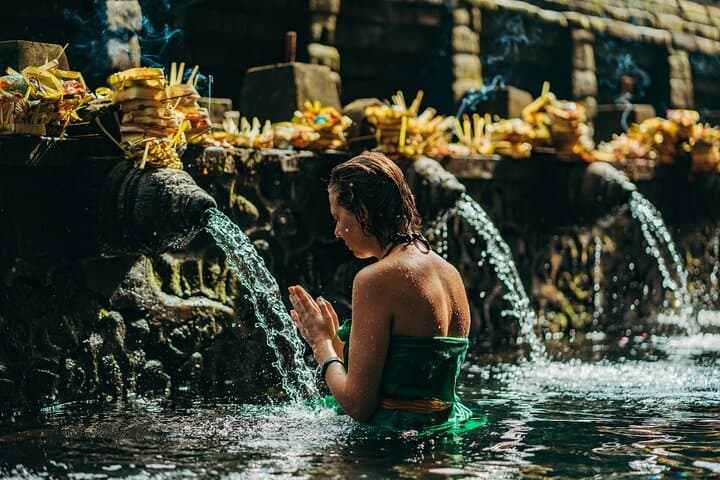
Tirta Empul, by contrast, is a social and spiritual harnessing of water. Built around a spring believed to flow since the 10th century, the temple’s stone bathing pools are an active practice of purification. Visitors watch incense smoke travel across carved reliefs, then give way to a quieter etiquette: shoulders and knees covered, shoes left outside, a small offering in hand.
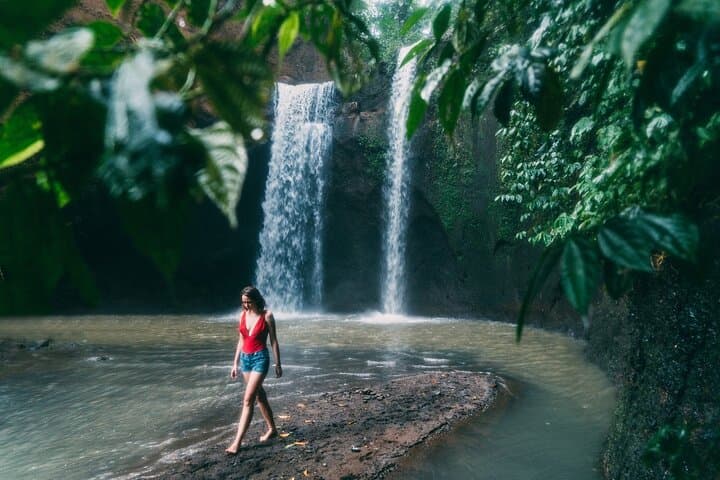
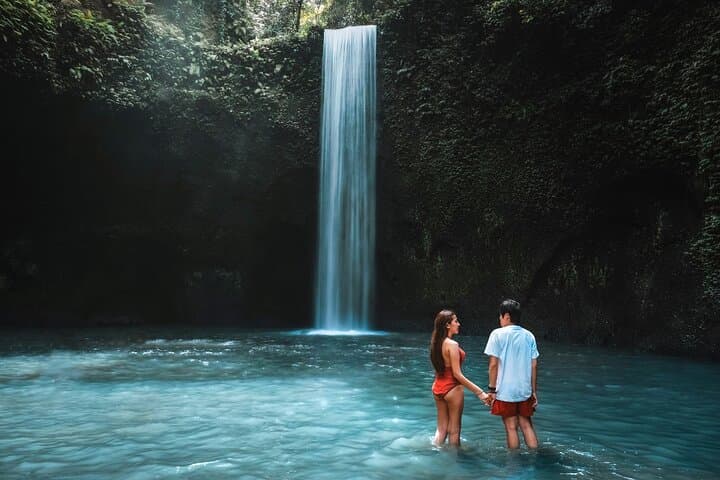
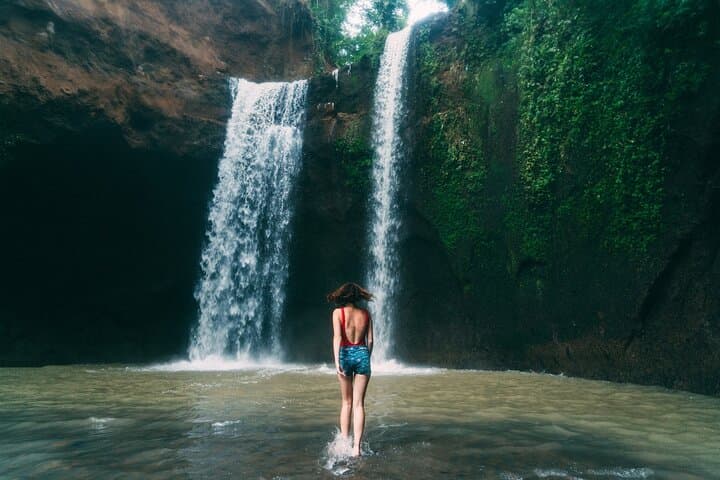
Later, the tour slips away from cultivated edges into the wild. Tibumana and Kato Lampo waterfalls sit beneath a canopy of broadleaf forest; water falls with intent, misting the gorge and slicking the stone steps. These falls demand respect—the rock is smooth underfoot—but they reward with cool swim holes and a sense of place that the busiest sites rarely offer.
Practical edge: this is a full 10‑hour private day. Expect roughly 40–60 minutes at each major stop, with 20–60 minutes of driving between them depending on traffic. Guides arrange entrance fees, lunch, bottled water and hotel pickup—timing can vary, but most groups start between 07:00–09:30 WITA to avoid midday heat.
Plan for mixed terrain: terraced steps, temple courtyards, and jungle paths. Bring modest clothes and a sarong for Tirta Empul, quick‑dry swimwear and a towel for waterfall swims, sturdy sandals or light hiking shoes for wet rock, insect repellent, and small change for temple donations or local stalls.
This private loop is part landscape study, part cultural immersion and part simple river play. It’s an efficient day to see the agricultural logic of Bali, witness living ritual, and let a waterfall scrub the humidity from your travel map—without the logistics, because the driver does that work for you.
moderate.
10 hours.
Good for travelers with normal mobility; expect short hikes, stairs and uneven ground—moderate stamina needed for multiple short walks and swimming.
The private tour is approximately 10 hours with four primary stops—Tegalalang Rice Terraces, Tirta Empul Temple, Tibumana Waterfall and Kato Lampo—with about an hour at each site and transit between them.
Yes—lunch, bottled water and entrance tickets to the listed attractions are included in the tour price.
Yes; Tibumana and Kato Lampo have swim areas. Bring swimwear and water shoes; be careful on wet rocks and follow the guide’s safety advice.
Yes—temple dress code requires covering shoulders and knees. If you don’t bring one, many guides or temple stalls provide sarongs for a small fee.
Pickup is available across Ubud and many Bali hotel areas; start times typically range from 07:00 to 09:30 WITA—confirm your exact pickup when booking.
The day is family‑friendly and labeled ‘physically easy’ for general fitness, but falls require stair climbs and slippery terrain; travelers with mobility issues should inform the operator in advance.
Tegalalang’s subak irrigation traces back centuries and reflects Bali’s communal farming system; Tirta Empul’s spring has been a site of ritual purification since the 10th century.
Stick to marked paths, avoid single‑use plastics where possible and respect local offerings—these simple actions reduce visitor impact on fragile terraces and temple grounds.
Bali Exploring Tours operates guided outdoor trips and adventures with an emphasis on safety, stewardship, and memorable experiences.
You step into the day before the town wakes: a driver in an air‑conditioned van slips through rice-lined lanes while dawn climbs over the central Balinese hills. The air is warm and thick with wet earth, the valley breathing steam into terraces that seem to climb like steps toward the sky. This is Ubud by morning—green, deliberate, and pragmatic in its beauty—and the day that follows moves with the same careful rhythm: a private circuit of Tegalalang’s sculpted paddies, the ritual pools of Tirta Empul, and two lesser‑known waterfalls that let the jungle speak louder than your camera.
You step into the day before the town wakes: a driver in an air‑conditioned van slips through rice-lined lanes while dawn climbs over the central Balinese hills. The air is warm and thick with wet earth, the valley breathing steam into terraces that seem to climb like steps toward the sky. This is Ubud by morning—green, deliberate, and pragmatic in its beauty—and the day that follows moves with the same careful rhythm: a private circuit of Tegalalang’s sculpted paddies, the ritual pools of Tirta Empul, and two lesser‑known waterfalls that let the jungle speak louder than your camera.
Tegalalang’s terraces are less a view than a system. Centuries of volcanic soil and engineered irrigation—the subak cooperatives—shape those contours; farmers still tend the plots on narrow ridgelines, water sluices chattering like small machines. From the terrace edge the geology is obvious: old volcanic ash has been re-engineered into terraces that retain water like shallow bowls, producing an almost quilted landscape of wet green.
Tirta Empul, by contrast, is a social and spiritual harnessing of water. Built around a spring believed to flow since the 10th century, the temple’s stone bathing pools are an active practice of purification. Visitors watch incense smoke travel across carved reliefs, then give way to a quieter etiquette: shoulders and knees covered, shoes left outside, a small offering in hand.
Later, the tour slips away from cultivated edges into the wild. Tibumana and Kato Lampo waterfalls sit beneath a canopy of broadleaf forest; water falls with intent, misting the gorge and slicking the stone steps. These falls demand respect—the rock is smooth underfoot—but they reward with cool swim holes and a sense of place that the busiest sites rarely offer.
Practical edge: this is a full 10‑hour private day. Expect roughly 40–60 minutes at each major stop, with 20–60 minutes of driving between them depending on traffic. Guides arrange entrance fees, lunch, bottled water and hotel pickup—timing can vary, but most groups start between 07:00–09:30 WITA to avoid midday heat.
Plan for mixed terrain: terraced steps, temple courtyards, and jungle paths. Bring modest clothes and a sarong for Tirta Empul, quick‑dry swimwear and a towel for waterfall swims, sturdy sandals or light hiking shoes for wet rock, insect repellent, and small change for temple donations or local stalls.
This private loop is part landscape study, part cultural immersion and part simple river play. It’s an efficient day to see the agricultural logic of Bali, witness living ritual, and let a waterfall scrub the humidity from your travel map—without the logistics, because the driver does that work for you.