THE ADVENTURE COLLECTIVE® · Independent discovery and booking for outdoor travel

In 48 hours you can move from the carved rose-red canyons of Petra to the wide red bowls of Wadi Rum and end floating on the mineral-rich Dead Sea. This private two-day tour pairs guided walks and a Bedouin Jeep safari with a night under stars and a luxury Dead Sea stop.
In 48 hours you can move from the carved rose-red canyons of Petra to the wide red bowls of Wadi Rum and end floating on the mineral-rich Dead Sea. This private two-day tour pairs guided walks and a Bedouin Jeep safari with a night under stars and a luxury Dead Sea stop.
The morning you drive south from Amman the highway opens like a map of time: flat plains, scrubby hills, then a slow climb toward the rose-colored cliffs of Petra. Walk through the Siq and the gorge narrows until the Treasury appears, carved directly from sandstone as if a city decided, all at once, to grow out of the rock. You spend hours moving between façades and tombs, the air dry and fragrant with stone dust and the roasted aroma of street coffee.
Verified experiences and guided adventures in the surrounding area.
Operated by Jordan Landmarks Tours · Petra, Ma'an Governorate
The morning you drive south from Amman the highway opens like a map of time: flat plains, scrubby hills, then a slow climb toward the rose-colored cliffs of Petra. Walk through the Siq and the gorge narrows until the Treasury appears, carved directly from sandstone as if a city decided, all at once, to grow out of the rock. You spend hours moving between façades and tombs, the air dry and fragrant with stone dust and the roasted aroma of street coffee.
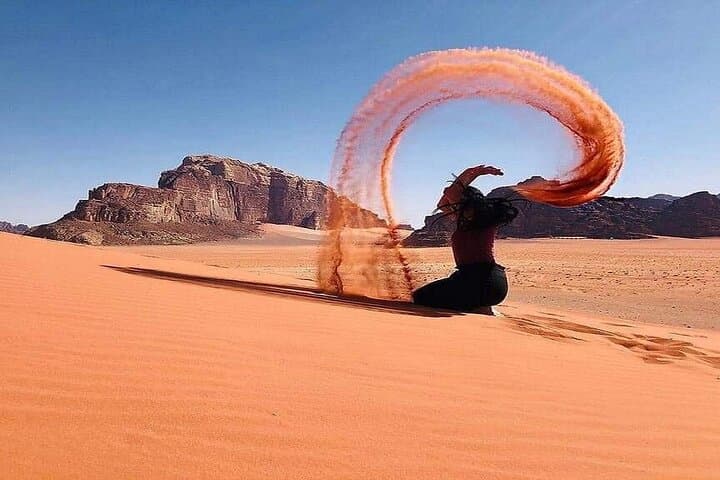
By afternoon the landscape changes again. The red sands of Wadi Rum reach up and push back at the sky—huge, blocky granite and sandstone towers carved by wind and temperature. A local Bedouin guide pilots a 4x4 along tracks that are more suggestion than road; the Jeep hums and the desert keeps its own time. As the sun slips, color shifts from burnt orange to copper and the camp lights come alive. Dinner is the slow, generous meal the desert specializes in: lamb, flatbread, fresh salad, and stories that fold history into place.
Geology and history thread the two days. Petra is Nabataean engineering, a caravan city where water management and stone carving powered an empire of trade routes. Wadi Rum records different epochs—wind-sanded sandstone and granite shaped over millions of years. Then, after an overnight under stars, you drive north to the Dead Sea, the planet's lowest exposed land surface. Here the water buoyantly rejects you; its density carries you in a way no ordinary sea can.
Practical planning is straightforward. The tour includes roughly three hours of driving between hubs and offers a four-hour guided window at Petra, a two-hour Jeep safari in Wadi Rum, and resort access at the Dead Sea. Hotel pickup in Amman simplifies logistics, and private-tour options let you set the pace.
Pack for heat, sun, and walking. Closed-toe shoes and a light daypack make Petra easier; breathable layers work at dawn and after sunset in the desert. Bring a large water bottle—the air is dry and consumption high—and a small dry bag for phones at the Dead Sea: salt is aggressive. If you want photos, aim for golden hour in Wadi Rum and early morning in Petra to avoid the crowds and harsh midday light.
Timing matters: arrive at Petra early to see the Treasury with fewer people, head to Wadi Rum in time for sunset, and finish the Dead Sea in the afternoon when resort facilities are warm and quiet. With a mix of walking, off-road exploration, and restorative floating, the route balances adventure and recovery—48 hours that move you through Jordan’s most elemental landscapes.
moderate.
2 days.
You should be comfortable walking 3–5 miles (5–8 km) over varied terrain and handling short stretches of uneven footing; no extreme fitness required.
Some options include entrance tickets; confirm at booking. If not included you can pay on arrival—bring cash or card.
Yes—options range from deluxe tents with private bathrooms and AC to simpler traditional camps; choose the accommodation option when booking.
Families are welcome; infant seats are available on request. Consider the heat and the walking involved for young children.
You can float but avoid splashing and do not ingest the water; wear water shoes and protect cuts—salt stings open skin.
Expect about four hours of guided walking covering uneven stone, stairs, and some loose sand—moderate exertion.
Tipping is customary; plan modest gratuities for drivers, guides, and camp staff, best given in local currency (Jordanian dinar).
Petra was the Nabataean capital and a major caravan hub between Arabia, Egypt, and the Levant; Wadi Rum has long been a Bedouin homeland and a route for trade and pilgrimage.
Stay on marked paths in Petra to protect fragile sandstone carvings and avoid leaving litter in Wadi Rum camps; many camps use solar power and local guides support low-impact tourism.
Jordan Landmarks Tours operates guided outdoor trips and adventures with an emphasis on safety, stewardship, and memorable experiences.
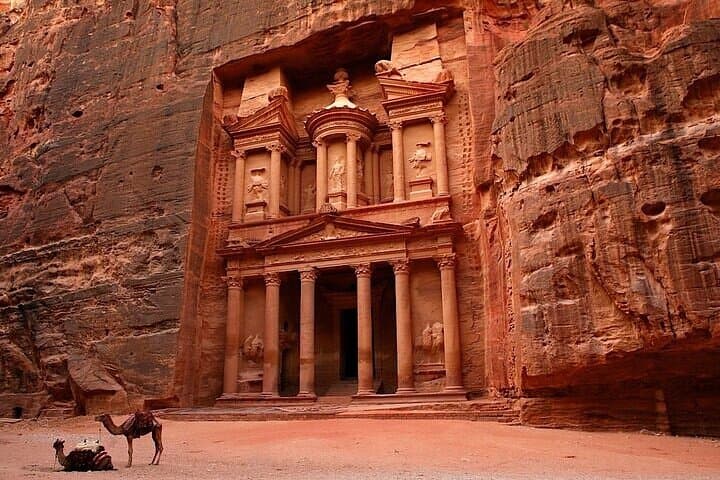
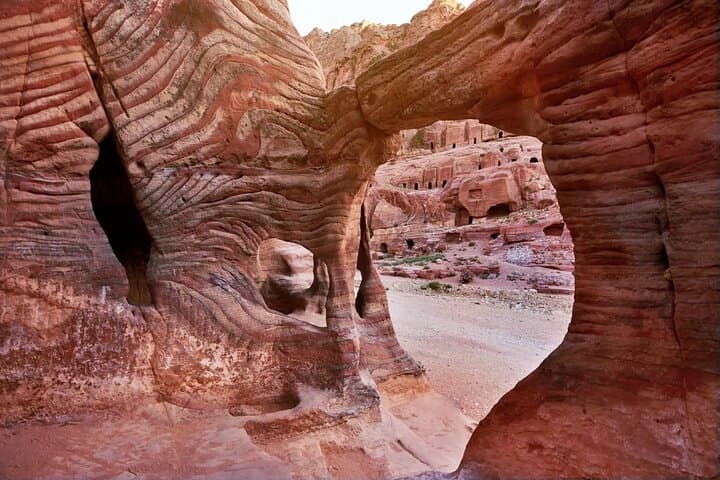
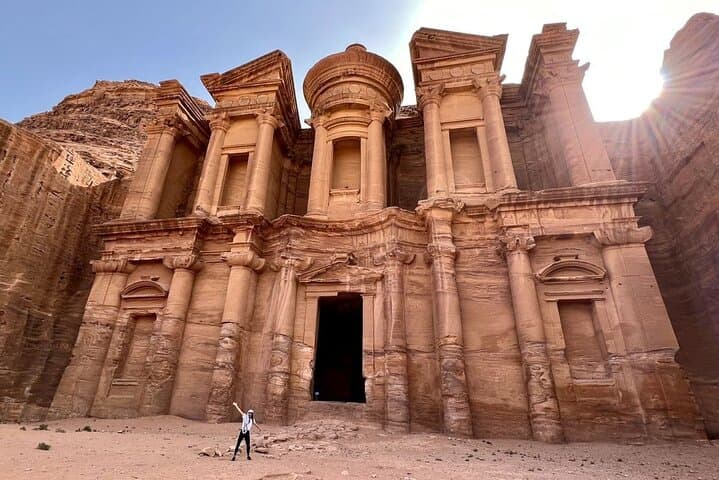
The morning you drive south from Amman the highway opens like a map of time: flat plains, scrubby hills, then a slow climb toward the rose-colored cliffs of Petra. Walk through the Siq and the gorge narrows until the Treasury appears, carved directly from sandstone as if a city decided, all at once, to grow out of the rock. You spend hours moving between façades and tombs, the air dry and fragrant with stone dust and the roasted aroma of street coffee.
The morning you drive south from Amman the highway opens like a map of time: flat plains, scrubby hills, then a slow climb toward the rose-colored cliffs of Petra. Walk through the Siq and the gorge narrows until the Treasury appears, carved directly from sandstone as if a city decided, all at once, to grow out of the rock. You spend hours moving between façades and tombs, the air dry and fragrant with stone dust and the roasted aroma of street coffee.
By afternoon the landscape changes again. The red sands of Wadi Rum reach up and push back at the sky—huge, blocky granite and sandstone towers carved by wind and temperature. A local Bedouin guide pilots a 4x4 along tracks that are more suggestion than road; the Jeep hums and the desert keeps its own time. As the sun slips, color shifts from burnt orange to copper and the camp lights come alive. Dinner is the slow, generous meal the desert specializes in: lamb, flatbread, fresh salad, and stories that fold history into place.
Geology and history thread the two days. Petra is Nabataean engineering, a caravan city where water management and stone carving powered an empire of trade routes. Wadi Rum records different epochs—wind-sanded sandstone and granite shaped over millions of years. Then, after an overnight under stars, you drive north to the Dead Sea, the planet's lowest exposed land surface. Here the water buoyantly rejects you; its density carries you in a way no ordinary sea can.
Practical planning is straightforward. The tour includes roughly three hours of driving between hubs and offers a four-hour guided window at Petra, a two-hour Jeep safari in Wadi Rum, and resort access at the Dead Sea. Hotel pickup in Amman simplifies logistics, and private-tour options let you set the pace.
Pack for heat, sun, and walking. Closed-toe shoes and a light daypack make Petra easier; breathable layers work at dawn and after sunset in the desert. Bring a large water bottle—the air is dry and consumption high—and a small dry bag for phones at the Dead Sea: salt is aggressive. If you want photos, aim for golden hour in Wadi Rum and early morning in Petra to avoid the crowds and harsh midday light.
Timing matters: arrive at Petra early to see the Treasury with fewer people, head to Wadi Rum in time for sunset, and finish the Dead Sea in the afternoon when resort facilities are warm and quiet. With a mix of walking, off-road exploration, and restorative floating, the route balances adventure and recovery—48 hours that move you through Jordan’s most elemental landscapes.