THE ADVENTURE COLLECTIVE® · Independent discovery and booking for outdoor travel

This two-day guided loop from Luxor takes you along the Nile to Aswan’s Philae and the monumental Abu Simbel. Expect early departures, UNESCO stories of relocation, and long transfers paired with concentrated temple exploration.
This two-day guided loop from Luxor takes you along the Nile to Aswan’s Philae and the monumental Abu Simbel. Expect early departures, UNESCO stories of relocation, and long transfers paired with concentrated temple exploration.
By the time the train eases into Aswan, the Nile has already taken shape—broad, slow and sun-glinting—framing the low desert that holds temples older than most borders.
On day one the rhythm is easy: a hotel pickup in Luxor, a morning ride into Aswan, and a guided walk across Philae's stone colonnades on Agilkia Island, where Isis's cult once made the river both highway and holy. The High Dam and the older barrage loom nearby; their concrete arcs rewrote waterlines and the maps of modern Egypt, forcing ancient monuments to move and villages to adapt.
Geology here is simple and striking—silicified sandstone and Nubian Shield bedrock rising from silted Nile banks—while culture layers millennia of pharaonic ritual, Roman reuse and modern Nubian life into the same shoreline.
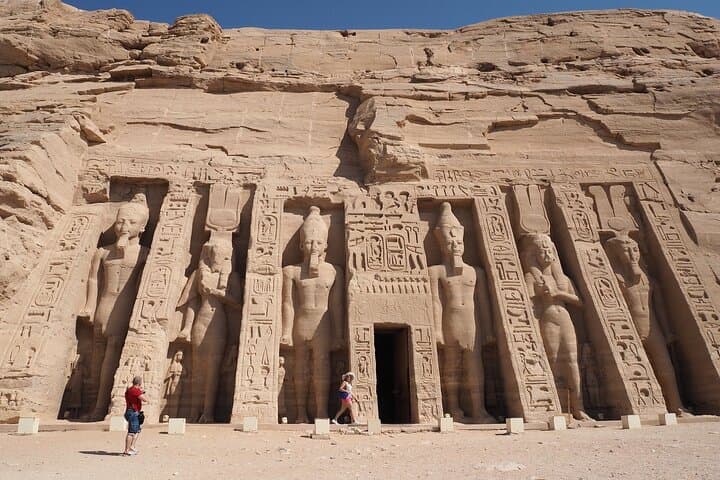
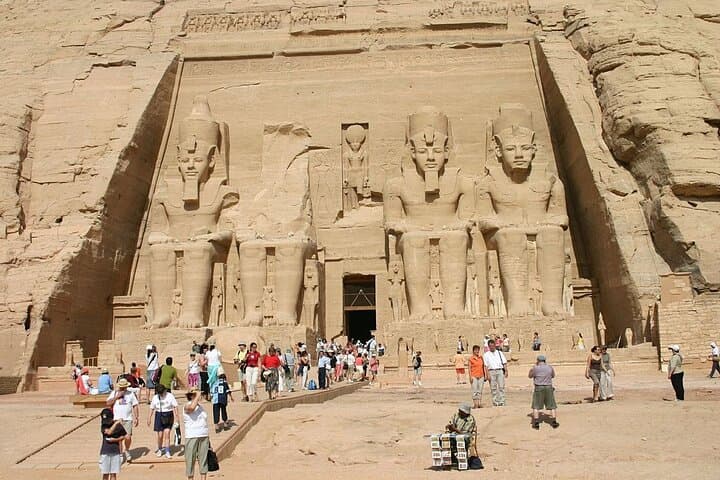
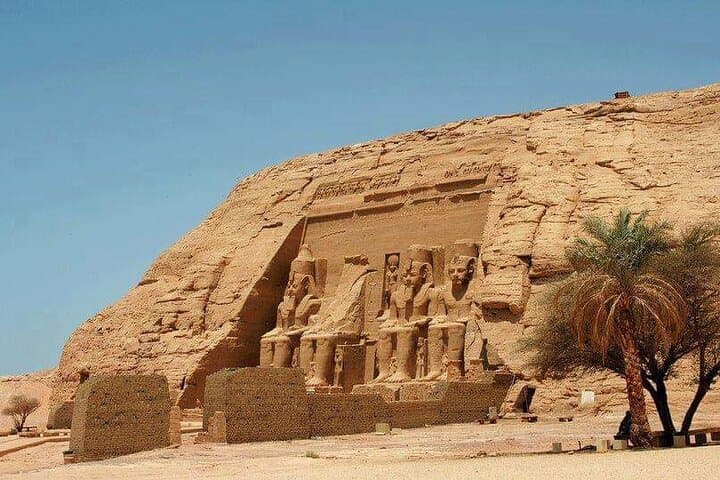
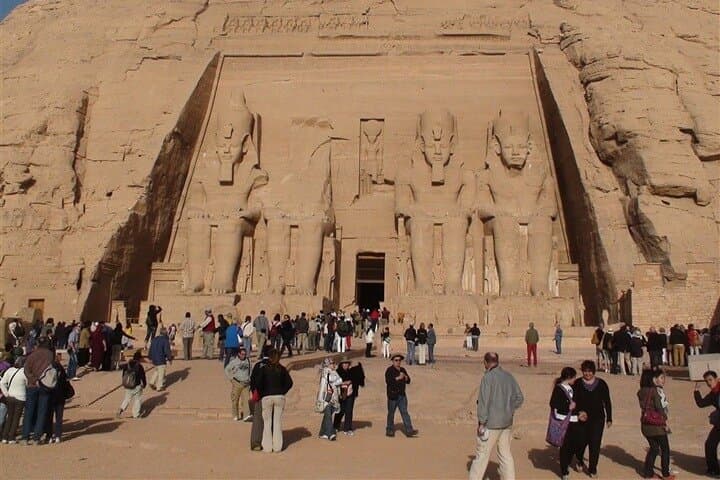
Day two begins before dawn for the long transfer to Abu Simbel, where Ramses II's colossal faces confront the desert sun and the temple’s interior aligns with light twice a year. The relocation of Abu Simbel and Philae in the 1960s under UNESCO is as much part of the story as the hieroglyphs.
Practicalities: trains and private transfers handle the heavy lifting; bring a valid passport for ticketing and entrance, and plan for extensive walking on uneven stone and steps. Sun protection and a refillable water bottle make a measurable difference; layered clothing handles cool mornings and intense midday heat. Expect guided commentary, photo windows of the Nile, and quiet pockets of time to explore temple courtyards.
Carry local cash for small purchases.
Verified experiences and guided adventures in the surrounding area.
Operated by Egypt Travel Line · Luxor, Luxor Governorate
By the time the train eases into Aswan, the Nile has already taken shape—broad, slow and sun-glinting—framing the low desert that holds temples older than most borders.
On day one the rhythm is easy: a hotel pickup in Luxor, a morning ride into Aswan, and a guided walk across Philae's stone colonnades on Agilkia Island, where Isis's cult once made the river both highway and holy. The High Dam and the older barrage loom nearby; their concrete arcs rewrote waterlines and the maps of modern Egypt, forcing ancient monuments to move and villages to adapt.
Geology here is simple and striking—silicified sandstone and Nubian Shield bedrock rising from silted Nile banks—while culture layers millennia of pharaonic ritual, Roman reuse and modern Nubian life into the same shoreline.
Day two begins before dawn for the long transfer to Abu Simbel, where Ramses II's colossal faces confront the desert sun and the temple’s interior aligns with light twice a year. The relocation of Abu Simbel and Philae in the 1960s under UNESCO is as much part of the story as the hieroglyphs.
Practicalities: trains and private transfers handle the heavy lifting; bring a valid passport for ticketing and entrance, and plan for extensive walking on uneven stone and steps. Sun protection and a refillable water bottle make a measurable difference; layered clothing handles cool mornings and intense midday heat. Expect guided commentary, photo windows of the Nile, and quiet pockets of time to explore temple courtyards.
Carry local cash for small purchases.
easy.
2 days.
Light fitness required—able to walk several hundred meters and climb temple steps; minimal sustained exertion.
No—admissions are typically not included; bring cash or card and your passport to purchase tickets at sites or to cover guide-arranged entry.
Yes—the itinerary includes an overnight hotel stay in Aswan between day one and the Abu Simbel transfer on day two.
Transport and many public areas are accessible, but individual temples have steps and uneven surfaces; contact the operator about specific mobility needs and assistance.
October through April offers the most comfortable temperatures and clearer skies; summers are very hot and require early starts.
Many temples here were relocated during the 1960s High Dam campaigns; the moves themselves are UNESCO-era milestones in archaeology and engineering.
Relocation and rescue programs reduced site loss, but rising tourism and Nile management require visitors to follow site rules and minimize impact.
Egypt Travel Line operates guided outdoor trips and adventures with an emphasis on safety, stewardship, and memorable experiences.
By the time the train eases into Aswan, the Nile has already taken shape—broad, slow and sun-glinting—framing the low desert that holds temples older than most borders.
On day one the rhythm is easy: a hotel pickup in Luxor, a morning ride into Aswan, and a guided walk across Philae's stone colonnades on Agilkia Island, where Isis's cult once made the river both highway and holy. The High Dam and the older barrage loom nearby; their concrete arcs rewrote waterlines and the maps of modern Egypt, forcing ancient monuments to move and villages to adapt.
Geology here is simple and striking—silicified sandstone and Nubian Shield bedrock rising from silted Nile banks—while culture layers millennia of pharaonic ritual, Roman reuse and modern Nubian life into the same shoreline.
Day two begins before dawn for the long transfer to Abu Simbel, where Ramses II's colossal faces confront the desert sun and the temple’s interior aligns with light twice a year. The relocation of Abu Simbel and Philae in the 1960s under UNESCO is as much part of the story as the hieroglyphs.
Practicalities: trains and private transfers handle the heavy lifting; bring a valid passport for ticketing and entrance, and plan for extensive walking on uneven stone and steps. Sun protection and a refillable water bottle make a measurable difference; layered clothing handles cool mornings and intense midday heat. Expect guided commentary, photo windows of the Nile, and quiet pockets of time to explore temple courtyards.
Carry local cash for small purchases.
By the time the train eases into Aswan, the Nile has already taken shape—broad, slow and sun-glinting—framing the low desert that holds temples older than most borders.
On day one the rhythm is easy: a hotel pickup in Luxor, a morning ride into Aswan, and a guided walk across Philae's stone colonnades on Agilkia Island, where Isis's cult once made the river both highway and holy. The High Dam and the older barrage loom nearby; their concrete arcs rewrote waterlines and the maps of modern Egypt, forcing ancient monuments to move and villages to adapt.
Geology here is simple and striking—silicified sandstone and Nubian Shield bedrock rising from silted Nile banks—while culture layers millennia of pharaonic ritual, Roman reuse and modern Nubian life into the same shoreline.
Day two begins before dawn for the long transfer to Abu Simbel, where Ramses II's colossal faces confront the desert sun and the temple’s interior aligns with light twice a year. The relocation of Abu Simbel and Philae in the 1960s under UNESCO is as much part of the story as the hieroglyphs.
Practicalities: trains and private transfers handle the heavy lifting; bring a valid passport for ticketing and entrance, and plan for extensive walking on uneven stone and steps. Sun protection and a refillable water bottle make a measurable difference; layered clothing handles cool mornings and intense midday heat. Expect guided commentary, photo windows of the Nile, and quiet pockets of time to explore temple courtyards.
Carry local cash for small purchases.