THE ADVENTURE COLLECTIVE® · Independent discovery and booking for outdoor travel

In 48 hours you’ll cross from the sun-baked plains of Anatolia into a landscape of chimneys, caves and hidden churches. This two-day tour from Belek covers Göreme, an underground city and local crafts, with an optional sunrise balloon flight.
In 48 hours you’ll cross from the sun-baked plains of Anatolia into a landscape of chimneys, caves and hidden churches. This two-day tour from Belek covers Göreme, an underground city and local crafts, with an optional sunrise balloon flight.
You step off the minibus and the air changes—thin, dry, carrying dust and a faint scent of wood smoke. In the soft light of late afternoon the fairy chimneys throw long, unexpected shadows; the rock seems to have been sculpted by a curious hand rather than wind and water. For two days, Cappadocia makes everything you thought you knew about landscape feel negotiable.
Verified experiences and guided adventures in the surrounding area.
You step off the minibus and the air changes—thin, dry, carrying dust and a faint scent of wood smoke. In the soft light of late afternoon the fairy chimneys throw long, unexpected shadows; the rock seems to have been sculpted by a curious hand rather than wind and water. For two days, Cappadocia makes everything you thought you knew about landscape feel negotiable.
This short tour is compact but layered. Beginning with a transfer from Belek, the itinerary threads through Cappadocia’s geological and human history: the volcanic tuff laid down millions of years ago, shaped by erosion into spires and cones, then hollowed by humans into houses, chapels and entire underground cities. Sites like the Göreme Open Air Museum map early Christian life in rock-cut churches; Saratlı (Saratli) Underground City exposes the practical ingenuity of communities who retreated underground to survive invasions.
The region’s geology is simple and dramatic—soft tuff capped by harder basalt—yet it produced complex architecture. Local villages still practice centuries-old crafts: pottery in Avanos, rug weaving in small family workshops, and slow, deliberate bread baking. Guides on this tour aim to bring those threads together, offering context between stops and pointing out lesser-known carvings and fresco fragments most visitors miss.
Practically speaking: this is a 48-hour window into a large landscape, paced for travelers who want highlights without camping. Travel between sites involves long drives across open steppe; expect several short walks on uneven stone and dirt, some with steps carved into rock. If you choose the optional hot-air balloon, plan it for dawn—the light makes the chimneys glow and the balloons become slow-moving constellations.
For preparation, pack layers—mornings and nights can be cold even in summer. Good ankle-support shoes make the difference on carved steps and loose scree. Bring a refillable water bottle and sunscreen; there are limited shade spots at many overlooks. If you’re photographing, allocate time for sunrise and late afternoon; midday flattens the relief.
The tour’s value is in contrast: open valleys that dare you to walk into them, tight subterranean passages that demand a quiet, deliberate pace. In 48 hours you’ll leave with an outline of Cappadocia’s story and a handful of intense moments—balloons, frescoes, and a starry, immovable sky overhead.
moderate.
2 days (approx. 48 hours).
Good for travelers who can handle several short walks on uneven terrain and long drives; basic mobility required.
Yes—the package advertises HB hotel accommodation (half-board) for the overnight stay in Cappadocia as part of the tour.
No—the hot-air balloon is optional and typically booked and paid for separately due to variable scheduling and weather.
Most walks are short—10–40 minutes—on uneven rock and dirt; there are no long day hikes but expect steps and narrow passages in underground sites.
Transfers and site-to-site travel are by coach/minibus provided by the tour operator with driver and guide.
Partial participation is possible, but some sites—especially underground cities—include stairs and low ceilings and may be inaccessible for those with limited mobility.
Guides are typically English-speaking; confirm when booking if you require another language.
Cappadocia’s troglodyte settlements grew from Neolithic occupation into Byzantine Christian communities who carved monastic complexes and frescoed churches into volcanic tuff.
Erosion is natural but tourism pressures can accelerate wear on fragile rock and frescoes; stick to paths, avoid touching frescoes, and support local conservation fees where collected.
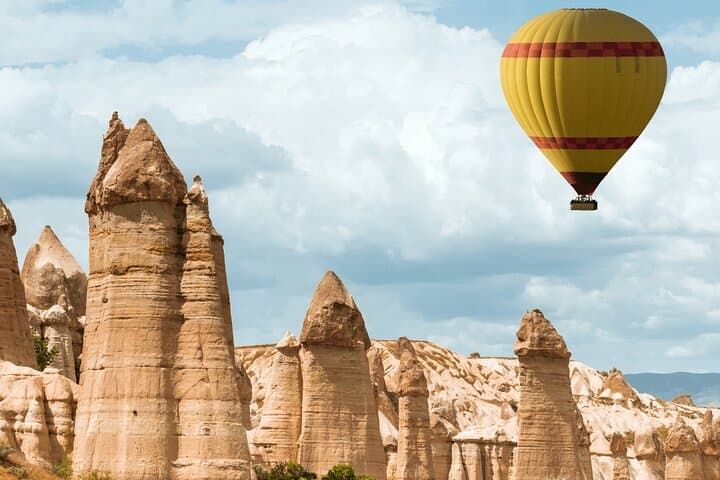
You step off the minibus and the air changes—thin, dry, carrying dust and a faint scent of wood smoke. In the soft light of late afternoon the fairy chimneys throw long, unexpected shadows; the rock seems to have been sculpted by a curious hand rather than wind and water. For two days, Cappadocia makes everything you thought you knew about landscape feel negotiable.
You step off the minibus and the air changes—thin, dry, carrying dust and a faint scent of wood smoke. In the soft light of late afternoon the fairy chimneys throw long, unexpected shadows; the rock seems to have been sculpted by a curious hand rather than wind and water. For two days, Cappadocia makes everything you thought you knew about landscape feel negotiable.
This short tour is compact but layered. Beginning with a transfer from Belek, the itinerary threads through Cappadocia’s geological and human history: the volcanic tuff laid down millions of years ago, shaped by erosion into spires and cones, then hollowed by humans into houses, chapels and entire underground cities. Sites like the Göreme Open Air Museum map early Christian life in rock-cut churches; Saratlı (Saratli) Underground City exposes the practical ingenuity of communities who retreated underground to survive invasions.
The region’s geology is simple and dramatic—soft tuff capped by harder basalt—yet it produced complex architecture. Local villages still practice centuries-old crafts: pottery in Avanos, rug weaving in small family workshops, and slow, deliberate bread baking. Guides on this tour aim to bring those threads together, offering context between stops and pointing out lesser-known carvings and fresco fragments most visitors miss.
Practically speaking: this is a 48-hour window into a large landscape, paced for travelers who want highlights without camping. Travel between sites involves long drives across open steppe; expect several short walks on uneven stone and dirt, some with steps carved into rock. If you choose the optional hot-air balloon, plan it for dawn—the light makes the chimneys glow and the balloons become slow-moving constellations.
For preparation, pack layers—mornings and nights can be cold even in summer. Good ankle-support shoes make the difference on carved steps and loose scree. Bring a refillable water bottle and sunscreen; there are limited shade spots at many overlooks. If you’re photographing, allocate time for sunrise and late afternoon; midday flattens the relief.
The tour’s value is in contrast: open valleys that dare you to walk into them, tight subterranean passages that demand a quiet, deliberate pace. In 48 hours you’ll leave with an outline of Cappadocia’s story and a handful of intense moments—balloons, frescoes, and a starry, immovable sky overhead.