THE ADVENTURE COLLECTIVE® · Independent discovery and booking for outdoor travel

Watch Angkor Wat at first light, trace tree-roots through Ta Prohm, and step closer to Khmer stonework over two paced days. This private-guided two-day tour pairs the Small and Big Circuits with a sunrise at Angkor and a visit to the pink sandstone carvings at Banteay Srei.
Watch Angkor Wat at first light, trace tree-roots through Ta Prohm, and step closer to Khmer stonework over two paced days. This private-guided two-day tour pairs the Small and Big Circuits with a sunrise at Angkor and a visit to the pink sandstone carvings at Banteay Srei.
You arrive before dawn, the van idling at your hotel while the road to Angkor Wat is still cool. Headlamps and camera flashes dot the path as the silhouette of the temple pool sharpens against a pale sky. The first day moves at a quiet, observant pace—Ta Prohm’s trees daring you to trace roots that have claimed stone, Phimeanakas’ low walls holding stories of kings, and the carved faces of Bayon watching crowds drift like tides.
Verified experiences and guided adventures in the surrounding area.
Operated by Asia Group Tour · Siem Reap, Siem Reap Province
You arrive before dawn, the van idling at your hotel while the road to Angkor Wat is still cool. Headlamps and camera flashes dot the path as the silhouette of the temple pool sharpens against a pale sky. The first day moves at a quiet, observant pace—Ta Prohm’s trees daring you to trace roots that have claimed stone, Phimeanakas’ low walls holding stories of kings, and the carved faces of Bayon watching crowds drift like tides.
Angkor sits on a table of laterite and sandstone pushed up by monsoon-fed rivers and a thousand years of Khmer engineering. Between the 9th and 15th centuries, the Khmer Empire lifted forests into city-forests of stone—temple mountains, reservoirs and canals that still control the land’s water. The Big and Small Circuits are different ways to read that landscape: the Small Circuit threads through Angkor Thom’s heart—Bayon, Baphuon, and Ta Prohm—while the Big Circuit stretches out to island temples like Neak Pean and the pink sandstone finesse of Banteay Srei.
Culture here is lived: monks in saffron robes move through courtyards, vendors hang around outer galleries, and local guides point out iconography that maps cosmology, politics, and daily life. Banteay Srei, an hour northeast, feels like a private chamber—finely carved devotions preserved in stone that glows rose in midday light.
Practically, this is a low-elevation, high-exposure experience. Expect two full days with early starts—sunrise at Angkor Wat on day two is non-negotiable. Walks vary: plan for 6–12 km of walking each day on flat stone terraces, loose sand, and uneven temple steps; elevation gain is negligible. Temperatures can climb fast; hydrate steadily and take shade breaks. Entrance fees and pickup are included, and the tour provides an air-conditioned van, guide, and meals (breakfast, two lunches, dinners as noted). Photography is best at sunrise and late afternoon; midday is better for detail shots under even light.
Respect temple rules—shoulders and knees covered, quiet in sanctified spaces, and avoid climbing fragile carvings. Wear supportive shoes with good traction; temple stones are ancient and slick when wet. The tour is suitable for most fitness levels but not recommended for travelers with serious cardiovascular concerns due to long days and heat.
End your days in Siem Reap’s central streets, where chilled coconut water and local fish amok are a direct reward for a full two-day immersion into one of Southeast Asia’s most extraordinary archaeological landscapes.
easy.
2 days.
Suitable for most fitness levels; requires walking 6–12 km per day on flat but uneven surfaces and early starts.
Yes—the tour inclusions list entrance fee as covered and the guide will handle gate logistics.
The guide will pick you up around 5:00 AM on sunrise day—confirm your hotel pickup at booking.
The tour is family-friendly and rated easy, but long days and early mornings may be tiring for very young children or those with limited mobility.
Yes—breakfast, two lunches and dinners are listed in the inclusions; specify dietary restrictions when booking.
Bring local currency for snacks, tips, souvenirs, and any optional extras not included in the tour package.
Private customization may be possible; for shared tours, changes are limited—ask during booking for options.
Angkor was the heart of the Khmer Empire from roughly the 9th to 15th centuries; temples combine Hindu and Buddhist iconography and sophisticated water management systems.
Visitor pressure stresses delicate stone and surrounding ecology—stay on paths, avoid touching reliefs, and support local conservation initiatives when possible.
Asia Group Tour operates guided outdoor trips and adventures with an emphasis on safety, stewardship, and memorable experiences.
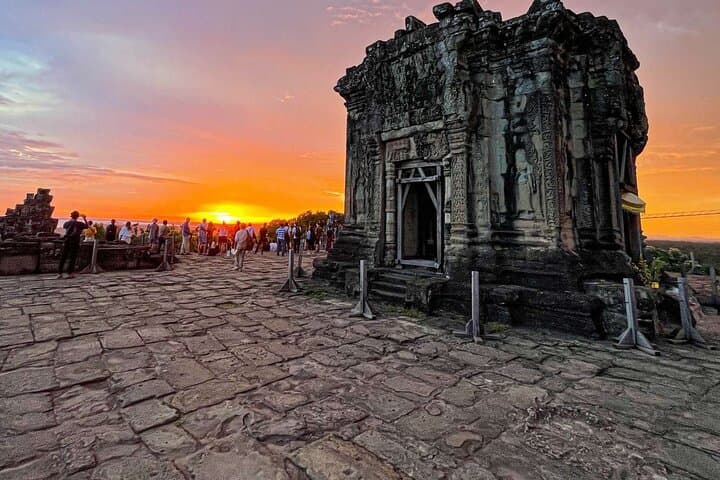
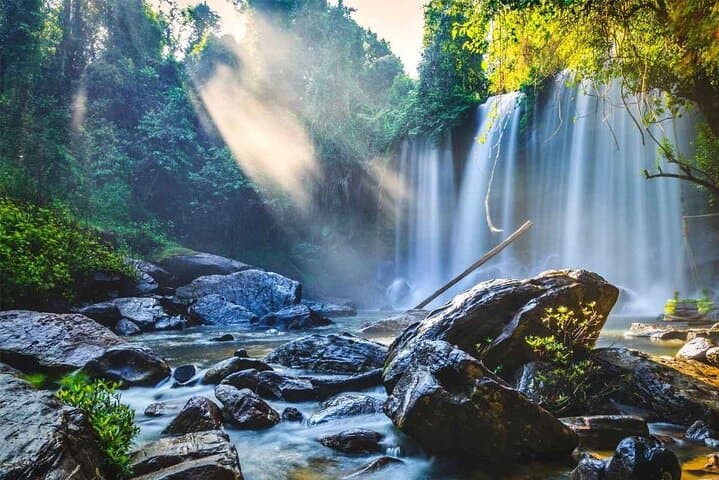
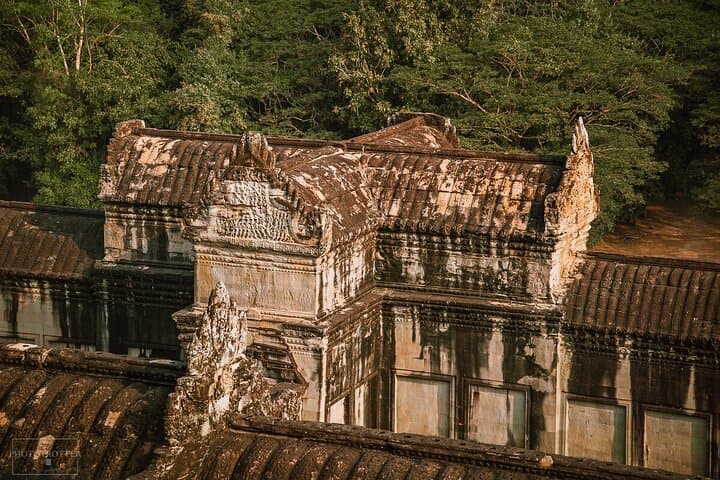
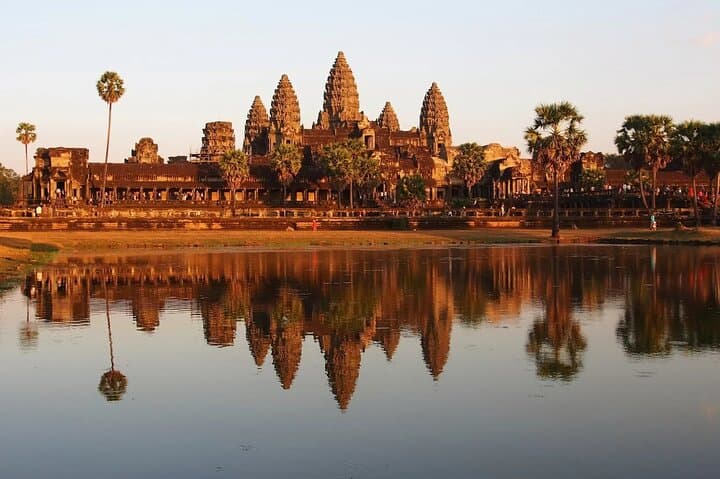
You arrive before dawn, the van idling at your hotel while the road to Angkor Wat is still cool. Headlamps and camera flashes dot the path as the silhouette of the temple pool sharpens against a pale sky. The first day moves at a quiet, observant pace—Ta Prohm’s trees daring you to trace roots that have claimed stone, Phimeanakas’ low walls holding stories of kings, and the carved faces of Bayon watching crowds drift like tides.
You arrive before dawn, the van idling at your hotel while the road to Angkor Wat is still cool. Headlamps and camera flashes dot the path as the silhouette of the temple pool sharpens against a pale sky. The first day moves at a quiet, observant pace—Ta Prohm’s trees daring you to trace roots that have claimed stone, Phimeanakas’ low walls holding stories of kings, and the carved faces of Bayon watching crowds drift like tides.
Angkor sits on a table of laterite and sandstone pushed up by monsoon-fed rivers and a thousand years of Khmer engineering. Between the 9th and 15th centuries, the Khmer Empire lifted forests into city-forests of stone—temple mountains, reservoirs and canals that still control the land’s water. The Big and Small Circuits are different ways to read that landscape: the Small Circuit threads through Angkor Thom’s heart—Bayon, Baphuon, and Ta Prohm—while the Big Circuit stretches out to island temples like Neak Pean and the pink sandstone finesse of Banteay Srei.
Culture here is lived: monks in saffron robes move through courtyards, vendors hang around outer galleries, and local guides point out iconography that maps cosmology, politics, and daily life. Banteay Srei, an hour northeast, feels like a private chamber—finely carved devotions preserved in stone that glows rose in midday light.
Practically, this is a low-elevation, high-exposure experience. Expect two full days with early starts—sunrise at Angkor Wat on day two is non-negotiable. Walks vary: plan for 6–12 km of walking each day on flat stone terraces, loose sand, and uneven temple steps; elevation gain is negligible. Temperatures can climb fast; hydrate steadily and take shade breaks. Entrance fees and pickup are included, and the tour provides an air-conditioned van, guide, and meals (breakfast, two lunches, dinners as noted). Photography is best at sunrise and late afternoon; midday is better for detail shots under even light.
Respect temple rules—shoulders and knees covered, quiet in sanctified spaces, and avoid climbing fragile carvings. Wear supportive shoes with good traction; temple stones are ancient and slick when wet. The tour is suitable for most fitness levels but not recommended for travelers with serious cardiovascular concerns due to long days and heat.
End your days in Siem Reap’s central streets, where chilled coconut water and local fish amok are a direct reward for a full two-day immersion into one of Southeast Asia’s most extraordinary archaeological landscapes.