THE ADVENTURE COLLECTIVE® · Independent discovery and booking for outdoor travel

In three days this private, all-inclusive tour turns Lake Van’s shoreline, Urartian castles, Armenian churches and volcanic landscape into a compact cultural and geological primer. Expect lengthy drives balanced by short hikes, curated museum visits and a boat ride to Akdamar Island.
In three days this private, all-inclusive tour turns Lake Van’s shoreline, Urartian castles, Armenian churches and volcanic landscape into a compact cultural and geological primer. Expect lengthy drives balanced by short hikes, curated museum visits and a boat ride to Akdamar Island.
On a clear morning the rim of Lake Van stretches like a pale highway to the horizon — a freshwater sea that dares you to look farther. The tour begins with that view: coaches hum to life, guides hand out strong Turkish coffee, and the conversation turns toward stones older than empires. Over the next three days, travellers move between wind-swept shorelines and low, rocky ridgelines where Urartian masonry still holds its lines against time.
Verified experiences and guided adventures in the surrounding area.
Operated by SilkRoad Moments · Van, Van Province
On a clear morning the rim of Lake Van stretches like a pale highway to the horizon — a freshwater sea that dares you to look farther. The tour begins with that view: coaches hum to life, guides hand out strong Turkish coffee, and the conversation turns toward stones older than empires. Over the next three days, travellers move between wind-swept shorelines and low, rocky ridgelines where Urartian masonry still holds its lines against time.
The itinerary threads history into landscape. On day one you cross highland valleys to Hosap and Çavuştepe — castles that sit on older Urartian foundations but wear Ottoman and local Mahmudi layers. Stones cut in the first millennium BCE meet later fortifications that speak to the region’s strategic importance: control the passes, control the lake. The so-called “7 Churches” refers less to a neat number than to clusters of Armenian ecclesiastical building that survived reconstructions and neglect; St. Sophia and the Virgin Mary ruins mark centuries of ritual life and architectural exchange.
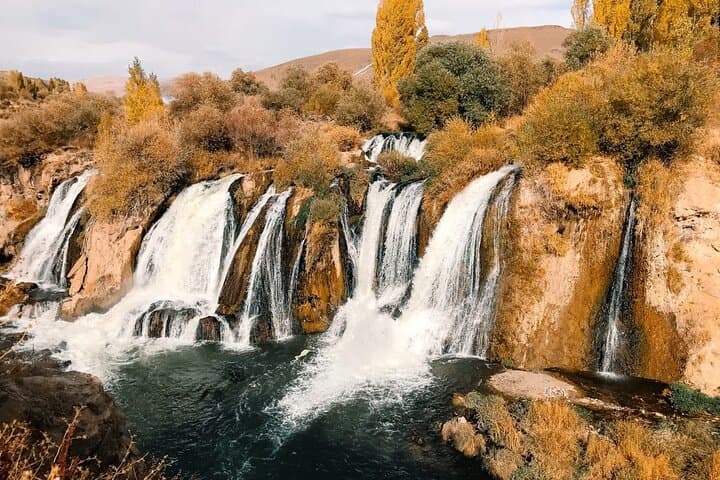
Geology shapes every stop. Lake Van fills a tectonic basin ringed by basalt flows and volcanic hills; the water’s pale blue contrasts with black lava slopes and red clay terraces. At Muradiye Waterfall water quits the plateau and falls into a gorge where moss gathers like a slow green current. Ahlat’s grave stones — raised, carved, and weathered — are both cultural artifacts and quiet geologic records, sitting on age-softened soil under a wide sky.
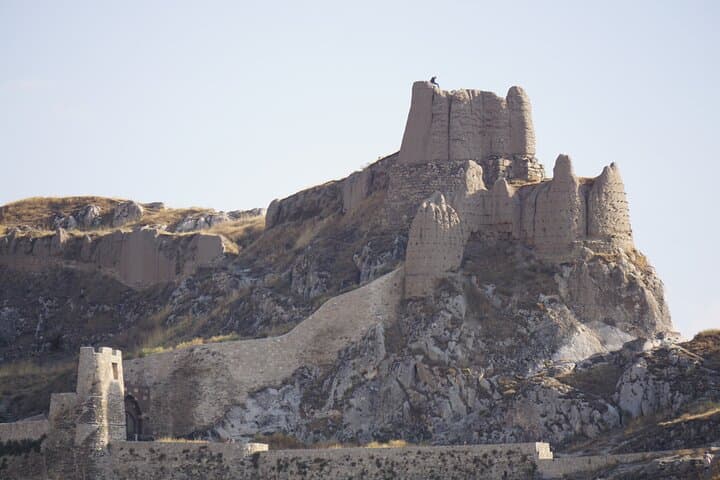
Day two broadens the frame: a 360-degree drive around the lake includes small fishing villages, salt flats visible in distance, and the Cat Museum that celebrates Van’s famously odd-eyed felines. Day three concentrates on the city: Van Museum’s Urartian inscriptions, a brisk hike up Van Castle for a panorama of town and lake, then a short boat crossing to Akdamar Island where the 10th-century Church of the Holy Cross sits in near-solitude except on its annual service day.
Practical guidance: pack sturdy walking shoes and layers — the lake winds can change temperature fast. Expect long drives between highlights but frequent stops for photos and short walks. Entrance fees and most meals are included; guides handle logistics and can adapt the pacing for families or slower walkers. Bring a reusable water bottle, a daypack for cameras and layers, and any medication you need — pharmacies are available in Van but countryside stops can be remote.
This private, all-inclusive format suits travellers who want curated history without navigating visas of small details. For photographers, plan sunrise on Van Castle and late afternoon on Akdamar for the best light. Respect church sites and cemetery areas: these places are living memory, and the region’s layered past is best experienced with quiet curiosity.
moderate.
3 days.
Suitable for travelers in average fitness; must be able to manage short uphill walks and uneven surfaces.
Yes — private, air-conditioned transportation is provided and included in the tour price.
Entrance fees, most lunches and dinners and bottled water are included; your guide will handle payments.
Yes — it’s a private tour and guides can adapt pacing and some stops; note that Van Castle involves uphill walking.
Visa requirements depend on your nationality; check Turkey’s e-visa system before travel and plan accordingly.
Generally yes; however, some sites like Van Castle and rocky ruins are not stroller-friendly.
The cathedral on Akdamar Island is typically opened for a single annual service in September; it’s otherwise a historic site open to visitors.
Van sits at the heart of the ancient Kingdom of Urartu and later witnessed Armenian, Ottoman and Persian influences that shaped its architecture and inscriptions.
Lake Van’s ecology is sensitive to development and pollution; tour operators encourage minimizing plastic waste and staying on marked paths to protect archaeological sites.
SilkRoad Moments operates guided outdoor trips and adventures with an emphasis on safety, stewardship, and memorable experiences.
On a clear morning the rim of Lake Van stretches like a pale highway to the horizon — a freshwater sea that dares you to look farther. The tour begins with that view: coaches hum to life, guides hand out strong Turkish coffee, and the conversation turns toward stones older than empires. Over the next three days, travellers move between wind-swept shorelines and low, rocky ridgelines where Urartian masonry still holds its lines against time.
On a clear morning the rim of Lake Van stretches like a pale highway to the horizon — a freshwater sea that dares you to look farther. The tour begins with that view: coaches hum to life, guides hand out strong Turkish coffee, and the conversation turns toward stones older than empires. Over the next three days, travellers move between wind-swept shorelines and low, rocky ridgelines where Urartian masonry still holds its lines against time.
The itinerary threads history into landscape. On day one you cross highland valleys to Hosap and Çavuştepe — castles that sit on older Urartian foundations but wear Ottoman and local Mahmudi layers. Stones cut in the first millennium BCE meet later fortifications that speak to the region’s strategic importance: control the passes, control the lake. The so-called “7 Churches” refers less to a neat number than to clusters of Armenian ecclesiastical building that survived reconstructions and neglect; St. Sophia and the Virgin Mary ruins mark centuries of ritual life and architectural exchange.
Geology shapes every stop. Lake Van fills a tectonic basin ringed by basalt flows and volcanic hills; the water’s pale blue contrasts with black lava slopes and red clay terraces. At Muradiye Waterfall water quits the plateau and falls into a gorge where moss gathers like a slow green current. Ahlat’s grave stones — raised, carved, and weathered — are both cultural artifacts and quiet geologic records, sitting on age-softened soil under a wide sky.
Day two broadens the frame: a 360-degree drive around the lake includes small fishing villages, salt flats visible in distance, and the Cat Museum that celebrates Van’s famously odd-eyed felines. Day three concentrates on the city: Van Museum’s Urartian inscriptions, a brisk hike up Van Castle for a panorama of town and lake, then a short boat crossing to Akdamar Island where the 10th-century Church of the Holy Cross sits in near-solitude except on its annual service day.
Practical guidance: pack sturdy walking shoes and layers — the lake winds can change temperature fast. Expect long drives between highlights but frequent stops for photos and short walks. Entrance fees and most meals are included; guides handle logistics and can adapt the pacing for families or slower walkers. Bring a reusable water bottle, a daypack for cameras and layers, and any medication you need — pharmacies are available in Van but countryside stops can be remote.
This private, all-inclusive format suits travellers who want curated history without navigating visas of small details. For photographers, plan sunrise on Van Castle and late afternoon on Akdamar for the best light. Respect church sites and cemetery areas: these places are living memory, and the region’s layered past is best experienced with quiet curiosity.