THE ADVENTURE COLLECTIVE® · Independent discovery and booking for outdoor travel

Move from Zagreb to Dubrovnik over three days of lakes, fortresses and cobbled streets. This private tour pairs Plitvice’s cascading lakes with medieval Trogir, Split’s coast, Mostar’s Ottoman arch and Dubrovnik’s walls—ideal for travelers who want curated history and nature without the logistics.
Move from Zagreb to Dubrovnik over three days of lakes, fortresses and cobbled streets. This private tour pairs Plitvice’s cascading lakes with medieval Trogir, Split’s coast, Mostar’s Ottoman arch and Dubrovnik’s walls—ideal for travelers who want curated history and nature without the logistics.
The road leaves Zagreb with a quiet confidence, climbing into karst hills where oak and pine stitch the horizon. By midmorning the air tastes of river spray as you step into Rastoke, a village that lets the Slunjcica river play architect—water daring you to follow channels under wooden mills and past stone houses patched after conflict. Later, the lakes of Plitvice unfold: a string of aquamarine basins held in place by travertine dams, each waterfall pushing the next into motion. You move along wooden boardwalks so close the mist finds the back of your neck.
Verified experiences and guided adventures in the surrounding area.
Operated by Mapping Croatia · Zagreb, Zagreb County
The road leaves Zagreb with a quiet confidence, climbing into karst hills where oak and pine stitch the horizon. By midmorning the air tastes of river spray as you step into Rastoke, a village that lets the Slunjcica river play architect—water daring you to follow channels under wooden mills and past stone houses patched after conflict. Later, the lakes of Plitvice unfold: a string of aquamarine basins held in place by travertine dams, each waterfall pushing the next into motion. You move along wooden boardwalks so close the mist finds the back of your neck.
This private three-day route threads four UNESCO-labeled stories. Plitvice Lakes National Park is a geological ledger of tufa formations and glacial-water chemistry that created 16 terraced lakes. Southward, Klis Fortress perches above Split, its battered walls recording Venetian sieges, Ottoman pressure, and more recently cinematic fame. Trogir preserves an urban plan with Hellenistic bones and Romanesque façades. Crossing into Bosnia and Herzegovina, Mostar’s Ottoman-era Stari Most arch traces a cultural hinge between east and west before the tour closes in Dubrovnik, the walled city whose marble streets reflect Adriatic light.
Culturally, this route is a lesson in layered borders: Austro-Hungarian, Ottoman, Venetian, Yugoslav and now modern Croatian influences show up in cuisine, language inflections, and architecture. Local guides are more than narrators; they are custodians of small details—where to order a slow-cooked peka, which café keeps real Turkish coffee warm, and which alley will feel empty enough for a long photo.
Practical notes: this is a private, chauffeured itinerary with hotel pickup in Zagreb and drop-off in Dubrovnik. Expect roughly three to five hours driving on days one and three, with more stop-and-walk time at heritage sites; Plitvice alone will take three to four hours to appreciate. Wear sturdy shoes for uneven boardwalks and cobbles, bring a waterproof layer for spray near falls and a light daypack. Carry euros and kuna; Mostar vendors often prefer convertible cash. If you want to skip crowds at Plitvice, request an early start—first light slices through the vapor and clears the paths.
For travelers: pace your days, stay hydrated, and let the private guide tailor time in towns like Split and Trogir. Whether you’re chasing waterfalls, stone ramparts, or a perfect plate of cevapi in Mostar, this three-day corridor gives a compressed, richly textured sample of the Adriatic Balkans with the convenience of a private guide and transport.
moderate.
3 days.
Suitable for travelers in average physical condition; involves several hours of walking on uneven surfaces and brief hikes to viewpoints.
Admissions are not included by default; your guide will arrange timing and recommend ticket options—book park entry in advance during peak season.
Citizens of EU countries and many others can enter Bosnia and Herzegovina visa-free for short stays; check your passport requirements before travel.
Expect 2–4 hours of standing and walking at sites like Plitvice and Mostar, with additional walking in towns for exploring; vehicle time reduces overall exertion.
Yes, as a private tour the guide can adjust stops and timing—notify suppliers ahead if you prefer longer stays in Split or Dubrovnik.
Guides provided for this tour are English-speaking; other languages may be available on request.
Yes, pickup from hotels or private addresses in Zagreb is included—provide your exact address at booking.
This corridor bears layers of empires: Venetian and Ottoman influences shaped coastal towns, while inland areas like Plitvice reflect geological forces and 20th-century conservation efforts.
Plitvice limits visitor numbers and channels traffic onto boardwalks to protect tufa formations; travel with a guide to minimize impact and respect restricted zones.
Mapping Croatia operates guided outdoor trips and adventures with an emphasis on safety, stewardship, and memorable experiences.


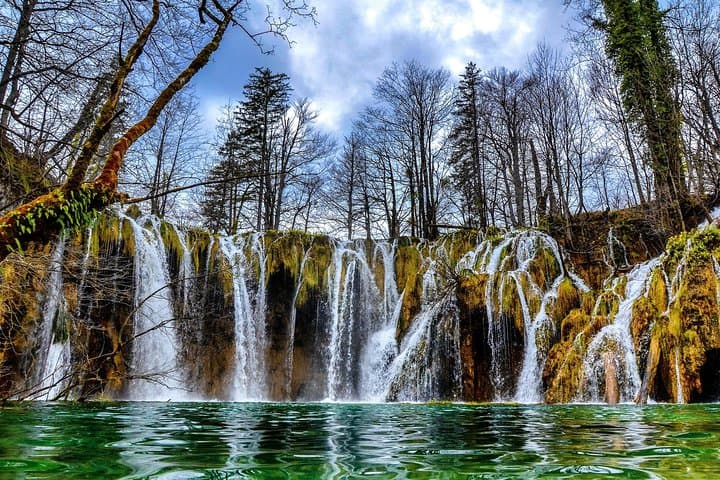

The road leaves Zagreb with a quiet confidence, climbing into karst hills where oak and pine stitch the horizon. By midmorning the air tastes of river spray as you step into Rastoke, a village that lets the Slunjcica river play architect—water daring you to follow channels under wooden mills and past stone houses patched after conflict. Later, the lakes of Plitvice unfold: a string of aquamarine basins held in place by travertine dams, each waterfall pushing the next into motion. You move along wooden boardwalks so close the mist finds the back of your neck.
The road leaves Zagreb with a quiet confidence, climbing into karst hills where oak and pine stitch the horizon. By midmorning the air tastes of river spray as you step into Rastoke, a village that lets the Slunjcica river play architect—water daring you to follow channels under wooden mills and past stone houses patched after conflict. Later, the lakes of Plitvice unfold: a string of aquamarine basins held in place by travertine dams, each waterfall pushing the next into motion. You move along wooden boardwalks so close the mist finds the back of your neck.
This private three-day route threads four UNESCO-labeled stories. Plitvice Lakes National Park is a geological ledger of tufa formations and glacial-water chemistry that created 16 terraced lakes. Southward, Klis Fortress perches above Split, its battered walls recording Venetian sieges, Ottoman pressure, and more recently cinematic fame. Trogir preserves an urban plan with Hellenistic bones and Romanesque façades. Crossing into Bosnia and Herzegovina, Mostar’s Ottoman-era Stari Most arch traces a cultural hinge between east and west before the tour closes in Dubrovnik, the walled city whose marble streets reflect Adriatic light.
Culturally, this route is a lesson in layered borders: Austro-Hungarian, Ottoman, Venetian, Yugoslav and now modern Croatian influences show up in cuisine, language inflections, and architecture. Local guides are more than narrators; they are custodians of small details—where to order a slow-cooked peka, which café keeps real Turkish coffee warm, and which alley will feel empty enough for a long photo.
Practical notes: this is a private, chauffeured itinerary with hotel pickup in Zagreb and drop-off in Dubrovnik. Expect roughly three to five hours driving on days one and three, with more stop-and-walk time at heritage sites; Plitvice alone will take three to four hours to appreciate. Wear sturdy shoes for uneven boardwalks and cobbles, bring a waterproof layer for spray near falls and a light daypack. Carry euros and kuna; Mostar vendors often prefer convertible cash. If you want to skip crowds at Plitvice, request an early start—first light slices through the vapor and clears the paths.
For travelers: pace your days, stay hydrated, and let the private guide tailor time in towns like Split and Trogir. Whether you’re chasing waterfalls, stone ramparts, or a perfect plate of cevapi in Mostar, this three-day corridor gives a compressed, richly textured sample of the Adriatic Balkans with the convenience of a private guide and transport.