THE ADVENTURE COLLECTIVE® · Independent discovery and booking for outdoor travel

A three-day climb up Mount Meru offers raw mountain exposure, wildlife sightings inside Arusha National Park, and a quiet summit sunrise that’s perfect for acclimatizing before Kilimanjaro. This compact route emphasizes steady pacing, experienced guides, and real altitude training without the crowds.
A three-day climb up Mount Meru offers raw mountain exposure, wildlife sightings inside Arusha National Park, and a quiet summit sunrise that’s perfect for acclimatizing before Kilimanjaro. This compact route emphasizes steady pacing, experienced guides, and real altitude training without the crowds.
Daybreak on the lower slopes of Mount Meru feels like the park inhaling. Headlamps bob through eucalyptus and montane forest as a small caravan—guides, porters, and climbers—threads a narrow trail toward the crater above. By the time the sun clears the ridge the forest has thinned to shrubs and the air has that high, thin quality that pulls at the lungs and sharpens every breath. On this three-day climb, the mountain tests patience more than technical skill: steep switchbacks, a late-night push to Rhino Point, and a summit ridge that narrows to a hand-span between inner cliffs and the crater’s outer lip.
Verified experiences and guided adventures in the surrounding area.
Operated by Across Africa Tours LLC · Arusha, Arusha Region
Daybreak on the lower slopes of Mount Meru feels like the park inhaling. Headlamps bob through eucalyptus and montane forest as a small caravan—guides, porters, and climbers—threads a narrow trail toward the crater above. By the time the sun clears the ridge the forest has thinned to shrubs and the air has that high, thin quality that pulls at the lungs and sharpens every breath. On this three-day climb, the mountain tests patience more than technical skill: steep switchbacks, a late-night push to Rhino Point, and a summit ridge that narrows to a hand-span between inner cliffs and the crater’s outer lip.
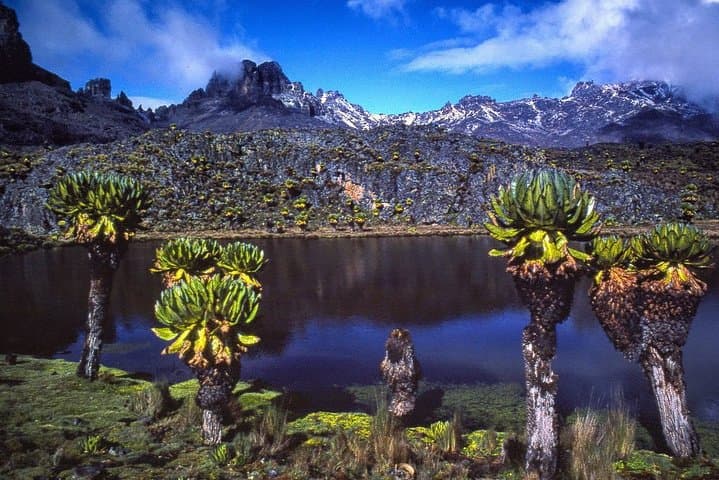
Geology here reads like a layered record: Mount Meru is a massive stratovolcano rising roughly 4,565 meters (14,980 ft), its ash cone and inner crater carved by eruptions and erosion. The route moves from Acacia and montane forest through heathland to the moonlike volcanic flank. Culturally the approach skirts lands long used by the Maasai and WaArusha communities; pastoralists and guides maintain a living knowledge of weather on these slopes, and porters carry not only tents but stories of past climbs that help frame the summit moment.
The trek doubles as practical acclimatization for Kilimanjaro—shorter distances, fewer crowds, and altitude gains that teach you how your body adapts. Wildlife along the lower track is a reminder this is Arusha National Park: colobus monkeys call through canopy gaps, giraffes and zebras graze on plains visible from the road to Momella Gate, and an armed ranger escort is standard policy to protect both climbers and animals.
Practical guidance is straightforward. Walk conservatively on Day 1 to Miriakamba Hut and conserve energy; Day 2’s steep ridge to Saddle Hut rewards measured pacing and gives a chance for a short climb to Little Meru before sunset. Summit day starts around 01:30 a.m.—expect a 10–12 hour push with exposed sections on Rhino and Cobra Points and a narrow final ridge. Dress in layers for a range of microclimates: warm, damp forest; crisp, windy ridgelines; and freezing summit conditions. The operator provides guides, porters, cooked meals, boiled water, and pulse oximeters—still, personal responsibility matters: monitor your breathing, stay hydrated, and speak up early about headaches or dizziness.
Logistics: transfers run from Arusha, permits and armed ranger fees are included, and the climb is private but physically demanding—recommended for fit hikers with prior long-day or altitude experience. The summit can offer a view of Kilimanjaro peering above a sea of cloud; it’s an earned, quiet sunrise that rewards a disciplined climb rather than technical prowess.
challenging.
3 days.
Good aerobic fitness with experience on long hiking days and some prior altitude exposure is recommended
You should be comfortable with 6–8 hour hiking days and have prior long-day hiking experience; the climb is physically demanding but non-technical.
Yes—guides, porters, cook, and salaries are included, along with an armed ranger escort for park safety.
Summit day gains roughly 1,200–1,500 meters from Saddle Hut to the summit, with steep and exposed sections near the top.
Yes—Mt Meru’s altitude profile and successive nights at higher huts help the body adjust before attempting Kilimanjaro.
Permits for Arusha National Park are included; check routine travel vaccinations and consult a travel clinic for altitude and health advice.
Guides carry pulse oximeters and will descend you immediately if symptoms worsen; priority is safety over summit ambitions.
Mount Meru is a stratovolcano whose activity shaped the inner crater and ash cone; the slopes have long been traversed by local Maasai and WaArusha communities.
The climb takes place inside Arusha National Park; follow ranger guidance, stick to trails, and respect wildlife—porters and guides help minimize environmental impact.
Across Africa Tours LLC operates guided outdoor trips and adventures with an emphasis on safety, stewardship, and memorable experiences.
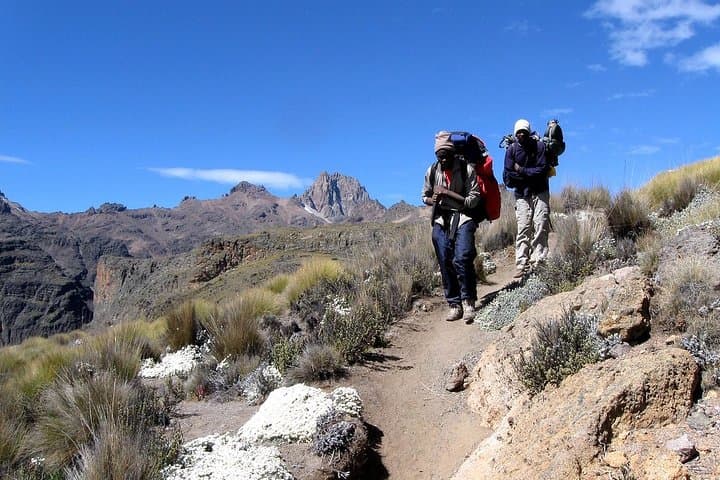
Daybreak on the lower slopes of Mount Meru feels like the park inhaling. Headlamps bob through eucalyptus and montane forest as a small caravan—guides, porters, and climbers—threads a narrow trail toward the crater above. By the time the sun clears the ridge the forest has thinned to shrubs and the air has that high, thin quality that pulls at the lungs and sharpens every breath. On this three-day climb, the mountain tests patience more than technical skill: steep switchbacks, a late-night push to Rhino Point, and a summit ridge that narrows to a hand-span between inner cliffs and the crater’s outer lip.
Daybreak on the lower slopes of Mount Meru feels like the park inhaling. Headlamps bob through eucalyptus and montane forest as a small caravan—guides, porters, and climbers—threads a narrow trail toward the crater above. By the time the sun clears the ridge the forest has thinned to shrubs and the air has that high, thin quality that pulls at the lungs and sharpens every breath. On this three-day climb, the mountain tests patience more than technical skill: steep switchbacks, a late-night push to Rhino Point, and a summit ridge that narrows to a hand-span between inner cliffs and the crater’s outer lip.
Geology here reads like a layered record: Mount Meru is a massive stratovolcano rising roughly 4,565 meters (14,980 ft), its ash cone and inner crater carved by eruptions and erosion. The route moves from Acacia and montane forest through heathland to the moonlike volcanic flank. Culturally the approach skirts lands long used by the Maasai and WaArusha communities; pastoralists and guides maintain a living knowledge of weather on these slopes, and porters carry not only tents but stories of past climbs that help frame the summit moment.
The trek doubles as practical acclimatization for Kilimanjaro—shorter distances, fewer crowds, and altitude gains that teach you how your body adapts. Wildlife along the lower track is a reminder this is Arusha National Park: colobus monkeys call through canopy gaps, giraffes and zebras graze on plains visible from the road to Momella Gate, and an armed ranger escort is standard policy to protect both climbers and animals.
Practical guidance is straightforward. Walk conservatively on Day 1 to Miriakamba Hut and conserve energy; Day 2’s steep ridge to Saddle Hut rewards measured pacing and gives a chance for a short climb to Little Meru before sunset. Summit day starts around 01:30 a.m.—expect a 10–12 hour push with exposed sections on Rhino and Cobra Points and a narrow final ridge. Dress in layers for a range of microclimates: warm, damp forest; crisp, windy ridgelines; and freezing summit conditions. The operator provides guides, porters, cooked meals, boiled water, and pulse oximeters—still, personal responsibility matters: monitor your breathing, stay hydrated, and speak up early about headaches or dizziness.
Logistics: transfers run from Arusha, permits and armed ranger fees are included, and the climb is private but physically demanding—recommended for fit hikers with prior long-day or altitude experience. The summit can offer a view of Kilimanjaro peering above a sea of cloud; it’s an earned, quiet sunrise that rewards a disciplined climb rather than technical prowess.