Morning light from Arusha spills across the windshield as your guide steers toward a horizon stitched with flat-topped acacia and the silhouettes of ancient baobabs.
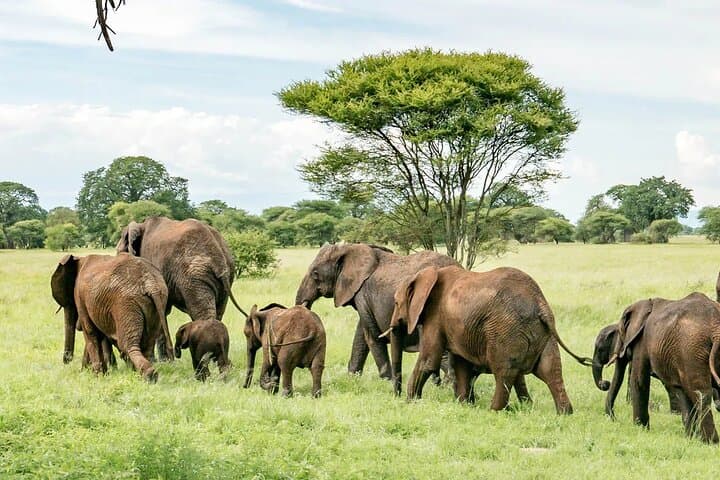
By mid-morning the vehicle hums along sandy tracks inside Tarangire National Park, the river daring you with its seasonal pulse while elephant bulls and family groups move like slow tides across the plain. A picnic lunch in a secluded clearing gives time to listen—crickets, distant calls, the rustle of graceful impala.
Tarangire sits on the eastern flank of the East African Rift; its soils and shallow river systems shape pockets of dense dry-season browse that concentrate wildlife. The park’s namesake river is a lifeline in the dry months, and the landscape has long been part of Maasai grazing routes—cultural threads still visible in the cattle and occasional villages beyond the park boundary.
Expect varied geology: firm laterite track, sandy washouts, and low termite mounds that break the horizon. Wildlife viewing here is practical and immediate—elephant herds often number in the hundreds, predators track those herds, and birdlife explodes in the riverine thickets.
Practical guidance: start early from Arusha to make the most of morning activity; bring binoculars, sun protection, and a light layer for the cooler morning. Animal sightings concentrate in dry months (June–October), but the park’s openness and the picnic stop make this an accessible, full-day introduction to northern Tanzania’s wild heart.