THE ADVENTURE COLLECTIVE® · Independent discovery and booking for outdoor travel

Climb Table Mountain via Platteklip Gorge with a local guide and snacks included. This 2–3 hour one-way route is steep, exposed and immensely rewarding—expect 600–700 m of elevation gain and sweeping views of Cape Town from a quartzite summit.
Climb Table Mountain via Platteklip Gorge with a local guide and snacks included. This 2–3 hour one-way route is steep, exposed and immensely rewarding—expect 600–700 m of elevation gain and sweeping views of Cape Town from a quartzite summit.
The city slips away beneath you the way a map folds: streets compress into a toy grid and the harbor becomes a pinprick. You start before most tourists wake, moving through fynbos-scented air as Cape Town’s low cloud— the famous "tablecloth"—spills and retreats across the summit. The route most guides use is Platteklip Gorge, a direct, unrelenting ascent of exposed sandstone steps that forces a steady, breath-measured rhythm. Local guides lead the way, offering route history, geology tips and steady encouragement, and the promise of snacks at the top is small comfort against the burn in your thighs—but it’s an earned one.
Verified experiences and guided adventures in the surrounding area.
The city slips away beneath you the way a map folds: streets compress into a toy grid and the harbor becomes a pinprick. You start before most tourists wake, moving through fynbos-scented air as Cape Town’s low cloud— the famous "tablecloth"—spills and retreats across the summit. The route most guides use is Platteklip Gorge, a direct, unrelenting ascent of exposed sandstone steps that forces a steady, breath-measured rhythm. Local guides lead the way, offering route history, geology tips and steady encouragement, and the promise of snacks at the top is small comfort against the burn in your thighs—but it’s an earned one.
Table Mountain’s flat crown is an ancient slab of quartzitic sandstone laid down hundreds of millions of years ago and carved by wind and water into the slabs and gullies you climb today. The mountain has been a landmark for mariners and a sacred place for the indigenous peoples of the Cape for generations; on summit cairns like Maclear’s Beacon you can still feel that continuity—modern cables and crowds compressing centuries of human stories into a single lookout.
Geology shows itself in every step: gritstone plates that slope like the pages of a book, resilient underfoot but slick when wet. The flora is the fynbos—low, hardy shrubs and proteas that recover after fire, a fragile ecosystem that asks for light tread and respect. Wildlife here is small and confident: rock hyraxes sun themselves on the slabs and Cape sugarbirds flit through protea blooms.
Practical edge: the advertised time is 2–3 hours one-way. Expect roughly 3 km and 600–700 m of elevation gain from the base to the plateau, on uneven rock and fixed stone steps. The tour collects from Cape Town hotels and hostels; snacks are included and private walks can be arranged. The price excludes cable car tickets—if you plan to descend by cableway, book in advance and check operating status; when the"tablecloth" comes in the cable runs can stop.
Plan to start early to avoid wind and midday heat. Bring at least 2 liters of water, a windproof layer (weather can change on the summit in minutes), and shoes with solid grip—this is a hike that punishes flimsy soles. If you’re time-limited, arrange a one-way hike and cable-car descent; if you want a quieter route, ask guides about alternate descents like Kasteelspoort.
On a clear day the summit rewards you with a 360-degree panorama: the city, the sweep of False Bay, and the serrated skyline of the Twelve Apostles. The climb is straightforward but honest: steep, exposed, and brilliant—an essential Cape Town day that teaches you how to read the mountain as much as it tests your legs.
challenging.
2–3 hours (one-way).
Good cardiovascular fitness and strong legs; comfortable with sustained uphill hiking and short scrambling sections
No—the tour price excludes the Table Mountain Aerial Cableway ticket; if you want to descend by cable car, purchase tickets separately and check the cableway’s operating status before your hike.
The route is steep with sustained stone steps and short, exposed sections; it’s more a fitness test than a technical climb, so no ropes or special gear are needed.
Yes—guides on this tour are local, familiar with routes, natural history, and weather patterns, and they provide bottled water, snacks, and route information.
Older children in good fitness can manage the ascent with frequent breaks; inexperienced hikers should evaluate fitness and consider a guide-led pace or a cable-car descent option.
Descend promptly if conditions deteriorate; guides monitor weather and will reroute or end the walk early if safety is a concern—always carry layers and waterproof protection.
Yes—the tour includes pickups from hotels, lodges, and backpacker hostels in Cape Town; confirm your pickup point when booking.
Table Mountain is a geologic landmark of quartzitic sandstone hundreds of millions of years old and has long been an important site for indigenous Khoikhoi communities and later sailors navigating the Cape.
The mountain’s fynbos biome is fire-adapted but fragile—stay on trails, pack out trash, and avoid disturbing plant life to protect this UNESCO-important environment.
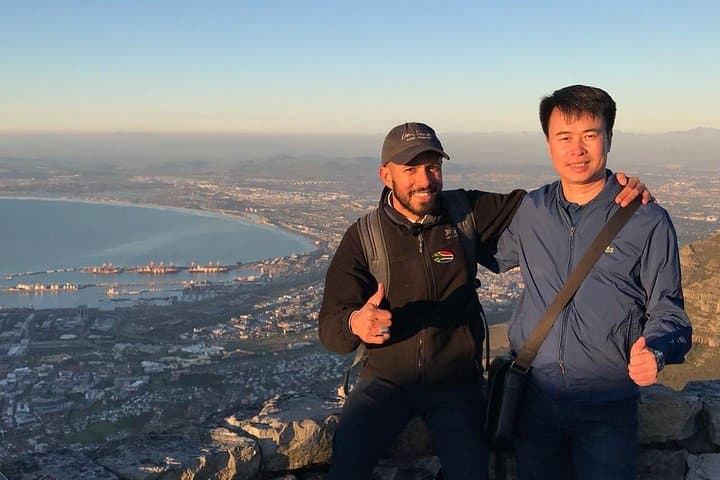
The city slips away beneath you the way a map folds: streets compress into a toy grid and the harbor becomes a pinprick. You start before most tourists wake, moving through fynbos-scented air as Cape Town’s low cloud— the famous "tablecloth"—spills and retreats across the summit. The route most guides use is Platteklip Gorge, a direct, unrelenting ascent of exposed sandstone steps that forces a steady, breath-measured rhythm. Local guides lead the way, offering route history, geology tips and steady encouragement, and the promise of snacks at the top is small comfort against the burn in your thighs—but it’s an earned one.
The city slips away beneath you the way a map folds: streets compress into a toy grid and the harbor becomes a pinprick. You start before most tourists wake, moving through fynbos-scented air as Cape Town’s low cloud— the famous "tablecloth"—spills and retreats across the summit. The route most guides use is Platteklip Gorge, a direct, unrelenting ascent of exposed sandstone steps that forces a steady, breath-measured rhythm. Local guides lead the way, offering route history, geology tips and steady encouragement, and the promise of snacks at the top is small comfort against the burn in your thighs—but it’s an earned one.
Table Mountain’s flat crown is an ancient slab of quartzitic sandstone laid down hundreds of millions of years ago and carved by wind and water into the slabs and gullies you climb today. The mountain has been a landmark for mariners and a sacred place for the indigenous peoples of the Cape for generations; on summit cairns like Maclear’s Beacon you can still feel that continuity—modern cables and crowds compressing centuries of human stories into a single lookout.
Geology shows itself in every step: gritstone plates that slope like the pages of a book, resilient underfoot but slick when wet. The flora is the fynbos—low, hardy shrubs and proteas that recover after fire, a fragile ecosystem that asks for light tread and respect. Wildlife here is small and confident: rock hyraxes sun themselves on the slabs and Cape sugarbirds flit through protea blooms.
Practical edge: the advertised time is 2–3 hours one-way. Expect roughly 3 km and 600–700 m of elevation gain from the base to the plateau, on uneven rock and fixed stone steps. The tour collects from Cape Town hotels and hostels; snacks are included and private walks can be arranged. The price excludes cable car tickets—if you plan to descend by cableway, book in advance and check operating status; when the"tablecloth" comes in the cable runs can stop.
Plan to start early to avoid wind and midday heat. Bring at least 2 liters of water, a windproof layer (weather can change on the summit in minutes), and shoes with solid grip—this is a hike that punishes flimsy soles. If you’re time-limited, arrange a one-way hike and cable-car descent; if you want a quieter route, ask guides about alternate descents like Kasteelspoort.
On a clear day the summit rewards you with a 360-degree panorama: the city, the sweep of False Bay, and the serrated skyline of the Twelve Apostles. The climb is straightforward but honest: steep, exposed, and brilliant—an essential Cape Town day that teaches you how to read the mountain as much as it tests your legs.