THE ADVENTURE COLLECTIVE® · Independent discovery and booking for outdoor travel

A guide-led ascent of Table Mountain that packs steep sandstone steps, fynbos-lined gullies and sweeping coastal views into a brisk four-hour outing. Perfect for fit travelers who want the summit without the navigation stress—descend on foot or buy a one-way cable car ticket.
A guide-led ascent of Table Mountain that packs steep sandstone steps, fynbos-lined gullies and sweeping coastal views into a brisk four-hour outing. Perfect for fit travelers who want the summit without the navigation stress—descend on foot or buy a one-way cable car ticket.
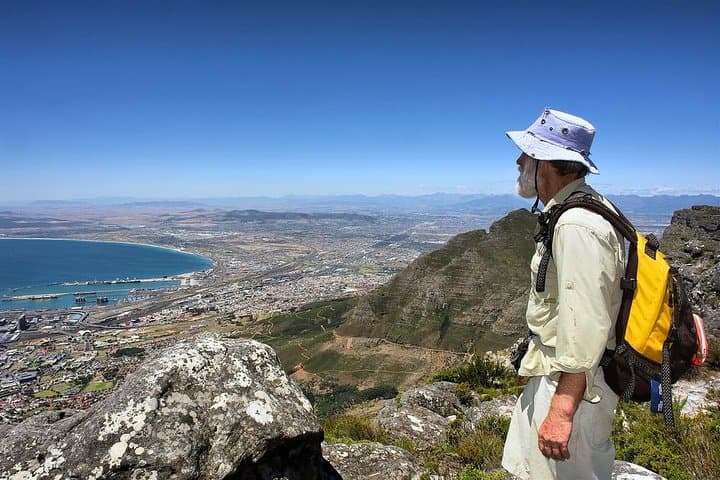
You step out of the van into a dry, bracing wind that seems determined to test every layer you brought. The city hums below — a scatter of white buildings, the harbour, boats bobbing like punctuation — and above, Table Mountain sits flat-headed and unapologetic, its plateau cut utterly different from the coastal slopes around it. Your guide points to the narrow throat of rock that will become your staircase; the mountain answers with the faint scrape of loose stone and the occasional call of a sunbird.
Verified experiences and guided adventures in the surrounding area.
Operated by Cullinan Guided Journeys · Cape Town, Western Cape
You step out of the van into a dry, bracing wind that seems determined to test every layer you brought. The city hums below — a scatter of white buildings, the harbour, boats bobbing like punctuation — and above, Table Mountain sits flat-headed and unapologetic, its plateau cut utterly different from the coastal slopes around it. Your guide points to the narrow throat of rock that will become your staircase; the mountain answers with the faint scrape of loose stone and the occasional call of a sunbird.
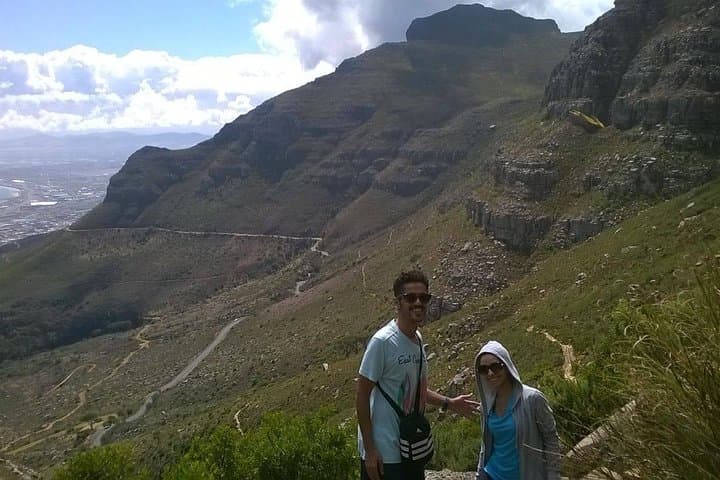
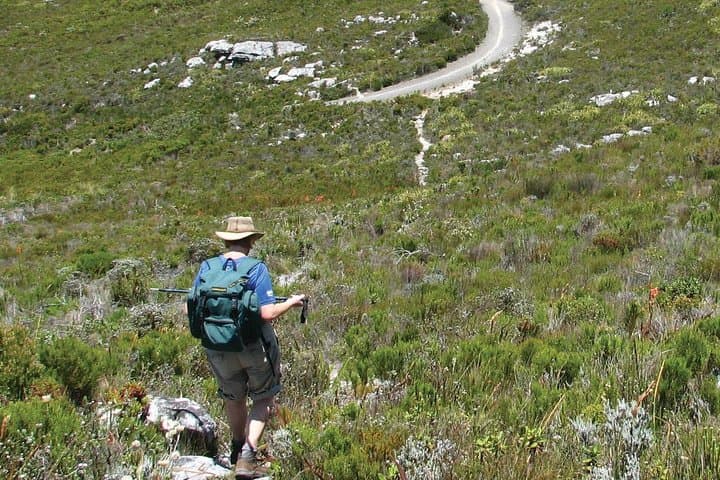
The hike to Table Mountain’s summit cuts through vegetation found nowhere else on Earth: fynbos. This low, woody shrubland evolved on impoverished soils and frequent fires, producing a riot of proteas, ericas and restios whose shapes make sense only in the context of Cape Town’s unique climate. Geologically, the mountain is an ancient sandstone block — Table Mountain Sandstone — raised by faulting and sculpted by wind and rain into steep gullies and a broad summit scarp that provides the dramatic vantage over the Cape Peninsula.
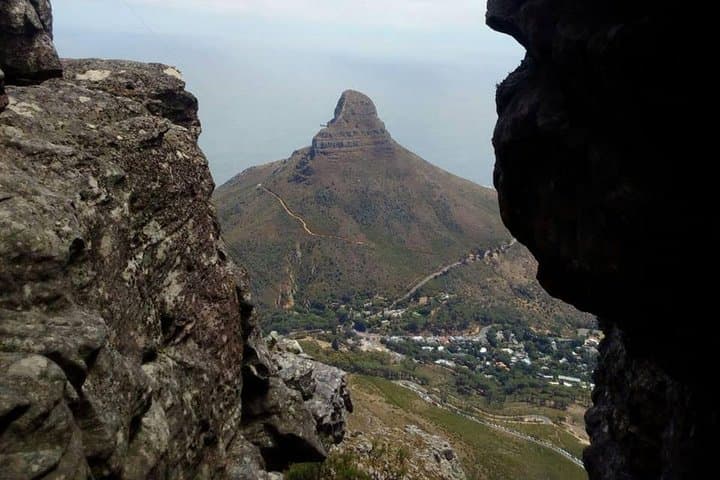
The route commonly travelled on guided tours follows a direct ascent that gains roughly 700–800 metres over 2.5–3 kilometres (expect steep stone steps, short scrambles and rocky path underfoot). The reward is immediate: panoramic views of the Cape of Good Hope and the long sweep of the Twelve Apostles range. Your guide will narrate snippets of history — Khoikhoi paths that predate colonial maps, early surveyors scribbling lines from the top, and the cable car’s early 20th-century engineering that later changed how locals and visitors accessed the plateau.
Practical edge: this is a four-hour outing that requires a moderate level of fitness. Trails are uneven; the ascent often takes 2–3 hours depending on pace and stops. Weather flips quickly — the summit can be several degrees colder and windier than the city — and the hike runs only when conditions are safe. If legs are spent on the descent, a one-way cable car ticket (buyer’s expense) offers a fast, scenic exit.
Tips for planning: wear sturdy hiking shoes with good traction, carry 1.5–2 litres of water, sun protection and a windproof layer. Start early in summer to avoid midday heat, and check cable car maintenance windows (the lift may close annually). Guides manage pace and point out little treasures — unusual fynbos, hidden streams and the best photo ridges — but be prepared to move at a steady, sometimes brisk climb. At the top, let the plateau breathe and take the long view: the city, the ocean, the mountain itself — each a part of the exercise that is Table Mountain.
moderate.
4 hours.
Suitable for hikers with moderate fitness who can sustain steady uphill walking for 2–3 hours and manage uneven terrain on descent.
The route is rated moderate: steep sections and several hundred metres of elevation gain require a steady pace and basic fitness, but no technical climbing skills.
Yes — guides usually allow you to buy a one-way cable car ticket at your own expense if you don’t want to descend on foot; queues vary by season.
Tours operate only in safe conditions; organizers will cancel or reschedule if high winds, heavy cloud or rain make the trail unsafe.
Hotel pickup and drop-off from central Cape Town hotels is typically included—check confirmation messages for specific pickup times.
Not recommended for pregnant travelers or those with spinal/serious heart conditions; suitability for children depends on fitness and ability to manage steep trails.
No special permit is required for the guided hike, but access is managed by Table Mountain National Park and standard park rules apply.
Table Mountain has been a navigational landmark for centuries and holds cultural significance for local Khoikhoi peoples; the cableway (opened in 1929 with later upgrades) democratized access to the plateau.
Table Mountain is part of a protected national park and UNESCO-designated Cape Floristic Region; stick to paths to protect fragile fynbos and avoid introducing foreign seeds or litter.
Cullinan Guided Journeys operates guided outdoor trips and adventures with an emphasis on safety, stewardship, and memorable experiences.
You step out of the van into a dry, bracing wind that seems determined to test every layer you brought. The city hums below — a scatter of white buildings, the harbour, boats bobbing like punctuation — and above, Table Mountain sits flat-headed and unapologetic, its plateau cut utterly different from the coastal slopes around it. Your guide points to the narrow throat of rock that will become your staircase; the mountain answers with the faint scrape of loose stone and the occasional call of a sunbird.
You step out of the van into a dry, bracing wind that seems determined to test every layer you brought. The city hums below — a scatter of white buildings, the harbour, boats bobbing like punctuation — and above, Table Mountain sits flat-headed and unapologetic, its plateau cut utterly different from the coastal slopes around it. Your guide points to the narrow throat of rock that will become your staircase; the mountain answers with the faint scrape of loose stone and the occasional call of a sunbird.
The hike to Table Mountain’s summit cuts through vegetation found nowhere else on Earth: fynbos. This low, woody shrubland evolved on impoverished soils and frequent fires, producing a riot of proteas, ericas and restios whose shapes make sense only in the context of Cape Town’s unique climate. Geologically, the mountain is an ancient sandstone block — Table Mountain Sandstone — raised by faulting and sculpted by wind and rain into steep gullies and a broad summit scarp that provides the dramatic vantage over the Cape Peninsula.
The route commonly travelled on guided tours follows a direct ascent that gains roughly 700–800 metres over 2.5–3 kilometres (expect steep stone steps, short scrambles and rocky path underfoot). The reward is immediate: panoramic views of the Cape of Good Hope and the long sweep of the Twelve Apostles range. Your guide will narrate snippets of history — Khoikhoi paths that predate colonial maps, early surveyors scribbling lines from the top, and the cable car’s early 20th-century engineering that later changed how locals and visitors accessed the plateau.
Practical edge: this is a four-hour outing that requires a moderate level of fitness. Trails are uneven; the ascent often takes 2–3 hours depending on pace and stops. Weather flips quickly — the summit can be several degrees colder and windier than the city — and the hike runs only when conditions are safe. If legs are spent on the descent, a one-way cable car ticket (buyer’s expense) offers a fast, scenic exit.
Tips for planning: wear sturdy hiking shoes with good traction, carry 1.5–2 litres of water, sun protection and a windproof layer. Start early in summer to avoid midday heat, and check cable car maintenance windows (the lift may close annually). Guides manage pace and point out little treasures — unusual fynbos, hidden streams and the best photo ridges — but be prepared to move at a steady, sometimes brisk climb. At the top, let the plateau breathe and take the long view: the city, the ocean, the mountain itself — each a part of the exercise that is Table Mountain.