THE ADVENTURE COLLECTIVE® · Independent discovery and booking for outdoor travel

Choose a guided hike or trail run on Table Mountain and trade city streets for sandstone steps, fynbos-scented gullies, and sweeping ocean views. Guides tailor routes from Lions Head to Platteklip Gorge for hikers and runners of varying fitness.
Choose a guided hike or trail run on Table Mountain and trade city streets for sandstone steps, fynbos-scented gullies, and sweeping ocean views. Guides tailor routes from Lions Head to Platteklip Gorge for hikers and runners of varying fitness.
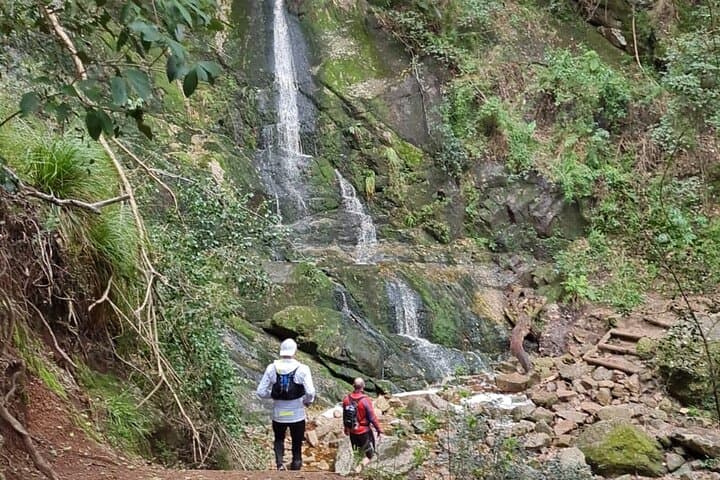
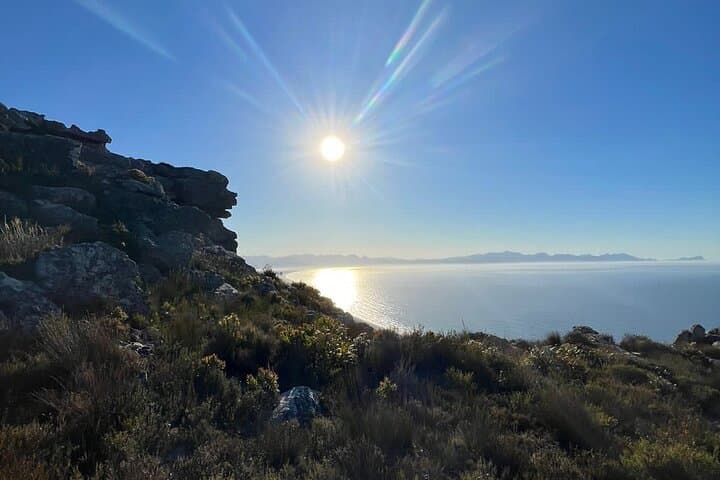
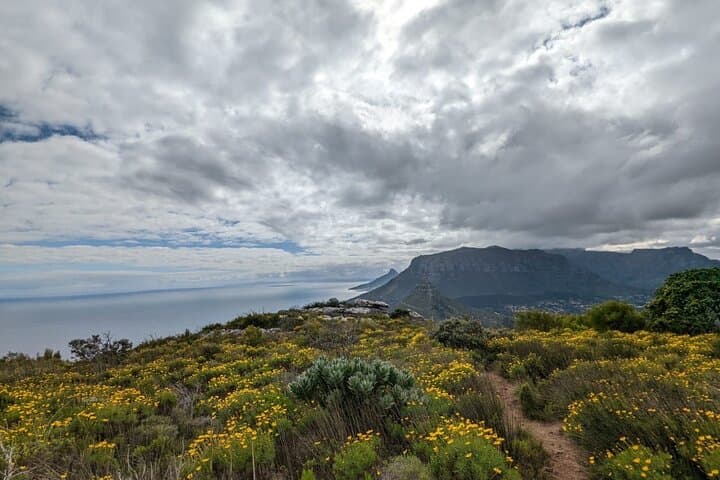
The day opens at Vida-e Caffè by the Cableway entrance, where the city already smells like strong coffee and salt. From that plaza the mountain waits with flat top and jagged edges — an invitation that changes tone with every trail. On a guided hike or trail run here, the group disperses into a landscape that alternately holds you close in fynbos-lined gullies and throws you open to ocean-broad panoramas that make the city below look like a pocket map.
Verified experiences and guided adventures in the surrounding area.
Operated by Nyati-X · Cape Town, Western Cape
The day opens at Vida-e Caffè by the Cableway entrance, where the city already smells like strong coffee and salt. From that plaza the mountain waits with flat top and jagged edges — an invitation that changes tone with every trail. On a guided hike or trail run here, the group disperses into a landscape that alternately holds you close in fynbos-lined gullies and throws you open to ocean-broad panoramas that make the city below look like a pocket map.
Guides tailor each outing — Lions Head for a beginning runner’s rhythm and stedfast ridgeline views; Platteklip Gorge for the classic, sweat-earned ascent; Maclear’s Beacon for the summit’s authoritative view. Geologically, Table Mountain is sandstone — hard, erosion-shaped slabs laid over Cape Granite — which explains the steep steps, sharp rock edges, and the way water carves clean gullies in winter. The mountain has been a landmark for Khoikhoi and European sailors for centuries; its exposed plateau acted as a navigational clock for passing ships and a sacred high place for early inhabitants.
Culturally, the mountain is woven into Cape Town’s identity: cablecars hum past hikers tucked into windbreakers, while guides share local tales — from shipwrecks around the Cape to the resilience of conservation groups preserving endemic fynbos. Wildlife is discreet but present: dassies bask on sun-warmed boulders and rock hyraxes chatter from ledges; raptors use the thermals and sometimes wheel overhead.
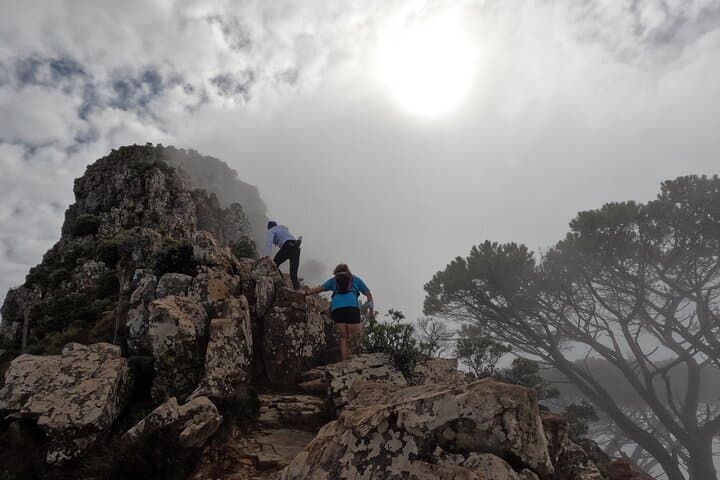
Practically, routes vary: expect 5–12 km total distance depending on objectives, with cumulative elevation gains commonly between 300–700 m. Terrain alternates between packed stone steps, loose scree, and short scrambling sections on harder routes. Guides will match pace to ability — a half-day hike or a longer summit push — and typically include tea or coffee before/after. Meeting at the Cableway plaza makes public transport and taxis straightforward; confirm meeting details with the operator.
Prepare for wind and rapid weather shifts: layers are non-negotiable. Hydrate early and carry at least 1–2 liters per person for longer outings; trail runners should stash a lightweight shell and socks in case of wet rock. Footwear should have confident grip — the sandstone rewards friction but punishes slippage.
Timing matters: early starts avoid crowds and afternoon winds, while golden-hour returns light the city below. Whether you move on two feet or four, guided outings here are equal parts education and exertion — a way to meet the mountain on terms that leave you a little more aware of Cape Town’s wild edge.
moderate.
5 hours.
Moderate fitness required—good cardiovascular endurance and leg strength for sustained uphill sections
Platteklip is steep and direct—expect continuous uphill steps and 400–700 m of elevation gain depending on the route; it’s strenuous but technically simple.
No; guides tailor pace and route to ability. Trail running options are offered to fit fitness and experience levels.
Yes; the Cableway plaza is well served by buses and taxis, and it’s easy to reach from central Cape Town.
Operators commonly cancel if conditions are unsafe; you can usually reschedule or get a refund if cancelled 24+ hours before departure.
Policies vary; check operator age and fitness requirements—most routes require a moderate fitness level and may not be suitable for very young children.
Guided commercial activities typically include park access logistics; independent hikers should check SANParks rules and pay any entrance fees.
Table Mountain has been a maritime landmark and cultural reference point for Khoikhoi and colonial sailors; routes were used historically for grazing and access to freshwater springs.
Table Mountain National Park protects endemic fynbos and rare plants; stay on trails and avoid picking plants—erosion and invasive species are ongoing concerns.
Nyati-X operates guided outdoor trips and adventures with an emphasis on safety, stewardship, and memorable experiences.
The day opens at Vida-e Caffè by the Cableway entrance, where the city already smells like strong coffee and salt. From that plaza the mountain waits with flat top and jagged edges — an invitation that changes tone with every trail. On a guided hike or trail run here, the group disperses into a landscape that alternately holds you close in fynbos-lined gullies and throws you open to ocean-broad panoramas that make the city below look like a pocket map.
The day opens at Vida-e Caffè by the Cableway entrance, where the city already smells like strong coffee and salt. From that plaza the mountain waits with flat top and jagged edges — an invitation that changes tone with every trail. On a guided hike or trail run here, the group disperses into a landscape that alternately holds you close in fynbos-lined gullies and throws you open to ocean-broad panoramas that make the city below look like a pocket map.
Guides tailor each outing — Lions Head for a beginning runner’s rhythm and stedfast ridgeline views; Platteklip Gorge for the classic, sweat-earned ascent; Maclear’s Beacon for the summit’s authoritative view. Geologically, Table Mountain is sandstone — hard, erosion-shaped slabs laid over Cape Granite — which explains the steep steps, sharp rock edges, and the way water carves clean gullies in winter. The mountain has been a landmark for Khoikhoi and European sailors for centuries; its exposed plateau acted as a navigational clock for passing ships and a sacred high place for early inhabitants.
Culturally, the mountain is woven into Cape Town’s identity: cablecars hum past hikers tucked into windbreakers, while guides share local tales — from shipwrecks around the Cape to the resilience of conservation groups preserving endemic fynbos. Wildlife is discreet but present: dassies bask on sun-warmed boulders and rock hyraxes chatter from ledges; raptors use the thermals and sometimes wheel overhead.
Practically, routes vary: expect 5–12 km total distance depending on objectives, with cumulative elevation gains commonly between 300–700 m. Terrain alternates between packed stone steps, loose scree, and short scrambling sections on harder routes. Guides will match pace to ability — a half-day hike or a longer summit push — and typically include tea or coffee before/after. Meeting at the Cableway plaza makes public transport and taxis straightforward; confirm meeting details with the operator.
Prepare for wind and rapid weather shifts: layers are non-negotiable. Hydrate early and carry at least 1–2 liters per person for longer outings; trail runners should stash a lightweight shell and socks in case of wet rock. Footwear should have confident grip — the sandstone rewards friction but punishes slippage.
Timing matters: early starts avoid crowds and afternoon winds, while golden-hour returns light the city below. Whether you move on two feet or four, guided outings here are equal parts education and exertion — a way to meet the mountain on terms that leave you a little more aware of Cape Town’s wild edge.