THE ADVENTURE COLLECTIVE® · Independent discovery and booking for outdoor travel

In five hours this private guided tour pairs the sweeping panoramas of Table Mountain with a walking shorthand for Cape Town’s layered history—from the Castle of Good Hope to the colorful streets of Bo‑Kaap. Perfect for first-timers who want context, views, and a local guide’s insights.
In five hours this private guided tour pairs the sweeping panoramas of Table Mountain with a walking shorthand for Cape Town’s layered history—from the Castle of Good Hope to the colorful streets of Bo‑Kaap. Perfect for first-timers who want context, views, and a local guide’s insights.
Stand at the edge of the cable car platform and Cape Town falls away in a spread of roofs and harbor water—streets threading like veins toward the distant Atlantic. Salt wind tugs at a jacket, the city’s noise drops to a murmur, and the flat top of Table Mountain lays itself open: wide slabs of sandstone, pockets of low fynbos, and a view that makes the city readable at a single glance.
Verified experiences and guided adventures in the surrounding area.
Operated by Cape Archives Tours · Cape Town, Western Cape
Stand at the edge of the cable car platform and Cape Town falls away in a spread of roofs and harbor water—streets threading like veins toward the distant Atlantic. Salt wind tugs at a jacket, the city’s noise drops to a murmur, and the flat top of Table Mountain lays itself open: wide slabs of sandstone, pockets of low fynbos, and a view that makes the city readable at a single glance.
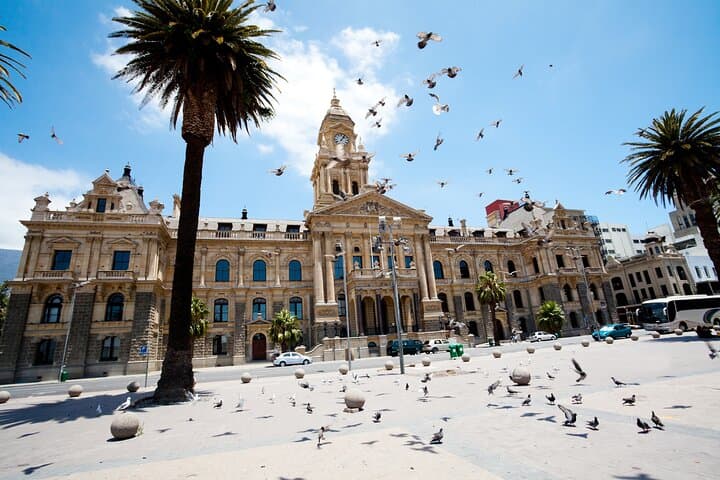
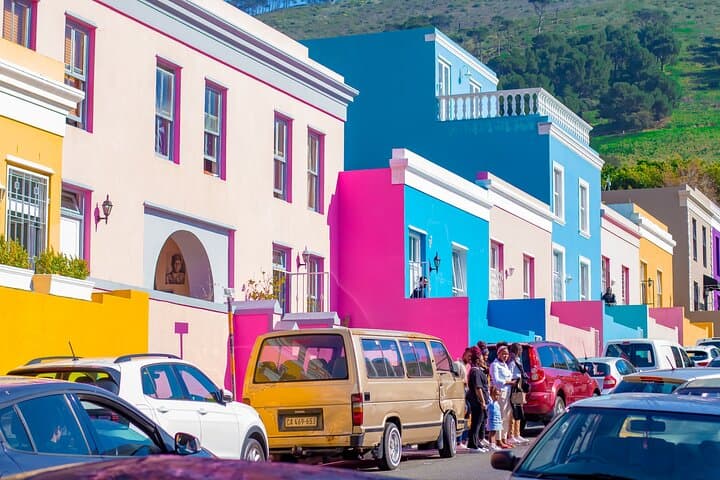
This half-day private tour compresses two very different Cape Towns into one morning: the urban chapters carved by colonial trade, politics and migration, and the raw, botanical oddity of Table Mountain. The Castle of Good Hope and Church Square recall the 17th-century Dutch East India Company, when ships stopped here between Europe and Asia; District Six’s museum keeps the memory of forcible removals alive. Bo-Kaap’s painted houses and mosque-lined streets speak to the Cape Malay community—aromatic kitchens and multi-generational customs that survived displacement and now shape contemporary Cape culture.
Geologically, Table Mountain is an island of quartzitic sandstone sitting atop older shale—the erosion-resistant cap that created the flat table. Its soils host fynbos, an endemic floral kingdom famed for proteas and restios; it’s the reason botanists and photographers find the plateau endlessly rewarding. The noon gun at Lion Battery still punctuates the city’s rhythm, a reminder that Cape Town’s public rituals often double as living history.
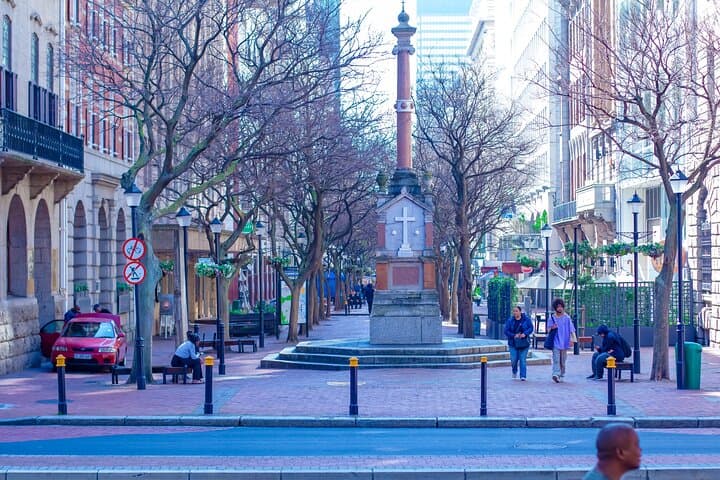
Practically, the tour is compact but unhurried. A private vehicle shuttles through Adderley Street and Saint George’s Mall, stopping to walk the Company’s Garden and drop into Greenmarket Square for crafts and local snacks. Table Mountain’s aerial cableway includes tickets; when wind shuts the cableway the operator shifts plans so the city leg lengthens and guests can use the cableway tickets another day or request a refund. Guides weave local anecdotes—about the slave tree site, about Jan Hofmeyr’s bronze—and point out architectural details that casual passersby miss.
For travelers: arrive hydrated and with steady footwear for cobbled streets and the plateau’s irregular rock. Morning departures dodge afternoon cape winds that often make the cableway unreliable, so early bookings increase the odds of ascending. Ask your guide about a quick stop for a koesister or curry pie in Bo-Kaap—food is as much a cultural primer as any museum.
This is a tour for people who want context with their panorama: botanical oddities, colonial layers, and neighborhoods that keep stories alive. In five hours it gives both the sweep of the mountain and the close-up of a city still arranging its past into public memory.
moderate.
5–6 hours.
Suitable for most fitness levels; expect short urban walks and light scrambling on the plateau
If the cableway is suspended the guide will extend the city portion of the tour; you can keep the cableway tickets for another day or request a refund for the tickets.
Yes—private pickup within the Cape Town 10 km radius is provided; specify your pickup point when booking.
The tour notes say infants and small children can use strollers; however, the plateau area has uneven ground, so carrying children may be necessary in spots.
Table Mountain tickets, District Six museum and Castle of Good Hope fees listed in inclusions are covered by the tour.
Most guides speak English; request language preferences when booking and the operator will try to accommodate.
Tipping is customary for guides in South Africa; 10–15% of the tour price is a typical guideline depending on service.
Cape Town grew as a refreshment station for the Dutch East India Company in the 1600s; District Six and Church Square reflect the city’s complex history of migration and forced removals.
Table Mountain’s fynbos is globally significant and fragile—stay on marked paths to avoid trampling endemic plants and reduce spread of invasive species by cleaning shoes.
Cape Archives Tours operates guided outdoor trips and adventures with an emphasis on safety, stewardship, and memorable experiences.
Stand at the edge of the cable car platform and Cape Town falls away in a spread of roofs and harbor water—streets threading like veins toward the distant Atlantic. Salt wind tugs at a jacket, the city’s noise drops to a murmur, and the flat top of Table Mountain lays itself open: wide slabs of sandstone, pockets of low fynbos, and a view that makes the city readable at a single glance.
Stand at the edge of the cable car platform and Cape Town falls away in a spread of roofs and harbor water—streets threading like veins toward the distant Atlantic. Salt wind tugs at a jacket, the city’s noise drops to a murmur, and the flat top of Table Mountain lays itself open: wide slabs of sandstone, pockets of low fynbos, and a view that makes the city readable at a single glance.
This half-day private tour compresses two very different Cape Towns into one morning: the urban chapters carved by colonial trade, politics and migration, and the raw, botanical oddity of Table Mountain. The Castle of Good Hope and Church Square recall the 17th-century Dutch East India Company, when ships stopped here between Europe and Asia; District Six’s museum keeps the memory of forcible removals alive. Bo-Kaap’s painted houses and mosque-lined streets speak to the Cape Malay community—aromatic kitchens and multi-generational customs that survived displacement and now shape contemporary Cape culture.
Geologically, Table Mountain is an island of quartzitic sandstone sitting atop older shale—the erosion-resistant cap that created the flat table. Its soils host fynbos, an endemic floral kingdom famed for proteas and restios; it’s the reason botanists and photographers find the plateau endlessly rewarding. The noon gun at Lion Battery still punctuates the city’s rhythm, a reminder that Cape Town’s public rituals often double as living history.
Practically, the tour is compact but unhurried. A private vehicle shuttles through Adderley Street and Saint George’s Mall, stopping to walk the Company’s Garden and drop into Greenmarket Square for crafts and local snacks. Table Mountain’s aerial cableway includes tickets; when wind shuts the cableway the operator shifts plans so the city leg lengthens and guests can use the cableway tickets another day or request a refund. Guides weave local anecdotes—about the slave tree site, about Jan Hofmeyr’s bronze—and point out architectural details that casual passersby miss.
For travelers: arrive hydrated and with steady footwear for cobbled streets and the plateau’s irregular rock. Morning departures dodge afternoon cape winds that often make the cableway unreliable, so early bookings increase the odds of ascending. Ask your guide about a quick stop for a koesister or curry pie in Bo-Kaap—food is as much a cultural primer as any museum.
This is a tour for people who want context with their panorama: botanical oddities, colonial layers, and neighborhoods that keep stories alive. In five hours it gives both the sweep of the mountain and the close-up of a city still arranging its past into public memory.