THE ADVENTURE COLLECTIVE® · Independent discovery and booking for outdoor travel

Covering Table Mountain, Bo‑Kaap, Chapman’s Peak, Boulders Beach penguins and Cape Point in one day, this small-group tour is a compact, scenic primer on the Cape Peninsula. Expect a long but manageable day of cable‑car vistas, coastal drives, and close-up wildlife viewing.
Covering Table Mountain, Bo‑Kaap, Chapman’s Peak, Boulders Beach penguins and Cape Point in one day, this small-group tour is a compact, scenic primer on the Cape Peninsula. Expect a long but manageable day of cable‑car vistas, coastal drives, and close-up wildlife viewing.
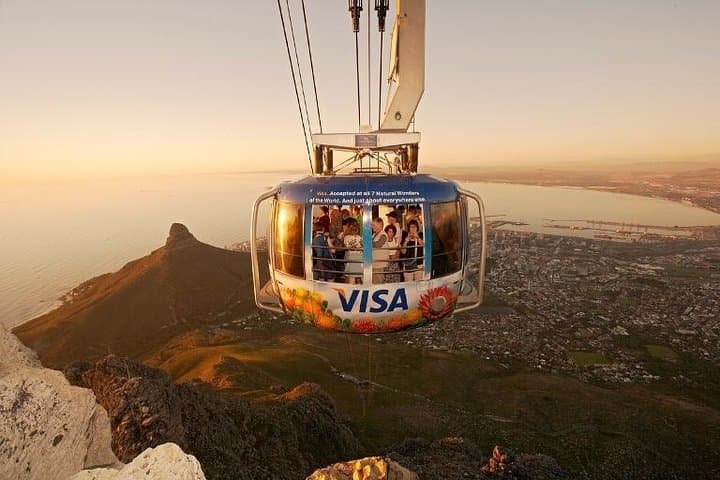
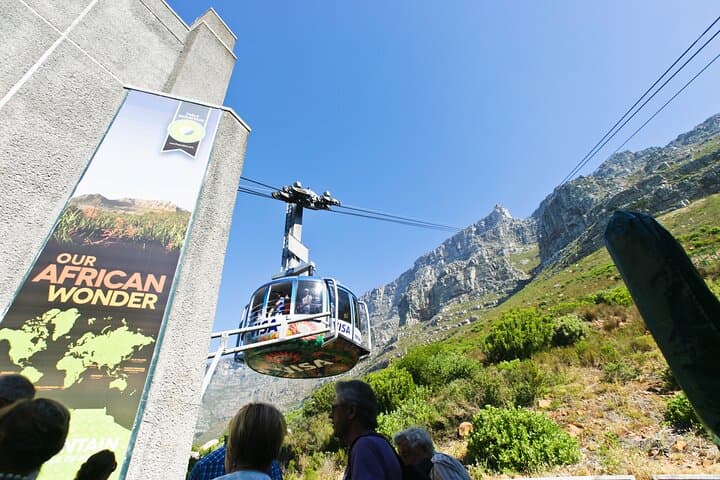
The day begins before most of the city has opened its shutters: a luxury minibus slips through Lower Long Street, past early tram workers and coffee stalls, and climbs toward the flat crown of Table Mountain. By the time the cable car rises through cool mist, the Atlantic has already started to sharpen—waves daring the cliffs below and wind pushing the scrub into patterns only locals can read.
Verified experiences and guided adventures in the surrounding area.
Operated by Beyond Africa Safaris (Pty)Ltd · Cape Town, Western Cape
The day begins before most of the city has opened its shutters: a luxury minibus slips through Lower Long Street, past early tram workers and coffee stalls, and climbs toward the flat crown of Table Mountain. By the time the cable car rises through cool mist, the Atlantic has already started to sharpen—waves daring the cliffs below and wind pushing the scrub into patterns only locals can read.
This is a curated sweep of the Cape Peninsula in one day—an itinerary that stitches Bo-Kaap’s painted terraces to the postcard drama of Chapman’s Peak and the lonely promontory at Cape Point. Table Mountain’s sandstone flanks are older than the city itself: wind-scoured plates of Table Mountain Sandstone that survived tectonic uplift and the slow carving of sea. The mountain’s flat summit hosts fynbos—small, hearty shrubs adapted to fire and salt spray—and it acts like a rooftop observatory for Robben Island, the city bowl, and the meet of Atlantic and Indian Oceans.
Bo-Kaap, with its bright façades and mosque minarets, offers a cultural detour: descendants of Malay slaves and exiles shaped the neighborhood’s culinary and musical traditions while resisting colonial edicts—its streets are a local archive of identity. Farther along the peninsula, Chapman’s Peak clings to the coastline in a 114-turn succession of viewpoints; every bend reveals a new angle on raw coastal geology and ocean foam biting at the base of the cliffs.
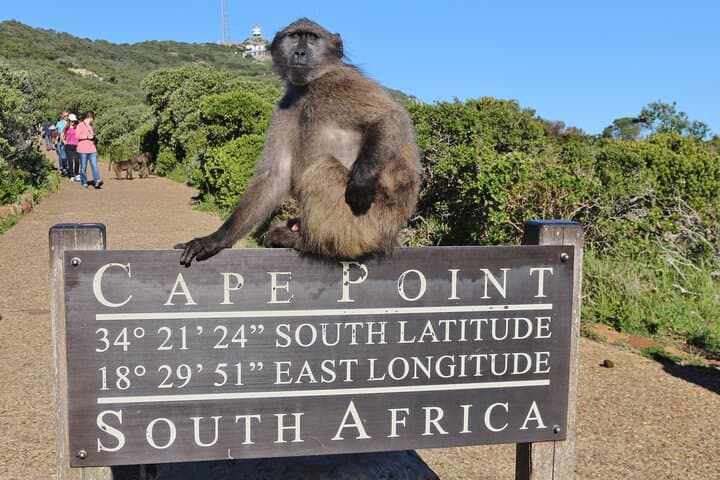
Boulders Beach introduces a different cast: African penguins—endangered and oddly charismatic—waddle among giant granite boulders, while guides explain decades-long conservation work to protect their colonies. At Cape Point, maritime history is tangible: the region’s reefs and foggy headlands forced European explorers to recalibrate routes around the cape, and lighthouses stand as reminders of those hazardous passages.
Practical guidance is straightforward. This is a long, full-day tour—expect roughly 10 hours with multiple short walks, one cable car ascent (tickets not included), and potential funicular rides at Cape Point. Comfortable walking shoes and layers are non-negotiable; weather can shift from crisp and breezy to strong sun in a matter of minutes. Buy the Table Mountain cable car ticket in advance during peak season to avoid long waits. Bring cash for small purchases and funicular fares if machines are offline during load shedding. Photography opportunities are constant—early morning light on the mountain and late-afternoon cliffs are the most rewarding—and the guides keep schedules tight so the day covers every highlight without feeling rushed.
For travelers wanting a practical, single-day sweep of the Cape’s geology, wildlife, and cultural neighborhoods, this small-group tour is an efficient, scenic primer—one that leaves room to return for longer, quieter exploration.
easy.
10 hours.
Light to moderate stamina—able to manage short boardwalk strolls and a brief climb to the lighthouse; not technical.
No—Table Mountain cable car tickets and Cape Point funicular fares are not included; you can buy them online in advance or on-site where available.
Yes—walkways bring you near the colony for observation; touching or feeding penguins is prohibited to protect them.
Pickups are scheduled between 7:00–8:00 AM within a 10km radius of the city center; exact times are sent the evening before.
Yes—the tour is family-friendly and suitable for most fitness levels; some sites have steps and uneven surfaces, and funicular options exist at Cape Point for limited mobility.
The tour continues with other stops; if you prefer to skip the day when the cable car is closed, request to be dropped at your hotel before the group proceeds.
Bring some South African rand in cash for entrances, food, or funicular rides in case card machines are offline.
The Cape Peninsula was a waypoint for 15th-century Portuguese explorers; lighthouses and headland names reflect centuries of maritime navigation and frequent shipwrecks.
Much of the route lies within Table Mountain National Park and marine protected areas—stick to pathways and observe wildlife rules to support ongoing penguin and coastal habitat protection.
Beyond Africa Safaris (Pty)Ltd operates guided outdoor trips and adventures with an emphasis on safety, stewardship, and memorable experiences.

The day begins before most of the city has opened its shutters: a luxury minibus slips through Lower Long Street, past early tram workers and coffee stalls, and climbs toward the flat crown of Table Mountain. By the time the cable car rises through cool mist, the Atlantic has already started to sharpen—waves daring the cliffs below and wind pushing the scrub into patterns only locals can read.
The day begins before most of the city has opened its shutters: a luxury minibus slips through Lower Long Street, past early tram workers and coffee stalls, and climbs toward the flat crown of Table Mountain. By the time the cable car rises through cool mist, the Atlantic has already started to sharpen—waves daring the cliffs below and wind pushing the scrub into patterns only locals can read.
This is a curated sweep of the Cape Peninsula in one day—an itinerary that stitches Bo-Kaap’s painted terraces to the postcard drama of Chapman’s Peak and the lonely promontory at Cape Point. Table Mountain’s sandstone flanks are older than the city itself: wind-scoured plates of Table Mountain Sandstone that survived tectonic uplift and the slow carving of sea. The mountain’s flat summit hosts fynbos—small, hearty shrubs adapted to fire and salt spray—and it acts like a rooftop observatory for Robben Island, the city bowl, and the meet of Atlantic and Indian Oceans.
Bo-Kaap, with its bright façades and mosque minarets, offers a cultural detour: descendants of Malay slaves and exiles shaped the neighborhood’s culinary and musical traditions while resisting colonial edicts—its streets are a local archive of identity. Farther along the peninsula, Chapman’s Peak clings to the coastline in a 114-turn succession of viewpoints; every bend reveals a new angle on raw coastal geology and ocean foam biting at the base of the cliffs.
Boulders Beach introduces a different cast: African penguins—endangered and oddly charismatic—waddle among giant granite boulders, while guides explain decades-long conservation work to protect their colonies. At Cape Point, maritime history is tangible: the region’s reefs and foggy headlands forced European explorers to recalibrate routes around the cape, and lighthouses stand as reminders of those hazardous passages.
Practical guidance is straightforward. This is a long, full-day tour—expect roughly 10 hours with multiple short walks, one cable car ascent (tickets not included), and potential funicular rides at Cape Point. Comfortable walking shoes and layers are non-negotiable; weather can shift from crisp and breezy to strong sun in a matter of minutes. Buy the Table Mountain cable car ticket in advance during peak season to avoid long waits. Bring cash for small purchases and funicular fares if machines are offline during load shedding. Photography opportunities are constant—early morning light on the mountain and late-afternoon cliffs are the most rewarding—and the guides keep schedules tight so the day covers every highlight without feeling rushed.
For travelers wanting a practical, single-day sweep of the Cape’s geology, wildlife, and cultural neighborhoods, this small-group tour is an efficient, scenic primer—one that leaves room to return for longer, quieter exploration.