THE ADVENTURE COLLECTIVE® · Independent discovery and booking for outdoor travel

Start your day with wind and panoramas on Table Mountain, then descend into the cool Constantia Valley to visit the four historic estates that once formed Simon van der Stel’s original farm. Expect cableway or hike options, vineyard tastings, and a relaxed vineyard lunch.
Start your day with wind and panoramas on Table Mountain, then descend into the cool Constantia Valley to visit the four historic estates that once formed Simon van der Stel’s original farm. Expect cableway or hike options, vineyard tastings, and a relaxed vineyard lunch.
You arrive at the foot of Table Mountain while the city is still uncluttering itself — morning light slicing across the Atlantic, wind already sharpening the edges of the cape. The cable car hums, or if you prefer, a short hike will take you up old sandstone steps and basalt ridges; at the summit the city—and the ocean beyond—open like a map. That high, cool air is the prelude to a different kind of terrain: a green corridor of vineyards that slips south from the mountain foothills into the Constantia valley, where rows of vines lean into ocean breezes and history sits in the shade of oak trees.
Verified experiences and guided adventures in the surrounding area.
Operated by Safari Private Tours. · Cape Town, Western Cape
You arrive at the foot of Table Mountain while the city is still uncluttering itself — morning light slicing across the Atlantic, wind already sharpening the edges of the cape. The cable car hums, or if you prefer, a short hike will take you up old sandstone steps and basalt ridges; at the summit the city—and the ocean beyond—open like a map. That high, cool air is the prelude to a different kind of terrain: a green corridor of vineyards that slips south from the mountain foothills into the Constantia valley, where rows of vines lean into ocean breezes and history sits in the shade of oak trees.
This is a day that pairs geology with gastronomy. Table Mountain’s flat-top is the result of Cape Fold Belt uplift and hard quartzitic sandstones resisting erosion; the mountain funnels moisture-laden winds off the Atlantic, creating the microclimate that makes Constantia’s slopes unusually cool for South Africa. The Constantia estates—Groot Constantia, Klein Constantia, Constantia Glen, and Buitenverwachting—trace back to Simon van der Stel’s late-17th-century provisioning farm, where early settlers began planting vines that would become the country’s first commercial wines.
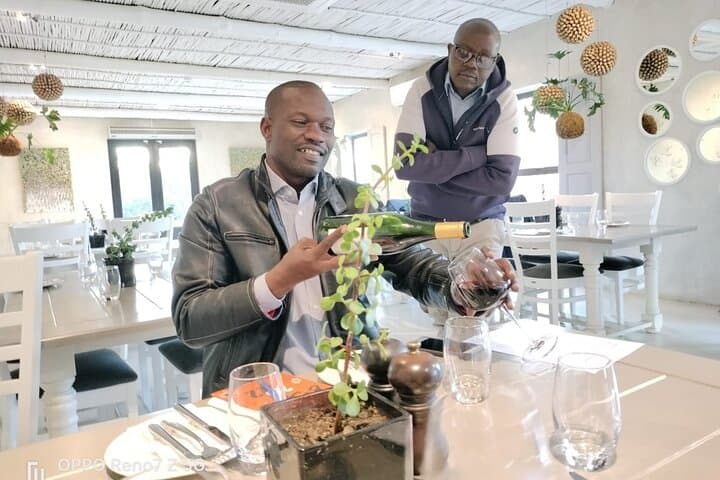
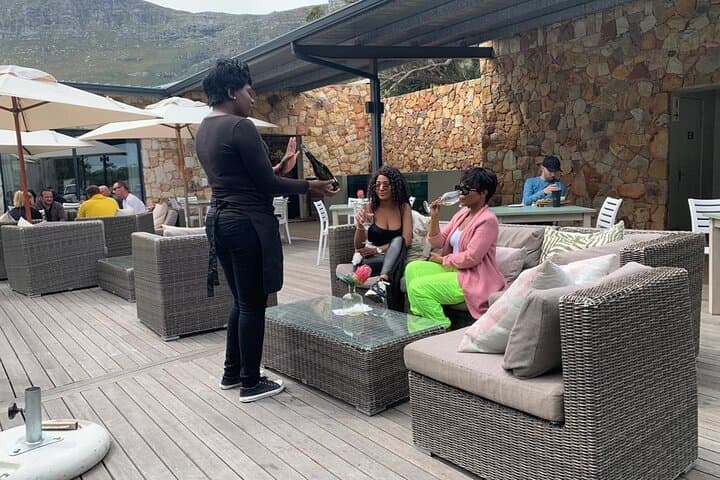
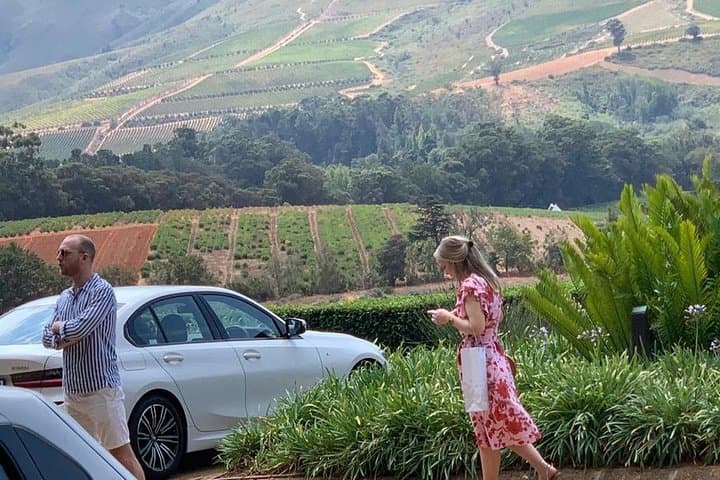
On the practical side, the tour moves at an unhurried pace: a morning visit to the mountain (cableway optional, hiking alternative available), then sequential wine stops with time for tastings and a vineyard-side lunch. Groot Constantia’s colonial homestead offers history with your glass; Klein Constantia’s decomposed granite and maritime breezes favor aromatic whites; Constantia Glen sits higher on the hill with panoramic vineyard runs; Buitenverwachting pairs restored Cape-Dutch architecture with crisp estate whites.
Tips for the day: wear sturdy walking shoes for uneven paths on the mountain and gravel at farms; bring a windproof layer — the ocean breeze can be brisk even in summer; pace your tastings and hydrate between flights; and book a vineyard lunch if you want a relaxed midday break with a view. Expect about an eight-hour day with private transport, hotel pickup and drop-off, and a maximum group size that keeps the van comfortable.
Culturally, Constantia remains a living agricultural landscape where wine families and modern vintners experiment with varieties that respect the old farm boundaries. Conservation matters here: many estates practice water-wise viticulture and habitat restoration to keep native fynbos and bird corridors intact.
This itinerary is as much about perspective—city-from-above and vineyard-from-below—as it is about the wine in your glass. By evening you’ll be back in Cape Town with a clearer sense of how geology, ocean, and centuries of farming create wines that taste like place.
easy.
8 hours.
Light walking and short stair climbs; suitable for most fitness levels but be ready for an 8-hour day.
Entry to Table Mountain is included; the cableway is available as an option at the mountain but operations can be weather-dependent—hiking is an alternative.
The itinerary allows time for standard tastings at each estate; some premium or private tastings and special cellar tours may carry extra fees—check with the operator in advance.
Yes; private pickup and drop-off from most Cape Town hotels and selected locations within a 20 km radius are provided.
Families are welcome; infants can use strollers and infant seats are available, but wineries may restrict tasting participation by age—confirm plans with the guide.
The supplier notes the tour is not recommended for pregnant travelers; discuss any concerns with your medical provider and the operator before booking.
This is a shared tour with a maximum of 15 guests, giving small-group flexibility while keeping transport comfortable.
The Constantia estates trace to Simon van der Stel’s late-17th-century farm; Groot Constantia dates to 1685 and remains one of South Africa’s oldest wine-producing properties.
Estates in Constantia increasingly use water-wise viticulture and fynbos restoration programs; visitors are encouraged to limit single-use plastics and follow estate recycling protocols.
Safari Private Tours. operates guided outdoor trips and adventures with an emphasis on safety, stewardship, and memorable experiences.
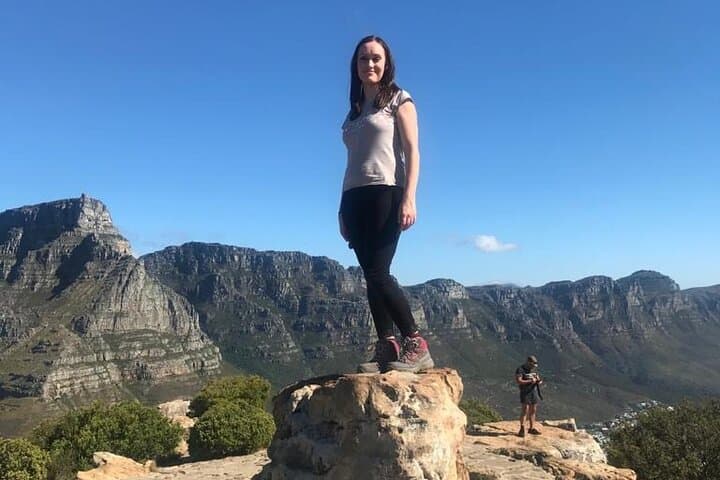
You arrive at the foot of Table Mountain while the city is still uncluttering itself — morning light slicing across the Atlantic, wind already sharpening the edges of the cape. The cable car hums, or if you prefer, a short hike will take you up old sandstone steps and basalt ridges; at the summit the city—and the ocean beyond—open like a map. That high, cool air is the prelude to a different kind of terrain: a green corridor of vineyards that slips south from the mountain foothills into the Constantia valley, where rows of vines lean into ocean breezes and history sits in the shade of oak trees.
You arrive at the foot of Table Mountain while the city is still uncluttering itself — morning light slicing across the Atlantic, wind already sharpening the edges of the cape. The cable car hums, or if you prefer, a short hike will take you up old sandstone steps and basalt ridges; at the summit the city—and the ocean beyond—open like a map. That high, cool air is the prelude to a different kind of terrain: a green corridor of vineyards that slips south from the mountain foothills into the Constantia valley, where rows of vines lean into ocean breezes and history sits in the shade of oak trees.
This is a day that pairs geology with gastronomy. Table Mountain’s flat-top is the result of Cape Fold Belt uplift and hard quartzitic sandstones resisting erosion; the mountain funnels moisture-laden winds off the Atlantic, creating the microclimate that makes Constantia’s slopes unusually cool for South Africa. The Constantia estates—Groot Constantia, Klein Constantia, Constantia Glen, and Buitenverwachting—trace back to Simon van der Stel’s late-17th-century provisioning farm, where early settlers began planting vines that would become the country’s first commercial wines.
On the practical side, the tour moves at an unhurried pace: a morning visit to the mountain (cableway optional, hiking alternative available), then sequential wine stops with time for tastings and a vineyard-side lunch. Groot Constantia’s colonial homestead offers history with your glass; Klein Constantia’s decomposed granite and maritime breezes favor aromatic whites; Constantia Glen sits higher on the hill with panoramic vineyard runs; Buitenverwachting pairs restored Cape-Dutch architecture with crisp estate whites.
Tips for the day: wear sturdy walking shoes for uneven paths on the mountain and gravel at farms; bring a windproof layer — the ocean breeze can be brisk even in summer; pace your tastings and hydrate between flights; and book a vineyard lunch if you want a relaxed midday break with a view. Expect about an eight-hour day with private transport, hotel pickup and drop-off, and a maximum group size that keeps the van comfortable.
Culturally, Constantia remains a living agricultural landscape where wine families and modern vintners experiment with varieties that respect the old farm boundaries. Conservation matters here: many estates practice water-wise viticulture and habitat restoration to keep native fynbos and bird corridors intact.
This itinerary is as much about perspective—city-from-above and vineyard-from-below—as it is about the wine in your glass. By evening you’ll be back in Cape Town with a clearer sense of how geology, ocean, and centuries of farming create wines that taste like place.