THE ADVENTURE COLLECTIVE® · Independent discovery and booking for outdoor travel

Paddle from First Landing State Park at sunset and meet Atlantic bottlenose dolphins in the shallow Chesapeake Bay. This guided two-hour tour blends easy paddling, coastal landmarks like Cape Henry, and high-percentage wildlife encounters—ideal for first-time kayakers.
Paddle from First Landing State Park at sunset and meet Atlantic bottlenose dolphins in the shallow Chesapeake Bay. This guided two-hour tour blends easy paddling, coastal landmarks like Cape Henry, and high-percentage wildlife encounters—ideal for first-time kayakers.
The beach smells like brine and sunscreen as the sun slides low over the Chesapeake Bay. You stand on the sand at First Landing State Park, the paddle light in your hand, while the guides read the water with the casual attention of people who’ve watched this edge of the bay for decades. Small waves lap the hulls of sit-on-top kayaks; beyond them, fins arc like punctuation marks in the glassy light. As the sky burns orange, dolphins begin to work the shallows, popping up with the curiosity of commuters checking the evening timetable.
Verified experiences and guided adventures in the surrounding area.
Operated by Chesapean Outdoors · Virginia Beach, Virginia
The beach smells like brine and sunscreen as the sun slides low over the Chesapeake Bay. You stand on the sand at First Landing State Park, the paddle light in your hand, while the guides read the water with the casual attention of people who’ve watched this edge of the bay for decades. Small waves lap the hulls of sit-on-top kayaks; beyond them, fins arc like punctuation marks in the glassy light. As the sky burns orange, dolphins begin to work the shallows, popping up with the curiosity of commuters checking the evening timetable.
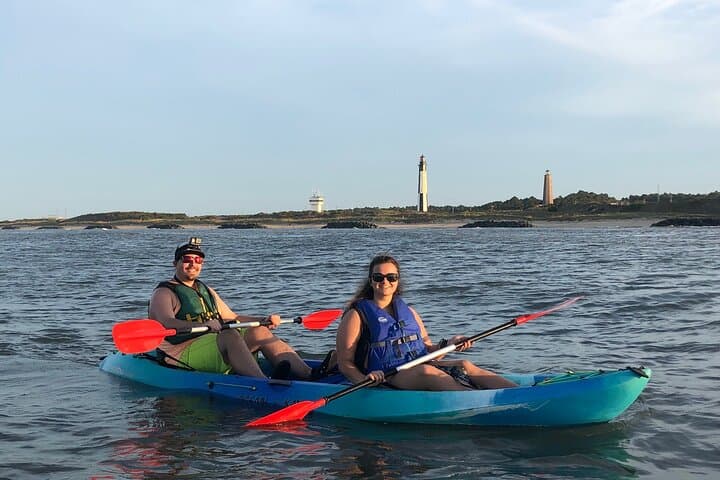
This strip of coastline is where English colonists first set foot in 1607 before moving on to found Jamestown; it’s also a meeting place of tidal currents and sediment from the Chesapeake. The bay is shallow and wide here, sculpted by glaciers and sea-level rise into broad flats, islands, and channels that funnel fish—so the dolphins come. Cape Henry’s twin lighthouses and the distant silhouette of the Chesapeake Bay Bridge-Tunnel frame the horizon, giving the paddling route both a navigational and historical backdrop.
The tour is practical in its charm. Guides from Chesapean Outdoors outfit you in a sturdy sit-on-top kayak—usually tandems when conditions stiffen—brief you on safety, and launch you from a sand ramp where the water words itself in whispers and small sighs. Sightings are frequent (operators report a 90th percentile encounter rate), but these are wild Atlantic bottlenose dolphins; they choose distance as easily as play. Expect active birds—terns and osprey—too, and the occasional boat cresting on a far channel.
Physically, this is accessible. The paddle is steady rather than strenuous: two hours total on open water with short pauses to watch dolphins or point out the Cape Henry Lighthouses. Wear a quick-dry layer, sunglasses with a retainer, and reef-safe sunscreen. Park at the main First Landing lot (address 2500 Shore Drive), pay the modest ranger fee, sign the online waiver, and be on the beach ready by 5:30 p.m. to catch the optimal light and calm seas.
Practical notes: sea conditions can change—guides may opt for tandem kayaks or cancel for safety. Bring motion-sickness medication if you’re sensitive, a small dry bag for your phone, and shoes that can get wet. The reward is immediate: a low-angle sun, dolphins slapping the surface, and the slow, clean beating of a day ending over one of the East Coast’s great estuaries. It’s part wildlife encounter, part maritime lesson, and wholly an evening spent where the bay dares you to keep watching until dark.
easy.
2 hours.
Basic fitness and ability to sit and paddle for two hours; suitable for beginners and families.
The tour is two hours total; expect on-water time with brief stops for wildlife viewing and landmarks.
No—tours are beginner-friendly and guides provide a safety and paddling briefing; tandems are used when conditions warrant.
No—sightings are common (operator reports ~90% daily) but dolphins are wild and not guaranteed.
Meet at the main entrance beach at First Landing State Park (2500 Shore Drive); guides wait near the kayaks by the Chesapeake Bay center walkway.
Guests over 250 lbs are asked to call the operator before booking to confirm equipment and safety accommodations.
Tours may be canceled for unsafe ocean conditions; if canceled you can reschedule or receive a refund per the operator’s policy.
Cape Henry is where English colonists first landed in 1607; the area has been a coastal navigation point and military post for centuries.
Operators emphasize viewing-only behavior and discourage feedings; minimizing plastic and using reef-safe sunscreen helps protect bay water quality and marine life.
Chesapean Outdoors operates guided outdoor trips and adventures with an emphasis on safety, stewardship, and memorable experiences.
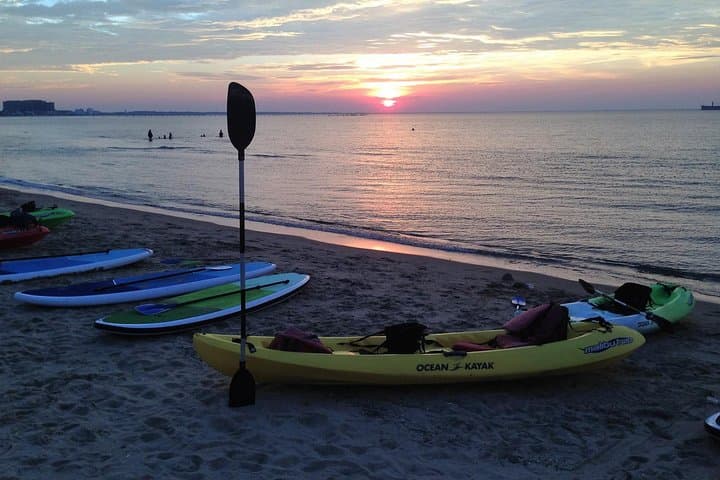
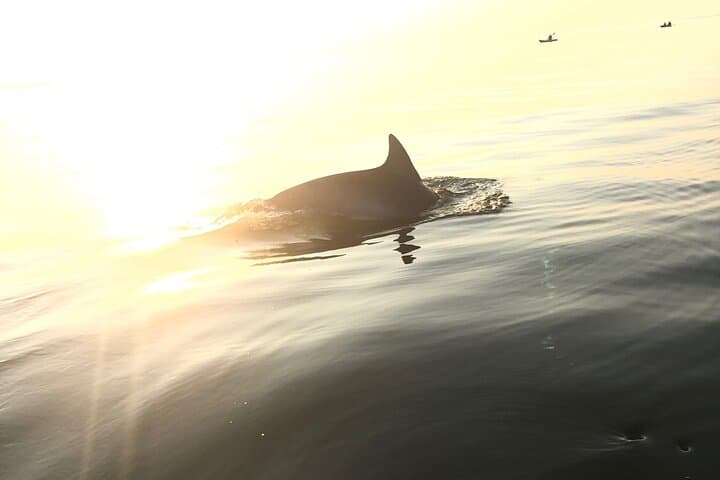
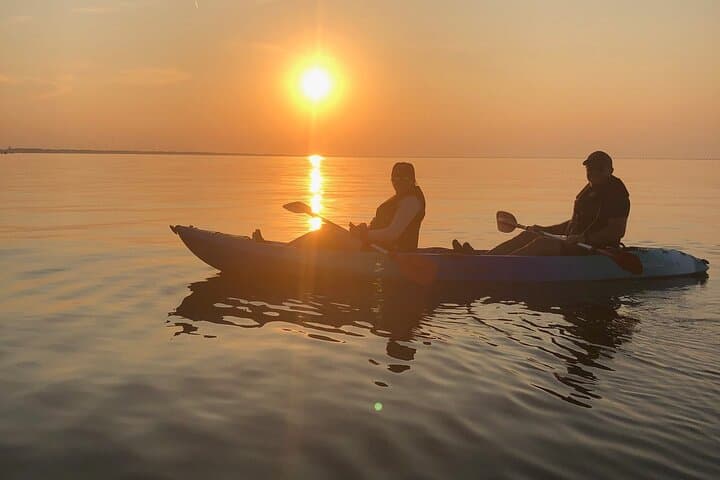
The beach smells like brine and sunscreen as the sun slides low over the Chesapeake Bay. You stand on the sand at First Landing State Park, the paddle light in your hand, while the guides read the water with the casual attention of people who’ve watched this edge of the bay for decades. Small waves lap the hulls of sit-on-top kayaks; beyond them, fins arc like punctuation marks in the glassy light. As the sky burns orange, dolphins begin to work the shallows, popping up with the curiosity of commuters checking the evening timetable.
The beach smells like brine and sunscreen as the sun slides low over the Chesapeake Bay. You stand on the sand at First Landing State Park, the paddle light in your hand, while the guides read the water with the casual attention of people who’ve watched this edge of the bay for decades. Small waves lap the hulls of sit-on-top kayaks; beyond them, fins arc like punctuation marks in the glassy light. As the sky burns orange, dolphins begin to work the shallows, popping up with the curiosity of commuters checking the evening timetable.
This strip of coastline is where English colonists first set foot in 1607 before moving on to found Jamestown; it’s also a meeting place of tidal currents and sediment from the Chesapeake. The bay is shallow and wide here, sculpted by glaciers and sea-level rise into broad flats, islands, and channels that funnel fish—so the dolphins come. Cape Henry’s twin lighthouses and the distant silhouette of the Chesapeake Bay Bridge-Tunnel frame the horizon, giving the paddling route both a navigational and historical backdrop.
The tour is practical in its charm. Guides from Chesapean Outdoors outfit you in a sturdy sit-on-top kayak—usually tandems when conditions stiffen—brief you on safety, and launch you from a sand ramp where the water words itself in whispers and small sighs. Sightings are frequent (operators report a 90th percentile encounter rate), but these are wild Atlantic bottlenose dolphins; they choose distance as easily as play. Expect active birds—terns and osprey—too, and the occasional boat cresting on a far channel.
Physically, this is accessible. The paddle is steady rather than strenuous: two hours total on open water with short pauses to watch dolphins or point out the Cape Henry Lighthouses. Wear a quick-dry layer, sunglasses with a retainer, and reef-safe sunscreen. Park at the main First Landing lot (address 2500 Shore Drive), pay the modest ranger fee, sign the online waiver, and be on the beach ready by 5:30 p.m. to catch the optimal light and calm seas.
Practical notes: sea conditions can change—guides may opt for tandem kayaks or cancel for safety. Bring motion-sickness medication if you’re sensitive, a small dry bag for your phone, and shoes that can get wet. The reward is immediate: a low-angle sun, dolphins slapping the surface, and the slow, clean beating of a day ending over one of the East Coast’s great estuaries. It’s part wildlife encounter, part maritime lesson, and wholly an evening spent where the bay dares you to keep watching until dark.