THE ADVENTURE COLLECTIVE® · Independent discovery and booking for outdoor travel

Watch the sun set the Kanchenjunga massif on fire at Tiger Hill, then spend days exploring Darjeeling’s tea terraces, colonial-era railways and mountain monasteries. This five-day tour blends dramatic dawns with cultural stops and practical logistics for travelers.
Watch the sun set the Kanchenjunga massif on fire at Tiger Hill, then spend days exploring Darjeeling’s tea terraces, colonial-era railways and mountain monasteries. This five-day tour blends dramatic dawns with cultural stops and practical logistics for travelers.
At 4:00 a.m. the town is a slow exhale. Headlights pick their way up narrow lanes, and the cold arrives with the first step out of a warm hotel room — a sharp, clean air that seems to polish the world. By the time you reach Tiger Hill the sky is still a bruise, but the eastern horizon is already plotting a betrayal: a faint, molten line that will, minutes later, thrust light across the Kanchenjunga massif and set the ridgelines aflame. The sunrise here isn’t sentimental; it’s an accusation — it insists you pay attention.
Verified experiences and guided adventures in the surrounding area.
Operated by Creative Holidays · Darjeeling, West Bengal
At 4:00 a.m. the town is a slow exhale. Headlights pick their way up narrow lanes, and the cold arrives with the first step out of a warm hotel room — a sharp, clean air that seems to polish the world. By the time you reach Tiger Hill the sky is still a bruise, but the eastern horizon is already plotting a betrayal: a faint, molten line that will, minutes later, thrust light across the Kanchenjunga massif and set the ridgelines aflame. The sunrise here isn’t sentimental; it’s an accusation — it insists you pay attention.
Darjeeling’s appeal is geological as well as theatrical. Sitting on the lesser Himalaya at roughly 2,100 m, the town perches along folds of uplifted rock pushed up by the collision of the Indian and Eurasian plates. Tiger Hill, at about 2,590 m, gives you an unvarnished look at that tectonic drama — a horizon of jagged white summits, glacial valleys and ridgelines that caught the British eye in the 19th century and turned this place into a hill station famed for cool weather and cooler tea.
Culturally the landscape is braided: Nepali, Tibetan and Bengali influences overlap in markets, monasteries and the cadence of conversation. Tea gardens sweep down the slopes in neat green ribbons; their leaves tell a quieter history of colonial demand and local labor that has shaped Darjeeling’s economy for more than 150 years. Nearby Gangtok and the glacial Tsomgo Lake (3,750 m) add alpine contrast — frozen mirrors in winter and jewel-tone basins in summer — while the narrow-gauge Darjeeling Himalayan Railway, a UNESCO site, still puffs between stations like a living relic.
Practically, this is an accessible expedition, not an alpine climb. Expect several early mornings, short drives on winding roads and plenty of standing around in cold air to watch light change. Acclimatize if you plan side trips to higher passes (Nathula requires permits and has restricted visiting days). Your hotel will typically include breakfast and transfers; travel operators run private, small-group schedules that pack views and cultural stops into a crisp five-day arc.
What to prepare: layer for temperature swings — a warm hat, insulated jacket and windproof shell are useful even in summer mornings. Footwear should be sturdy but comfortable: many viewpoints are gravel or paved; few require technical hiking boots. Bring cash for small vendors, a compact tripod for dawn exposures, and patience: clouds may steal a sunrise, but the town’s market, tea estates and monasteries more than repay a second attempt.
Sunrise in Darjeeling is part light show, part lesson in Himalayan history and human adaptation. It’s modestly demanding, visually generous and best taken slowly — with a camera, a thermos and the intention to let the mountain make the plan.
easy.
5 days.
Suitable for travelers in average fitness — short walks and vehicle transfers with a few short hikes to viewpoints at high altitude.
Pre-dawn temperatures often drop near freezing in winter; even summers are brisk before sunrise — layers and a windproof jacket are recommended.
The standard Darjeeling–Gangtok itinerary requires no special permits, but Nathula Pass is optional and needs advance permits and availability checks.
Yes — the itinerary is classified as physically easy with hotel transfers and short walks, though early starts and some high-elevation stops may be tiring for very young children or guests with health issues.
October to early December tends to offer the clearest skies after the monsoon; late winter can also be crisp but colder and more prone to cloud inversions.
Yes — most itineraries include a visit to a working tea garden and a brief walk to learn about plucking and processing; longer factory tours may be arranged on request.
The elevations here are moderate; stay hydrated, move slowly, avoid alcohol on arrival and consult a physician about medication if you have prior altitude sensitivity.
Darjeeling grew as a British hill station and tea-centre in the 19th century; the Darjeeling Himalayan Railway originated to connect the plains to these cooler slopes.
Tea estate runoff and plastic waste are local concerns; choose operators who support community initiatives and avoid single-use plastics when touring.
Creative Holidays operates guided outdoor trips and adventures with an emphasis on safety, stewardship, and memorable experiences.
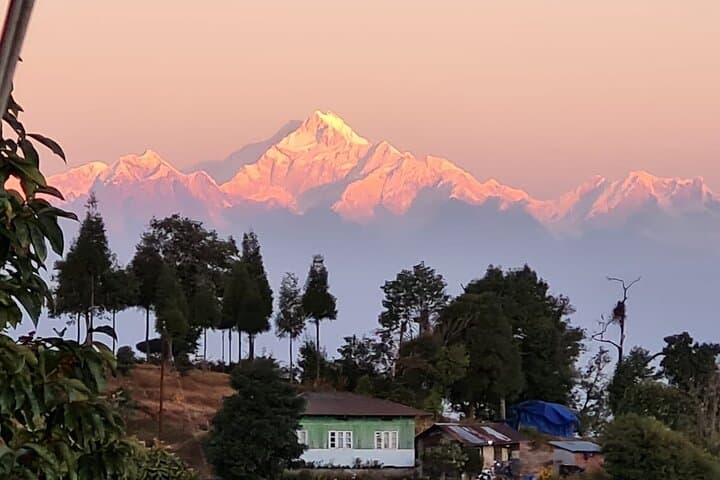
At 4:00 a.m. the town is a slow exhale. Headlights pick their way up narrow lanes, and the cold arrives with the first step out of a warm hotel room — a sharp, clean air that seems to polish the world. By the time you reach Tiger Hill the sky is still a bruise, but the eastern horizon is already plotting a betrayal: a faint, molten line that will, minutes later, thrust light across the Kanchenjunga massif and set the ridgelines aflame. The sunrise here isn’t sentimental; it’s an accusation — it insists you pay attention.
At 4:00 a.m. the town is a slow exhale. Headlights pick their way up narrow lanes, and the cold arrives with the first step out of a warm hotel room — a sharp, clean air that seems to polish the world. By the time you reach Tiger Hill the sky is still a bruise, but the eastern horizon is already plotting a betrayal: a faint, molten line that will, minutes later, thrust light across the Kanchenjunga massif and set the ridgelines aflame. The sunrise here isn’t sentimental; it’s an accusation — it insists you pay attention.
Darjeeling’s appeal is geological as well as theatrical. Sitting on the lesser Himalaya at roughly 2,100 m, the town perches along folds of uplifted rock pushed up by the collision of the Indian and Eurasian plates. Tiger Hill, at about 2,590 m, gives you an unvarnished look at that tectonic drama — a horizon of jagged white summits, glacial valleys and ridgelines that caught the British eye in the 19th century and turned this place into a hill station famed for cool weather and cooler tea.
Culturally the landscape is braided: Nepali, Tibetan and Bengali influences overlap in markets, monasteries and the cadence of conversation. Tea gardens sweep down the slopes in neat green ribbons; their leaves tell a quieter history of colonial demand and local labor that has shaped Darjeeling’s economy for more than 150 years. Nearby Gangtok and the glacial Tsomgo Lake (3,750 m) add alpine contrast — frozen mirrors in winter and jewel-tone basins in summer — while the narrow-gauge Darjeeling Himalayan Railway, a UNESCO site, still puffs between stations like a living relic.
Practically, this is an accessible expedition, not an alpine climb. Expect several early mornings, short drives on winding roads and plenty of standing around in cold air to watch light change. Acclimatize if you plan side trips to higher passes (Nathula requires permits and has restricted visiting days). Your hotel will typically include breakfast and transfers; travel operators run private, small-group schedules that pack views and cultural stops into a crisp five-day arc.
What to prepare: layer for temperature swings — a warm hat, insulated jacket and windproof shell are useful even in summer mornings. Footwear should be sturdy but comfortable: many viewpoints are gravel or paved; few require technical hiking boots. Bring cash for small vendors, a compact tripod for dawn exposures, and patience: clouds may steal a sunrise, but the town’s market, tea estates and monasteries more than repay a second attempt.
Sunrise in Darjeeling is part light show, part lesson in Himalayan history and human adaptation. It’s modestly demanding, visually generous and best taken slowly — with a camera, a thermos and the intention to let the mountain make the plan.