THE ADVENTURE COLLECTIVE® · Independent discovery and booking for outdoor travel

Ride a camel across the Giza Plateau at dawn, guided by an Egyptologist through the Great Pyramids, Valley Temple, and Sphinx. This private sunrise tour pairs quiet desert light with expert history and is ideal for photographers and first-time visitors.
Ride a camel across the Giza Plateau at dawn, guided by an Egyptologist through the Great Pyramids, Valley Temple, and Sphinx. This private sunrise tour pairs quiet desert light with expert history and is ideal for photographers and first-time visitors.
Before the sun clears the rim of the desert, you step from an air-conditioned vehicle into a cooling hush where sandstone and shadow meet.
The Great Pyramids cut black silhouettes against a slow, pale wash of light; your camel shifts beneath you with the deliberate patience of an animal built for this landscape. The early hour strips the site of crowds and lets the plateau breathe — limestone faces catching the first amber, the Sphinx watching the horizon like a very old guard.
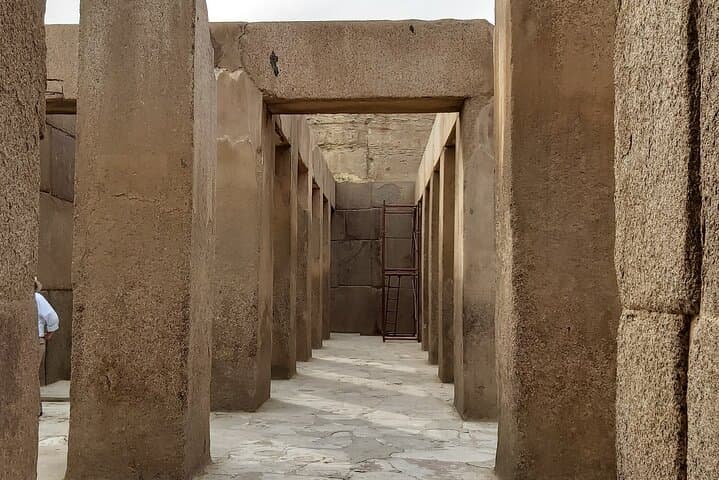
These monuments date to the Old Kingdom (around 2600–2500 BCE) and are made largely from local limestone and granite quarried nearby; an Egyptologist on your private tour frames them not as static relics but as the culmination of millennia of engineering, ritual, and politics. Local handlers and guides provide cultural context and practical know‑how: how camels are led, where to stand for shade, and why the Valley Temple mattered to funerary rites.
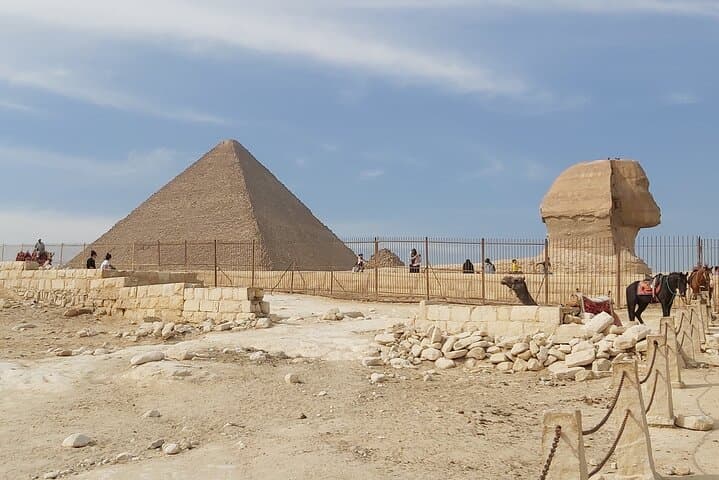
Practically, a sunrise tour means low temperatures but strong light as the sun rises; expect uneven footing on compacted sand and stone, short walking sections near tomb entrances, and photo stops at the Sphinx and the Khufu pyramid. Breakfast with simple Egyptian fare follows the ride, then a focused walk-through of the pyramids and Valley Temple.
Plan for hydration, sun protection, and shoes that handle sand and steps. Keep your camera ready, respect roped areas, and allow an extra hour for traffic to and from Cairo — the hour before dawn is the difference between a memorably quiet plateau and the throng that comes later.
Verified experiences and guided adventures in the surrounding area.
Operated by Nile Navigators · Giza, Giza Governorate
Before the sun clears the rim of the desert, you step from an air-conditioned vehicle into a cooling hush where sandstone and shadow meet.
The Great Pyramids cut black silhouettes against a slow, pale wash of light; your camel shifts beneath you with the deliberate patience of an animal built for this landscape. The early hour strips the site of crowds and lets the plateau breathe — limestone faces catching the first amber, the Sphinx watching the horizon like a very old guard.
These monuments date to the Old Kingdom (around 2600–2500 BCE) and are made largely from local limestone and granite quarried nearby; an Egyptologist on your private tour frames them not as static relics but as the culmination of millennia of engineering, ritual, and politics. Local handlers and guides provide cultural context and practical know‑how: how camels are led, where to stand for shade, and why the Valley Temple mattered to funerary rites.
Practically, a sunrise tour means low temperatures but strong light as the sun rises; expect uneven footing on compacted sand and stone, short walking sections near tomb entrances, and photo stops at the Sphinx and the Khufu pyramid. Breakfast with simple Egyptian fare follows the ride, then a focused walk-through of the pyramids and Valley Temple.
Plan for hydration, sun protection, and shoes that handle sand and steps. Keep your camera ready, respect roped areas, and allow an extra hour for traffic to and from Cairo — the hour before dawn is the difference between a memorably quiet plateau and the throng that comes later.
easy.
5 hours.
Suitable for most fitness levels; must be able to mount a camel and walk short distances on uneven ground.
The sunrise camel ride portion is approximately one hour; the full private tour runs about five hours including transfers and site visits.
Access to interior chambers varies by site rules and ticketing; your Egyptologist guide will advise on current entry availability and any additional fees.
Yes—this tour is suitable for families; infant seats can be provided in the vehicle and camels can accommodate children with handler assistance.
Cooler months (fall to spring) provide the most comfortable temperatures for early starts; summer sun is intense though still popular for sunrise light.
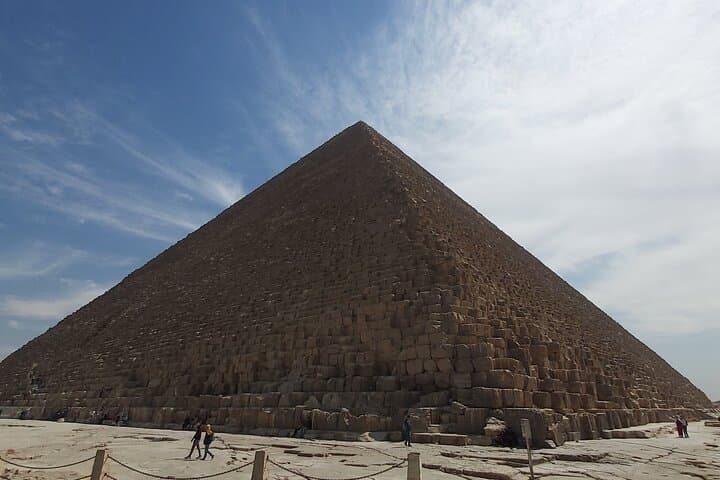
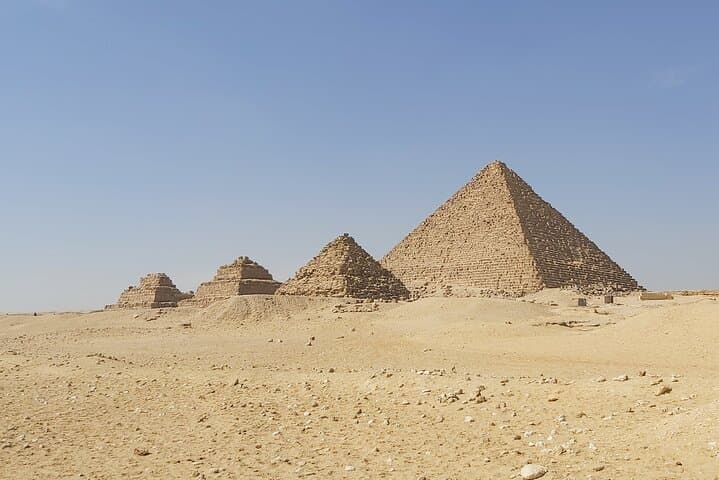
The Giza Plateau holds the pyramids of Khufu, Khafre and Menkaure from Egypt's Fourth Dynasty; the Valley Temple and Sphinx are integral to the funerary landscape surrounding the royal necropolis.
The site is managed to limit wear on ancient stone — stay on designated paths, avoid touching carvings, and support certified guides to reduce impact.
Nile Navigators operates guided outdoor trips and adventures with an emphasis on safety, stewardship, and memorable experiences.
Before the sun clears the rim of the desert, you step from an air-conditioned vehicle into a cooling hush where sandstone and shadow meet.
The Great Pyramids cut black silhouettes against a slow, pale wash of light; your camel shifts beneath you with the deliberate patience of an animal built for this landscape. The early hour strips the site of crowds and lets the plateau breathe — limestone faces catching the first amber, the Sphinx watching the horizon like a very old guard.
These monuments date to the Old Kingdom (around 2600–2500 BCE) and are made largely from local limestone and granite quarried nearby; an Egyptologist on your private tour frames them not as static relics but as the culmination of millennia of engineering, ritual, and politics. Local handlers and guides provide cultural context and practical know‑how: how camels are led, where to stand for shade, and why the Valley Temple mattered to funerary rites.
Practically, a sunrise tour means low temperatures but strong light as the sun rises; expect uneven footing on compacted sand and stone, short walking sections near tomb entrances, and photo stops at the Sphinx and the Khufu pyramid. Breakfast with simple Egyptian fare follows the ride, then a focused walk-through of the pyramids and Valley Temple.
Plan for hydration, sun protection, and shoes that handle sand and steps. Keep your camera ready, respect roped areas, and allow an extra hour for traffic to and from Cairo — the hour before dawn is the difference between a memorably quiet plateau and the throng that comes later.
Before the sun clears the rim of the desert, you step from an air-conditioned vehicle into a cooling hush where sandstone and shadow meet.
The Great Pyramids cut black silhouettes against a slow, pale wash of light; your camel shifts beneath you with the deliberate patience of an animal built for this landscape. The early hour strips the site of crowds and lets the plateau breathe — limestone faces catching the first amber, the Sphinx watching the horizon like a very old guard.
These monuments date to the Old Kingdom (around 2600–2500 BCE) and are made largely from local limestone and granite quarried nearby; an Egyptologist on your private tour frames them not as static relics but as the culmination of millennia of engineering, ritual, and politics. Local handlers and guides provide cultural context and practical know‑how: how camels are led, where to stand for shade, and why the Valley Temple mattered to funerary rites.
Practically, a sunrise tour means low temperatures but strong light as the sun rises; expect uneven footing on compacted sand and stone, short walking sections near tomb entrances, and photo stops at the Sphinx and the Khufu pyramid. Breakfast with simple Egyptian fare follows the ride, then a focused walk-through of the pyramids and Valley Temple.
Plan for hydration, sun protection, and shoes that handle sand and steps. Keep your camera ready, respect roped areas, and allow an extra hour for traffic to and from Cairo — the hour before dawn is the difference between a memorably quiet plateau and the throng that comes later.