THE ADVENTURE COLLECTIVE® · Independent discovery and booking for outdoor travel

Rise before the rest of Australia and hike with a guide to Cape Byron Lighthouse for an intimate sunrise ritual—yoga, breathwork and a coastal walk through rainforest, beach and clifftops. Practical guidance and conservation-minded leadership make this a thoughtful way to greet the day.
Rise before the rest of Australia and hike with a guide to Cape Byron Lighthouse for an intimate sunrise ritual—yoga, breathwork and a coastal walk through rainforest, beach and clifftops. Practical guidance and conservation-minded leadership make this a thoughtful way to greet the day.
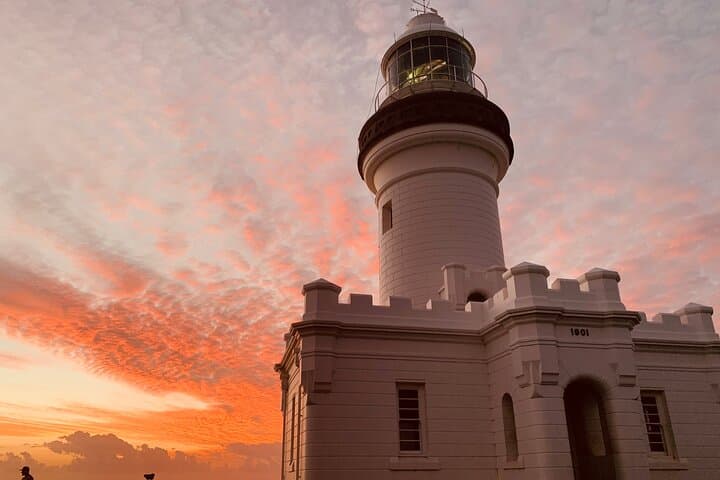
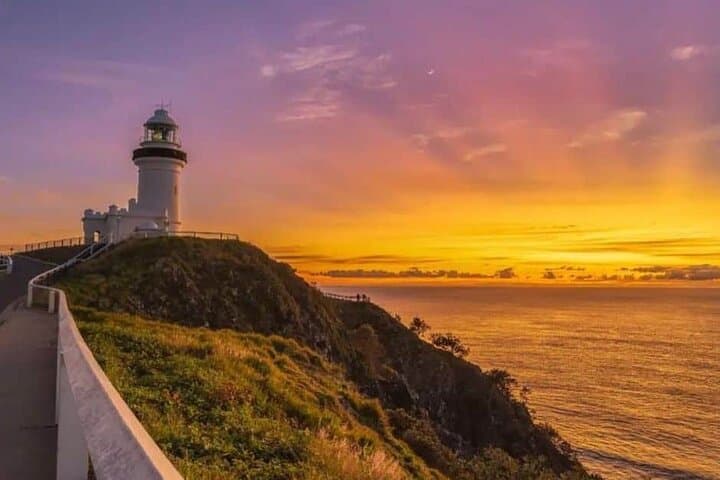
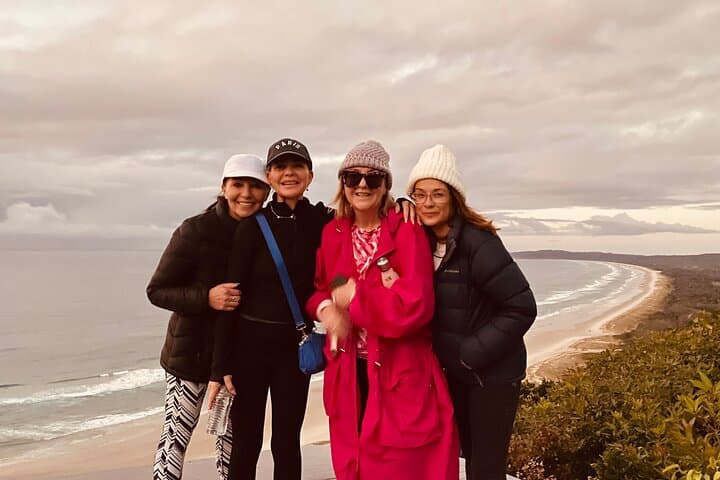
The headland holds its breath before first light. You meet at The Pass Cafe with a steaming elixir in hand, the air sharp with salt and eucalyptus, and the walk north feels less like travel and more like an appointment with the horizon. Guided by a leader from Wander Byron, a small group slips along boardwalks through rainforest, finds footing on grassy clifftops and loosens into soft sand before the cape opens to the lighthouse where Australia’s sunrise stages its slow, authoritative arrival.
Verified experiences and guided adventures in the surrounding area.
Operated by Lighthouse Trail · Byron Bay, New South Wales
The headland holds its breath before first light. You meet at The Pass Cafe with a steaming elixir in hand, the air sharp with salt and eucalyptus, and the walk north feels less like travel and more like an appointment with the horizon. Guided by a leader from Wander Byron, a small group slips along boardwalks through rainforest, finds footing on grassy clifftops and loosens into soft sand before the cape opens to the lighthouse where Australia’s sunrise stages its slow, authoritative arrival.
This is a two‑hour ritual—part hike, part guided breathwork and sun salutations—framed by stories older than the lighthouse itself. The Bundjalung (Arakwal) people call the headland Walgun; Aboriginal connection to these rocks and waters stretches back 40,000 years, and guided tours acknowledge country and care for cultural sites inside Cape Byron State Conservation Area.
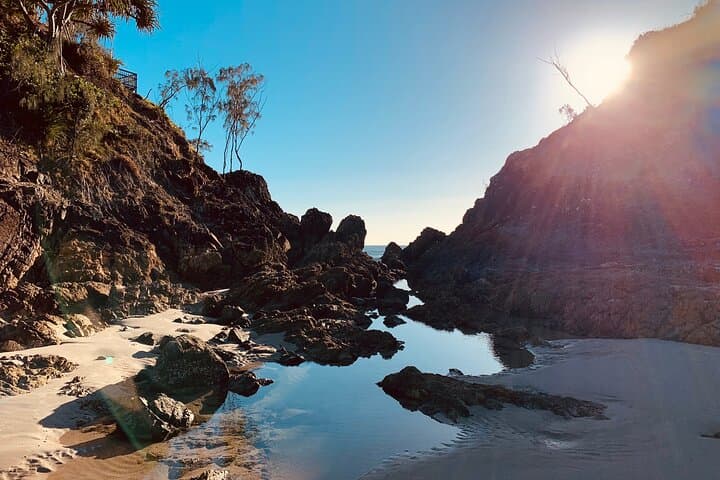
Geologically, the cape reads like a very slow-motion drama. Sedimentary layers laid down 300–500 million years ago were later lifted and tilted, leaving contorted beds of sandstone and siltstone exposed to wind, spray and the patient action of waves. The track slides across that folded stone, offering cliff-edge views where bottlenose dolphins carve foam and migrating humpbacks pass offshore between May and November.
Practicality sits under the poetry. The walk covers roughly 3–4 km round trip with around 80–120 m of cumulative elevation gain—well-formed trails, occasional wooden steps and rocky viewpoints. Timing is everything: you meet an hour before sunrise (meeting time provided after booking), take a brief briefing and small snack, and arrive at the lighthouse in time to let the light do its work while the guide leads gentle yoga and breathwork.
For photographers and early risers this is a small-window, high-return outing: blue hour colors, ocean silhouettes and the first wash of light hitting the eastern horizon. The guides operate under license with NSW National Parks & Wildlife Service and contribute to conservation efforts—each booking helps fund species monitoring and protection of cultural artefacts.
Expect weather that shifts quickly on the headland—dawn can be calm or raw with wind. Wear closed, grippy shoes and layers that include a windproof shell; bring a headlamp for the return, water and a small daypack. Tours are suitable for most fitness levels but note the walk includes uneven sections and short climbs. If you have cardiovascular concerns or mobility limitations, check with the operator before booking.
Ultimately, the experience is direct: salt on the air, the sun nudging the horizon, a few yoga flows to meet the day. It’s less about spectacle and more about arriving—physically, mentally and, for a moment, in the company of a place with deep natural and cultural roots.
moderate.
2 hours.
Suitable for most people who can manage 3–4 km on uneven terrain and short climbs; some balance and mobility required.
Meeting is always 1 hour before sunrise; the exact clock time for your date will be emailed after booking—provide your email when you book.
Pickup is offered for bookings of 1–4 guests from outside the Beach Hotel (3 Bay St); pickup time will be emailed after booking.
The tour is rated easy–moderate: about 3–4 km round trip with some short climbs and uneven ground—suitable for most fitness levels.
You can bring a small travel mat or towel, but guides typically lead standing sequences that work without a full mat.
Dolphins are commonly seen, turtles and rays are possible, and seasonal humpback whale migrations occur from May to November.
Tours may be cancelled for poor weather; you’ll receive cancellation/refund details at booking—cancel at least 24 hours before to receive a full refund.
Cape Byron Lighthouse was completed in 1901; the headland—Walgun—has deep cultural significance for the Bundjalung (Arakwal) people, with sites and stories embedded across the landscape.
Wander Byron contributes funds per booking to NSW National Parks & Wildlife Service; staying on marked trails and avoiding drone use helps protect fragile habitat and cultural sites.
Lighthouse Trail operates guided outdoor trips and adventures with an emphasis on safety, stewardship, and memorable experiences.
The headland holds its breath before first light. You meet at The Pass Cafe with a steaming elixir in hand, the air sharp with salt and eucalyptus, and the walk north feels less like travel and more like an appointment with the horizon. Guided by a leader from Wander Byron, a small group slips along boardwalks through rainforest, finds footing on grassy clifftops and loosens into soft sand before the cape opens to the lighthouse where Australia’s sunrise stages its slow, authoritative arrival.
The headland holds its breath before first light. You meet at The Pass Cafe with a steaming elixir in hand, the air sharp with salt and eucalyptus, and the walk north feels less like travel and more like an appointment with the horizon. Guided by a leader from Wander Byron, a small group slips along boardwalks through rainforest, finds footing on grassy clifftops and loosens into soft sand before the cape opens to the lighthouse where Australia’s sunrise stages its slow, authoritative arrival.
This is a two‑hour ritual—part hike, part guided breathwork and sun salutations—framed by stories older than the lighthouse itself. The Bundjalung (Arakwal) people call the headland Walgun; Aboriginal connection to these rocks and waters stretches back 40,000 years, and guided tours acknowledge country and care for cultural sites inside Cape Byron State Conservation Area.
Geologically, the cape reads like a very slow-motion drama. Sedimentary layers laid down 300–500 million years ago were later lifted and tilted, leaving contorted beds of sandstone and siltstone exposed to wind, spray and the patient action of waves. The track slides across that folded stone, offering cliff-edge views where bottlenose dolphins carve foam and migrating humpbacks pass offshore between May and November.
Practicality sits under the poetry. The walk covers roughly 3–4 km round trip with around 80–120 m of cumulative elevation gain—well-formed trails, occasional wooden steps and rocky viewpoints. Timing is everything: you meet an hour before sunrise (meeting time provided after booking), take a brief briefing and small snack, and arrive at the lighthouse in time to let the light do its work while the guide leads gentle yoga and breathwork.
For photographers and early risers this is a small-window, high-return outing: blue hour colors, ocean silhouettes and the first wash of light hitting the eastern horizon. The guides operate under license with NSW National Parks & Wildlife Service and contribute to conservation efforts—each booking helps fund species monitoring and protection of cultural artefacts.
Expect weather that shifts quickly on the headland—dawn can be calm or raw with wind. Wear closed, grippy shoes and layers that include a windproof shell; bring a headlamp for the return, water and a small daypack. Tours are suitable for most fitness levels but note the walk includes uneven sections and short climbs. If you have cardiovascular concerns or mobility limitations, check with the operator before booking.
Ultimately, the experience is direct: salt on the air, the sun nudging the horizon, a few yoga flows to meet the day. It’s less about spectacle and more about arriving—physically, mentally and, for a moment, in the company of a place with deep natural and cultural roots.