THE ADVENTURE COLLECTIVE® · Independent discovery and booking for outdoor travel

Witness Angkor Wat at the exact hour light returns to its towers—before the crowds arrive. This small-group dawn tour from Siem Reap combines early access to Angkor Wat with visits to Bayon, Ta Prohm and the royal terraces.
Witness Angkor Wat at the exact hour light returns to its towers—before the crowds arrive. This small-group dawn tour from Siem Reap combines early access to Angkor Wat with visits to Bayon, Ta Prohm and the royal terraces.
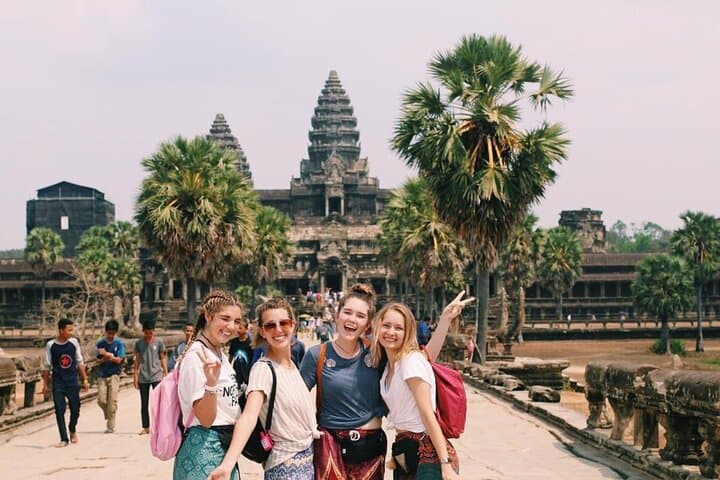
Before the official gates open, the eastern approach to Angkor Wat hums with the hush of early light.
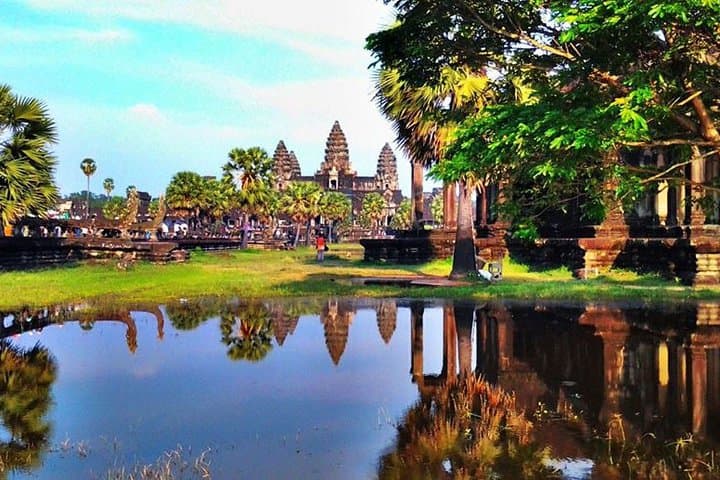
You step from a cool minivan, follow a narrow jungle track and wait beside a still reflecting pool as the first band of gold edges the temple’s lotus towers. The stones do not sleep — they hold centuries of weather, conquest and ritual — and at sunrise the reliefs and towers change tone like pages turning.
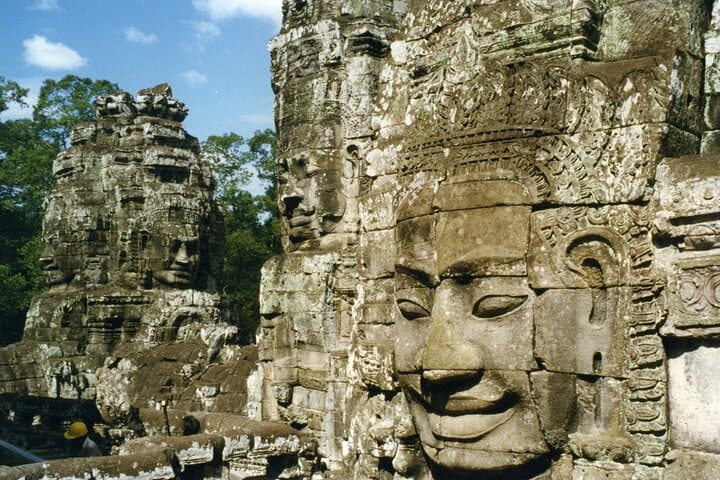
Angkor Wat was raised in the 12th century as the Khmer Empire’s crowning temple and remains the world’s largest religious complex. Its construction used sandstone quarried from nearby ridges; bas-reliefs along the galleries record myths and daily life while later additions from Jayavarman VII introduced the enigmatic smiling faces at Bayon. Ta Prohm, where tree roots pry at lintels, shows nature actively rewriting architecture.
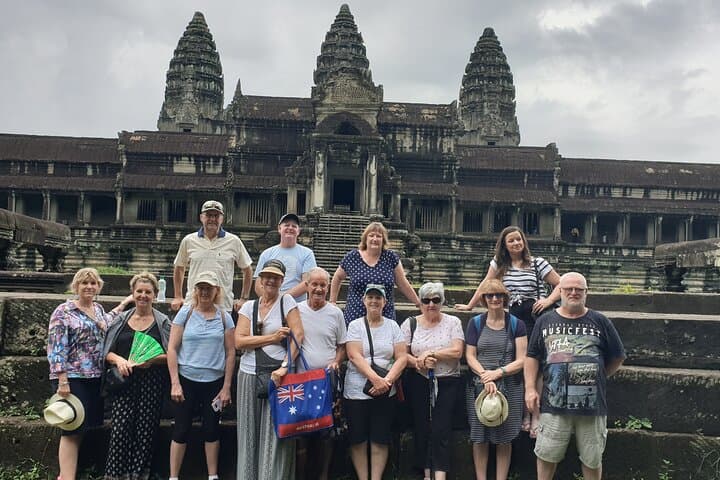
This small-group dawn tour threads through those key sites: a quiet entrance at Angkor Wat’s eastern flank, the long bas-relief galleries, the Bayon’s towers, the Terraces of the Elephants and Leper King, and Ta Prohm’s jungle embrace. Guides will place stones and scenes in cultural context and point camera-friendly angles.
Practical notes: arrive hydrated, wear modest clothing that covers shoulders and knees, and choose flat, grippy shoes for uneven stone and damp paths. Temperatures rise quickly after sunrise; plan to visit the busiest galleries early and use the provided breaks to refill water and recharge batteries. Buy or arrange your temple pass in advance to avoid lines.
Verified experiences and guided adventures in the surrounding area.
Operated by Journey2 Angkor · Siem Reap, Siem Reap Province
Before the official gates open, the eastern approach to Angkor Wat hums with the hush of early light.
You step from a cool minivan, follow a narrow jungle track and wait beside a still reflecting pool as the first band of gold edges the temple’s lotus towers. The stones do not sleep — they hold centuries of weather, conquest and ritual — and at sunrise the reliefs and towers change tone like pages turning.
Angkor Wat was raised in the 12th century as the Khmer Empire’s crowning temple and remains the world’s largest religious complex. Its construction used sandstone quarried from nearby ridges; bas-reliefs along the galleries record myths and daily life while later additions from Jayavarman VII introduced the enigmatic smiling faces at Bayon. Ta Prohm, where tree roots pry at lintels, shows nature actively rewriting architecture.
This small-group dawn tour threads through those key sites: a quiet entrance at Angkor Wat’s eastern flank, the long bas-relief galleries, the Bayon’s towers, the Terraces of the Elephants and Leper King, and Ta Prohm’s jungle embrace. Guides will place stones and scenes in cultural context and point camera-friendly angles.
Practical notes: arrive hydrated, wear modest clothing that covers shoulders and knees, and choose flat, grippy shoes for uneven stone and damp paths. Temperatures rise quickly after sunrise; plan to visit the busiest galleries early and use the provided breaks to refill water and recharge batteries. Buy or arrange your temple pass in advance to avoid lines.
easy.
8 hours.
Suitable for most fitness levels; expect walking on uneven stone, short stair sections and some standing during explanations.
Yes—buying online or through your guide before the tour saves time at the entrance; your guide typically sends an e-ticket link in advance.
Shoulders and knees must be covered to enter inner temple areas; lightweight long sleeves and trousers are recommended in the heat.
Pickup before dawn lets the group reach Angkor Wat’s east side for sunrise, avoiding midday heat and larger crowds that arrive later.
Generally yes—this itinerary is low-impact walking, but uneven steps and some standing are required; notify the operator of mobility needs when booking.
Angkor Wat was constructed in the early 12th century under King Suryavarman II and later incorporated new iconography under Jayavarman VII during the Angkorian golden age.
Visitor numbers and vegetation pressure are managed through timed entry and conservation projects; stick to paths and avoid touching bas-reliefs to help preserve the sandstone.
Journey2 Angkor operates guided outdoor trips and adventures with an emphasis on safety, stewardship, and memorable experiences.
Before the official gates open, the eastern approach to Angkor Wat hums with the hush of early light.
You step from a cool minivan, follow a narrow jungle track and wait beside a still reflecting pool as the first band of gold edges the temple’s lotus towers. The stones do not sleep — they hold centuries of weather, conquest and ritual — and at sunrise the reliefs and towers change tone like pages turning.
Angkor Wat was raised in the 12th century as the Khmer Empire’s crowning temple and remains the world’s largest religious complex. Its construction used sandstone quarried from nearby ridges; bas-reliefs along the galleries record myths and daily life while later additions from Jayavarman VII introduced the enigmatic smiling faces at Bayon. Ta Prohm, where tree roots pry at lintels, shows nature actively rewriting architecture.
This small-group dawn tour threads through those key sites: a quiet entrance at Angkor Wat’s eastern flank, the long bas-relief galleries, the Bayon’s towers, the Terraces of the Elephants and Leper King, and Ta Prohm’s jungle embrace. Guides will place stones and scenes in cultural context and point camera-friendly angles.
Practical notes: arrive hydrated, wear modest clothing that covers shoulders and knees, and choose flat, grippy shoes for uneven stone and damp paths. Temperatures rise quickly after sunrise; plan to visit the busiest galleries early and use the provided breaks to refill water and recharge batteries. Buy or arrange your temple pass in advance to avoid lines.
Before the official gates open, the eastern approach to Angkor Wat hums with the hush of early light.
You step from a cool minivan, follow a narrow jungle track and wait beside a still reflecting pool as the first band of gold edges the temple’s lotus towers. The stones do not sleep — they hold centuries of weather, conquest and ritual — and at sunrise the reliefs and towers change tone like pages turning.
Angkor Wat was raised in the 12th century as the Khmer Empire’s crowning temple and remains the world’s largest religious complex. Its construction used sandstone quarried from nearby ridges; bas-reliefs along the galleries record myths and daily life while later additions from Jayavarman VII introduced the enigmatic smiling faces at Bayon. Ta Prohm, where tree roots pry at lintels, shows nature actively rewriting architecture.
This small-group dawn tour threads through those key sites: a quiet entrance at Angkor Wat’s eastern flank, the long bas-relief galleries, the Bayon’s towers, the Terraces of the Elephants and Leper King, and Ta Prohm’s jungle embrace. Guides will place stones and scenes in cultural context and point camera-friendly angles.
Practical notes: arrive hydrated, wear modest clothing that covers shoulders and knees, and choose flat, grippy shoes for uneven stone and damp paths. Temperatures rise quickly after sunrise; plan to visit the busiest galleries early and use the provided breaks to refill water and recharge batteries. Buy or arrange your temple pass in advance to avoid lines.