THE ADVENTURE COLLECTIVE® · Independent discovery and booking for outdoor travel

Experience Ko Samui before it wakes: early-morning temple visits, market discoveries, and a jungle waterfall all in one thoughtfully paced day. This culturally focused tour pairs crowd-free photo ops with local stories and a comfortable hotel pickup and drop-off.
Experience Ko Samui before it wakes: early-morning temple visits, market discoveries, and a jungle waterfall all in one thoughtfully paced day. This culturally focused tour pairs crowd-free photo ops with local stories and a comfortable hotel pickup and drop-off.
Before dawn on Ko Samui the island feels like a sleeping shoulder—slow, warm, and full of small, deliberate sounds. On this full-day cultural loop you slip through seaside towns while the sky pales to a clean blue and monks walk barefoot along quiet streets, their orange robes like signals guiding you toward the island’s quieter rhythms. The first stop, the Big Buddha, grows larger as you climb the steps; the statue doesn’t just sit over the bay, it presides, patient and unhurried, while fishermen and distant islands fold into the horizon.
Verified experiences and guided adventures in the surrounding area.
Operated by I Asia Thailand · Ko Samui, Surat Thani
Before dawn on Ko Samui the island feels like a sleeping shoulder—slow, warm, and full of small, deliberate sounds. On this full-day cultural loop you slip through seaside towns while the sky pales to a clean blue and monks walk barefoot along quiet streets, their orange robes like signals guiding you toward the island’s quieter rhythms. The first stop, the Big Buddha, grows larger as you climb the steps; the statue doesn’t just sit over the bay, it presides, patient and unhurried, while fishermen and distant islands fold into the horizon.
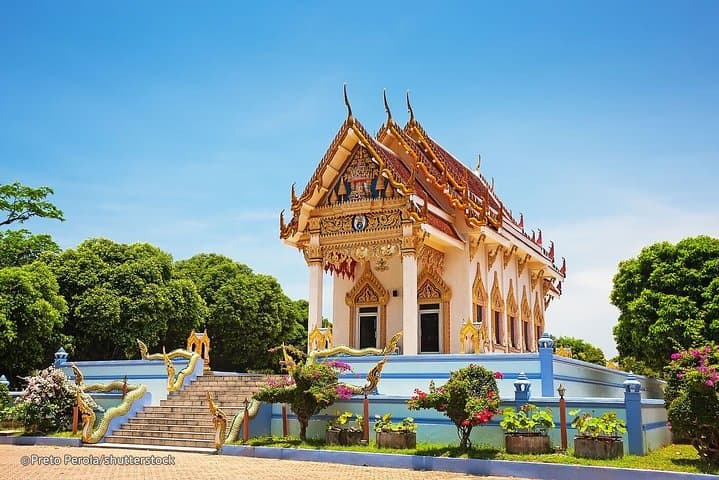
This is not a checklist tour. It’s an introduction to the intersections of religion, geology, and everyday life on Samui. The granite formations at Hinta Hinyai—Grandfather and Grandmother Rocks—are geological punchlines that have shaped folklore and beachside commerce. Wat Plai Laem channels Chinese-Buddhist decorative flair into an active spiritual site where gilded statues and mirror tiles catch light like a private gallery for devotees. Between temples, markets and a jungle-path waterfall thread together the island’s agricultural past and its modern tourism economy: rubber plantations and coconut groves that once fed families now fringe resorts and restaurants.
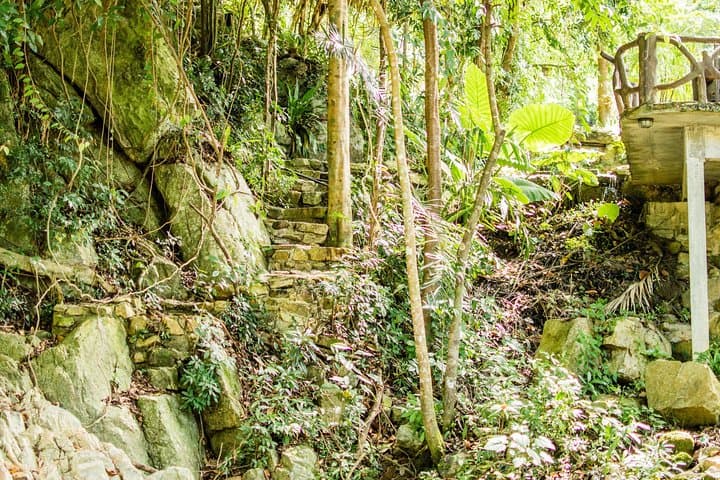
Your guide will point out local customs—how to present food to monks, the correct way to remove shoes before entering temple buildings—and share small social histories: how Samui’s hillier interior kept communities slightly apart, creating distinct village identities that still hold at festivals. The waterfall stop is less about scale and more about contrast: a short walk through a green, humid pocket of forest where ferns fan the trail and the falling water dares you to cool off.
Practicalities matter. This tour starts early and runs about eight hours with hotel pickup and return; expect light walking, short stair climbs at temple sites, and a few uneven market surfaces. Dress respectfully for temples—shoulders and knees covered—and bring swimwear and a towel if you plan to dip at the waterfall. Hydration is critical: island sun intensifies quickly, and salty sea air masks effort.
For photographers, the quiet morning light at Big Buddha and Wat Plai Laem yields the best, crowd-free frames; the market’s textures are sharpest midmorning. The group size keeps things intimate—about 15 people—so you’ll have time to linger or move on depending on the mood. By afternoon you’re back to your hotel with a full belly from a Thai set lunch and the odd, pleasing sensation of having seen an island from the inside—its rituals, rocks, and hidden corners stitched into a single, easy day.
easy.
8 hours.
Suitable for most fitness levels; requires short walks, stair climbs and standing during temple visits
Pickup typically begins early morning with a total duration of about eight hours, including hotel pickup and return.
Admissions listed as included for certain temples; your local guide will confirm which sites require fees during the tour.
Yes; the tour is rated easy and suitable for all fitness levels, though some temple steps and short jungle walks are involved.
Yes—stops at markets and near Hinta Hinyai offer local snacks and souvenirs; bring cash for small purchases.
Modest clothing: no shorts above the knee, no sleeveless tops or see-through garments; remove footwear inside temple buildings.
The provider requires at least two people; if the minimum isn’t met you’ll be offered an alternative date or a refund.
Samui’s identity shifted from coconut and rubber production to tourism in the late 20th century; many temples and village festivals preserve older community customs.
Tour operators encourage responsible visits—don’t leave litter at temple sites, and avoid feeding wildlife; stick to marked paths at waterfall areas to protect fragile understory plants.
I Asia Thailand operates guided outdoor trips and adventures with an emphasis on safety, stewardship, and memorable experiences.
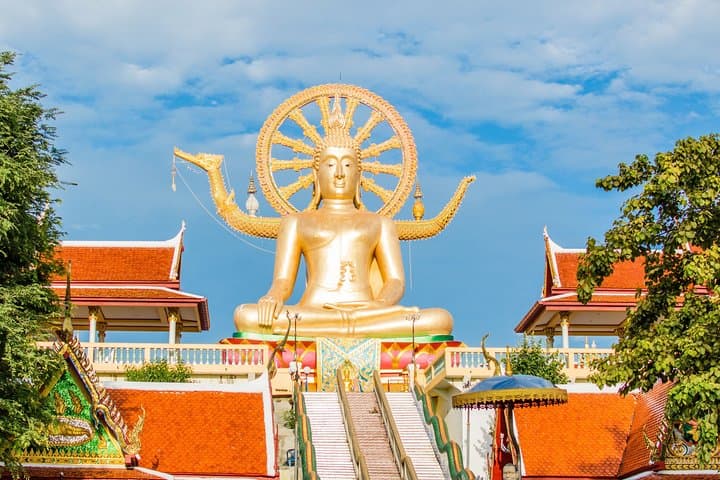
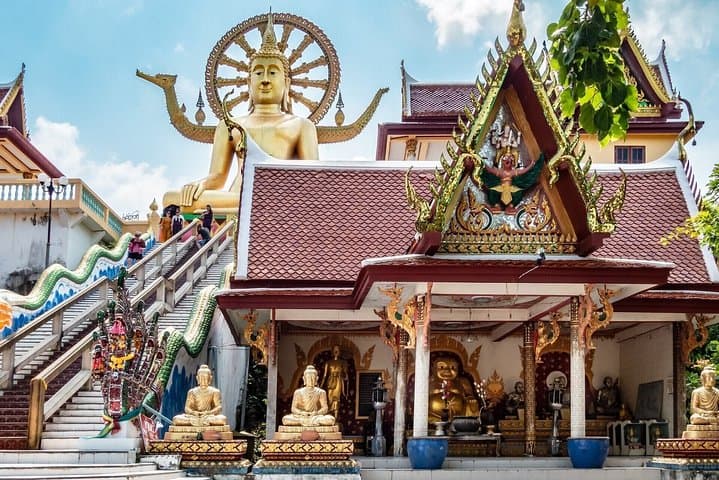
Before dawn on Ko Samui the island feels like a sleeping shoulder—slow, warm, and full of small, deliberate sounds. On this full-day cultural loop you slip through seaside towns while the sky pales to a clean blue and monks walk barefoot along quiet streets, their orange robes like signals guiding you toward the island’s quieter rhythms. The first stop, the Big Buddha, grows larger as you climb the steps; the statue doesn’t just sit over the bay, it presides, patient and unhurried, while fishermen and distant islands fold into the horizon.
Before dawn on Ko Samui the island feels like a sleeping shoulder—slow, warm, and full of small, deliberate sounds. On this full-day cultural loop you slip through seaside towns while the sky pales to a clean blue and monks walk barefoot along quiet streets, their orange robes like signals guiding you toward the island’s quieter rhythms. The first stop, the Big Buddha, grows larger as you climb the steps; the statue doesn’t just sit over the bay, it presides, patient and unhurried, while fishermen and distant islands fold into the horizon.
This is not a checklist tour. It’s an introduction to the intersections of religion, geology, and everyday life on Samui. The granite formations at Hinta Hinyai—Grandfather and Grandmother Rocks—are geological punchlines that have shaped folklore and beachside commerce. Wat Plai Laem channels Chinese-Buddhist decorative flair into an active spiritual site where gilded statues and mirror tiles catch light like a private gallery for devotees. Between temples, markets and a jungle-path waterfall thread together the island’s agricultural past and its modern tourism economy: rubber plantations and coconut groves that once fed families now fringe resorts and restaurants.
Your guide will point out local customs—how to present food to monks, the correct way to remove shoes before entering temple buildings—and share small social histories: how Samui’s hillier interior kept communities slightly apart, creating distinct village identities that still hold at festivals. The waterfall stop is less about scale and more about contrast: a short walk through a green, humid pocket of forest where ferns fan the trail and the falling water dares you to cool off.
Practicalities matter. This tour starts early and runs about eight hours with hotel pickup and return; expect light walking, short stair climbs at temple sites, and a few uneven market surfaces. Dress respectfully for temples—shoulders and knees covered—and bring swimwear and a towel if you plan to dip at the waterfall. Hydration is critical: island sun intensifies quickly, and salty sea air masks effort.
For photographers, the quiet morning light at Big Buddha and Wat Plai Laem yields the best, crowd-free frames; the market’s textures are sharpest midmorning. The group size keeps things intimate—about 15 people—so you’ll have time to linger or move on depending on the mood. By afternoon you’re back to your hotel with a full belly from a Thai set lunch and the odd, pleasing sensation of having seen an island from the inside—its rituals, rocks, and hidden corners stitched into a single, easy day.