THE ADVENTURE COLLECTIVE® · Independent discovery and booking for outdoor travel

Rise through rainforest, moorland and alpine desert on Kilimanjaro’s oldest path. This six‑day Marangu route climb combines hut stays with a steady ascent to Uhuru Peak—perfect for climbers who value structure, support and a classic summit experience.
Rise through rainforest, moorland and alpine desert on Kilimanjaro’s oldest path. This six‑day Marangu route climb combines hut stays with a steady ascent to Uhuru Peak—perfect for climbers who value structure, support and a classic summit experience.
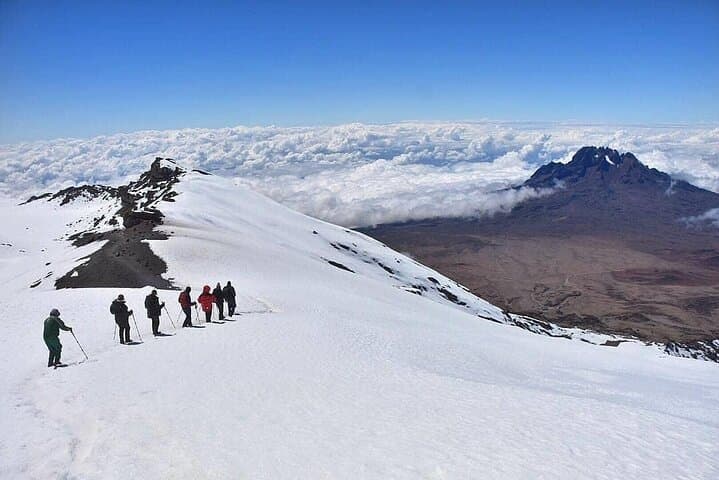
A string of headlamps threads the night on the lower slopes—tiny constellations marching up a sleeping volcano. The air at Marangu Gate tastes of damp earth and eucalyptus; Colobus monkeys call from the canopy as porters sling packs and guides tighten their belts. Over six days the mountain will change its wardrobe: rainforest at the start, giant lobelia-dotted moorlands, an austere alpine desert and finally the raw, wind-scoured rim of Kibo where sunrise finds you at Uhuru Peak (5,895 m).
Verified experiences and guided adventures in the surrounding area.
Operated by Exceed Expectations Tours & Safari · Moshi, Kilimanjaro Region
A string of headlamps threads the night on the lower slopes—tiny constellations marching up a sleeping volcano. The air at Marangu Gate tastes of damp earth and eucalyptus; Colobus monkeys call from the canopy as porters sling packs and guides tighten their belts. Over six days the mountain will change its wardrobe: rainforest at the start, giant lobelia-dotted moorlands, an austere alpine desert and finally the raw, wind-scoured rim of Kibo where sunrise finds you at Uhuru Peak (5,895 m).
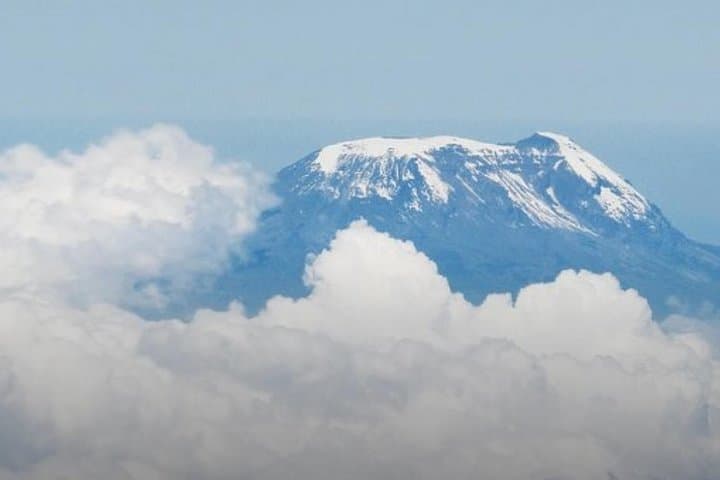
The Marangu route is the oldest established path to Kilimanjaro and the one most often nicknamed the “Coca‑Cola” route for its relative ease and hut accommodations. Geologically Kilimanjaro is a three‑peaked stratovolcano—Mawenzi and Kibo are the features you’ll watch grow larger each day—and the summit crater still holds fast‑shrinking glaciers that map climate change in slow, elegant lines. The Chagga people have lived in the mountain's rain shadow for centuries; today their farms and towns like Moshi supply guides, porters and the hospitality that make summit day possible.
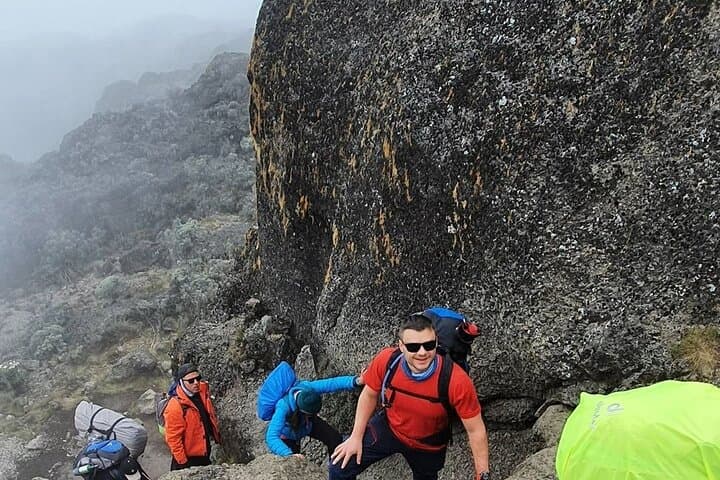
Expect real elevation gain: the climb begins at Marangu Gate (≈1,860 m) and tops out at Uhuru Peak (5,895 m), a net gain of roughly 4,035 m over about 64 km roundtrip. Daily hiking ranges from four to ten hours on varied terrain—muddy forest tracks, eroded volcanic scree, rocky ridgelines and a thin‑air scramble to Gillman’s Point and the crater rim. Dormitory huts (Mandara, Horombo, Kibo) replace tents, which simplifies logistics but also concentrates traffic; the route is more crowded than alternatives and ascent and descent use the same corridor.
Practical edge: acclimatization matters more than tempo—spend the extra day at Horombo if symptoms appear. Hydrate proactively (3–4 liters per day), eat warm, calorie‑dense meals provided on the trail, and layer for extremes—tropical warmth at 2,000 m, near‑freezing summit nights. Guides will advise pacing with the Tanzanian mantra: pole pole (slowly). Pack gaiters and trekking poles for the mud and scree, and a warm sleeping bag for summit rotations.
Permits and park fees are mandatory and arranged by your operator; tipping the crew is customary and forms a meaningful portion of local wages. Best windows for stable weather are the dry months (June–October) and January–February; rainy periods make the lower slopes slippery and views murkier.
On summit morning, the crater rim will turn from iron to gold as you cross Hans Meyer Cave and push for Gillman’s Point—the mountain rewards steady, respectful climbing. The Marangu route isn’t the most solitary or scenic option, but it is direct, social and historically resonant—a practical, human‑powered way to stand on Africa’s rooftop.
challenging.
6 days.
Good cardiovascular fitness and regular hiking experience; ability to carry a daypack and walk 5–8 hours on uneven terrain.
Marangu is one of the more direct and social routes with hut accommodations; it’s less scenically varied and can be crowded, but technically easier—still expect long days and major altitude gain.
Huts are dormitory style with basic bedding in some seasons; bring a rated sleeping bag and a small liner for hygiene and extra warmth.
Success rates fluctuate but a 6‑day program is borderline; adding an extra acclimatization day at Horombo significantly improves summit odds.
Permits and park fees are mandatory and normally handled by the operator; confirm this before travel and keep copies of your paperwork.
Tipping is customary; plan roughly $100–$200 total per climber divided among guides and porters, adjusted by service and group size.
June–October (long dry season) and January–February offer the most stable weather and clearer summit views; the March–May long rains are least favorable.
Marangu is the oldest colonial route, historically used by early European explorers; huts were established to support guided ascents and remain the most traditional accommodation option.
Kilimanjaro National Park enforces strict permit systems and waste rules; staying on trails and packing out non‑biodegradable waste helps preserve fragile alpine zones.
Exceed Expectations Tours & Safari operates guided outdoor trips and adventures with an emphasis on safety, stewardship, and memorable experiences.
A string of headlamps threads the night on the lower slopes—tiny constellations marching up a sleeping volcano. The air at Marangu Gate tastes of damp earth and eucalyptus; Colobus monkeys call from the canopy as porters sling packs and guides tighten their belts. Over six days the mountain will change its wardrobe: rainforest at the start, giant lobelia-dotted moorlands, an austere alpine desert and finally the raw, wind-scoured rim of Kibo where sunrise finds you at Uhuru Peak (5,895 m).
A string of headlamps threads the night on the lower slopes—tiny constellations marching up a sleeping volcano. The air at Marangu Gate tastes of damp earth and eucalyptus; Colobus monkeys call from the canopy as porters sling packs and guides tighten their belts. Over six days the mountain will change its wardrobe: rainforest at the start, giant lobelia-dotted moorlands, an austere alpine desert and finally the raw, wind-scoured rim of Kibo where sunrise finds you at Uhuru Peak (5,895 m).
The Marangu route is the oldest established path to Kilimanjaro and the one most often nicknamed the “Coca‑Cola” route for its relative ease and hut accommodations. Geologically Kilimanjaro is a three‑peaked stratovolcano—Mawenzi and Kibo are the features you’ll watch grow larger each day—and the summit crater still holds fast‑shrinking glaciers that map climate change in slow, elegant lines. The Chagga people have lived in the mountain's rain shadow for centuries; today their farms and towns like Moshi supply guides, porters and the hospitality that make summit day possible.
Expect real elevation gain: the climb begins at Marangu Gate (≈1,860 m) and tops out at Uhuru Peak (5,895 m), a net gain of roughly 4,035 m over about 64 km roundtrip. Daily hiking ranges from four to ten hours on varied terrain—muddy forest tracks, eroded volcanic scree, rocky ridgelines and a thin‑air scramble to Gillman’s Point and the crater rim. Dormitory huts (Mandara, Horombo, Kibo) replace tents, which simplifies logistics but also concentrates traffic; the route is more crowded than alternatives and ascent and descent use the same corridor.
Practical edge: acclimatization matters more than tempo—spend the extra day at Horombo if symptoms appear. Hydrate proactively (3–4 liters per day), eat warm, calorie‑dense meals provided on the trail, and layer for extremes—tropical warmth at 2,000 m, near‑freezing summit nights. Guides will advise pacing with the Tanzanian mantra: pole pole (slowly). Pack gaiters and trekking poles for the mud and scree, and a warm sleeping bag for summit rotations.
Permits and park fees are mandatory and arranged by your operator; tipping the crew is customary and forms a meaningful portion of local wages. Best windows for stable weather are the dry months (June–October) and January–February; rainy periods make the lower slopes slippery and views murkier.
On summit morning, the crater rim will turn from iron to gold as you cross Hans Meyer Cave and push for Gillman’s Point—the mountain rewards steady, respectful climbing. The Marangu route isn’t the most solitary or scenic option, but it is direct, social and historically resonant—a practical, human‑powered way to stand on Africa’s rooftop.