THE ADVENTURE COLLECTIVE® · Independent discovery and booking for outdoor travel

A private 7-day Machame Route trek to Uhuru Peak that balances scenic variety with built-in acclimatization. Ideal for fit hikers who want guided support and a high success rate on Africa’s highest summit.
A private 7-day Machame Route trek to Uhuru Peak that balances scenic variety with built-in acclimatization. Ideal for fit hikers who want guided support and a high success rate on Africa’s highest summit.
You step off the transport in Moshi at dawn and the mountain is already awake — a dark, towering cone capped in ice, its flanks rolling down through forest, heath, and stony plateau. On the Machame Route you cross that vertical biography in seven stages: humid rainforest that clings to your sleeves, the wind-scoured Shira Plateau at 3,500 m, the serrated silhouette of the Barranco Wall, and the long, thin push from Barafu to Uhuru Peak at 5,895 m where sunrise rewrites every forecast.
Verified experiences and guided adventures in the surrounding area.
Operated by Eyes on Kilimanjaro · Moshi, Kilimanjaro Region
You step off the transport in Moshi at dawn and the mountain is already awake — a dark, towering cone capped in ice, its flanks rolling down through forest, heath, and stony plateau. On the Machame Route you cross that vertical biography in seven stages: humid rainforest that clings to your sleeves, the wind-scoured Shira Plateau at 3,500 m, the serrated silhouette of the Barranco Wall, and the long, thin push from Barafu to Uhuru Peak at 5,895 m where sunrise rewrites every forecast.
Machame’s history is as volcanic as its slopes. Kilimanjaro is a dormant stratovolcano with three volcanic cones: Kibo (the summit), Mawenzi and Shira. The mountain’s glaciers are shrinking remnants of a colder climate; local Chagga communities have lived in its shadow for centuries, cultivating coffee on the lower slopes and guiding caravans upward since the first European climbs in the late 19th century. Geologically, you move from thick rainforest soils to ancient lava flows and finally to alpine desert gravel — the terrain announces itself with every 500–1,000 meters of elevation.
Culturally the mountain feels public: porters and guides form the human spine of the trek, and private groups on a Machame itinerary benefit from one guide per two climbers plus a support crew that handles camp, food and safety. The itinerary builds acclimatization into the plan: a day walking to Lava Tower (4,630 m) and a slow climb across Barranco Wall are not just scenic, they’re physiological strategy.
Practically, plan for steep, uneven trails, long days and dramatic temperature swings. Expect total elevation gain of roughly 4,200 m from Machame Gate (~1,800 m) to Uhuru Peak, with daily hikes of 4–8 hours and a summit push that starts around midnight and can last 6–8 hours round trip to Barafu and down to Mweka. Footing varies from mud and roots in the forest to loose scree near the summit; trekking poles and solid boots matter.
Hydration and pacing are your two best tools against altitude: drink often, walk slow, and trust the guides’ rotation of rest and acclimatization walks. Bring layered insulation for night camps and the summit — temperatures can swing from warm at camp to -10°C (or colder) on the crater rim. Expect communal meals prepared by the crew, tented sleeping, and an emphasis on safety: supplementary oxygen and rescue fees are included.
For motivated hikers with good aerobic fitness, the 7-day Machame private trek is a compact, well-supported route that rewards persistence with a sunrise that feels physically earned. When you stand on the crater rim at dawn, the air is thin, bright and fiercely present — and the work it took to get there is part of the view.
challenging.
7 days.
Good aerobic base and experience with multi-day hiking at altitude; able to hike 4–8 hours/day and tolerate long night summit push.
No technical altitude experience is required, but you should have good fitness and some multi-day trekking background; the itinerary includes acclimatization days and a 1:2 guide ratio.
Primary risks are altitude sickness, cold exposure, and slips on scree; guides carry oxygen and are trained in evacuation protocols.
Typical inclusions are park and rescue fees, all meals on the mountain, tents, mattresses, supplementary oxygen and guiding staff; check your booking for exact details.
Expect a long, cold 6–8 hour round trip with steep sections and very thin air; pacing and frequent breaks are critical.
Yes, basic items can often be rented in Moshi; however, bring well-broken-in boots and your own sleeping bag if possible.
January–March and June–October are drier and more reliable; avoid the main rainy seasons (March–May, November–December) for better summit chances.
Local Chagga communities have farmed the lower slopes for generations; colonial-era explorers mapped early routes and the Machame path grew in popularity for its scenery.
Kilimanjaro National Park manages strict waste and porter regulations; choose operators who follow leave-no-trace, pay fair wages and use official park waste protocols.
Eyes on Kilimanjaro operates guided outdoor trips and adventures with an emphasis on safety, stewardship, and memorable experiences.
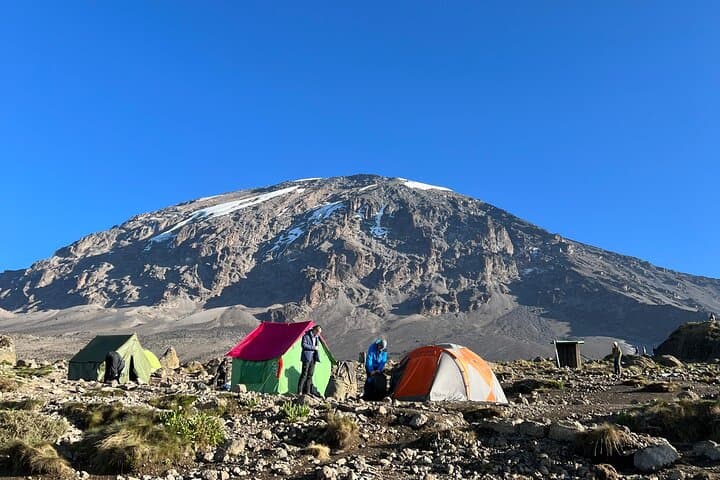
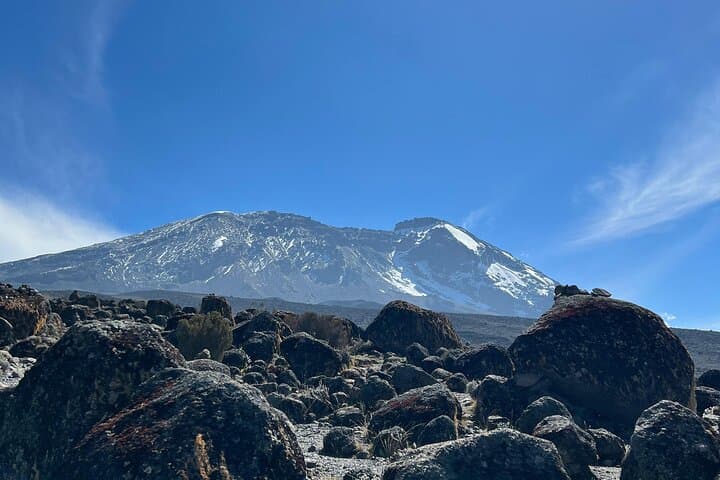
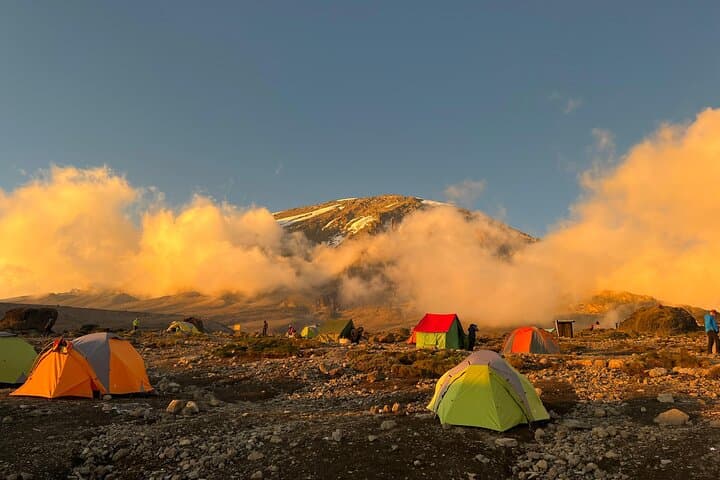
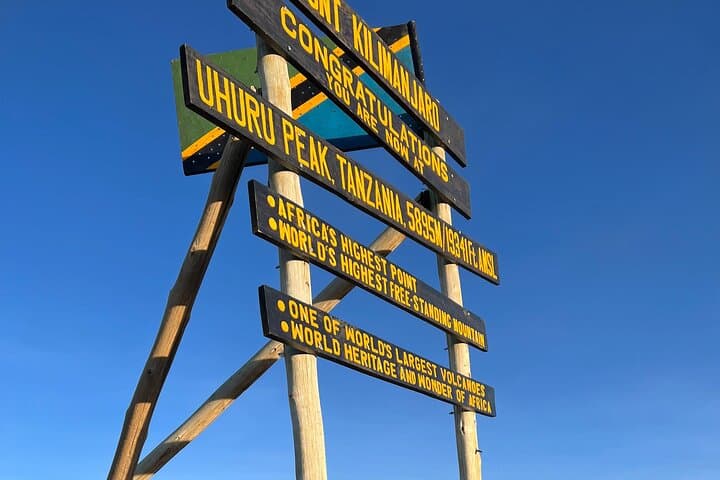
You step off the transport in Moshi at dawn and the mountain is already awake — a dark, towering cone capped in ice, its flanks rolling down through forest, heath, and stony plateau. On the Machame Route you cross that vertical biography in seven stages: humid rainforest that clings to your sleeves, the wind-scoured Shira Plateau at 3,500 m, the serrated silhouette of the Barranco Wall, and the long, thin push from Barafu to Uhuru Peak at 5,895 m where sunrise rewrites every forecast.
You step off the transport in Moshi at dawn and the mountain is already awake — a dark, towering cone capped in ice, its flanks rolling down through forest, heath, and stony plateau. On the Machame Route you cross that vertical biography in seven stages: humid rainforest that clings to your sleeves, the wind-scoured Shira Plateau at 3,500 m, the serrated silhouette of the Barranco Wall, and the long, thin push from Barafu to Uhuru Peak at 5,895 m where sunrise rewrites every forecast.
Machame’s history is as volcanic as its slopes. Kilimanjaro is a dormant stratovolcano with three volcanic cones: Kibo (the summit), Mawenzi and Shira. The mountain’s glaciers are shrinking remnants of a colder climate; local Chagga communities have lived in its shadow for centuries, cultivating coffee on the lower slopes and guiding caravans upward since the first European climbs in the late 19th century. Geologically, you move from thick rainforest soils to ancient lava flows and finally to alpine desert gravel — the terrain announces itself with every 500–1,000 meters of elevation.
Culturally the mountain feels public: porters and guides form the human spine of the trek, and private groups on a Machame itinerary benefit from one guide per two climbers plus a support crew that handles camp, food and safety. The itinerary builds acclimatization into the plan: a day walking to Lava Tower (4,630 m) and a slow climb across Barranco Wall are not just scenic, they’re physiological strategy.
Practically, plan for steep, uneven trails, long days and dramatic temperature swings. Expect total elevation gain of roughly 4,200 m from Machame Gate (~1,800 m) to Uhuru Peak, with daily hikes of 4–8 hours and a summit push that starts around midnight and can last 6–8 hours round trip to Barafu and down to Mweka. Footing varies from mud and roots in the forest to loose scree near the summit; trekking poles and solid boots matter.
Hydration and pacing are your two best tools against altitude: drink often, walk slow, and trust the guides’ rotation of rest and acclimatization walks. Bring layered insulation for night camps and the summit — temperatures can swing from warm at camp to -10°C (or colder) on the crater rim. Expect communal meals prepared by the crew, tented sleeping, and an emphasis on safety: supplementary oxygen and rescue fees are included.
For motivated hikers with good aerobic fitness, the 7-day Machame private trek is a compact, well-supported route that rewards persistence with a sunrise that feels physically earned. When you stand on the crater rim at dawn, the air is thin, bright and fiercely present — and the work it took to get there is part of the view.