THE ADVENTURE COLLECTIVE® · Independent discovery and booking for outdoor travel

A two-hour, small-group walking tour that traces three centuries of vice in New Orleans—from Ursuline convent scandals to Storyville’s palaces of sin. Expect archival photos, provocative stories, and practical route details for an atmospheric evening in the Quarter.
A two-hour, small-group walking tour that traces three centuries of vice in New Orleans—from Ursuline convent scandals to Storyville’s palaces of sin. Expect archival photos, provocative stories, and practical route details for an atmospheric evening in the Quarter.
The brick wall at the corner of Chartres and Ursulines holds the first frame of the story: a humid gust off the Mississippi seems to whisper secrets through the ironwork as a small group gathers beneath a faded lamppost. The guide opens a leather-bound folder of archival photos, and suddenly the French Quarter loosens its daytime civility—its alleys, courtyards and backdoors flicker into a different past, one where red lanterns called customers and madams ran fortunes and the law bent around vice.
Verified experiences and guided adventures in the surrounding area.
Operated by Spectral City Tours · New Orleans, Louisiana
The brick wall at the corner of Chartres and Ursulines holds the first frame of the story: a humid gust off the Mississippi seems to whisper secrets through the ironwork as a small group gathers beneath a faded lamppost. The guide opens a leather-bound folder of archival photos, and suddenly the French Quarter loosens its daytime civility—its alleys, courtyards and backdoors flicker into a different past, one where red lanterns called customers and madams ran fortunes and the law bent around vice.
This two-hour walking tour rewrites the tidy tour-map version of New Orleans. It starts where France’s colonial experiments collided with church control: the Ursulines convent, an 18th-century compound that doubled as a social fulcrum for a city built on trade, temptation, and transactional survival. From there the route threads past the oldest bar in North America, along the edges of the Tremé and toward Louis Armstrong Park, which now overlooks the ground where Storyville’s “palaces of sin” once rose.
Geology and geography play quiet roles: the city sits on alluvial plain, the Mississippi pushing and pulling life ashore, which helped make New Orleans a port hungry for labor—and for vice. Social currents were equally powerful. Women shipped from Europe and “corrected” by the church often parlayed that marginalization into businesses that shaped the city’s economy. By the late 19th century, madams glittered in diamonds, built social networks, and sometimes escaped punishment for crimes others could not.
The tour balances jaw-dropping anecdotes—murder, bootlegging, and Marie Laveau’s lesser-known finances—with concrete context: where the red-light district was zoned, why Basin Street mattered to jazz, and how municipal policies reshaped neighborhoods. Guides present historical images and stop for photos; there’s a take-home Polaroid moment, suggested cocktails if you want to extend the evening, and enough seating at the Armstrong Park stop to rest in the shade.
Practicalities are simple but important. Meet at Chartres & Ursulines by the BK House courtyard brick wall; tours run two hours, are limited to 15 people, and are strictly 18+. Wear breathable shoes—the route is an easy paced, mostly flat walk on cobbles and sidewalks—but humidity makes water and sun protection essential. Public transit and streetcars stop nearby; stroller access is possible and service animals are allowed, but expect narrow sidewalks and occasional crowds.
This is a tour that asks you to look at New Orleans’ past without varnish: provocative, historically messy, and deeply human. It’s best late afternoon into early evening, when the Quarter cools and the streetlamps begin to assert their own small authority over the night.
easy.
2 hours.
Suitable for people who can stand and walk for up to two hours at a relaxed pace; minimal elevation and no technical fitness required.
Meet at the corner of Chartres Street and Ursulines Avenue by the brick wall of the BK House courtyard; guides will be waiting there.
No; the tour is intended for guests aged 18 and older due to mature historical content.
No; drinks are not included, though the guide may recommend nearby historic cocktail spots if you choose to continue after the tour.
The tour notes stroller access is possible and paths are mostly flat, but some sidewalks are narrow and cobbled—call ahead to discuss specific accessibility needs.
Groups are limited to 15 guests to keep the experience intimate and easier to navigate through the Quarter.
Full refunds are available if you cancel at least 24 hours before the scheduled departure time.
The city’s red-light districts were formally zoned as Storyville in 1897; the district’s existence shaped early jazz venues and the local economy until its closure in 1917.
Respect for residential areas and historic structures is crucial—avoid touching fragile architecture, pack out trash, and support local preservation efforts by visiting museums and buying from neighborhood businesses.
Spectral City Tours operates guided outdoor trips and adventures with an emphasis on safety, stewardship, and memorable experiences.
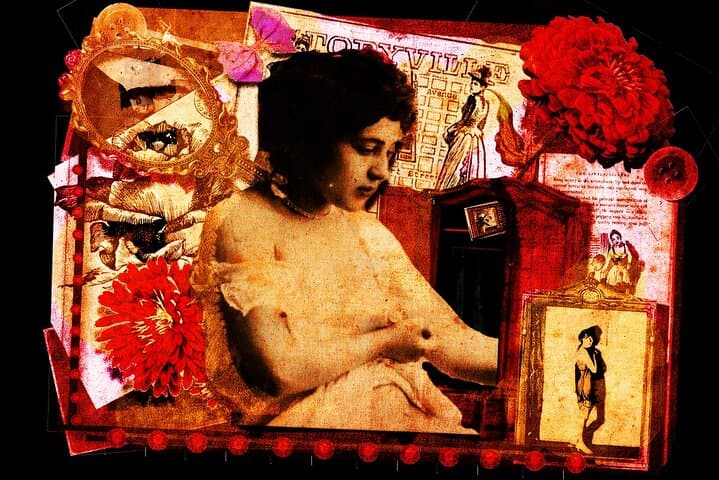
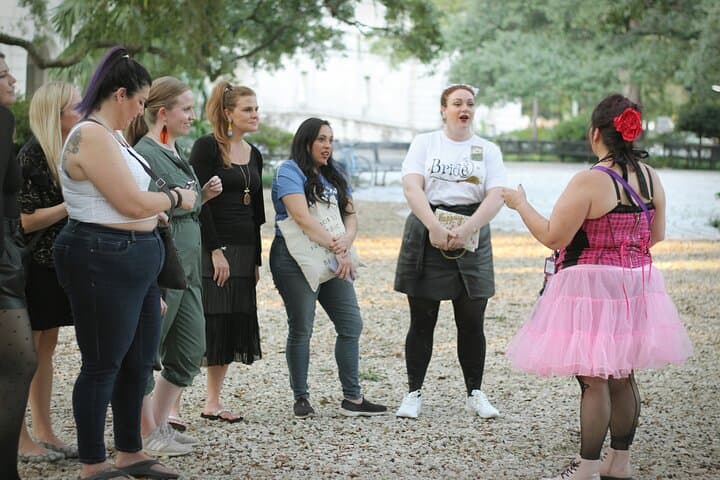
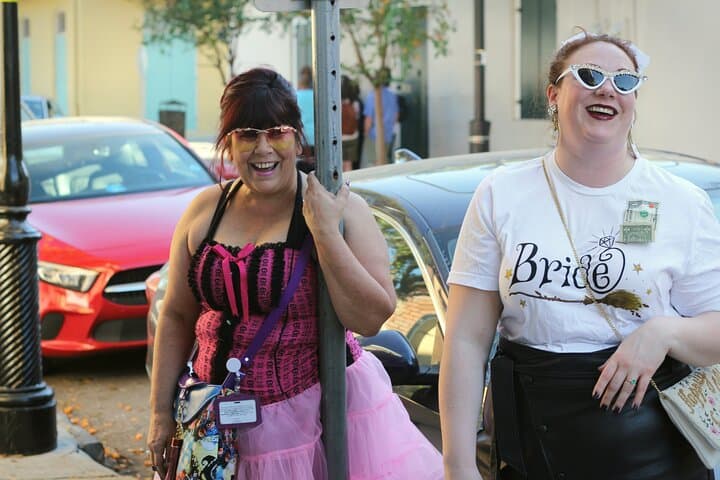
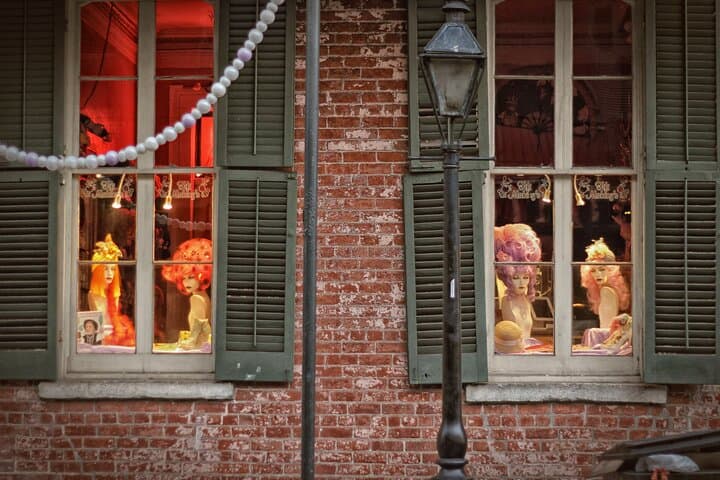
The brick wall at the corner of Chartres and Ursulines holds the first frame of the story: a humid gust off the Mississippi seems to whisper secrets through the ironwork as a small group gathers beneath a faded lamppost. The guide opens a leather-bound folder of archival photos, and suddenly the French Quarter loosens its daytime civility—its alleys, courtyards and backdoors flicker into a different past, one where red lanterns called customers and madams ran fortunes and the law bent around vice.
The brick wall at the corner of Chartres and Ursulines holds the first frame of the story: a humid gust off the Mississippi seems to whisper secrets through the ironwork as a small group gathers beneath a faded lamppost. The guide opens a leather-bound folder of archival photos, and suddenly the French Quarter loosens its daytime civility—its alleys, courtyards and backdoors flicker into a different past, one where red lanterns called customers and madams ran fortunes and the law bent around vice.
This two-hour walking tour rewrites the tidy tour-map version of New Orleans. It starts where France’s colonial experiments collided with church control: the Ursulines convent, an 18th-century compound that doubled as a social fulcrum for a city built on trade, temptation, and transactional survival. From there the route threads past the oldest bar in North America, along the edges of the Tremé and toward Louis Armstrong Park, which now overlooks the ground where Storyville’s “palaces of sin” once rose.
Geology and geography play quiet roles: the city sits on alluvial plain, the Mississippi pushing and pulling life ashore, which helped make New Orleans a port hungry for labor—and for vice. Social currents were equally powerful. Women shipped from Europe and “corrected” by the church often parlayed that marginalization into businesses that shaped the city’s economy. By the late 19th century, madams glittered in diamonds, built social networks, and sometimes escaped punishment for crimes others could not.
The tour balances jaw-dropping anecdotes—murder, bootlegging, and Marie Laveau’s lesser-known finances—with concrete context: where the red-light district was zoned, why Basin Street mattered to jazz, and how municipal policies reshaped neighborhoods. Guides present historical images and stop for photos; there’s a take-home Polaroid moment, suggested cocktails if you want to extend the evening, and enough seating at the Armstrong Park stop to rest in the shade.
Practicalities are simple but important. Meet at Chartres & Ursulines by the BK House courtyard brick wall; tours run two hours, are limited to 15 people, and are strictly 18+. Wear breathable shoes—the route is an easy paced, mostly flat walk on cobbles and sidewalks—but humidity makes water and sun protection essential. Public transit and streetcars stop nearby; stroller access is possible and service animals are allowed, but expect narrow sidewalks and occasional crowds.
This is a tour that asks you to look at New Orleans’ past without varnish: provocative, historically messy, and deeply human. It’s best late afternoon into early evening, when the Quarter cools and the streetlamps begin to assert their own small authority over the night.