THE ADVENTURE COLLECTIVE® · Independent discovery and booking for outdoor travel

Board a scenic cruise from Vilano Beach and paddle quiet tidal creeks around Anastasia Island. This two-hour wildlife-focused tour pairs coastal history with hands-on kayaking—dolphins, manatees, and roseate spoonbills are regulars.
Board a scenic cruise from Vilano Beach and paddle quiet tidal creeks around Anastasia Island. This two-hour wildlife-focused tour pairs coastal history with hands-on kayaking—dolphins, manatees, and roseate spoonbills are regulars.
You step onto a small floating dock under a bluebird-and-dolphin arch, the Atlantic breeze tugging at your hat while the Fury vessel settles into the gentle chop. The boat peels away from Vilano Beach Pier and Matanzas Bay opens like a moving map: Castillo de San Marcos on the left, the black-and-white spiral of the St. Augustine Lighthouse across the water, and the Bridge of Lions tracing an old route between mainland and island. For the next two hours the coastline becomes the guide, and the water the thing that keeps time.
Verified experiences and guided adventures in the surrounding area.
Operated by Fury Water Adventures St. Augustine · St. Augustine, Florida
You step onto a small floating dock under a bluebird-and-dolphin arch, the Atlantic breeze tugging at your hat while the Fury vessel settles into the gentle chop. The boat peels away from Vilano Beach Pier and Matanzas Bay opens like a moving map: Castillo de San Marcos on the left, the black-and-white spiral of the St. Augustine Lighthouse across the water, and the Bridge of Lions tracing an old route between mainland and island. For the next two hours the coastline becomes the guide, and the water the thing that keeps time.
Geology here reads like a slow-motion collision: barrier island sand built by currents and storms, tidal creeks carving channels through peat-rich marsh, and dunes fortified by sea oats. History rides alongside the shoreline. St. Augustine is the nation’s oldest continuously occupied European-founded city; ships and shore have been trading, fighting, and fishing these waters for four centuries. On this cruise you pass those landmarks and listen as guides fold local history into natural history—why the bay is named Matanzas, how maritime forests survive salt and wind, and where ospreys and spoonbills prefer to roost.
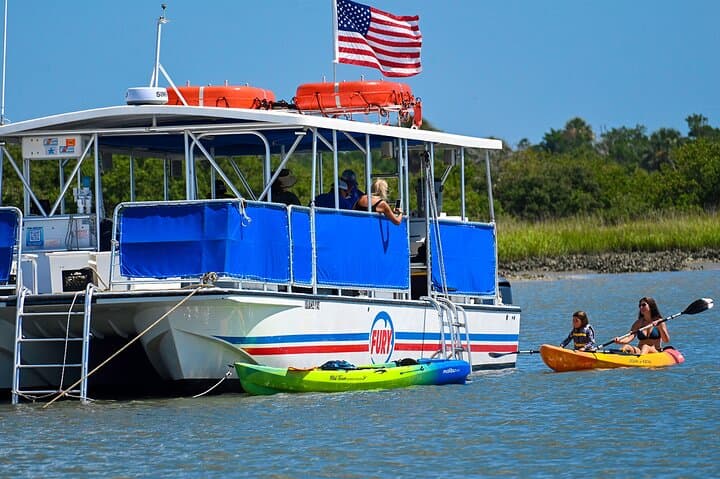
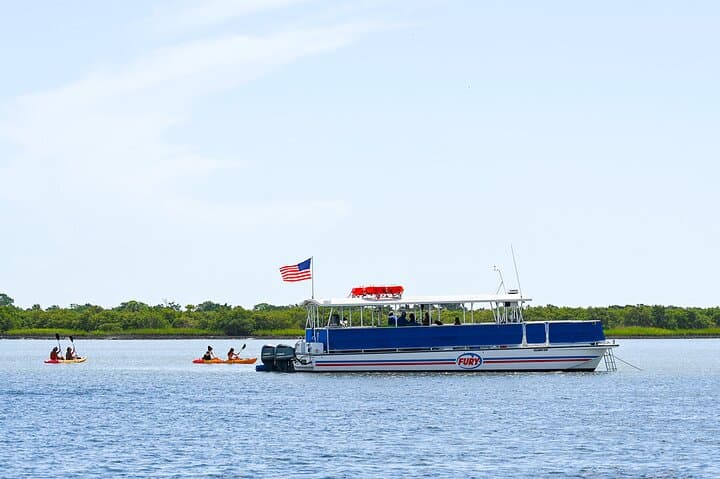
The day pivots when the boat anchors off Anastasia Island. Kayaks are waiting, and the bay narrows into tidal creeks that dare you to glide quietly. Paddling here is less workout and more reconnaissance: you drift through channels that mirror the sky, count pelicans silhouetted on pilings, and watch dolphins arc in the distance. Manatees surface like slow breath, and roseate spoonbills paint the marsh with abrupt splashes of pink. Guides point out subtle signs—fish jumps, oyster bars, and the difference between a marsh eel trail and a raccoon’s path.
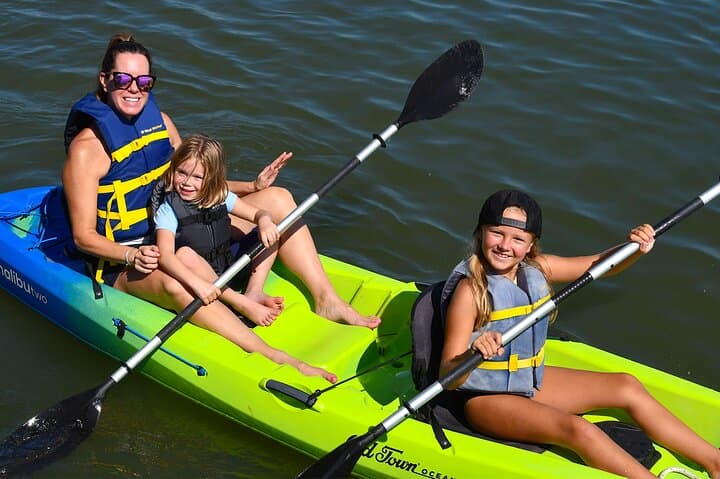
Practicalities are straightforward. Check in at least 30 minutes before departure at the Vilano Beach Public Fishing Pier (260 Vilano Rd). The total experience is two hours: roughly 30–40 minutes of cruising each way and about 40–50 minutes of guided kayaking depending on tides. No prior paddling expertise required; guides provide instruction and life jackets. Wear quick-dry layers, reef-safe sunscreen, and shoes that can get wet. Bring a refillable water bottle—unlimited water and soda are provided, and beer or wine is served after the kayak portion for those 21 and older. Respect wildlife: keep distance, do not feed animals, and follow the guide’s direction when approaching sensitive nesting areas.
Timing matters—mornings are typically calmer and better for wildlife viewing; tides change where you can paddle and when channels open. If weather cancels, the operator will reschedule or refund per policy. For photographers, low light and calm water create mirror-like reflections; for naturalists, quiet paddling reveals the marsh’s rhythm. This is a short tour, but it delivers an expansive sense of place: living coastline, layered history, and wildlife that insists on being seen.
easy.
2 hours.
Suitable for most fitness levels; participants should be able to sit and paddle for roughly 40–60 minutes.
Plan to arrive at least 30 minutes before departure; check in is at the Fury vessel on the Vilano Beach Pier.
No—guides provide basic instruction and life jackets; the paddle sections are on calm tidal creeks suited to beginners.
Infants must sit on an adult’s lap; the operator notes the tour is suitable for a wide range of ages but confirm any age or weight limits when booking.
Common sightings include bottlenose dolphins, West Indian manatees, ospreys, herons, and roseate spoonbills, though wildlife is never guaranteed.
Fury does not own parking; allow extra time to find street or public lot parking, or use a taxi or ride share if time is tight.
No—alcohol cannot be consumed prior to participating; guests under the influence may be turned away or required to reschedule.
St. Augustine dates to 1565; Matanzas Bay and Anastasia Island have been strategic and ecological corridors since Spanish colonial times.
Salt marshes here sequester carbon and protect the mainland; stick to channels, avoid trampling vegetation, and do not feed wildlife to minimize impact.
Fury Water Adventures St. Augustine operates guided outdoor trips and adventures with an emphasis on safety, stewardship, and memorable experiences.
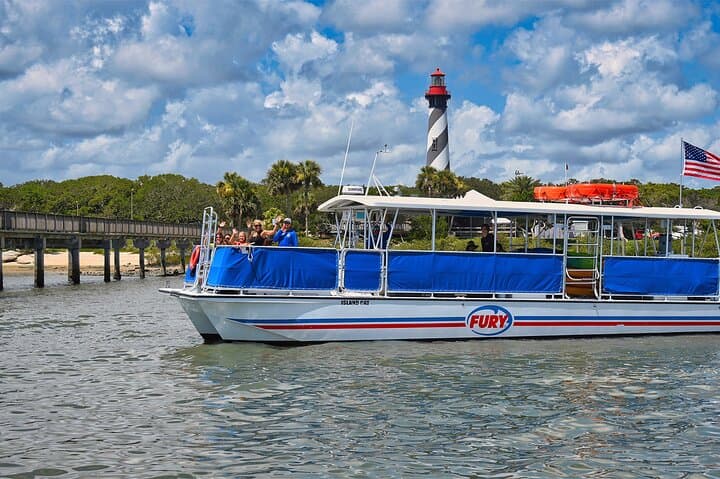
You step onto a small floating dock under a bluebird-and-dolphin arch, the Atlantic breeze tugging at your hat while the Fury vessel settles into the gentle chop. The boat peels away from Vilano Beach Pier and Matanzas Bay opens like a moving map: Castillo de San Marcos on the left, the black-and-white spiral of the St. Augustine Lighthouse across the water, and the Bridge of Lions tracing an old route between mainland and island. For the next two hours the coastline becomes the guide, and the water the thing that keeps time.
You step onto a small floating dock under a bluebird-and-dolphin arch, the Atlantic breeze tugging at your hat while the Fury vessel settles into the gentle chop. The boat peels away from Vilano Beach Pier and Matanzas Bay opens like a moving map: Castillo de San Marcos on the left, the black-and-white spiral of the St. Augustine Lighthouse across the water, and the Bridge of Lions tracing an old route between mainland and island. For the next two hours the coastline becomes the guide, and the water the thing that keeps time.
Geology here reads like a slow-motion collision: barrier island sand built by currents and storms, tidal creeks carving channels through peat-rich marsh, and dunes fortified by sea oats. History rides alongside the shoreline. St. Augustine is the nation’s oldest continuously occupied European-founded city; ships and shore have been trading, fighting, and fishing these waters for four centuries. On this cruise you pass those landmarks and listen as guides fold local history into natural history—why the bay is named Matanzas, how maritime forests survive salt and wind, and where ospreys and spoonbills prefer to roost.
The day pivots when the boat anchors off Anastasia Island. Kayaks are waiting, and the bay narrows into tidal creeks that dare you to glide quietly. Paddling here is less workout and more reconnaissance: you drift through channels that mirror the sky, count pelicans silhouetted on pilings, and watch dolphins arc in the distance. Manatees surface like slow breath, and roseate spoonbills paint the marsh with abrupt splashes of pink. Guides point out subtle signs—fish jumps, oyster bars, and the difference between a marsh eel trail and a raccoon’s path.
Practicalities are straightforward. Check in at least 30 minutes before departure at the Vilano Beach Public Fishing Pier (260 Vilano Rd). The total experience is two hours: roughly 30–40 minutes of cruising each way and about 40–50 minutes of guided kayaking depending on tides. No prior paddling expertise required; guides provide instruction and life jackets. Wear quick-dry layers, reef-safe sunscreen, and shoes that can get wet. Bring a refillable water bottle—unlimited water and soda are provided, and beer or wine is served after the kayak portion for those 21 and older. Respect wildlife: keep distance, do not feed animals, and follow the guide’s direction when approaching sensitive nesting areas.
Timing matters—mornings are typically calmer and better for wildlife viewing; tides change where you can paddle and when channels open. If weather cancels, the operator will reschedule or refund per policy. For photographers, low light and calm water create mirror-like reflections; for naturalists, quiet paddling reveals the marsh’s rhythm. This is a short tour, but it delivers an expansive sense of place: living coastline, layered history, and wildlife that insists on being seen.