THE ADVENTURE COLLECTIVE® · Independent discovery and booking for outdoor travel

A private transfer from Split to Zagreb that pauses for a concentrated, 3–4 hour visit to Plitvice Lakes National Park—one of Europe’s most dynamic freshwater landscapes. This day-long route combines comfortable driving through Lika with a brisk walk along boardwalks, waterfalls, and travertine pools.
A private transfer from Split to Zagreb that pauses for a concentrated, 3–4 hour visit to Plitvice Lakes National Park—one of Europe’s most dynamic freshwater landscapes. This day-long route combines comfortable driving through Lika with a brisk walk along boardwalks, waterfalls, and travertine pools.
The minivan slips out of Split before dawn, headlights cutting across the Adriatic plain as limestone ridges rise in the distance. For eight to ten hours the road becomes the day's spine: a relaxed drive through the Lika highlands, a window into rural Croatia, and a short, concentrated immersion at Plitvice Lakes National Park. When the van eases into the parking area, the sound changes — engines fade and water takes over, a constant chorus of cascades daring you toward the boardwalks.
Verified experiences and guided adventures in the surrounding area.
Operated by CROATIA PRIVATE TOURS · Plitvička Jezera, Lika-Senj County
The minivan slips out of Split before dawn, headlights cutting across the Adriatic plain as limestone ridges rise in the distance. For eight to ten hours the road becomes the day's spine: a relaxed drive through the Lika highlands, a window into rural Croatia, and a short, concentrated immersion at Plitvice Lakes National Park. When the van eases into the parking area, the sound changes — engines fade and water takes over, a constant chorus of cascades daring you toward the boardwalks.
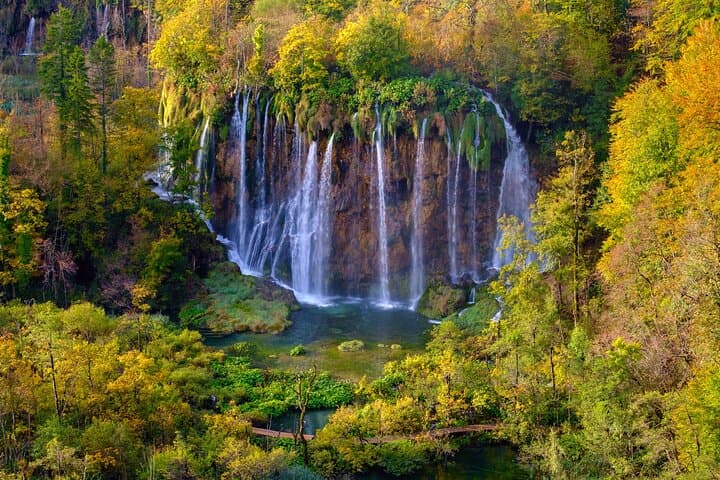
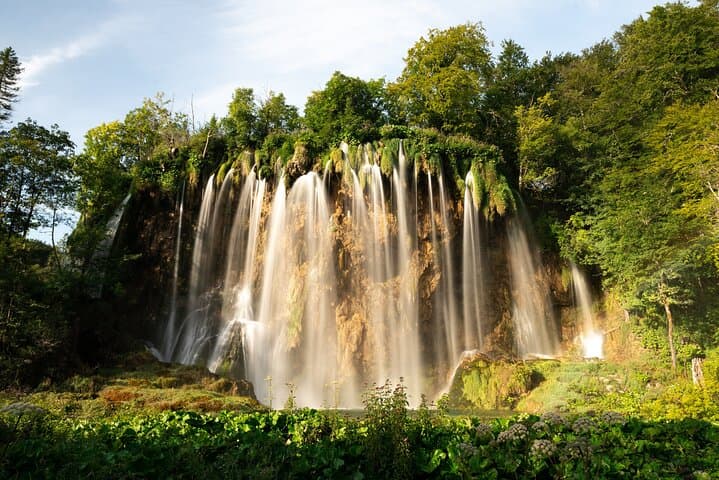
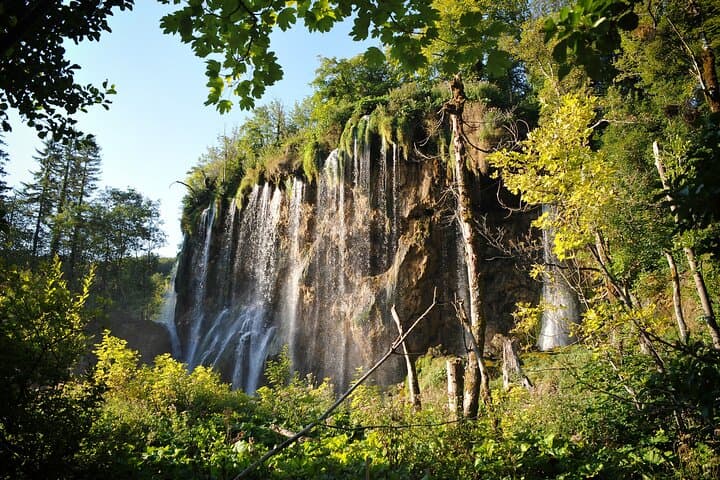
Plitvice is not one lake but a connected system of sixteen tiered basins. UNESCO added the park to its World Heritage List in 1979, recognizing the unusual tufa (travertine) barriers that build and rebuild themselves through mineral deposition. Geologically, the park sits on dolomite and permeable limestone; where underground springs meet surface flows, calcite precipitates and forms the wooden platforms and waterfalls visitors now cross.
Culturally, the region around Plitvice has long been a crossroads — shepherds, fishermen, and small mountain towns shaped by seasonal rhythms and karst soil. That human story is restrained here; the park's regulations keep infrastructure low-profile to protect the fragile travertine formations and the habitat of shy species like otters and red deer.
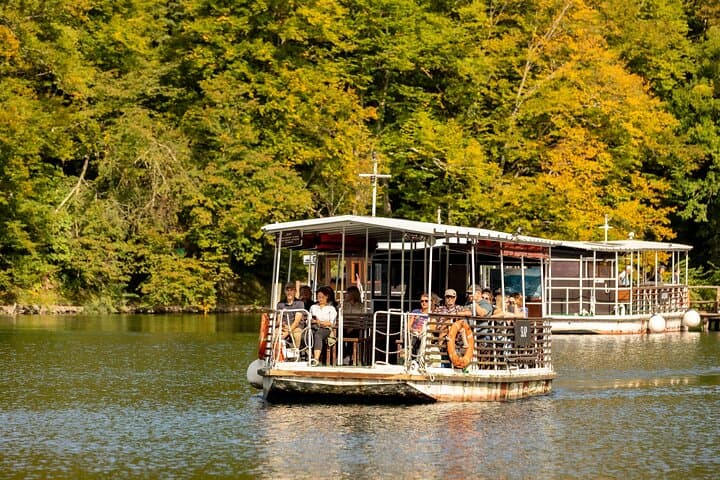
On a three- to four-hour stop, expect to move. The operator typically drops guests at the park entrance where a guided tour can be added but is optional. Most visitors follow a main circuit of boardwalks and stone steps that link the Upper and Lower Lakes; the walk covers roughly 6–8 km depending on route choices and includes stair sections around the 40-meter canyon walls of the Lower Lakes. Paths are well-signed but wet after rain; the wooden planks can be slick.
Practicalities: tickets are not included with this transfer—buy park entrance online in advance during high season. Wear sturdy walking shoes, bring a waterproof layer and at least 1 liter of water, and leave large, oversize luggage at the vehicle (the transfer allows one suitcase and one carry-on per traveler). The schedule is long but efficient: Split pick-up, 3–4 hours of park time, then continuation to Zagreb.
Timing matters. Early in the day waterfalls are full and quiet; mid-afternoon brings crowds but warmer light for photos. If winter weather or park restrictions are in effect, parts of the boardwalk network may be closed, so confirm park status when booking. For travelers who want a compact, high-impact nature experience between two Croatian cities, this private transfer stitches together comfortable transport with one of Europe’s most unusual freshwater landscapes.
moderate.
8–10 hours.
Should be able to walk 3–4 hours over uneven boardwalks and stairs and handle a long day of travel.
No—the transfer covers transport only; park admission must be purchased separately online or at the entrance.
Typical itineraries allow 3–4 hours inside the park, enough for a main circuit of the Upper and Lower Lakes.
A local guide can be booked on request, but it is not included by default in this transfer package.
Each traveler is allowed one suitcase and one carry-on—oversized items may be restricted; check with the operator beforehand.
Some sections near the Lower Lakes are boardwalked and flatter, but many areas include steps and uneven surfaces; full accessibility is limited.
No—swimming is prohibited to protect the fragile travertine formations and water ecology.
Plitvice’s landscapes formed over millennia through travertine deposition on dolomite and limestone; the park gained UNESCO World Heritage status in 1979.
The park relies on visitor fees and strict trail rules to protect tufa formation; stick to boardwalks and carry out waste to minimize impact.
CROATIA PRIVATE TOURS operates guided outdoor trips and adventures with an emphasis on safety, stewardship, and memorable experiences.
The minivan slips out of Split before dawn, headlights cutting across the Adriatic plain as limestone ridges rise in the distance. For eight to ten hours the road becomes the day's spine: a relaxed drive through the Lika highlands, a window into rural Croatia, and a short, concentrated immersion at Plitvice Lakes National Park. When the van eases into the parking area, the sound changes — engines fade and water takes over, a constant chorus of cascades daring you toward the boardwalks.
The minivan slips out of Split before dawn, headlights cutting across the Adriatic plain as limestone ridges rise in the distance. For eight to ten hours the road becomes the day's spine: a relaxed drive through the Lika highlands, a window into rural Croatia, and a short, concentrated immersion at Plitvice Lakes National Park. When the van eases into the parking area, the sound changes — engines fade and water takes over, a constant chorus of cascades daring you toward the boardwalks.
Plitvice is not one lake but a connected system of sixteen tiered basins. UNESCO added the park to its World Heritage List in 1979, recognizing the unusual tufa (travertine) barriers that build and rebuild themselves through mineral deposition. Geologically, the park sits on dolomite and permeable limestone; where underground springs meet surface flows, calcite precipitates and forms the wooden platforms and waterfalls visitors now cross.
Culturally, the region around Plitvice has long been a crossroads — shepherds, fishermen, and small mountain towns shaped by seasonal rhythms and karst soil. That human story is restrained here; the park's regulations keep infrastructure low-profile to protect the fragile travertine formations and the habitat of shy species like otters and red deer.
On a three- to four-hour stop, expect to move. The operator typically drops guests at the park entrance where a guided tour can be added but is optional. Most visitors follow a main circuit of boardwalks and stone steps that link the Upper and Lower Lakes; the walk covers roughly 6–8 km depending on route choices and includes stair sections around the 40-meter canyon walls of the Lower Lakes. Paths are well-signed but wet after rain; the wooden planks can be slick.
Practicalities: tickets are not included with this transfer—buy park entrance online in advance during high season. Wear sturdy walking shoes, bring a waterproof layer and at least 1 liter of water, and leave large, oversize luggage at the vehicle (the transfer allows one suitcase and one carry-on per traveler). The schedule is long but efficient: Split pick-up, 3–4 hours of park time, then continuation to Zagreb.
Timing matters. Early in the day waterfalls are full and quiet; mid-afternoon brings crowds but warmer light for photos. If winter weather or park restrictions are in effect, parts of the boardwalk network may be closed, so confirm park status when booking. For travelers who want a compact, high-impact nature experience between two Croatian cities, this private transfer stitches together comfortable transport with one of Europe’s most unusual freshwater landscapes.