THE ADVENTURE COLLECTIVE® · Independent discovery and booking for outdoor travel

A private door-to-door transfer from Split to Rijeka that stops for four hours at Plitvice Lakes National Park. Expect wooden boardwalks, turquoise cascades, practical comforts like WiFi and child seats, and the need to buy park admission separately.
A private door-to-door transfer from Split to Rijeka that stops for four hours at Plitvice Lakes National Park. Expect wooden boardwalks, turquoise cascades, practical comforts like WiFi and child seats, and the need to buy park admission separately.
You step into the minivan while Split still sleeps, streetlights sliding off the chrome, and the driver eases onto the coastal road. The Adriatic recedes; limestone ridges and dark pine slopes press in. By midmorning the van hums with low conversation, warm bottles of water handed around, and the map on the dashboard folding toward a single magnet: Plitvice Lakes.
Verified experiences and guided adventures in the surrounding area.
Operated by Split-Transfers · Plitvička Jezera, Lika-Senj
You step into the minivan while Split still sleeps, streetlights sliding off the chrome, and the driver eases onto the coastal road. The Adriatic recedes; limestone ridges and dark pine slopes press in. By midmorning the van hums with low conversation, warm bottles of water handed around, and the map on the dashboard folding toward a single magnet: Plitvice Lakes.
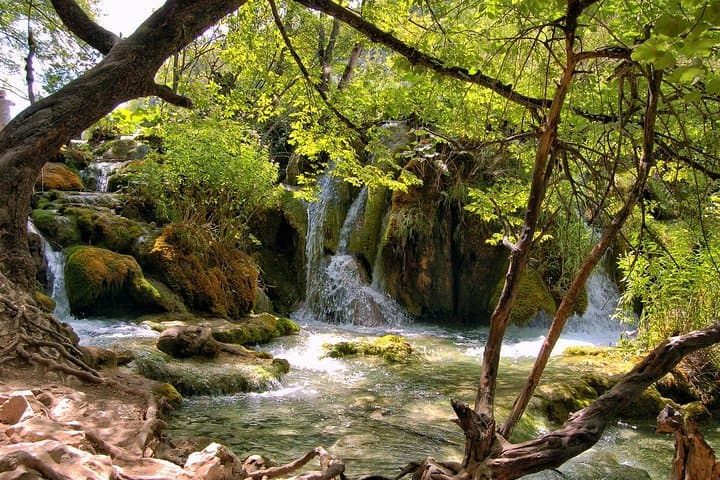
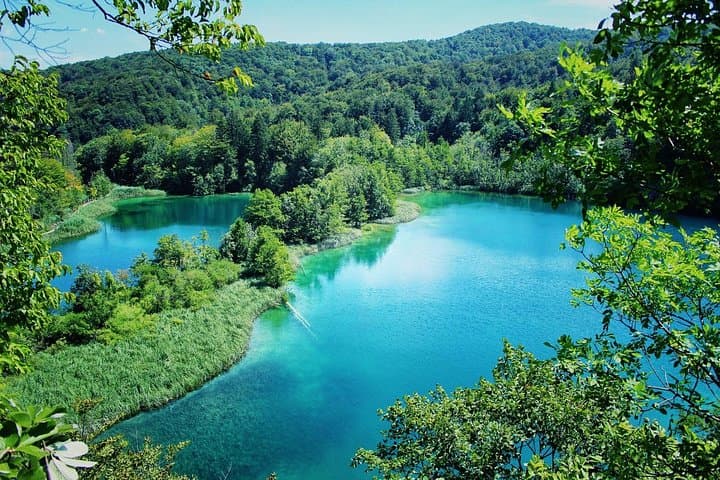
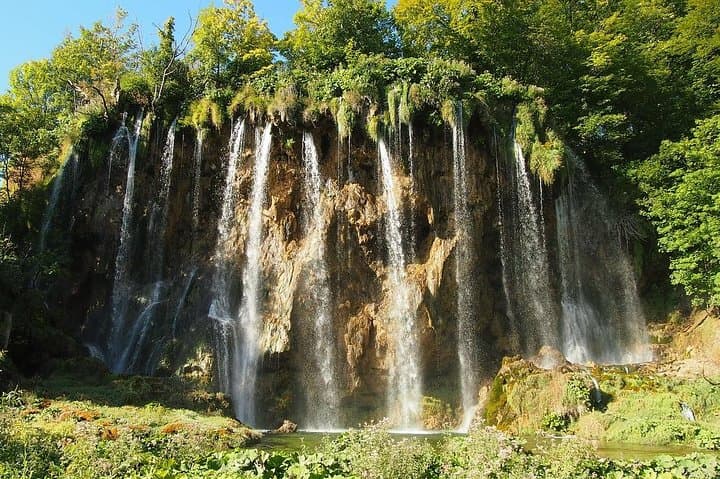
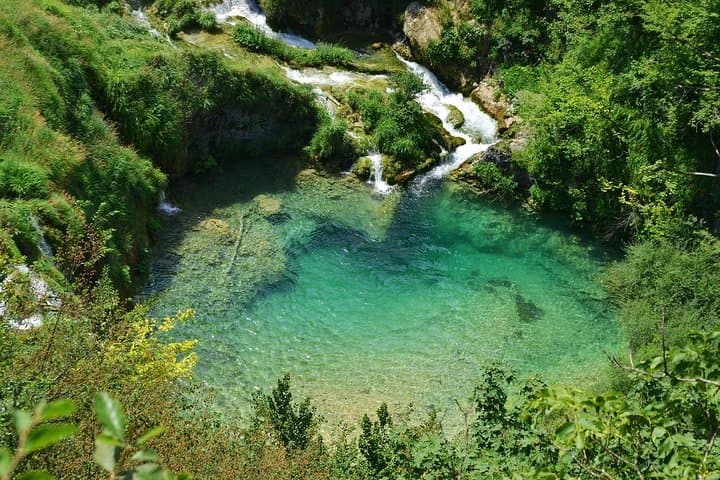
Arriving feels cinematic—the first view of turquoise water threaded through wooden boardwalks, waterfalls staging their steady fall. The park occupies a block of karst country where travertine dams build and rebuild, making cascades that change with season and weather. Geologically young, the lakes sit where limestone dissolves into pools, and over thousands of years tufa barriers have risen to create the terraces you walk across today.
Plitvice’s human story runs parallel: shepherds and millers once used these channels; the park was set aside as a national reserve in 1949 and earned UNESCO status in 1979. Today the site balances tourism and protection—footbridges guide visitors so the fragile tufa isn't trampled, while local villages still sell smoked trout and simple stews in family-run restaurants.
This private transfer is practical by design: a door-to-door minivan for up to eight passengers with free WiFi, bottled water, child seats on request, and capacity notes for luggage and pets in travel boxes. The schedule gives roughly four hours inside the park—enough for a focused route that covers both upper and lower lakes but not for a full circuit. Note: admission to the national park is not included and should be purchased in advance in high season to avoid lines.
Practical guidance: pick the earliest available pickup to make the most of cooler temperatures and softer light; the main circuits vary from about 4–8 km depending on the route you choose, with modest elevation changes (roughly 100–200 m cumulative). Sturdy walking shoes and a light rain shell are wise—boardwalks get slippery and summer storms can appear fast. Bring cash or card for the park entrance, and plan your return windows carefully—the van operates on a fixed 9-hour block.
Local tips: if you have extra time, ask the driver to swing by the nearby village of Rastoke—small watermills and clear streams feel like an appetizer for Plitvice. Respect the park rules: stay on marked paths, avoid feeding wildlife, and carry out waste. With a bit of planning, this private transfer turns a long-day road trip into a compact, seamless encounter with one of Croatia’s most elemental landscapes.
moderate.
9 hours (full-day, including transfer and 4-hour park visit).
Moderately fit—able to walk 4–8 km on uneven, often wet boardwalks and climb short stair sections.
No—entrance fees for Plitvice Lakes National Park are not included; buy tickets online in advance, especially in summer.
The itinerary allows about four hours inside the park—enough for a main circuit but not the full extensive routes.
Yes—child seats and boosters are available free if requested at booking; pets travel only in proper travel boxes and must be declared in advance.
Yes—there are public restrooms and several park restaurants and kiosks near main entrances, but options are basic and can be busy at peak times.
Expect 4–8 km of walking depending on the route, with moderate elevation changes and some stair sections—good shoes are important.
Notify the operator during booking—vehicles can be assigned based on luggage needs, but unannounced oversized luggage may not be accommodated.
Plitvice Lakes became a national park in 1949 and was inscribed as a UNESCO World Heritage site in 1979 for its dynamic travertine terraces and waterfalls.
Visitors must stay on marked boardwalks to protect fragile tufa deposits; follow park rules, pack out waste, and favor local services to support conservation efforts.
Split-Transfers operates guided outdoor trips and adventures with an emphasis on safety, stewardship, and memorable experiences.
You step into the minivan while Split still sleeps, streetlights sliding off the chrome, and the driver eases onto the coastal road. The Adriatic recedes; limestone ridges and dark pine slopes press in. By midmorning the van hums with low conversation, warm bottles of water handed around, and the map on the dashboard folding toward a single magnet: Plitvice Lakes.
You step into the minivan while Split still sleeps, streetlights sliding off the chrome, and the driver eases onto the coastal road. The Adriatic recedes; limestone ridges and dark pine slopes press in. By midmorning the van hums with low conversation, warm bottles of water handed around, and the map on the dashboard folding toward a single magnet: Plitvice Lakes.
Arriving feels cinematic—the first view of turquoise water threaded through wooden boardwalks, waterfalls staging their steady fall. The park occupies a block of karst country where travertine dams build and rebuild, making cascades that change with season and weather. Geologically young, the lakes sit where limestone dissolves into pools, and over thousands of years tufa barriers have risen to create the terraces you walk across today.
Plitvice’s human story runs parallel: shepherds and millers once used these channels; the park was set aside as a national reserve in 1949 and earned UNESCO status in 1979. Today the site balances tourism and protection—footbridges guide visitors so the fragile tufa isn't trampled, while local villages still sell smoked trout and simple stews in family-run restaurants.
This private transfer is practical by design: a door-to-door minivan for up to eight passengers with free WiFi, bottled water, child seats on request, and capacity notes for luggage and pets in travel boxes. The schedule gives roughly four hours inside the park—enough for a focused route that covers both upper and lower lakes but not for a full circuit. Note: admission to the national park is not included and should be purchased in advance in high season to avoid lines.
Practical guidance: pick the earliest available pickup to make the most of cooler temperatures and softer light; the main circuits vary from about 4–8 km depending on the route you choose, with modest elevation changes (roughly 100–200 m cumulative). Sturdy walking shoes and a light rain shell are wise—boardwalks get slippery and summer storms can appear fast. Bring cash or card for the park entrance, and plan your return windows carefully—the van operates on a fixed 9-hour block.
Local tips: if you have extra time, ask the driver to swing by the nearby village of Rastoke—small watermills and clear streams feel like an appetizer for Plitvice. Respect the park rules: stay on marked paths, avoid feeding wildlife, and carry out waste. With a bit of planning, this private transfer turns a long-day road trip into a compact, seamless encounter with one of Croatia’s most elemental landscapes.