THE ADVENTURE COLLECTIVE® · Independent discovery and booking for outdoor travel

Drive south from São Tomé through cocoa plantations, black-sand beaches and rainforest to Mioba waterfall and the jagged silhouette of Pico de Cão Grande. This private day tour packs culture, geology and warm ocean swims into a single unforgettable day.
Drive south from São Tomé through cocoa plantations, black-sand beaches and rainforest to Mioba waterfall and the jagged silhouette of Pico de Cão Grande. This private day tour packs culture, geology and warm ocean swims into a single unforgettable day.
The morning oil-forged roads out of São Tomé open like a map being unfolded. A private vehicle shuffles you south, past pastel houses and roadside markets where the air already smells of smoked fish and ripe papaya. The coastline tightens; surf begins to mark the rhythm of the day and, in the distance, a black needle — Pico de Cão Grande — thrusts from the green like a challenge.
Verified experiences and guided adventures in the surrounding area.
Operated by Ban Be Non Tours · São Tomé, São Tomé Province
The morning oil-forged roads out of São Tomé open like a map being unfolded. A private vehicle shuffles you south, past pastel houses and roadside markets where the air already smells of smoked fish and ripe papaya. The coastline tightens; surf begins to mark the rhythm of the day and, in the distance, a black needle — Pico de Cão Grande — thrusts from the green like a challenge.
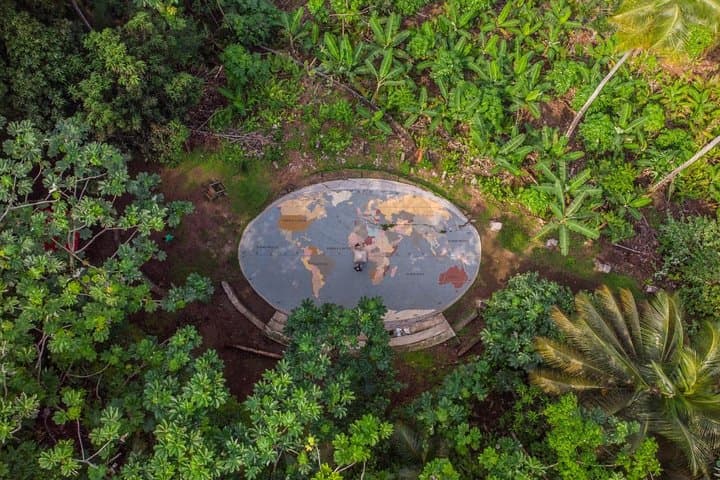
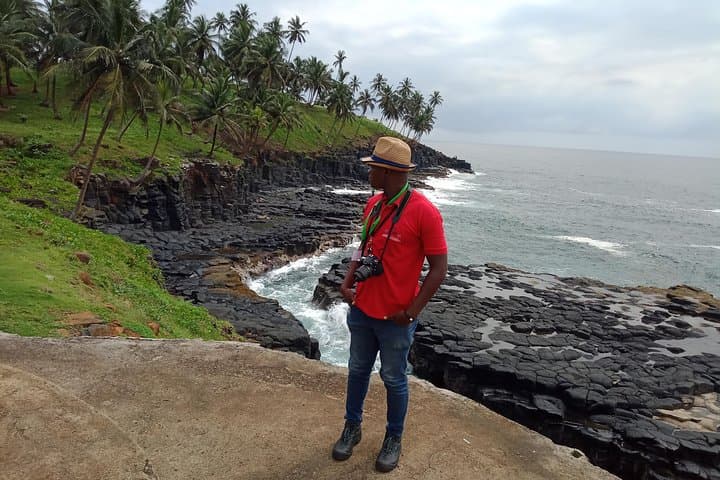
This full-day circuit across southern São Tomé is a concentrated sampler of the island’s diversity: colonial cacao roças, black-sand coves, a living fishing culture, a plunging waterfall and that impossibly vertical volcanic plug. The route threads historical and geological strands. Roça Água Izé carries the architecture and stories of the cocoa boom — decaying manors, workers’ quarters and the layout of a plantation economy that shaped São Tomé’s social landscape. Geologically, the south is dominated by hardened volcanic intrusions and coastal erosion that paints beaches in dark sand and carves dramatic inlets like Boca de Inferno.
Culture here is tactile. In Santana, you’ll drive through neighborhoods where wooden houses sit shoulder-to-shoulder with small markets, and fishermen mend nets while toddlers play in shade. At local eateries like those in São João dos Angolares, flavors trace centuries: grilled fish with palm oil, pepper sauces, and cocoa notes threaded through desserts — a culinary echo of the island’s agricultural history.
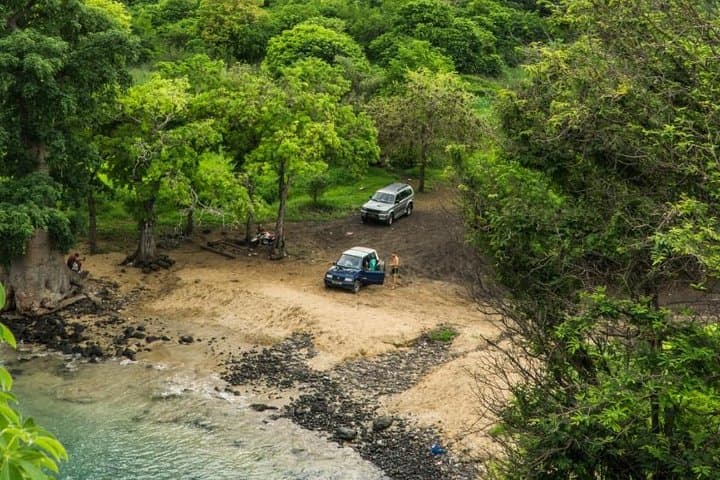
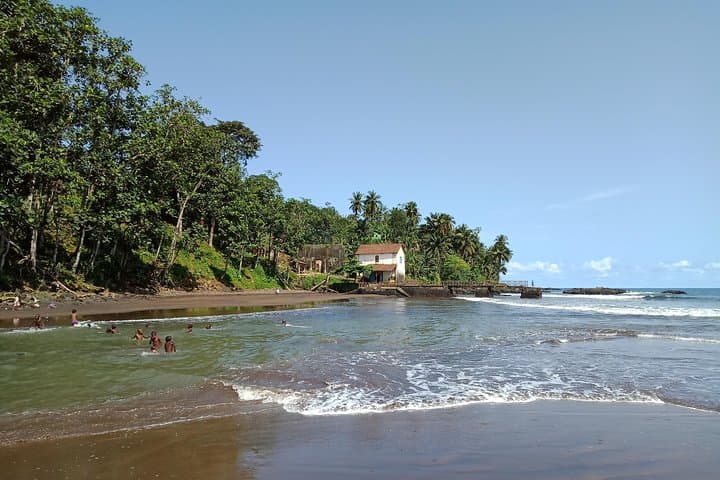
The day balances short exploratory walks with relaxed stops. Expect shallow swims at one of the island's best beaches, where water hovers around 24–26°C — the sea inviting but energetic. At Mioba waterfall, rainforest breathes against your skin and the peak of Cão Grande looms—its sheer face a reminder of São Tomé’s volcanic birth.
Practical edge: this is a private, largely vehicle-based tour running approximately 8–9 hours with flexible hotel pickup. Terrain is mostly paved roads and easy coastal paths, with a few uneven approaches to viewpoints and the waterfall. Bring sun protection, reef-safe sunscreen for swimming, sturdy sandals or light hiking shoes for short trails, and cash for lunch or small purchases at village stops. Photography opportunities are abundant at Boca de Inferno, the black-sand lookout and the waterfall; aim for early morning or late afternoon light to reduce harsh contrast.
Conservation note: parts of southern São Tomé are ecologically sensitive — respect nesting areas, avoid single-use plastics, and consider tipping local guides who steward both culture and landscape. By the end of the day you’ll have traversed timelines — geological, colonial and contemporary — leaving with a clearer sense of why São Tomé’s south is often called unmissable.
easy.
8–9 hours.
Suitable for travelers in average physical condition; involves short walks and some standing at viewpoints
Yes — hotel and port pickup in São Tomé is provided; confirm your pickup point when booking.
The tour runs about 8–9 hours (480–540 minutes) with multiple stops for photos, swimming and lunch.
Yes; the itinerary is classified as physically easy, though it’s not recommended for people with serious back or heart problems.
Yes — one beach stop includes swimming in warm water (around 24–26°C); bring a towel and reef-safe sunscreen.
Lunch is not included; you can choose to eat at local restaurants such as São João dos Angolares or Mionga during the tour.
The operator’s cancellation policy allows full refund if cancelled 24 hours prior; tours generally run unless conditions make travel unsafe.
Roça Água Izé and other plantations reflect São Tomé’s 19th–20th century cocoa economy; these estates shaped local architecture and community life.
Coastal and forest areas are ecologically sensitive — minimize plastic use, avoid disturbing nests, and support local guides who promote sustainable visitation.
Ban Be Non Tours operates guided outdoor trips and adventures with an emphasis on safety, stewardship, and memorable experiences.
The morning oil-forged roads out of São Tomé open like a map being unfolded. A private vehicle shuffles you south, past pastel houses and roadside markets where the air already smells of smoked fish and ripe papaya. The coastline tightens; surf begins to mark the rhythm of the day and, in the distance, a black needle — Pico de Cão Grande — thrusts from the green like a challenge.
The morning oil-forged roads out of São Tomé open like a map being unfolded. A private vehicle shuffles you south, past pastel houses and roadside markets where the air already smells of smoked fish and ripe papaya. The coastline tightens; surf begins to mark the rhythm of the day and, in the distance, a black needle — Pico de Cão Grande — thrusts from the green like a challenge.
This full-day circuit across southern São Tomé is a concentrated sampler of the island’s diversity: colonial cacao roças, black-sand coves, a living fishing culture, a plunging waterfall and that impossibly vertical volcanic plug. The route threads historical and geological strands. Roça Água Izé carries the architecture and stories of the cocoa boom — decaying manors, workers’ quarters and the layout of a plantation economy that shaped São Tomé’s social landscape. Geologically, the south is dominated by hardened volcanic intrusions and coastal erosion that paints beaches in dark sand and carves dramatic inlets like Boca de Inferno.
Culture here is tactile. In Santana, you’ll drive through neighborhoods where wooden houses sit shoulder-to-shoulder with small markets, and fishermen mend nets while toddlers play in shade. At local eateries like those in São João dos Angolares, flavors trace centuries: grilled fish with palm oil, pepper sauces, and cocoa notes threaded through desserts — a culinary echo of the island’s agricultural history.
The day balances short exploratory walks with relaxed stops. Expect shallow swims at one of the island's best beaches, where water hovers around 24–26°C — the sea inviting but energetic. At Mioba waterfall, rainforest breathes against your skin and the peak of Cão Grande looms—its sheer face a reminder of São Tomé’s volcanic birth.
Practical edge: this is a private, largely vehicle-based tour running approximately 8–9 hours with flexible hotel pickup. Terrain is mostly paved roads and easy coastal paths, with a few uneven approaches to viewpoints and the waterfall. Bring sun protection, reef-safe sunscreen for swimming, sturdy sandals or light hiking shoes for short trails, and cash for lunch or small purchases at village stops. Photography opportunities are abundant at Boca de Inferno, the black-sand lookout and the waterfall; aim for early morning or late afternoon light to reduce harsh contrast.
Conservation note: parts of southern São Tomé are ecologically sensitive — respect nesting areas, avoid single-use plastics, and consider tipping local guides who steward both culture and landscape. By the end of the day you’ll have traversed timelines — geological, colonial and contemporary — leaving with a clearer sense of why São Tomé’s south is often called unmissable.