THE ADVENTURE COLLECTIVE® · Independent discovery and booking for outdoor travel

Make the most of a Southampton port call with a private full‑day tour that stitches together Stonehenge’s mystery, Salisbury Cathedral’s Magna Carta, and Bath’s Roman baths and Georgian crescents. A local guide from Bath keeps the pace brisk and the context sharp.
Make the most of a Southampton port call with a private full‑day tour that stitches together Stonehenge’s mystery, Salisbury Cathedral’s Magna Carta, and Bath’s Roman baths and Georgian crescents. A local guide from Bath keeps the pace brisk and the context sharp.
A cruise ship horns off the Solent and you find yourself back on solid ground with a local guide who grew up in Bath—an advantage on a day packed with England’s long stories. The minivan eases out of Southampton, trading port cranes for hedgerows and the chalky rise of the downland. By the time the stones of Stonehenge come into view, the landscape has already begun to speak: low, rolling hills, pasture dotted with sheep, and a sky that can change within minutes.
Verified experiences and guided adventures in the surrounding area.
A cruise ship horns off the Solent and you find yourself back on solid ground with a local guide who grew up in Bath—an advantage on a day packed with England’s long stories. The minivan eases out of Southampton, trading port cranes for hedgerows and the chalky rise of the downland. By the time the stones of Stonehenge come into view, the landscape has already begun to speak: low, rolling hills, pasture dotted with sheep, and a sky that can change within minutes.
Stonehenge is the day’s opener and the most immediate puzzle—sarsen blocks set against a plain that has held human ritual for millennia. Geologically, those stones are survivors of glacial and post-glacial movements; culturally, the ring is less a monument than an invitation to imagine. From there the route bends to Salisbury, where the cathedral’s spire runs the longest uninterrupted vertical line in England and where a 1215 Magna Carta copy rests in a dim, hushed display. The soaring Gothic nave and cathedral close offer a different kind of time travel: civic power, medieval law, and stone-carved sermons.
Midday moves toward Bath, a city shaped by hot springs and by Romans who built baths to match imperial scale. Walk the Roman Baths for the steam and archaeology, then turn out to the Royal Crescent and the honey-colored Georgian terraces that give Bath its ordered grace. Together, these three stops—prehistoric, medieval, and Georgian—compress England’s layered history into a single, manageable loop.
Practicalities are straightforward but decisive. The full-day private tour runs roughly 10–11 hours; expect 30–50 minute drives between major stops and short walking loops—Stonehenge’s Visitor Centre circuit is about 1.5 miles round-trip; Bath’s central highlights add another 1–2 miles on cobbles and steps. Elevation gain is negligible overall, but surfaces vary from compacted chalk tracks to cobbled streets and cathedral steps, so sturdy shoes and a weatherproof layer make the day far easier.
The itinerary includes admissions, which saves time at each site; lunch and personal purchases are on you. Timing matters: if your cruise has a late departure, confirm return ETA with your guide. For photographers, light at sunrise hits the stones best, while Bath’s facades glow in late afternoon.
This tour works for travelers who want a curated, efficient overview of southern England’s icons without the rush of public buses. With a local guide from Bath at the wheel, the day balances context with pace—history served alongside the practical know-how that keeps you back on board on time.
moderate.
10–11 hours.
Good basic fitness—able to walk 3–4 miles across varied surfaces and manage brief periods of standing and stairs.
Yes—this private shore excursion includes admission fees so you won’t need to queue or pay onsite for those attractions.
Expect light to moderate walking: Stonehenge’s visitor loop is about 1.5 miles round‑trip, Salisbury close is compact, and Bath’s highlights cover 1–2 miles on cobbles and steps.
Accessibility varies by site—Bath’s streets and the Roman Baths have uneven sections and steps; Salisbury Cathedral has some accessible routes but contact the operator in advance to confirm arrangements for wheelchairs.
Yes—there is a scheduled break for lunch in Bath or Salisbury depending on the day’s pacing; lunch itself is not included.
Notify the tour operator and your ship immediately; private tours often adjust pickup, but reboarding cutoffs mean you must coordinate closely to avoid missing the ship.
Typical stops run 60–90 minutes at Stonehenge (including Visitor Centre), 45–60 minutes at Salisbury, and 2–3 hours in Bath to see the Roman Baths and key streets.
Salisbury Cathedral houses one of the four surviving original 1215 Magna Carta documents; Bath’s growth is tied to Roman exploitation of thermal springs and Georgian urban planning.
Stonehenge visitor management limits access to protect fragile turf and archaeology; visitors are encouraged to use official paths and the Visitor Centre to minimize erosion and disturbance.
A cruise ship horns off the Solent and you find yourself back on solid ground with a local guide who grew up in Bath—an advantage on a day packed with England’s long stories. The minivan eases out of Southampton, trading port cranes for hedgerows and the chalky rise of the downland. By the time the stones of Stonehenge come into view, the landscape has already begun to speak: low, rolling hills, pasture dotted with sheep, and a sky that can change within minutes.
A cruise ship horns off the Solent and you find yourself back on solid ground with a local guide who grew up in Bath—an advantage on a day packed with England’s long stories. The minivan eases out of Southampton, trading port cranes for hedgerows and the chalky rise of the downland. By the time the stones of Stonehenge come into view, the landscape has already begun to speak: low, rolling hills, pasture dotted with sheep, and a sky that can change within minutes.
Stonehenge is the day’s opener and the most immediate puzzle—sarsen blocks set against a plain that has held human ritual for millennia. Geologically, those stones are survivors of glacial and post-glacial movements; culturally, the ring is less a monument than an invitation to imagine. From there the route bends to Salisbury, where the cathedral’s spire runs the longest uninterrupted vertical line in England and where a 1215 Magna Carta copy rests in a dim, hushed display. The soaring Gothic nave and cathedral close offer a different kind of time travel: civic power, medieval law, and stone-carved sermons.
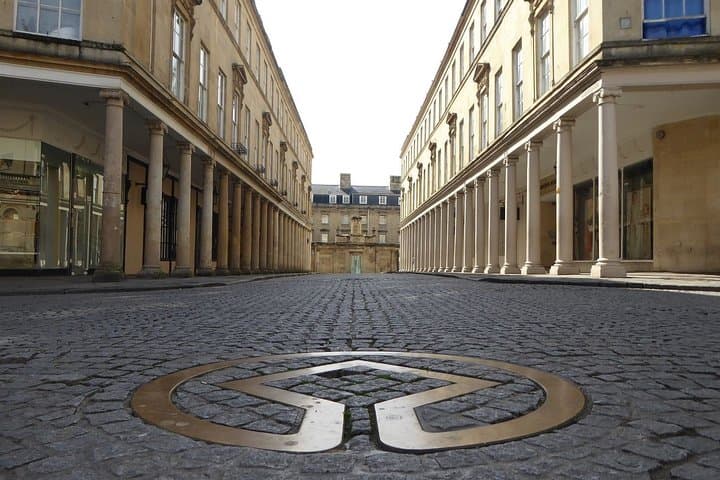
Midday moves toward Bath, a city shaped by hot springs and by Romans who built baths to match imperial scale. Walk the Roman Baths for the steam and archaeology, then turn out to the Royal Crescent and the honey-colored Georgian terraces that give Bath its ordered grace. Together, these three stops—prehistoric, medieval, and Georgian—compress England’s layered history into a single, manageable loop.
Practicalities are straightforward but decisive. The full-day private tour runs roughly 10–11 hours; expect 30–50 minute drives between major stops and short walking loops—Stonehenge’s Visitor Centre circuit is about 1.5 miles round-trip; Bath’s central highlights add another 1–2 miles on cobbles and steps. Elevation gain is negligible overall, but surfaces vary from compacted chalk tracks to cobbled streets and cathedral steps, so sturdy shoes and a weatherproof layer make the day far easier.
The itinerary includes admissions, which saves time at each site; lunch and personal purchases are on you. Timing matters: if your cruise has a late departure, confirm return ETA with your guide. For photographers, light at sunrise hits the stones best, while Bath’s facades glow in late afternoon.
This tour works for travelers who want a curated, efficient overview of southern England’s icons without the rush of public buses. With a local guide from Bath at the wheel, the day balances context with pace—history served alongside the practical know-how that keeps you back on board on time.