THE ADVENTURE COLLECTIVE® · Independent discovery and booking for outdoor travel

Drive the Elwha Valley, stand beneath Sol Duc Falls, peer across the glacier-carved depth of Lake Crescent, and ascend to wind-polished views on Hurricane Ridge in a single, expertly guided nine-hour loop through Olympic National Park.
Drive the Elwha Valley, stand beneath Sol Duc Falls, peer across the glacier-carved depth of Lake Crescent, and ascend to wind-polished views on Hurricane Ridge in a single, expertly guided nine-hour loop through Olympic National Park.
On a damp morning in Port Angeles the van eases out of town and the world changes by the mile. The road first threads the Elwha Valley—cedar and fir hanging heavy with moss—then skirts Lake Crescent, its glass surface suddenly cut by a gull or wind and the mountains hemming it in like a folded page. The guide slips into naturalist mode: basalt and glaciers, human histories, and a practical warning to zip your jacket—the ridge waits.
Verified experiences and guided adventures in the surrounding area.
Operated by Olympic Hiking Co. · Port Angeles, Washington
On a damp morning in Port Angeles the van eases out of town and the world changes by the mile. The road first threads the Elwha Valley—cedar and fir hanging heavy with moss—then skirts Lake Crescent, its glass surface suddenly cut by a gull or wind and the mountains hemming it in like a folded page. The guide slips into naturalist mode: basalt and glaciers, human histories, and a practical warning to zip your jacket—the ridge waits.
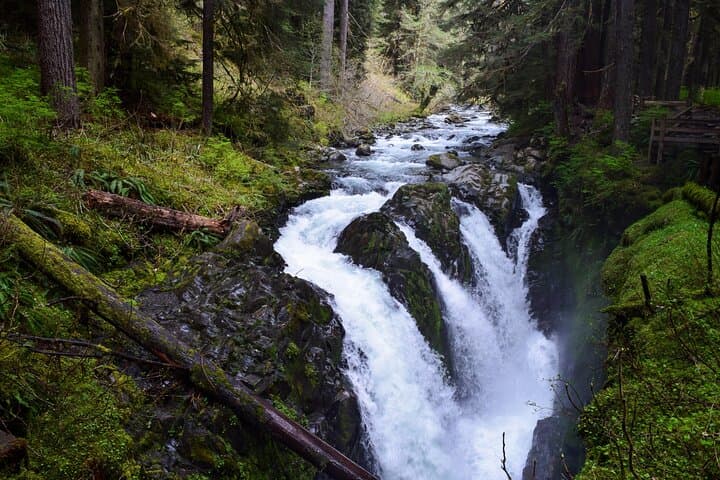
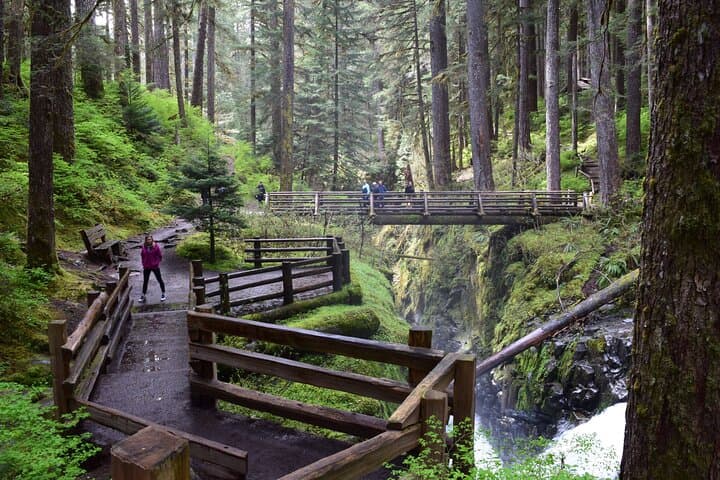
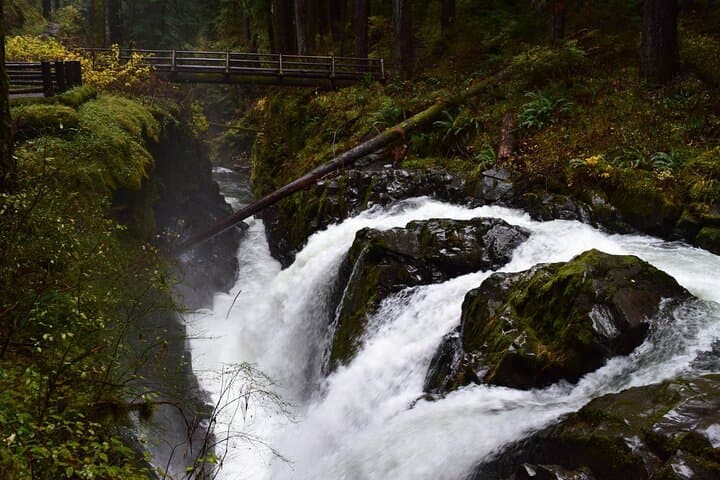
The first full stop is the Sol Duc River Valley. The path to Sol Duc Falls is a short, well-worn two-mile loop through old-growth forest where ferns press close and the river dares you to listen. Sol Duc Falls drops about 48 feet into a moss-framed canyon; in spring the falls swells, in late summer the flow softens to a steady roar that you feel in your chest.
From the falls the tour moves to Lake Crescent, a deep, glacier-carved basin—over 600 feet at its deepest—that was gouged by ice and then left to the pines. The historic Lake Crescent Lodge sits on the water, its porch a good place to scan for waterfowl or to take a compact hike along the lakeshore. The lodge’s century-old presence anchors the human story here: early tourists arrived by steamer and trail, and the building still looks out over the same glassy stretch of water.
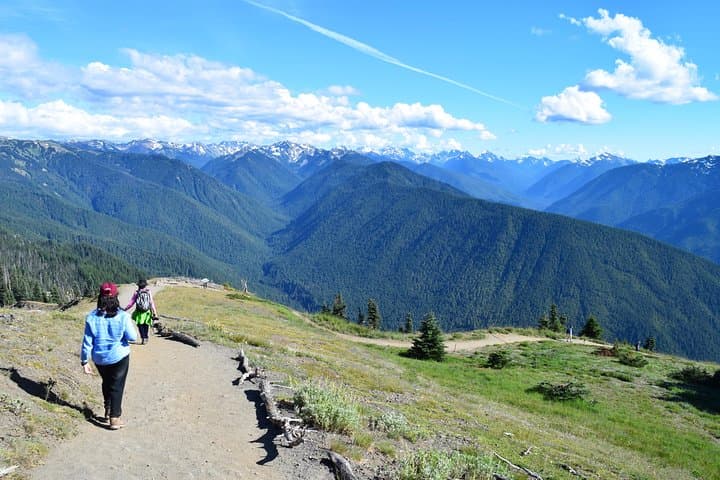
The day culminates at Hurricane Ridge, a dramatic climb from sea level to 5,242 feet. The drive alone is a lesson in changing biomes: temperate rainforest at the bottom, subalpine meadows and wind-sculpted grasses at the top. Guides lead optional hikes up to three miles along the ridge rim, where panoramas open across peaks and the Strait of Juan de Fuca; wind here has an opinion, and you’ll quickly learn it.
Practicalities are tidy: the full experience runs about nine hours, with roundtrip shuttle and Olympic National Park entrance fees included. Expect a mix of short, easy hikes and a gentler, interpretive pace—guides tailor distance to group comfort. Bring layered clothing and a waterproof shell; mountain weather is notoriously quick to change. Good hiking shoes, water, and a camera with a wide-angle lens will reward you at every stop.
This tour balances natural spectacle with on-the-ground context—glacial geology, tribal histories of the Lower Elwha and Klallam peoples, and modern conservation efforts in a park defined by extremes of rain and isolation. For a single day you get river, lake, and alpine ridge—a compact portrait of the Olympic Mountains that’s both transportive and eminently do-able for most fit travelers.
moderate.
9 hours (full day).
Moderate fitness for short hikes (2 miles at Sol Duc, up to 3 miles on Hurricane Ridge) and periods of standing; able to hike uneven terrain.
The tour runs about nine hours total with two-mile roundtrip to Sol Duc Falls and up to three miles of guided hiking on Hurricane Ridge—guests choose how much they hike at the ridge.
Yes—Olympic National Park entrance fees and the roundtrip shuttle within the park are included in the tour price; transit to Port Angeles is not included.
Meet at Olympic Hiking Co.’s building at 720 Marine Drive, Port Angeles; the tour requires meeting at this start point—there’s no pickup from Seattle (Seattle is roughly a 3-hour drive away).
Yes—children must be accompanied by an adult and participants should have moderate fitness; any mobility limitations should be discussed before booking so guides can advise on accessibility.
The operator runs rain-or-shine and does not cancel for typical mountain weather; bring appropriate layers—only extreme conditions may force itinerary changes.
Pets are not permitted on park trails in many areas and are generally not allowed on guided tours—check with the operator if you need to make special arrangements.
The Olympic Mountains are home to Coast Salish peoples—Lower Elwha Klallam and others—whose traditional territories include these valleys and shorelines; Lake Crescent’s lodge dates to the early 20th century when tourists first arrived by road and steamer.
The Elwha River restoration and other park projects emphasize habitat recovery; visitors are asked to stay on trails and pack out waste to protect fragile subalpine meadows and old-growth forest.
Olympic Hiking Co. operates guided outdoor trips and adventures with an emphasis on safety, stewardship, and memorable experiences.
On a damp morning in Port Angeles the van eases out of town and the world changes by the mile. The road first threads the Elwha Valley—cedar and fir hanging heavy with moss—then skirts Lake Crescent, its glass surface suddenly cut by a gull or wind and the mountains hemming it in like a folded page. The guide slips into naturalist mode: basalt and glaciers, human histories, and a practical warning to zip your jacket—the ridge waits.
On a damp morning in Port Angeles the van eases out of town and the world changes by the mile. The road first threads the Elwha Valley—cedar and fir hanging heavy with moss—then skirts Lake Crescent, its glass surface suddenly cut by a gull or wind and the mountains hemming it in like a folded page. The guide slips into naturalist mode: basalt and glaciers, human histories, and a practical warning to zip your jacket—the ridge waits.
The first full stop is the Sol Duc River Valley. The path to Sol Duc Falls is a short, well-worn two-mile loop through old-growth forest where ferns press close and the river dares you to listen. Sol Duc Falls drops about 48 feet into a moss-framed canyon; in spring the falls swells, in late summer the flow softens to a steady roar that you feel in your chest.
From the falls the tour moves to Lake Crescent, a deep, glacier-carved basin—over 600 feet at its deepest—that was gouged by ice and then left to the pines. The historic Lake Crescent Lodge sits on the water, its porch a good place to scan for waterfowl or to take a compact hike along the lakeshore. The lodge’s century-old presence anchors the human story here: early tourists arrived by steamer and trail, and the building still looks out over the same glassy stretch of water.
The day culminates at Hurricane Ridge, a dramatic climb from sea level to 5,242 feet. The drive alone is a lesson in changing biomes: temperate rainforest at the bottom, subalpine meadows and wind-sculpted grasses at the top. Guides lead optional hikes up to three miles along the ridge rim, where panoramas open across peaks and the Strait of Juan de Fuca; wind here has an opinion, and you’ll quickly learn it.
Practicalities are tidy: the full experience runs about nine hours, with roundtrip shuttle and Olympic National Park entrance fees included. Expect a mix of short, easy hikes and a gentler, interpretive pace—guides tailor distance to group comfort. Bring layered clothing and a waterproof shell; mountain weather is notoriously quick to change. Good hiking shoes, water, and a camera with a wide-angle lens will reward you at every stop.
This tour balances natural spectacle with on-the-ground context—glacial geology, tribal histories of the Lower Elwha and Klallam peoples, and modern conservation efforts in a park defined by extremes of rain and isolation. For a single day you get river, lake, and alpine ridge—a compact portrait of the Olympic Mountains that’s both transportive and eminently do-able for most fit travelers.