THE ADVENTURE COLLECTIVE® · Independent discovery and booking for outdoor travel

Snuba in Cabo bridges snorkeling and scuba—no certification, but real underwater time near Pelican Rock and El Arco. Expect calm morning waters, close encounters with colorful reef fish, and easy logistics from the marina.
Snuba in Cabo bridges snorkeling and scuba—no certification, but real underwater time near Pelican Rock and El Arco. Expect calm morning waters, close encounters with colorful reef fish, and easy logistics from the marina.
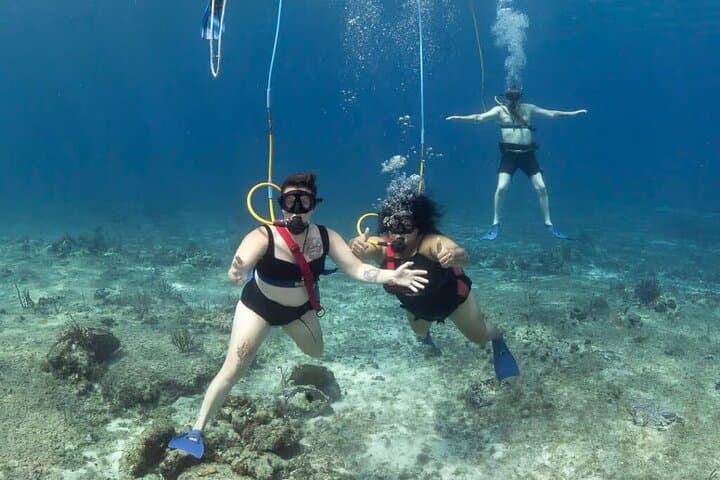
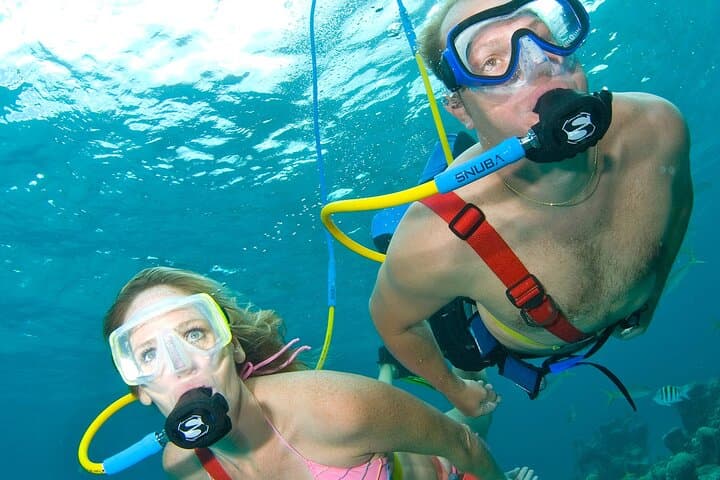
You step off the marina dock and the Pacific breeze meets the warm Gulf sun—salty, bright, and insistent. The boat hums as guides secure fins and masks; behind them the granite sculpting of Land's End rises like a stage set, El Arco cutting the horizon. This is not scuba; it is Snuba—an in-between that borrows the breath of a surface hose and the intimacy of being under the waves.
Verified experiences and guided adventures in the surrounding area.
Operated by Metate Cabo Corp · Cabo San Lucas, Baja California Sur
You step off the marina dock and the Pacific breeze meets the warm Gulf sun—salty, bright, and insistent. The boat hums as guides secure fins and masks; behind them the granite sculpting of Land's End rises like a stage set, El Arco cutting the horizon. This is not scuba; it is Snuba—an in-between that borrows the breath of a surface hose and the intimacy of being under the waves.
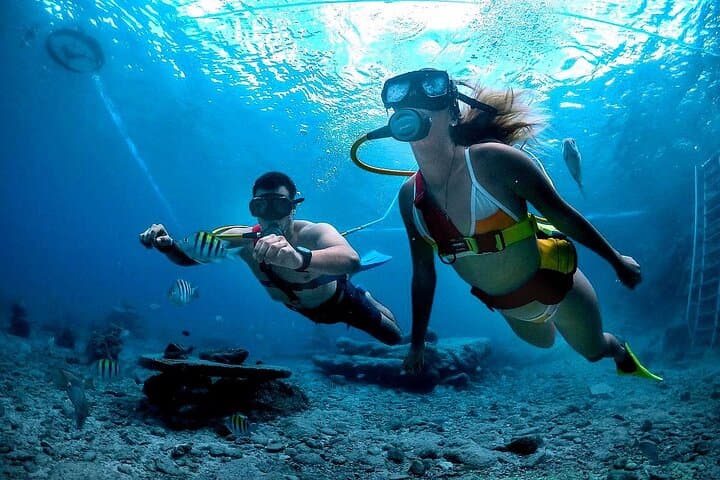
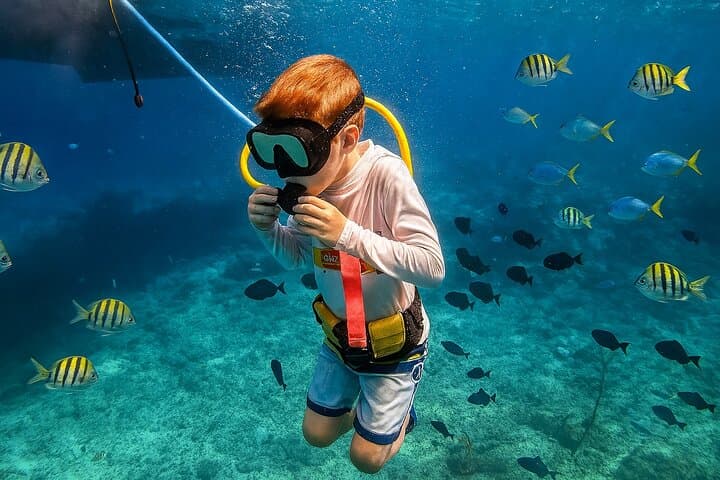
The first plunge is a small recalibration: the regulator feels foreign at first, then like a life preserver of calm. Pelican Rock is where the sea concentrates color and movement. A 25-minute swim here reveals walls of rock pocked with barnacles, pockets of black sea urchins, and shoals of parrotfish that chew on the reef as if on a conveyor belt. Later, the boat drifts toward the Arch and Lover’s Beach, where photo ops are as much about light on granite as they are about people and place.
Geologically, Cabo’s coastline is a study in granite meeting motion. These outcrops are ancient igneous rock honed by wind and wave—an honest, hands-on lesson in marine erosion. Culturally, the town was once a quiet fishing village; today it balances commercial tourism with local fishing traditions, and the guides you meet are often born to the sea here.
Practically, the experience is straightforward: meet at the Cabo San Lucas marina, ride to Pelican Rock, enjoy guided Snuba below the surface, then circle the Arch and return. The outing runs roughly 2–3 hours. No dive certification is required, and operators provide all necessary gear. That said, Snuba is not risk-free; the activity is not recommended for pregnant travelers, people with serious heart or spinal problems, or anyone uncomfortable breathing through a regulator. Hydrate before boarding, avoid alcohol the night before, and wear a rash guard and reef-safe sunscreen to protect both you and the reef.
Timing matters. Morning trips typically mean calmer water and better visibility; late afternoon offers dramatic light across the Arch for photos. Local operators emphasize small groups and personalized attention—ideal for riders who want supervised underwater time without full scuba training.
Leave the reef as you found it: no touching, no stirring up sand, and use reef-safe products. If you want a quieter experience, ask for morning departures and aim for weekdays in shoulder season.
Snuba in Cabo gives you a rare kind of access: close enough to the reef to feel its motion, far enough from the shore to see the Arch as a living silhouette. It’s an approachable way to meet the Sea of Cortez on its own terms—curious, colorful, and occasionally stubborn.
easy.
2–3 hours.
Accessible to most people who can swim and be comfortable in open water; not physically demanding but requires basic mobility for boarding and exiting a boat.
No certification is required; breathing is supported by a surface hose while you remain shallow and guided by an instructor.
The advertised Snuba portion is about 25 minutes at Pelican Rock, with the total tour lasting roughly 2–3 hours including transit time.
Age restrictions vary by operator; children must be comfortable in the water and able to follow instructions—check the booking age policy.
Operators monitor weather and sea state; cancelation policies typically allow refunds 24 hours prior—confirm specifics at booking.
Yes—bring a waterproof case or leave phones dry on the boat; the Arch and Pelican Rock are prime photo stops.
Not guaranteed, but Pelican Rock has consistent sightings of reef fish and usually california sea lions in the area around Land’s End.
The Arch at Land’s End is a granite formation carved by ocean waves; Cabo grew from a fishing settlement into a global tourist hub in the 20th century.
Respect no-touch rules and use reef-safe products—local operators collaborate with authorities to reduce reef damage and manage visitor impact.
Metate Cabo Corp operates guided outdoor trips and adventures with an emphasis on safety, stewardship, and memorable experiences.
You step off the marina dock and the Pacific breeze meets the warm Gulf sun—salty, bright, and insistent. The boat hums as guides secure fins and masks; behind them the granite sculpting of Land's End rises like a stage set, El Arco cutting the horizon. This is not scuba; it is Snuba—an in-between that borrows the breath of a surface hose and the intimacy of being under the waves.
You step off the marina dock and the Pacific breeze meets the warm Gulf sun—salty, bright, and insistent. The boat hums as guides secure fins and masks; behind them the granite sculpting of Land's End rises like a stage set, El Arco cutting the horizon. This is not scuba; it is Snuba—an in-between that borrows the breath of a surface hose and the intimacy of being under the waves.
The first plunge is a small recalibration: the regulator feels foreign at first, then like a life preserver of calm. Pelican Rock is where the sea concentrates color and movement. A 25-minute swim here reveals walls of rock pocked with barnacles, pockets of black sea urchins, and shoals of parrotfish that chew on the reef as if on a conveyor belt. Later, the boat drifts toward the Arch and Lover’s Beach, where photo ops are as much about light on granite as they are about people and place.
Geologically, Cabo’s coastline is a study in granite meeting motion. These outcrops are ancient igneous rock honed by wind and wave—an honest, hands-on lesson in marine erosion. Culturally, the town was once a quiet fishing village; today it balances commercial tourism with local fishing traditions, and the guides you meet are often born to the sea here.
Practically, the experience is straightforward: meet at the Cabo San Lucas marina, ride to Pelican Rock, enjoy guided Snuba below the surface, then circle the Arch and return. The outing runs roughly 2–3 hours. No dive certification is required, and operators provide all necessary gear. That said, Snuba is not risk-free; the activity is not recommended for pregnant travelers, people with serious heart or spinal problems, or anyone uncomfortable breathing through a regulator. Hydrate before boarding, avoid alcohol the night before, and wear a rash guard and reef-safe sunscreen to protect both you and the reef.
Timing matters. Morning trips typically mean calmer water and better visibility; late afternoon offers dramatic light across the Arch for photos. Local operators emphasize small groups and personalized attention—ideal for riders who want supervised underwater time without full scuba training.
Leave the reef as you found it: no touching, no stirring up sand, and use reef-safe products. If you want a quieter experience, ask for morning departures and aim for weekdays in shoulder season.
Snuba in Cabo gives you a rare kind of access: close enough to the reef to feel its motion, far enough from the shore to see the Arch as a living silhouette. It’s an approachable way to meet the Sea of Cortez on its own terms—curious, colorful, and occasionally stubborn.