THE ADVENTURE COLLECTIVE® · Independent discovery and booking for outdoor travel

Climb into a small plane and watch Croatia unfold: Krka’s falls, Visovac’s island monastery, Velebit’s limestone ridges, and the terraced aquamarine basins of Plitvice. This two‑hour panoramic flight condenses the country’s rugged geology and cultural landmarks into a single sweeping route.
Climb into a small plane and watch Croatia unfold: Krka’s falls, Visovac’s island monastery, Velebit’s limestone ridges, and the terraced aquamarine basins of Plitvice. This two‑hour panoramic flight condenses the country’s rugged geology and cultural landmarks into a single sweeping route.
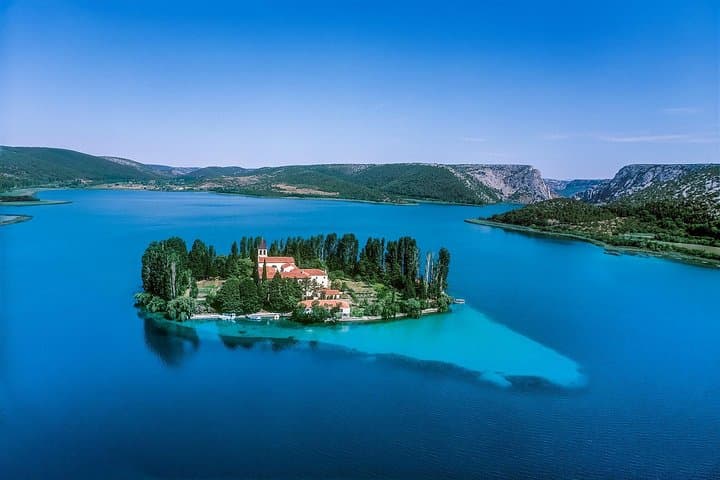
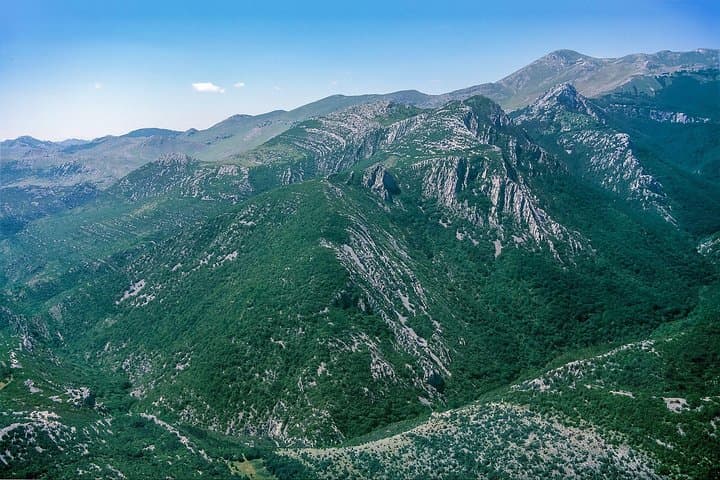
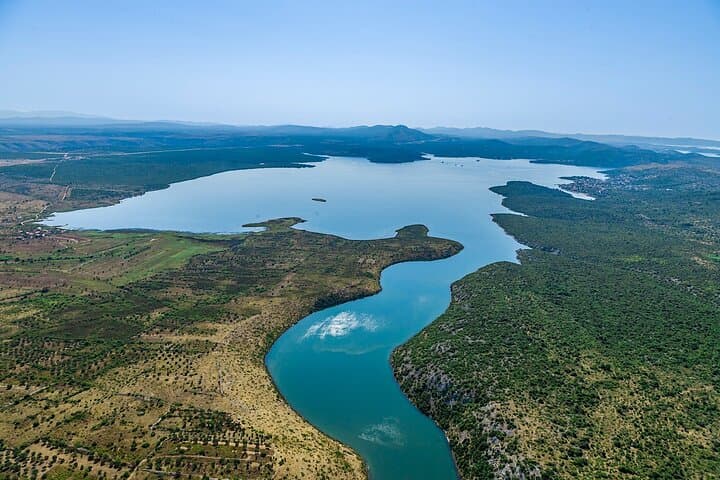
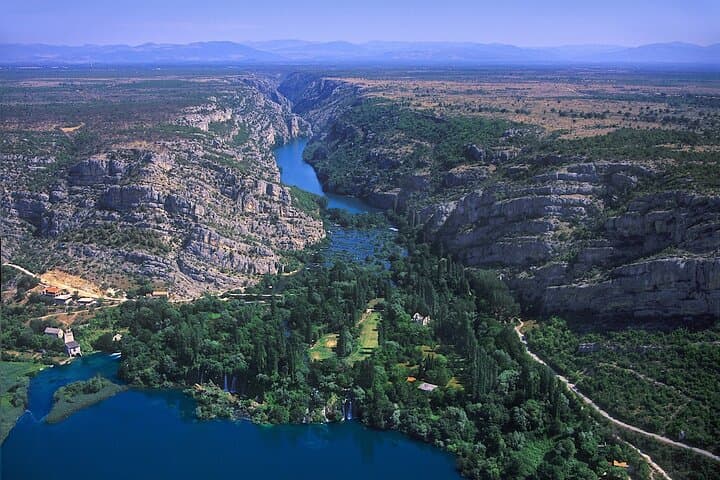
You lift from a small airstrip near Sinj and the Dalmatian coast falls away beneath you: a lace of rivers and stone, a monastery pinned like a brooch on a tiny island, a chain of waterfalls that seem to breathe. From the window of a fixed‑wing aircraft, Krka’s thunderous tiers compress into a white ribbon, Visovac’s monastery becomes an intimate dot of red tile and history, and the Velebit massif—folded limestone and wind—stretches toward the Lika plateau. The flight saves the slow approach for the view: Plitvice’s lakes arrive like a secret revealed, a string of aquamarine basins and tufaceous ledges that glint from high altitude.
Verified experiences and guided adventures in the surrounding area.
Operated by SplitAir · Sinj, Split-Dalmatia County
You lift from a small airstrip near Sinj and the Dalmatian coast falls away beneath you: a lace of rivers and stone, a monastery pinned like a brooch on a tiny island, a chain of waterfalls that seem to breathe. From the window of a fixed‑wing aircraft, Krka’s thunderous tiers compress into a white ribbon, Visovac’s monastery becomes an intimate dot of red tile and history, and the Velebit massif—folded limestone and wind—stretches toward the Lika plateau. The flight saves the slow approach for the view: Plitvice’s lakes arrive like a secret revealed, a string of aquamarine basins and tufaceous ledges that glint from high altitude.
This two‑hour panoramic route stitches together several of Croatia’s defining landscapes. Krka National Park is carved by the Krka River and celebrated for its broad cascades and the small island of Visovac, where a centuries‑old monastery stands watch. The Velebit range is part of the Dinaric Alps—karstified limestone shaped by rain and time—giving way to Lika’s open fields. Plitvice Lakes National Park, a UNESCO World Heritage Site, is famous for its tufa formations: mineral deposits that build natural dams and create stepped lakes and falls. Together the sequence offers geology and culture in flight—riverine terraces, karst plateaus, and human settlements that adapted to them.
From a practical standpoint, this is sightseeing at altitude. The operator runs fixed‑wing tours with bottled water included and meets guests at the Sinj airfield (Put Piketa bb). The flight is private and instant‑confirmation, and the booking requires basic identity and weight information—standard for small aircraft seating and balance. Weather can change the itinerary; episodic wind over Velebit or low clouds can shift pathways or delay departures.
Prepare for sharp, panoramic exposures to sun and wind: bring polarized sunglasses and a camera with a fast shutter. Expect minimal walking—this is an aerial tour—so fitness is not a factor, but operators typically restrict pregnant passengers and may have weight limits. Timing matters: clear mornings often deliver the crispest visibility and calmer air; late afternoons can gild the lakes and waterfalls but increase the chance of thermals.
The flight is both appetizer and orientation: you’ll see places worth returning to on foot. For first‑time visitors to Dalmatia and Lika, the panorama helps connect the dots—how river meets karst, how monasteries anchor islands, and why the Plitvice travertine system remains one of Europe’s most unusual natural processes.
easy.
2 hours.
Minimal physical fitness required—this is a sightseeing flight suitable for most travelers
All guests meet at the operator’s airstrip in Sinj (Put Piketa bb); precise meeting instructions are provided at booking.
Booking collects weight and age; small aircraft have strict weight/balance rules and may limit seats—disclose accurate weights.
Yes—window photography is encouraged; use straps and a polarizer to manage glare and protect gear.
Flights may be rescheduled or refunded per the cancellation policy; low clouds or high winds can change the route or timing.
The tour is not recommended for pregnant travelers; check with your physician and the operator before booking.
The aircraft passes over Krka’s falls, Visovac, and Plitvice for panoramic views but does not land inside protected park interiors—altitude follows safety and park regulations.
Visovac’s small island monastery and the settlements around Krka have centuries of monastic and rural history tied to river transport and pastoralism; Plitvice has been protected since the 19th century and is a UNESCO World Heritage Site.
Flights over protected areas are regulated to limit disturbance—operators follow routes and altitudes to reduce noise and visual impact; visitors should avoid littering and adhere to park rules on any ground visits.
SplitAir operates guided outdoor trips and adventures with an emphasis on safety, stewardship, and memorable experiences.
You lift from a small airstrip near Sinj and the Dalmatian coast falls away beneath you: a lace of rivers and stone, a monastery pinned like a brooch on a tiny island, a chain of waterfalls that seem to breathe. From the window of a fixed‑wing aircraft, Krka’s thunderous tiers compress into a white ribbon, Visovac’s monastery becomes an intimate dot of red tile and history, and the Velebit massif—folded limestone and wind—stretches toward the Lika plateau. The flight saves the slow approach for the view: Plitvice’s lakes arrive like a secret revealed, a string of aquamarine basins and tufaceous ledges that glint from high altitude.
You lift from a small airstrip near Sinj and the Dalmatian coast falls away beneath you: a lace of rivers and stone, a monastery pinned like a brooch on a tiny island, a chain of waterfalls that seem to breathe. From the window of a fixed‑wing aircraft, Krka’s thunderous tiers compress into a white ribbon, Visovac’s monastery becomes an intimate dot of red tile and history, and the Velebit massif—folded limestone and wind—stretches toward the Lika plateau. The flight saves the slow approach for the view: Plitvice’s lakes arrive like a secret revealed, a string of aquamarine basins and tufaceous ledges that glint from high altitude.
This two‑hour panoramic route stitches together several of Croatia’s defining landscapes. Krka National Park is carved by the Krka River and celebrated for its broad cascades and the small island of Visovac, where a centuries‑old monastery stands watch. The Velebit range is part of the Dinaric Alps—karstified limestone shaped by rain and time—giving way to Lika’s open fields. Plitvice Lakes National Park, a UNESCO World Heritage Site, is famous for its tufa formations: mineral deposits that build natural dams and create stepped lakes and falls. Together the sequence offers geology and culture in flight—riverine terraces, karst plateaus, and human settlements that adapted to them.
From a practical standpoint, this is sightseeing at altitude. The operator runs fixed‑wing tours with bottled water included and meets guests at the Sinj airfield (Put Piketa bb). The flight is private and instant‑confirmation, and the booking requires basic identity and weight information—standard for small aircraft seating and balance. Weather can change the itinerary; episodic wind over Velebit or low clouds can shift pathways or delay departures.
Prepare for sharp, panoramic exposures to sun and wind: bring polarized sunglasses and a camera with a fast shutter. Expect minimal walking—this is an aerial tour—so fitness is not a factor, but operators typically restrict pregnant passengers and may have weight limits. Timing matters: clear mornings often deliver the crispest visibility and calmer air; late afternoons can gild the lakes and waterfalls but increase the chance of thermals.
The flight is both appetizer and orientation: you’ll see places worth returning to on foot. For first‑time visitors to Dalmatia and Lika, the panorama helps connect the dots—how river meets karst, how monasteries anchor islands, and why the Plitvice travertine system remains one of Europe’s most unusual natural processes.