THE ADVENTURE COLLECTIVE® · Independent discovery and booking for outdoor travel

A full-day private tour that threads Sintra’s story through palace gardens, secret wells and Atlantic cliffs. Visit Quinta da Regaleira, Monserrate, Cabo da Roca and Cascais with local insights, practical tips and transport from Lisbon.
A full-day private tour that threads Sintra’s story through palace gardens, secret wells and Atlantic cliffs. Visit Quinta da Regaleira, Monserrate, Cabo da Roca and Cascais with local insights, practical tips and transport from Lisbon.
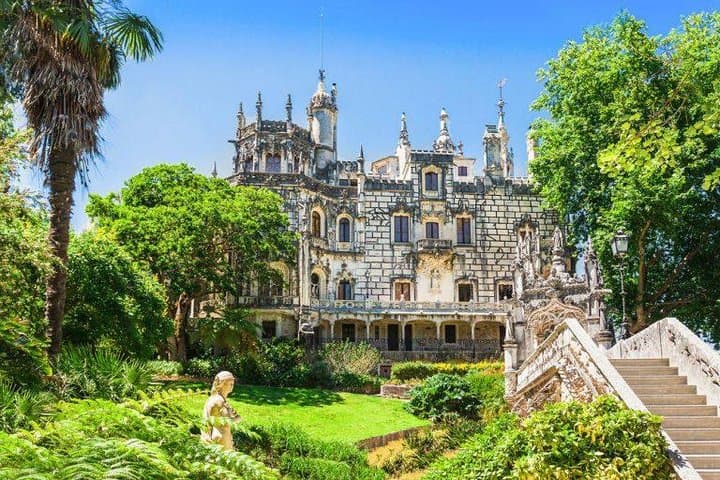
You arrive before the crowds and the first light slants through tall pines on a winding lane toward Quinta da Regaleira. Stone stairways drop into shade, fountains murmur, and a deep, spiraled shaft—an initiation well—cuts down through the earth like a secret the estate refuses to give up. The guide’s voice is low; the place asks you to slow down. That hush follows you up to the gardens of Monserrate with their exotic palms and Moorish arches, and later breaks open at Cabo da Roca, where the Atlantic presses the cliff edge and the horizon looks like an argument between water and sky.
Verified experiences and guided adventures in the surrounding area.
Operated by Sucesso e Dedicação · Sintra, Lisbon
You arrive before the crowds and the first light slants through tall pines on a winding lane toward Quinta da Regaleira. Stone stairways drop into shade, fountains murmur, and a deep, spiraled shaft—an initiation well—cuts down through the earth like a secret the estate refuses to give up. The guide’s voice is low; the place asks you to slow down. That hush follows you up to the gardens of Monserrate with their exotic palms and Moorish arches, and later breaks open at Cabo da Roca, where the Atlantic presses the cliff edge and the horizon looks like an argument between water and sky.
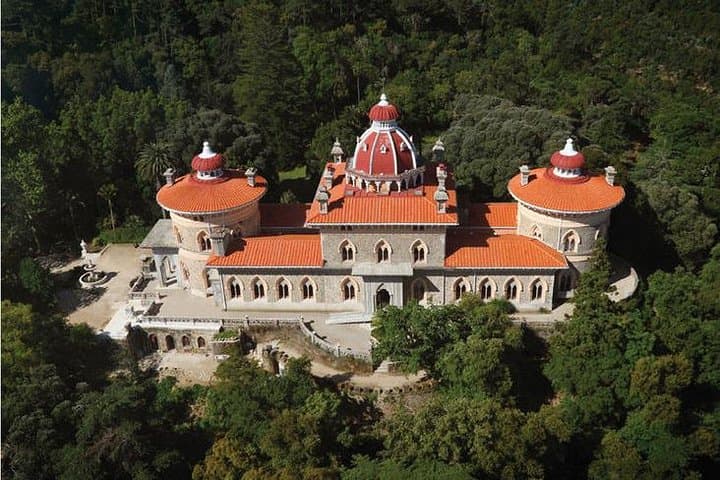
Sintra’s landscape reads like a history of ideas laid over geology. The rolling Serra de Sintra is a compact granite massif uplifted and weathered into rounded summits and sheltered valleys; its microclimates allowed 19th-century romanticists and European aristocrats to plant rare species from Brazil, Asia and Africa. Quinta da Regaleira (built 1904–1910) layers Gothic, Manueline and Renaissance echoes with symbols drawn from Freemasonry, the Templars and Rosicrucian thought—it's both a playground and a riddle. Monserrate Palace, completed in the late 1800s, mixes Gothic and Indian motifs and sits within 33 hectares of botanical experiments that reflect Portugal’s imperial connections.
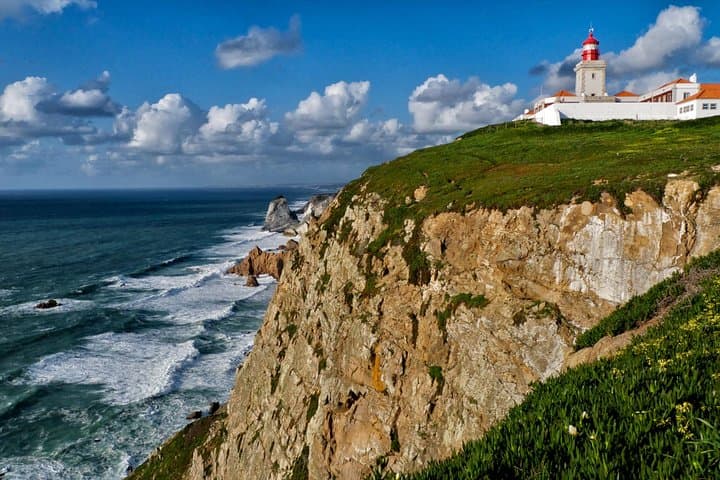
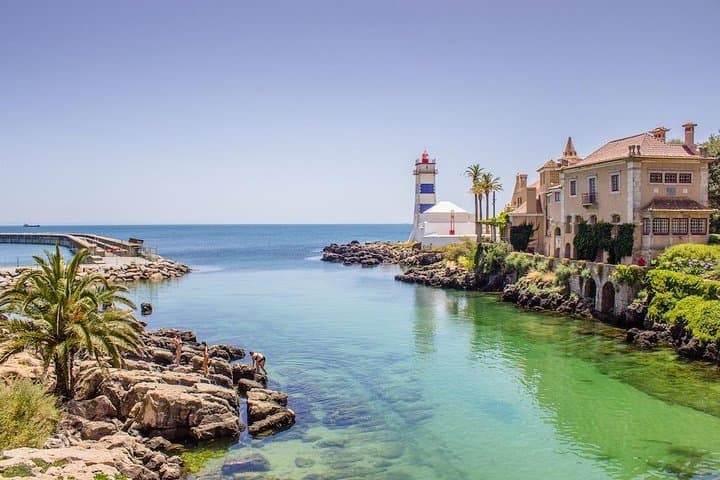
Cabo da Roca stakes the claim “where the land ends”: the cliff rises roughly 150 meters from the surf and provides one of the purest Atlantic vistas in Europe. Nearby Cascais, once a fishing village, now mixes marina life, fresh seafood restaurants and beaches where Lisbon residents decamp on warm weekends.
Practical guide: this is an eight-hour private tour with door-to-door pickup from Lisbon. Admissions for Quinta da Regaleira and Monserrate are often sold at the gate; buy tickets online in high season to skip lines. Wear grippy shoes—paths, wells and cliff viewpoints include uneven stone and steep steps. Bring layers: coastal wind at Cabo da Roca can knock the chill into your bones even on a sunny day. A small daypack with water, sunscreen and a wind shell will keep you comfortable. If you plan sunset at Cabo da Roca, confirm timing with your driver—the light shifts fast and parking is limited after hours.
Accessibility and pacing are gentle: most stops require short walks and stair climbs but the tour provides private transportation and can accommodate reduced mobility with advance notice. For photographers, the early light in Sintra concentrates color in the gardens; later, the sea flattens the palette for dramatic silhouettes at the cliffs. Above all, give each place time—Sintra rewards curiosity, not a checklist.
easy.
8 hours.
Suitable for travelers who can manage short walks and stair climbs; minimal endurance required
Admissions are not included—buy tickets online or at the entrance; pre-purchasing is recommended in peak season.
The private tour lasts about 8 hours with pickup available from hotels across Lisbon—confirm your pickup point when booking.
Yes; the itinerary involves short walks and some stairs. Notify the operator of mobility restrictions so they can adapt timing and assistance.
Yes—request a sunset stop when booking; parking and traffic can be tight after hours so confirm logistics with your guide.
Expect 30–120 minutes at each site with moderate walking: garden paths, steps and viewpoints—most people find it comfortable with regular walking shoes.
Cascais offers many restaurants specializing in seafood; you can plan a lunch stop there—inform the guide if you have dietary needs.
Sintra became a 19th-century magnet for European romanticism and aristocratic villas; many estates reflect Portugal’s global botanical exchanges during the imperial era.
The sites sit inside Sintra-Cascais Natural Park—stay on paths, avoid picking plants and follow local waste rules to protect fragile coastal and woodland habitats.
Sucesso e Dedicação operates guided outdoor trips and adventures with an emphasis on safety, stewardship, and memorable experiences.
You arrive before the crowds and the first light slants through tall pines on a winding lane toward Quinta da Regaleira. Stone stairways drop into shade, fountains murmur, and a deep, spiraled shaft—an initiation well—cuts down through the earth like a secret the estate refuses to give up. The guide’s voice is low; the place asks you to slow down. That hush follows you up to the gardens of Monserrate with their exotic palms and Moorish arches, and later breaks open at Cabo da Roca, where the Atlantic presses the cliff edge and the horizon looks like an argument between water and sky.
You arrive before the crowds and the first light slants through tall pines on a winding lane toward Quinta da Regaleira. Stone stairways drop into shade, fountains murmur, and a deep, spiraled shaft—an initiation well—cuts down through the earth like a secret the estate refuses to give up. The guide’s voice is low; the place asks you to slow down. That hush follows you up to the gardens of Monserrate with their exotic palms and Moorish arches, and later breaks open at Cabo da Roca, where the Atlantic presses the cliff edge and the horizon looks like an argument between water and sky.
Sintra’s landscape reads like a history of ideas laid over geology. The rolling Serra de Sintra is a compact granite massif uplifted and weathered into rounded summits and sheltered valleys; its microclimates allowed 19th-century romanticists and European aristocrats to plant rare species from Brazil, Asia and Africa. Quinta da Regaleira (built 1904–1910) layers Gothic, Manueline and Renaissance echoes with symbols drawn from Freemasonry, the Templars and Rosicrucian thought—it's both a playground and a riddle. Monserrate Palace, completed in the late 1800s, mixes Gothic and Indian motifs and sits within 33 hectares of botanical experiments that reflect Portugal’s imperial connections.
Cabo da Roca stakes the claim “where the land ends”: the cliff rises roughly 150 meters from the surf and provides one of the purest Atlantic vistas in Europe. Nearby Cascais, once a fishing village, now mixes marina life, fresh seafood restaurants and beaches where Lisbon residents decamp on warm weekends.
Practical guide: this is an eight-hour private tour with door-to-door pickup from Lisbon. Admissions for Quinta da Regaleira and Monserrate are often sold at the gate; buy tickets online in high season to skip lines. Wear grippy shoes—paths, wells and cliff viewpoints include uneven stone and steep steps. Bring layers: coastal wind at Cabo da Roca can knock the chill into your bones even on a sunny day. A small daypack with water, sunscreen and a wind shell will keep you comfortable. If you plan sunset at Cabo da Roca, confirm timing with your driver—the light shifts fast and parking is limited after hours.
Accessibility and pacing are gentle: most stops require short walks and stair climbs but the tour provides private transportation and can accommodate reduced mobility with advance notice. For photographers, the early light in Sintra concentrates color in the gardens; later, the sea flattens the palette for dramatic silhouettes at the cliffs. Above all, give each place time—Sintra rewards curiosity, not a checklist.