THE ADVENTURE COLLECTIVE® · Independent discovery and booking for outdoor travel

Trade the skyline for slow-moving waterways at Singapore’s River Wonders. Spend a morning watching giant otters hunt, glide past manatees on a boat ride, and learn how rivers around the world shape wildlife and human life.
Trade the skyline for slow-moving waterways at Singapore’s River Wonders. Spend a morning watching giant otters hunt, glide past manatees on a boat ride, and learn how rivers around the world shape wildlife and human life.
The first steps inside River Wonders feel like stepping into a slow-moving current: warm, humid air, a chorus of distant calls, and a pathway that bends like a river through planted banks and glass viewing windows. Visitors trade the city’s skyline for scaled-down ecosystems — the Amazon’s flooded forests, the Nile’s murkier channels, the winding Mekong — each exhibit arranged to make the water itself the protagonist, daring you to lean in closer.
Verified experiences and guided adventures in the surrounding area.
Operated by Dream Fly Tourism LLC · Singapore, Singapore
The first steps inside River Wonders feel like stepping into a slow-moving current: warm, humid air, a chorus of distant calls, and a pathway that bends like a river through planted banks and glass viewing windows. Visitors trade the city’s skyline for scaled-down ecosystems — the Amazon’s flooded forests, the Nile’s murkier channels, the winding Mekong — each exhibit arranged to make the water itself the protagonist, daring you to lean in closer.
Opened as Asia’s first river-themed park, River Wonders sits in Singapore’s Mandai precinct and was conceived as both an immersive attraction and a living classroom. The design borrows from river geomorphology; paths mimic oxbow bends, boardwalks rise where floodplains would, and the park’s waterways are engineered to replicate seasonal flows that shape river communities. That engineering is part landscape architecture, part animal husbandry and all about storytelling: learn how giant otters hunt in social packs; watch manatees glide like submerged barges; see freshwater fish adapted to tannin-dark water.
Culturally, the park reflects Singapore’s approach to conservation as civic duty — education, breeding programs, and public outreach sit alongside the exhibits. Look for interpretive signage that connects distant river cultures to local stewardship, explaining how downstream urban choices ripple upstream in distant basins.
Plan at least half a day. Typical visits run 2–7 hours depending on how many keeper talks and the boat ride you choose to take. Mornings are quieter and cooler; animal activity peaks around feeding demonstrations. The boat ride offers a measured intimacy: a slow lap that puts you at water level and gives unobstructed views of animals and vegetation, so bring a compact camera and steady hands.
Practical notes: tickets are mobile-friendly and often delivered electronically; skip long lines by booking ahead. Pathways are mostly paved and stroller-accessible but expect humidity—light, breathable clothing is key. Food and restroom facilities are located at multiple nodes, so plan breaks around scheduled shows to avoid backtracking.
For families, River Wonders balances spectacle and science: children can meet species they’ve read about in textbooks, while adults will appreciate the park’s conservation messaging and habitat replication. Respect barriers, follow staff instructions during boat rides, and use the park’s recycling and water-conservation stations.
Whether you come for the manatees’ slow choreography or the otters’ sharp, social energy, River Wonders makes rivers feel alive and consequential — a compact, well-curated place to learn why freshwater systems matter and how they connect us all.
easy.
2–7 hours.
Suitable for most fitness levels; expect walking on paved paths and occasional gentle ramps.
A scenic boat ride is included at River Wonders; schedules may vary, so check showtimes on arrival.
Yes—most paths are stroller-accessible and exhibits are family-friendly, though some viewing areas have steps.
Yes—there are dining outlets and kiosks offering meals and snacks; bringing food from outside is generally not permitted.
Yes—mobile or paper tickets are accepted and e-tickets are commonly delivered via WhatsApp.
Typical visits run 2–7 hours depending on shows and boat rides; check the park’s official hours before you go.
Most exhibits are accessible, but contact the park ahead of time for specific assistance or to arrange mobility aid services.
Opened as Asia’s first river-themed park, River Wonders merges exhibit design with conservation education to showcase species from iconic river basins.
The park runs breeding and rescue programs and uses habitat replication to teach freshwater conservation; visitors are encouraged to follow recycling and water-saving practices.
Dream Fly Tourism LLC operates guided outdoor trips and adventures with an emphasis on safety, stewardship, and memorable experiences.
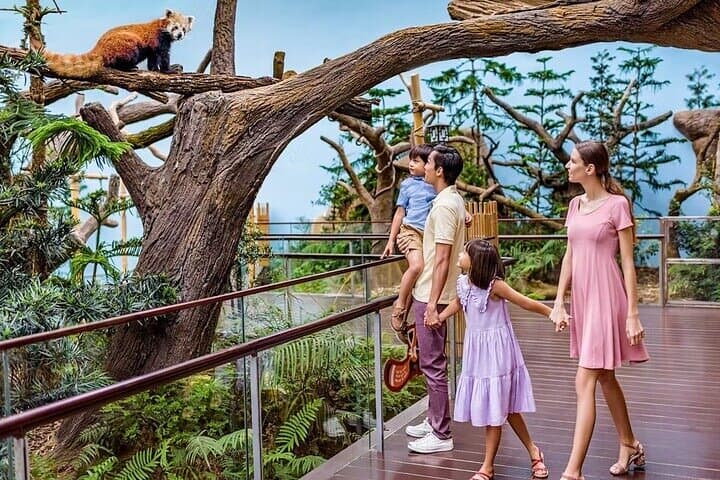
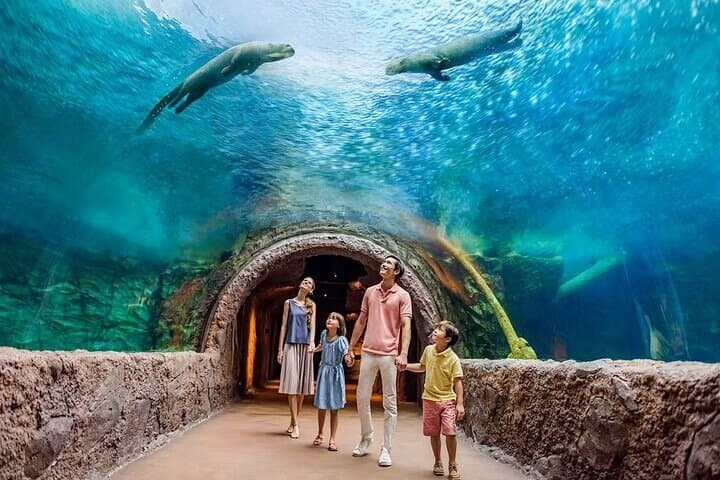
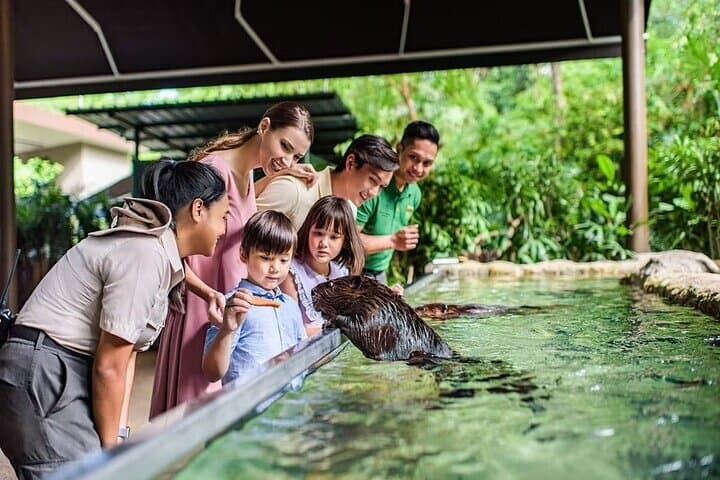
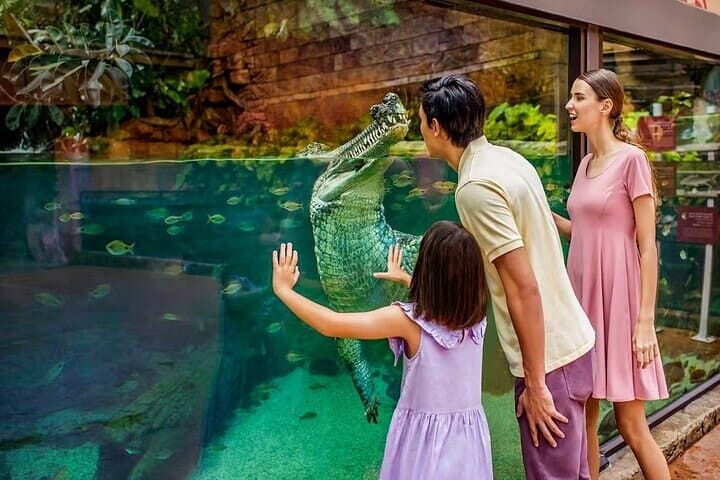
The first steps inside River Wonders feel like stepping into a slow-moving current: warm, humid air, a chorus of distant calls, and a pathway that bends like a river through planted banks and glass viewing windows. Visitors trade the city’s skyline for scaled-down ecosystems — the Amazon’s flooded forests, the Nile’s murkier channels, the winding Mekong — each exhibit arranged to make the water itself the protagonist, daring you to lean in closer.
The first steps inside River Wonders feel like stepping into a slow-moving current: warm, humid air, a chorus of distant calls, and a pathway that bends like a river through planted banks and glass viewing windows. Visitors trade the city’s skyline for scaled-down ecosystems — the Amazon’s flooded forests, the Nile’s murkier channels, the winding Mekong — each exhibit arranged to make the water itself the protagonist, daring you to lean in closer.
Opened as Asia’s first river-themed park, River Wonders sits in Singapore’s Mandai precinct and was conceived as both an immersive attraction and a living classroom. The design borrows from river geomorphology; paths mimic oxbow bends, boardwalks rise where floodplains would, and the park’s waterways are engineered to replicate seasonal flows that shape river communities. That engineering is part landscape architecture, part animal husbandry and all about storytelling: learn how giant otters hunt in social packs; watch manatees glide like submerged barges; see freshwater fish adapted to tannin-dark water.
Culturally, the park reflects Singapore’s approach to conservation as civic duty — education, breeding programs, and public outreach sit alongside the exhibits. Look for interpretive signage that connects distant river cultures to local stewardship, explaining how downstream urban choices ripple upstream in distant basins.
Plan at least half a day. Typical visits run 2–7 hours depending on how many keeper talks and the boat ride you choose to take. Mornings are quieter and cooler; animal activity peaks around feeding demonstrations. The boat ride offers a measured intimacy: a slow lap that puts you at water level and gives unobstructed views of animals and vegetation, so bring a compact camera and steady hands.
Practical notes: tickets are mobile-friendly and often delivered electronically; skip long lines by booking ahead. Pathways are mostly paved and stroller-accessible but expect humidity—light, breathable clothing is key. Food and restroom facilities are located at multiple nodes, so plan breaks around scheduled shows to avoid backtracking.
For families, River Wonders balances spectacle and science: children can meet species they’ve read about in textbooks, while adults will appreciate the park’s conservation messaging and habitat replication. Respect barriers, follow staff instructions during boat rides, and use the park’s recycling and water-conservation stations.
Whether you come for the manatees’ slow choreography or the otters’ sharp, social energy, River Wonders makes rivers feel alive and consequential — a compact, well-curated place to learn why freshwater systems matter and how they connect us all.