THE ADVENTURE COLLECTIVE® · Independent discovery and booking for outdoor travel

Trace World War II’s imprint on modern Singapore with a 3.5-hour battlefield tour from Kranji to Changi. Visit memorials, prison exhibits and coastal batteries while guides translate military strategy into human stories.
Trace World War II’s imprint on modern Singapore with a 3.5-hour battlefield tour from Kranji to Changi. Visit memorials, prison exhibits and coastal batteries while guides translate military strategy into human stories.
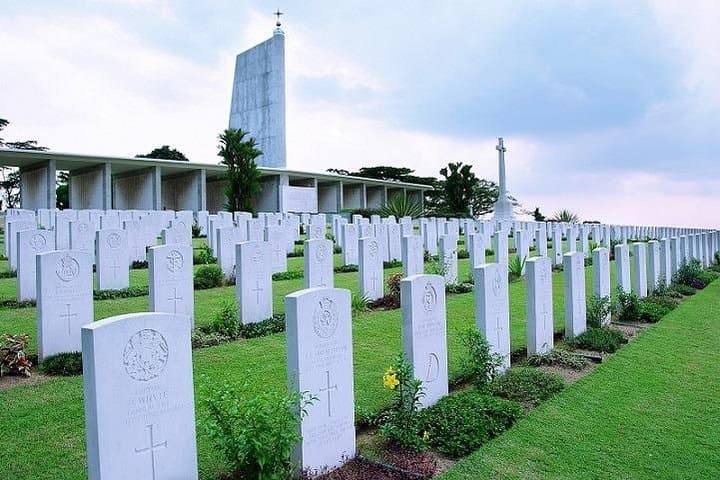
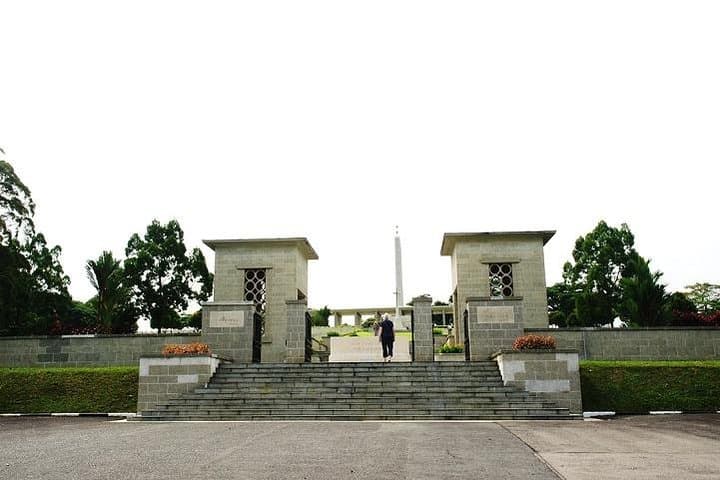
You step off the coach into a tidy row of white headstones at Kranji War Memorial and the city behind you falls away—traffic becomes a distant hum, high-rises reduced to a skyline you no longer occupy. The air is humid and still; insects hum in the grass while a guide unfolds the map of 1942, pointing to defensive lines that never held. This is not a dramatic, cinematic reenactment but a quiet retracing of decisions, missteps and the human stories lodged in mortar and stone.
Verified experiences and guided adventures in the surrounding area.
Operated by Tour East - Singapore · Singapore, Singapore
You step off the coach into a tidy row of white headstones at Kranji War Memorial and the city behind you falls away—traffic becomes a distant hum, high-rises reduced to a skyline you no longer occupy. The air is humid and still; insects hum in the grass while a guide unfolds the map of 1942, pointing to defensive lines that never held. This is not a dramatic, cinematic reenactment but a quiet retracing of decisions, missteps and the human stories lodged in mortar and stone.
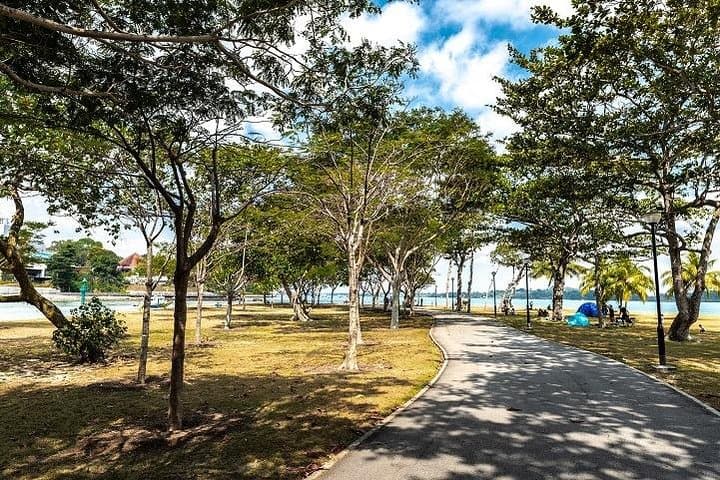
The route threads through Singapore’s wartime geography: Kranji, where Commonwealth soldiers are commemorated; the Changi area, whose name is synonymous with the prison and the endurance of internees; the Selarang Barracks and the coastal edge where Johor Battery once aimed out over the straits. Geologically there are no cliffs or peaks here—this is low-lying tropical plain and coastline shaped by reclaimed land and tidal flats—but the landscape owns a patient, coastal austerity that frames the human dramas of occupation and surrender.
History sits in layers: British prewar hubris that dubbed Singapore the ‘Gibraltar of the East’; the rapid Japanese advance that exposed logistical blind spots; and the months of occupation that left marks on the city’s architecture and collective memory. Local color arrives not from dramatic vistas but from details—a rusting cannon at a roadside, a plaque bearing names, a chapel display whose fragile diaries make wartime domesticity painfully immediate.
Culturally, the tour cuts across Singapore’s contemporary identity: efficient urban planning, multicultural cuisine and an insistence on remembering uncomfortable chapters. Guides tend to blend military facts with family stories and period photographs, which makes the stops feel both authoritative and human.
Practical guidance: the tour lasts about 3.5 hours with multiple brief stops and disembarkations for short walks—expect 15–30 minutes at memorials and up to an hour at Changi Beach. Wear sturdy walking shoes (paths can be sandy or grassy), a wide-brimmed hat and sunscreen; carry water and insect repellent. The coach provides air-conditioned comfort between stops, but bring a light rain jacket—Singapore’s showers come with no notice. If you rely on hotel pickup, be ready 30–60 minutes earlier; otherwise meet at the tour coordination point 30 minutes before departure.
Who should go: history-minded travelers, families with older children and those who want context beyond a museum wall. The emotional tenor is reflective rather than sensational—expect history told with restraint and a focus on facts and first-person testimony.
Timing: early morning departures reduce heat on any walking portions and improve photography at coastlines. Bring cash or plan for a stop at Changi Village to sample local hawker fare after the tour; it’s a practical, flavorful counterpoint to a morning of remembrance.
easy.
3.5 hours.
Suitable for most fitness levels; requires short walks of up to 20 minutes at stops and minimal stair negotiation
The tour runs about 3.5 hours with short walks at each stop; most walking segments are under 20 minutes.
Yes—selected city and Sentosa hotels are covered; confirm your exact pickup time on your voucher and be ready 30–60 minutes earlier.
Visits to certain sites like Kranji War Memorial and Changi Beach are included; specific exhibits noted in the itinerary are covered by the provider.
The tour is family-friendly but involves walking on uneven ground; it is wheelchair accessible in portions—check with the operator for specific assistance needs.
Guides typically conduct the tour in English; inquire about other language options when booking.
Private tours may be possible—contact the operator to request a custom itinerary and pricing.
Singapore was a strategic British naval base that fell to the Japanese in 1942; Changi later became a primary POW and internment site during the Occupation.
Sites are actively maintained by national agencies—stay on paths, avoid touching artifacts and follow signage to protect fragile memorial grounds.
Tour East - Singapore operates guided outdoor trips and adventures with an emphasis on safety, stewardship, and memorable experiences.

You step off the coach into a tidy row of white headstones at Kranji War Memorial and the city behind you falls away—traffic becomes a distant hum, high-rises reduced to a skyline you no longer occupy. The air is humid and still; insects hum in the grass while a guide unfolds the map of 1942, pointing to defensive lines that never held. This is not a dramatic, cinematic reenactment but a quiet retracing of decisions, missteps and the human stories lodged in mortar and stone.
You step off the coach into a tidy row of white headstones at Kranji War Memorial and the city behind you falls away—traffic becomes a distant hum, high-rises reduced to a skyline you no longer occupy. The air is humid and still; insects hum in the grass while a guide unfolds the map of 1942, pointing to defensive lines that never held. This is not a dramatic, cinematic reenactment but a quiet retracing of decisions, missteps and the human stories lodged in mortar and stone.
The route threads through Singapore’s wartime geography: Kranji, where Commonwealth soldiers are commemorated; the Changi area, whose name is synonymous with the prison and the endurance of internees; the Selarang Barracks and the coastal edge where Johor Battery once aimed out over the straits. Geologically there are no cliffs or peaks here—this is low-lying tropical plain and coastline shaped by reclaimed land and tidal flats—but the landscape owns a patient, coastal austerity that frames the human dramas of occupation and surrender.
History sits in layers: British prewar hubris that dubbed Singapore the ‘Gibraltar of the East’; the rapid Japanese advance that exposed logistical blind spots; and the months of occupation that left marks on the city’s architecture and collective memory. Local color arrives not from dramatic vistas but from details—a rusting cannon at a roadside, a plaque bearing names, a chapel display whose fragile diaries make wartime domesticity painfully immediate.
Culturally, the tour cuts across Singapore’s contemporary identity: efficient urban planning, multicultural cuisine and an insistence on remembering uncomfortable chapters. Guides tend to blend military facts with family stories and period photographs, which makes the stops feel both authoritative and human.
Practical guidance: the tour lasts about 3.5 hours with multiple brief stops and disembarkations for short walks—expect 15–30 minutes at memorials and up to an hour at Changi Beach. Wear sturdy walking shoes (paths can be sandy or grassy), a wide-brimmed hat and sunscreen; carry water and insect repellent. The coach provides air-conditioned comfort between stops, but bring a light rain jacket—Singapore’s showers come with no notice. If you rely on hotel pickup, be ready 30–60 minutes earlier; otherwise meet at the tour coordination point 30 minutes before departure.
Who should go: history-minded travelers, families with older children and those who want context beyond a museum wall. The emotional tenor is reflective rather than sensational—expect history told with restraint and a focus on facts and first-person testimony.
Timing: early morning departures reduce heat on any walking portions and improve photography at coastlines. Bring cash or plan for a stop at Changi Village to sample local hawker fare after the tour; it’s a practical, flavorful counterpoint to a morning of remembrance.