THE ADVENTURE COLLECTIVE® · Independent discovery and booking for outdoor travel

Slide into Silfra and snorkel a glacier-filtered channel between the Eurasian and North American plates. This private tour in Thingvellir blends geology, safety-first guiding and stunning visibility for a singular cold-water experience.
Slide into Silfra and snorkel a glacier-filtered channel between the Eurasian and North American plates. This private tour in Thingvellir blends geology, safety-first guiding and stunning visibility for a singular cold-water experience.
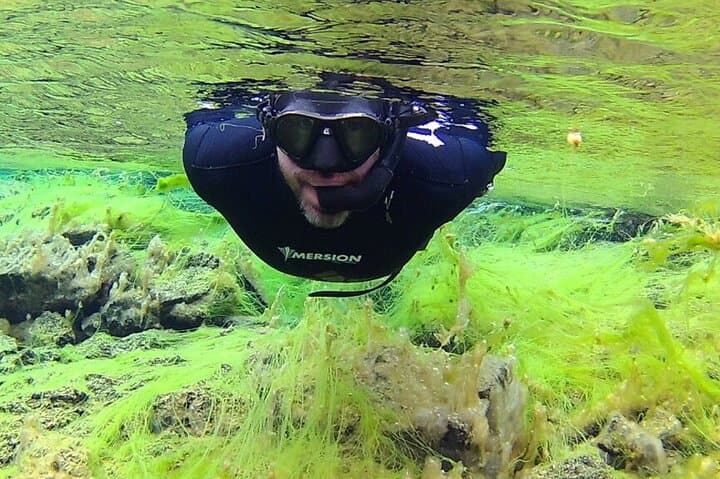
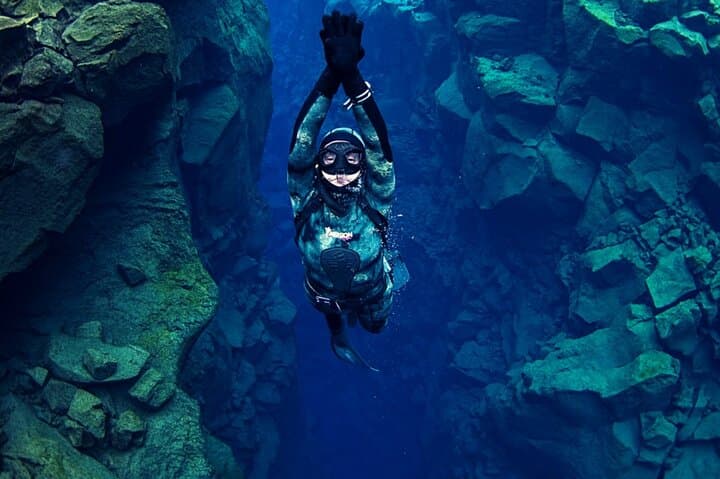
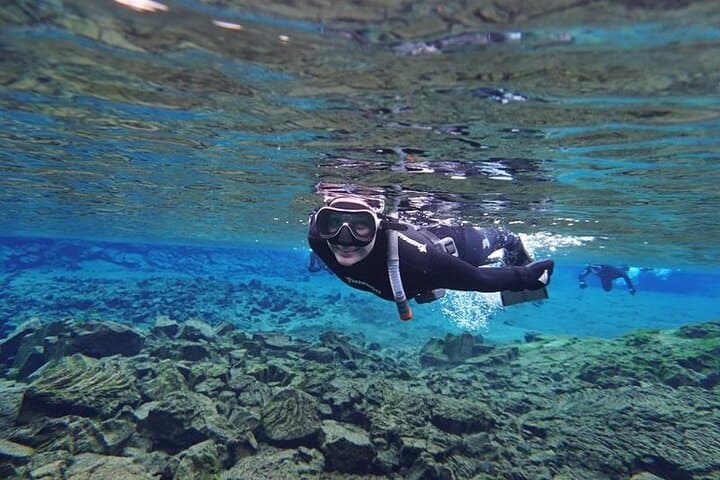
You stand on the edge of a rift that keeps its own calendar: ancient rock walls, stripped by ice and pressure, frame a slit of water so clear it seems to be holding its breath. Guides from Freedive Iceland fit your drysuit, click a hood into place and point to a small path—two minutes, they say—and then the fissure opens. Into Silfra you slip: the water pushes no current and refuses to murk. Visibility here can exceed 100 meters; the plates are literal shelves of time, and paddling through them is like moving through a slow, cold cathedral.
Verified experiences and guided adventures in the surrounding area.
Operated by Freedive Iceland · Reykjavik, Capital Region
You stand on the edge of a rift that keeps its own calendar: ancient rock walls, stripped by ice and pressure, frame a slit of water so clear it seems to be holding its breath. Guides from Freedive Iceland fit your drysuit, click a hood into place and point to a small path—two minutes, they say—and then the fissure opens. Into Silfra you slip: the water pushes no current and refuses to murk. Visibility here can exceed 100 meters; the plates are literal shelves of time, and paddling through them is like moving through a slow, cold cathedral.
Thingvellir has been a meeting place for humans long before the snorkel: the Alþingi, Iceland’s parliament, gathered here in the 10th century on basalt benches carved by volcanic flows and rift motion. Geology reads on a grand scale—the Eurasian and North American tectonic plates drift apart at a few centimeters per year, leaving a network of clear, spring-fed channels. Silfra’s water comes from Langjökull glacier, filtered through lava for decades, and emerges so pure its blue-green clarity makes colors pop against dark rock.
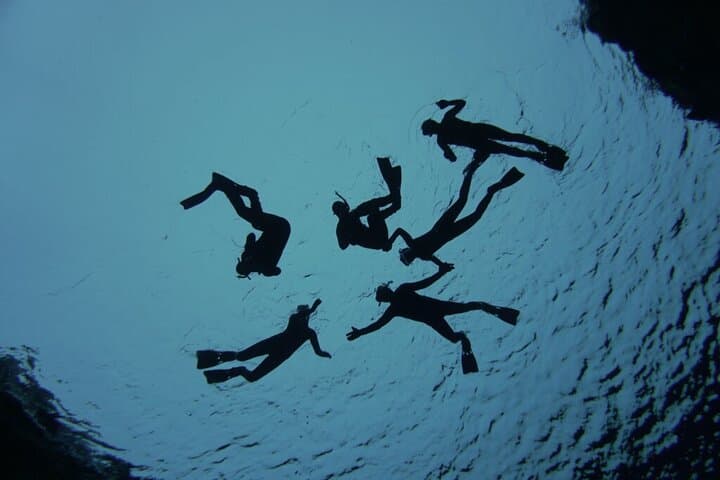
The private tour emphasizes safety and intimacy. Guides stay with you in the water, translating the fissure’s stratified story while managing buoyancy and comfort. You won’t dive deep; snorkeling stays near the surface of crevices like Silfra Hall and the Cathedral, where light slices the column of cold water into bands. After the swim you change into warm layers in onsite facilities and are handed hot cocoa—small, practical rituals that make the cold legible.
Practicalities: the whole experience runs about 3–4 hours including briefing, gearing, a two-minute walk to the water, and post-dip warming. Water temperature sits around 2–4°C year-round, so the operator supplies drysuits, gloves and booties. Participants must know how to swim, meet minimum height/weight limits and should be free of serious cardiovascular or spinal issues. Bring waterproof layers for travel to and from P5 parking at Thingvellir National Park, and a towel; a waterproof camera with a wide-angle lens rewards the bold.
For planning: Reykjavik is the usual base (roughly 45–60 minutes by car). Tours require advance booking and may cancel for weather or low participation; refunds are available if cancelled 24+ hours ahead. This private format is ideal for photographers, couples, or anyone who prefers a tailored pace. There is an austere quiet here—tectonics and cold water combine to sharpen a sense of being in the middle of something older than routine. The guides’ knowledge turns that quiet into a focused experience: you come out warm, breathless from the cold and the clarity, and with a new map of how the land carries its own slow motion.
moderate.
3–4 hours.
Able to swim comfortably and tolerate cold water exposure; not overly strenuous but requires basic mobility for gearing and short walk to the site.
Temperatures are typically between 2–4°C year-round; you’ll wear a drysuit provided by the operator to stay insulated and dry.
You must know how to swim and be comfortable in open water, but no formal diving certification is required—the guide stays with you for safety.
Meet at Thingvellir National Park near the P5 parking area; the operator notes a roughly 400-meter walk back to the dive vehicles and meeting point.
Attendees must be at least 145 cm tall and 45 kg, and must not exceed 210 cm or 130 kg; these limits ensure drysuit fit and safety.
Yes—underwater photography is allowed but use a waterproof housing and wide-angle lens; consider the private tour for clearer shots without crowds.
Tours may be canceled for bad weather or insufficient travelers; cancelations made 24+ hours prior are fully refundable.
Thingvellir hosted Iceland’s Alþingi (parliament) from the 10th century onward; the rift valley has long been both a legal and geological crossroads.
Silfra’s clarity depends on glacier-fed filtration and careful visitor management; stick to designated paths and follow guide instructions to minimize impact.
Freedive Iceland operates guided outdoor trips and adventures with an emphasis on safety, stewardship, and memorable experiences.
You stand on the edge of a rift that keeps its own calendar: ancient rock walls, stripped by ice and pressure, frame a slit of water so clear it seems to be holding its breath. Guides from Freedive Iceland fit your drysuit, click a hood into place and point to a small path—two minutes, they say—and then the fissure opens. Into Silfra you slip: the water pushes no current and refuses to murk. Visibility here can exceed 100 meters; the plates are literal shelves of time, and paddling through them is like moving through a slow, cold cathedral.
You stand on the edge of a rift that keeps its own calendar: ancient rock walls, stripped by ice and pressure, frame a slit of water so clear it seems to be holding its breath. Guides from Freedive Iceland fit your drysuit, click a hood into place and point to a small path—two minutes, they say—and then the fissure opens. Into Silfra you slip: the water pushes no current and refuses to murk. Visibility here can exceed 100 meters; the plates are literal shelves of time, and paddling through them is like moving through a slow, cold cathedral.
Thingvellir has been a meeting place for humans long before the snorkel: the Alþingi, Iceland’s parliament, gathered here in the 10th century on basalt benches carved by volcanic flows and rift motion. Geology reads on a grand scale—the Eurasian and North American tectonic plates drift apart at a few centimeters per year, leaving a network of clear, spring-fed channels. Silfra’s water comes from Langjökull glacier, filtered through lava for decades, and emerges so pure its blue-green clarity makes colors pop against dark rock.
The private tour emphasizes safety and intimacy. Guides stay with you in the water, translating the fissure’s stratified story while managing buoyancy and comfort. You won’t dive deep; snorkeling stays near the surface of crevices like Silfra Hall and the Cathedral, where light slices the column of cold water into bands. After the swim you change into warm layers in onsite facilities and are handed hot cocoa—small, practical rituals that make the cold legible.
Practicalities: the whole experience runs about 3–4 hours including briefing, gearing, a two-minute walk to the water, and post-dip warming. Water temperature sits around 2–4°C year-round, so the operator supplies drysuits, gloves and booties. Participants must know how to swim, meet minimum height/weight limits and should be free of serious cardiovascular or spinal issues. Bring waterproof layers for travel to and from P5 parking at Thingvellir National Park, and a towel; a waterproof camera with a wide-angle lens rewards the bold.
For planning: Reykjavik is the usual base (roughly 45–60 minutes by car). Tours require advance booking and may cancel for weather or low participation; refunds are available if cancelled 24+ hours ahead. This private format is ideal for photographers, couples, or anyone who prefers a tailored pace. There is an austere quiet here—tectonics and cold water combine to sharpen a sense of being in the middle of something older than routine. The guides’ knowledge turns that quiet into a focused experience: you come out warm, breathless from the cold and the clarity, and with a new map of how the land carries its own slow motion.