THE ADVENTURE COLLECTIVE® · Independent discovery and booking for outdoor travel

Scale ancient stairs to a dramatic rock palace, move through painted caverns of serene Buddhas, and finish with a village bullock-cart ride and catamaran glide—this private day tour from Colombo packs Sri Lanka’s cultural high notes into a single, well-paced day.
Scale ancient stairs to a dramatic rock palace, move through painted caverns of serene Buddhas, and finish with a village bullock-cart ride and catamaran glide—this private day tour from Colombo packs Sri Lanka’s cultural high notes into a single, well-paced day.
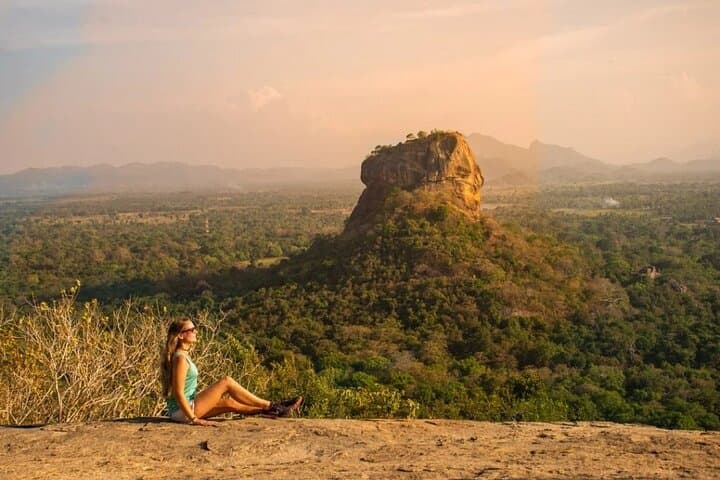
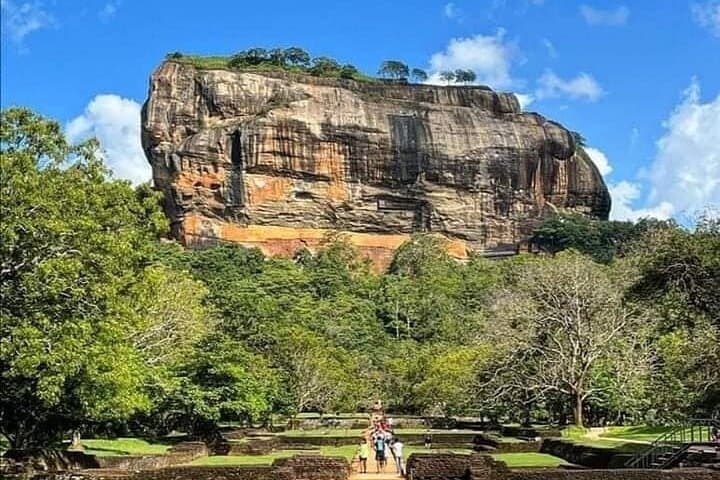
You step out of the air-conditioned van just as the heat of the Anuradhapura plain pulls itself into the long light of morning. Sigiriya rises ahead—an island of rock, a sheer headland rising 200 meters above rice paddies and jungle—its summit rimmed like a ruined crown. Behind you, the driver-guide smooths a map across the dashboard and points toward the carved lion’s paws that guard the path upward. For the next 8–12 hours you move between two of Sri Lanka’s most persuasive stories: the painted caves of Dambulla and the engineered theater of rock that is Sigiriya.
Verified experiences and guided adventures in the surrounding area.
Operated by Beecy Tours · Sigiriya, Central Province
You step out of the air-conditioned van just as the heat of the Anuradhapura plain pulls itself into the long light of morning. Sigiriya rises ahead—an island of rock, a sheer headland rising 200 meters above rice paddies and jungle—its summit rimmed like a ruined crown. Behind you, the driver-guide smooths a map across the dashboard and points toward the carved lion’s paws that guard the path upward. For the next 8–12 hours you move between two of Sri Lanka’s most persuasive stories: the painted caves of Dambulla and the engineered theater of rock that is Sigiriya.
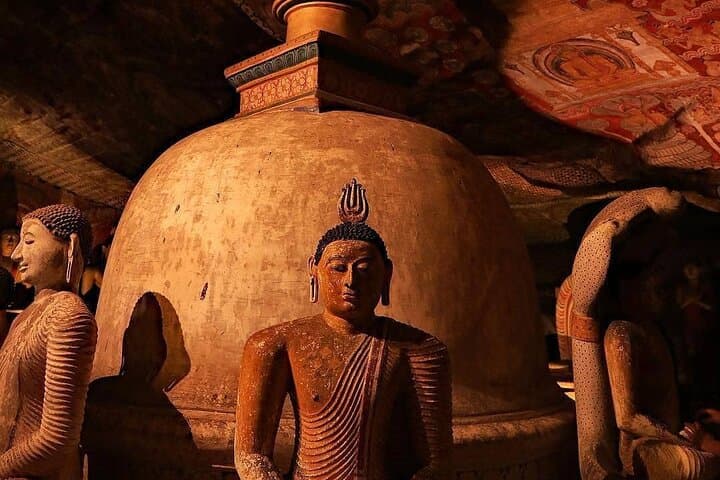
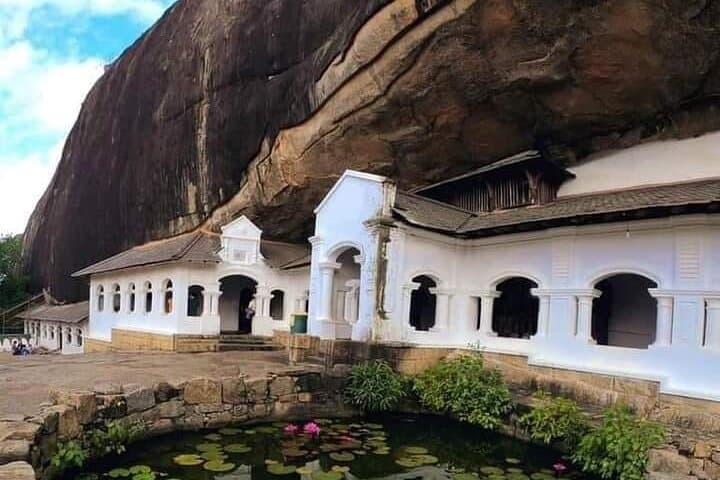
Dambulla’s cave temple sits on a low ridge of basalt where monks have painted and venerated for more than two millennia. Inside the dim caverns, gilded Buddhas recline and stand beneath layers of lacquered fresco while the stone floor remembers the steady scrape of sandals. Sigiriya, by contrast, is a late-5th-century palace-fortress—King Kasyapa’s audacious attempt to turn geology into spectacle. Its water gardens, terraced stairways and faded frescoes speak of an era that waged power with geometry and color.
Geology here is blunt and honest: hardened lava flows and laterite outcrops shaped by monsoon seasons. The rock’s iron-rich face flares orange in late afternoon light; the surrounding plains are dotted with tanks—man-made reservoirs that have irrigated these lowlands for centuries. The culture you pass through is rural but thick with ritual: temple bells, toddy palms, and households that still cook on clay stoves.
The day tour stitches the sites together with practical ease. You’ll climb metal staircases and narrow walkways at Sigiriya—expect steep sections and several hundred steps—then settle into the calm of a village lunch and a catamaran glide on a quiet lake. Your driver-guide handles the logistics, tickets and the small translations that make a private tour feel fluent.
Practical edge: wear broken-in walking shoes with good grip, bring sun protection and a refillable water bottle, and start early to beat the midday heat and school-group crowds. Respect sacred spaces at Dambulla—shoulders and knees covered—and don’t feed monkeys at the base of Sigiriya; they’re bold and fast.
Timing matters: an early start from Colombo or Negombo gives you cool morning air for the ascent and a softer light for photography on the return. If you want a quieter summit, go in the shoulder months when humidity softens but monsoon rainfall is limited. Ultimately, this is a day that trades comfort for breadth—two monumental sites, a village interlude and the kind of views that make history feel immediate and, for a few hours, entirely yours.
moderate.
8–12 hours.
Moderate fitness—able to climb several hundred steps and walk uneven surfaces; suitable for most active travelers
The tour runs approximately 8–12 hours (480–720 minutes); exact pickup and drop-off times depend on your hotel location and traffic—confirm with the operator at booking.
Yes—admission fees for both Sigiriya Rock Fortress and Dambulla Cave Temple are included in the tour price.
The tour is suitable for most ages, but Sigiriya involves steep stair sections—guests with mobility issues should consider remaining at lower viewpoints or arranging assistance.
Dress modestly: cover shoulders and knees at Dambulla. Comfortable, lightweight clothing is best for the tropical climate.
A traditional Sri Lankan lunch at a local village house is included, plus snacks and bottled water on board.
Yes—these activities are low-impact and operated locally. If you have specific health concerns, notify the operator in advance to arrange alternatives.
Sigiriya was transformed into a palace-fortress in the 5th century CE by King Kasyapa; Dambulla’s caves have been a continuous Buddhist monastic site for over 2,000 years.
Both sites are UNESCO-listed and managed to balance visitor access with preservation—stick to marked paths, avoid touching frescoes, and reduce plastic waste.
Beecy Tours operates guided outdoor trips and adventures with an emphasis on safety, stewardship, and memorable experiences.
You step out of the air-conditioned van just as the heat of the Anuradhapura plain pulls itself into the long light of morning. Sigiriya rises ahead—an island of rock, a sheer headland rising 200 meters above rice paddies and jungle—its summit rimmed like a ruined crown. Behind you, the driver-guide smooths a map across the dashboard and points toward the carved lion’s paws that guard the path upward. For the next 8–12 hours you move between two of Sri Lanka’s most persuasive stories: the painted caves of Dambulla and the engineered theater of rock that is Sigiriya.
You step out of the air-conditioned van just as the heat of the Anuradhapura plain pulls itself into the long light of morning. Sigiriya rises ahead—an island of rock, a sheer headland rising 200 meters above rice paddies and jungle—its summit rimmed like a ruined crown. Behind you, the driver-guide smooths a map across the dashboard and points toward the carved lion’s paws that guard the path upward. For the next 8–12 hours you move between two of Sri Lanka’s most persuasive stories: the painted caves of Dambulla and the engineered theater of rock that is Sigiriya.
Dambulla’s cave temple sits on a low ridge of basalt where monks have painted and venerated for more than two millennia. Inside the dim caverns, gilded Buddhas recline and stand beneath layers of lacquered fresco while the stone floor remembers the steady scrape of sandals. Sigiriya, by contrast, is a late-5th-century palace-fortress—King Kasyapa’s audacious attempt to turn geology into spectacle. Its water gardens, terraced stairways and faded frescoes speak of an era that waged power with geometry and color.
Geology here is blunt and honest: hardened lava flows and laterite outcrops shaped by monsoon seasons. The rock’s iron-rich face flares orange in late afternoon light; the surrounding plains are dotted with tanks—man-made reservoirs that have irrigated these lowlands for centuries. The culture you pass through is rural but thick with ritual: temple bells, toddy palms, and households that still cook on clay stoves.
The day tour stitches the sites together with practical ease. You’ll climb metal staircases and narrow walkways at Sigiriya—expect steep sections and several hundred steps—then settle into the calm of a village lunch and a catamaran glide on a quiet lake. Your driver-guide handles the logistics, tickets and the small translations that make a private tour feel fluent.
Practical edge: wear broken-in walking shoes with good grip, bring sun protection and a refillable water bottle, and start early to beat the midday heat and school-group crowds. Respect sacred spaces at Dambulla—shoulders and knees covered—and don’t feed monkeys at the base of Sigiriya; they’re bold and fast.
Timing matters: an early start from Colombo or Negombo gives you cool morning air for the ascent and a softer light for photography on the return. If you want a quieter summit, go in the shoulder months when humidity softens but monsoon rainfall is limited. Ultimately, this is a day that trades comfort for breadth—two monumental sites, a village interlude and the kind of views that make history feel immediate and, for a few hours, entirely yours.