THE ADVENTURE COLLECTIVE® · Independent discovery and booking for outdoor travel

Tick off Sri Lanka’s most iconic monolith and then trade stone for savanna on a single, full-day loop from Negombo. Expect a steep climb to Sigiriya’s summit and a 3-hour jeep safari in Minneriya for elephant sightings—best July–October.
Tick off Sri Lanka’s most iconic monolith and then trade stone for savanna on a single, full-day loop from Negombo. Expect a steep climb to Sigiriya’s summit and a 3-hour jeep safari in Minneriya for elephant sightings—best July–October.
The day begins before sunrise in Negombo, when an air-conditioned van eases out of the town and the coastline gives way to flat rice paddies and clustered villages. By mid-morning Sigiriya appears: a solitary, hulking rock rising out of the plain like a giant's rampart. The heat presses down; Brahminy kites wheel in thermals and the road hums with the confident rhythm of Sri Lanka’s rural life.
Verified experiences and guided adventures in the surrounding area.
Operated by Lakpura LLC · Sigiriya, Central Province
The day begins before sunrise in Negombo, when an air-conditioned van eases out of the town and the coastline gives way to flat rice paddies and clustered villages. By mid-morning Sigiriya appears: a solitary, hulking rock rising out of the plain like a giant's rampart. The heat presses down; Brahminy kites wheel in thermals and the road hums with the confident rhythm of Sri Lanka’s rural life.
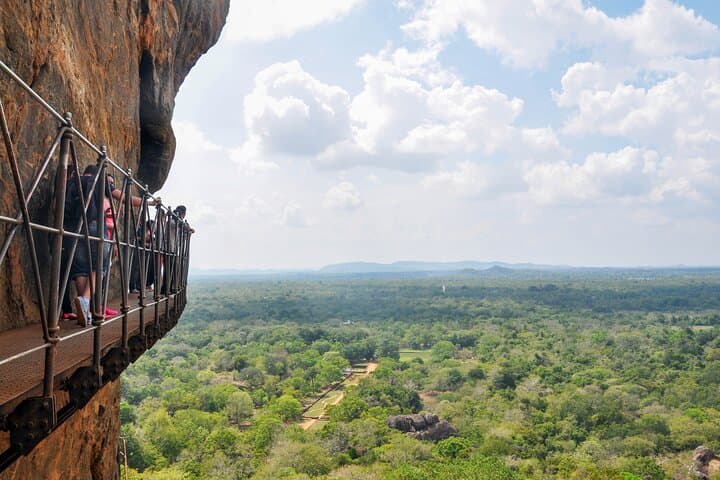
Climbing Sigiriya is part archaeology, part workout. Roughly 200 meters of vertical stone and about 1,200 steps (varying by route) carry visitors past vestigial gardens, frescoed cave walls and the famous Lion’s Paw—two massive stone forepaws that mark the final ascent. The frescoes here are fragments of a royal court from the 5th century CE, remnants of King Kasyapa’s attempt to build an impregnable hilltop palace. Geologically it’s a hardened magma plug: granite and gneiss that weathered into the sheer, smooth faces that make the ascent dramatic and exposed.
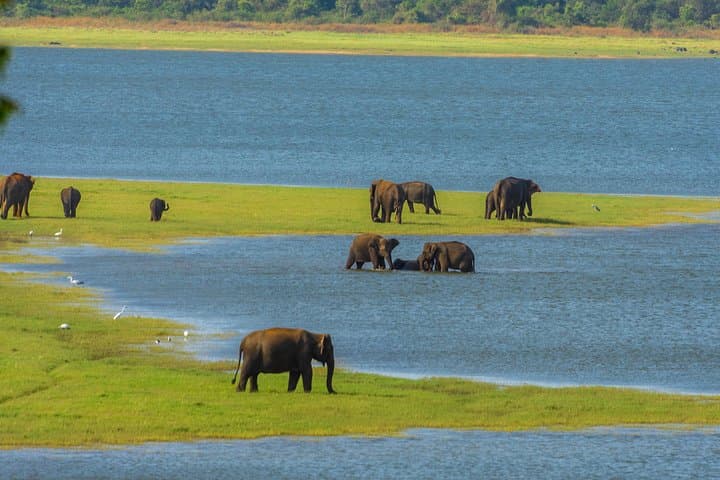
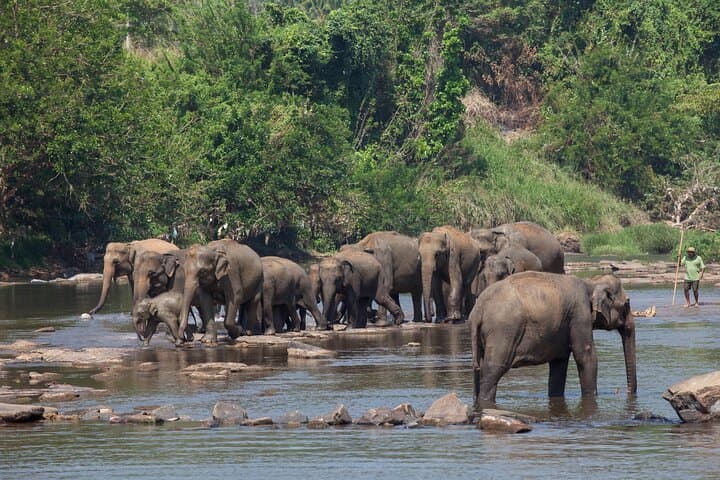
After the climb, the tour moves into Sri Lanka’s dry-zone wilderness: Minneriya National Park. The landscape changes to low scrub, lakes and thorny growths where elephants congregate around the remaining waterholes. The park is famous for “The Gathering,” when hundreds of Asian elephants concentrate on grasslands around Minneriya Tank; this spectacle is at its peak in the dry months. A three-hour jeep safari threads across rough terrain, and the guide listens for trumpets and scans for distant silhouettes—elephants, sambar deer, and a skitter of monkeys.
Culturally, this day pairs two faces of Sri Lanka: the island’s ancient royal ambition at Sigiriya and its living rural ecosystem at Minneriya. Local villages along the route are agricultural and Hindu and Buddhist shrines dot the roadside, offering glimpses of contemporary island life.
Practical notes: expect a long day—roughly 12–13 hours including travel from Negombo (about 3–3.5 hours each way depending on traffic). The climb to Sigiriya is exposed; carry sun protection, at least 2 liters of water, and sturdy shoes. Entrance fees to Sigiriya Rock and Minneriya Park are typically paid on-site and are not included in many private tours—confirm with your operator. The safari uses a 4WD game vehicle; keep binoculars and a zoom lens ready and stow valuables during bumpy stretches. Peak elephant viewing runs July–October, but wildlife is present year-round.
This combination tour is built for travelers who want a condensed, high-impact day: history hardened into stone, and wild herds testing the patience of the plains. Move deliberately, listen for the forest and the rumble of elephant feet, and plan your energy—Sigiriya rewards the climb with one of Sri Lanka’s most decisive panoramas.
moderate.
12–13 hours.
Moderate fitness recommended—able to handle a sustained stair climb (~1,200 steps) and several hours in a safari vehicle.
Plan on approximately 12–13 hours door-to-door—travel time varies with traffic but expect about 3–3.5 hours each way.
Most bookings do not include site entrance fees; pay separately at Sigiriya and Minneriya, usually in local currency.
Minneriya is one of the best places on the island for herd sightings—highest likelihood in the dry season (July–October), but animals can be seen year-round.
The climb is steep and exposed; individuals should be reasonably fit and comfortable on stairs and narrow walkways.
Basic facilities exist at Sigiriya’s lower precinct and at park entry points; carry hand sanitizer and small change.
Tipping is appreciated and customary for good service; small notes in local currency are easiest.
Sigiriya was transformed into a fortified royal capital in the 5th century CE by King Kasyapa; its frescoes and mirror wall reflect an advanced urban design for its time.
Minneriya’s dry-zone ecosystem is sensitive to over-visitation and seasonal water management; stick to park rules to minimize disturbance to elephant herds.
Lakpura LLC operates guided outdoor trips and adventures with an emphasis on safety, stewardship, and memorable experiences.
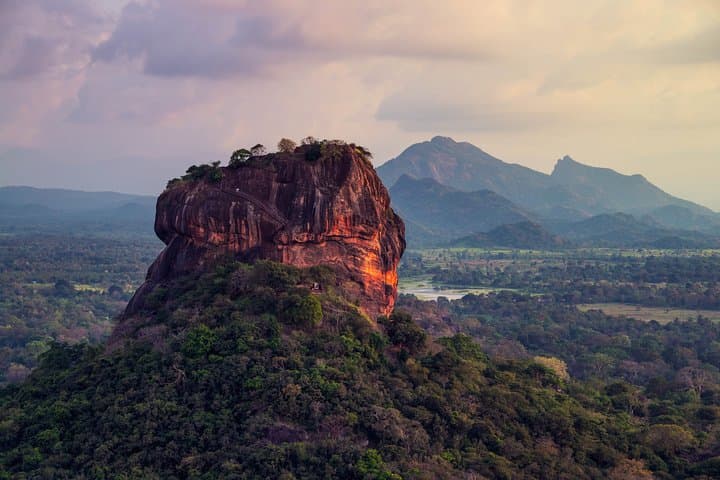
The day begins before sunrise in Negombo, when an air-conditioned van eases out of the town and the coastline gives way to flat rice paddies and clustered villages. By mid-morning Sigiriya appears: a solitary, hulking rock rising out of the plain like a giant's rampart. The heat presses down; Brahminy kites wheel in thermals and the road hums with the confident rhythm of Sri Lanka’s rural life.
The day begins before sunrise in Negombo, when an air-conditioned van eases out of the town and the coastline gives way to flat rice paddies and clustered villages. By mid-morning Sigiriya appears: a solitary, hulking rock rising out of the plain like a giant's rampart. The heat presses down; Brahminy kites wheel in thermals and the road hums with the confident rhythm of Sri Lanka’s rural life.
Climbing Sigiriya is part archaeology, part workout. Roughly 200 meters of vertical stone and about 1,200 steps (varying by route) carry visitors past vestigial gardens, frescoed cave walls and the famous Lion’s Paw—two massive stone forepaws that mark the final ascent. The frescoes here are fragments of a royal court from the 5th century CE, remnants of King Kasyapa’s attempt to build an impregnable hilltop palace. Geologically it’s a hardened magma plug: granite and gneiss that weathered into the sheer, smooth faces that make the ascent dramatic and exposed.
After the climb, the tour moves into Sri Lanka’s dry-zone wilderness: Minneriya National Park. The landscape changes to low scrub, lakes and thorny growths where elephants congregate around the remaining waterholes. The park is famous for “The Gathering,” when hundreds of Asian elephants concentrate on grasslands around Minneriya Tank; this spectacle is at its peak in the dry months. A three-hour jeep safari threads across rough terrain, and the guide listens for trumpets and scans for distant silhouettes—elephants, sambar deer, and a skitter of monkeys.
Culturally, this day pairs two faces of Sri Lanka: the island’s ancient royal ambition at Sigiriya and its living rural ecosystem at Minneriya. Local villages along the route are agricultural and Hindu and Buddhist shrines dot the roadside, offering glimpses of contemporary island life.
Practical notes: expect a long day—roughly 12–13 hours including travel from Negombo (about 3–3.5 hours each way depending on traffic). The climb to Sigiriya is exposed; carry sun protection, at least 2 liters of water, and sturdy shoes. Entrance fees to Sigiriya Rock and Minneriya Park are typically paid on-site and are not included in many private tours—confirm with your operator. The safari uses a 4WD game vehicle; keep binoculars and a zoom lens ready and stow valuables during bumpy stretches. Peak elephant viewing runs July–October, but wildlife is present year-round.
This combination tour is built for travelers who want a condensed, high-impact day: history hardened into stone, and wild herds testing the patience of the plains. Move deliberately, listen for the forest and the rumble of elephant feet, and plan your energy—Sigiriya rewards the climb with one of Sri Lanka’s most decisive panoramas.