THE ADVENTURE COLLECTIVE® · Independent discovery and booking for outdoor travel

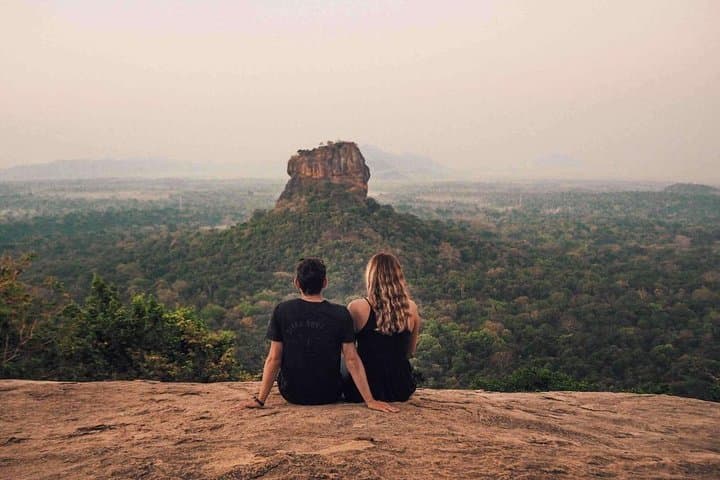
Spend a day moving between caves, royal rock and a working herbal garden on this private tour from Kandy. Climb Sigiriya’s iron stairways, explore Dambulla’s painted caves and finish on Pidurangala for one of the clearest views of Lion Rock.
Spend a day moving between caves, royal rock and a working herbal garden on this private tour from Kandy. Climb Sigiriya’s iron stairways, explore Dambulla’s painted caves and finish on Pidurangala for one of the clearest views of Lion Rock.
The minivan eases out of Kandy before sunrise, rice paddies sliding by like green pages. By mid-morning the road tightens into granite gullies and the first silhouette of Sigiriya rises—a squat, craggy dome flanked by flat plains. The day unfolds as a series of vertical encounters: cool, shadowed caves with painted Buddhas; a formal herbal garden where leaves steam with scent and cure; a climb up iron stairways to banked frescoes; and a final, windy view from Pidurangala that frames Sigiriya like a rival stone.
Verified experiences and guided adventures in the surrounding area.
Operated by Travel with Hasith · Sigiriya, Central Province
The minivan eases out of Kandy before sunrise, rice paddies sliding by like green pages. By mid-morning the road tightens into granite gullies and the first silhouette of Sigiriya rises—a squat, craggy dome flanked by flat plains. The day unfolds as a series of vertical encounters: cool, shadowed caves with painted Buddhas; a formal herbal garden where leaves steam with scent and cure; a climb up iron stairways to banked frescoes; and a final, windy view from Pidurangala that frames Sigiriya like a rival stone.
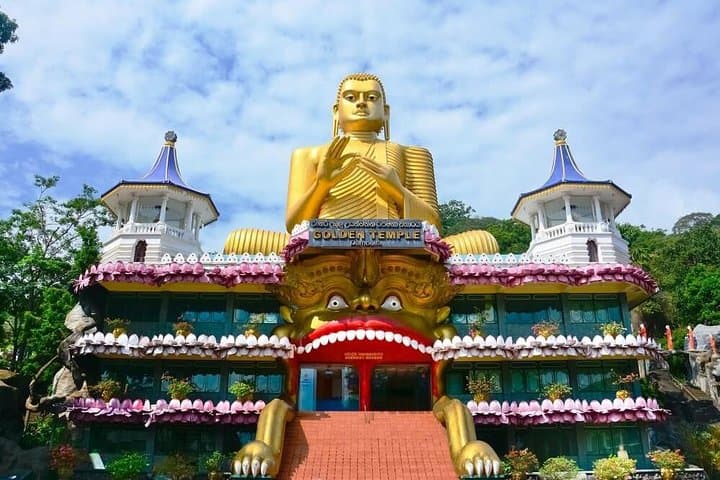
Dambulla’s cave temple complex predates much of Sri Lanka’s medieval court life. Carved into a basalt outcrop, its five main caves house hundreds of Buddha images and murals that trace changes in art from the first century BCE through later Kandyan refurbishments. Sigiriya itself is a hardened magma plug thrust from the plain and refined by human hands—King Kasyapa’s 5th-century palace-stronghold sits half-lifted above terraces, moats, and gardens imagined as a geometric counterpoint to the raw rock.
Culturally the route stitches together Buddhism, vernacular Ayurveda and local livelihoods: small shops sell jaggery and chama (cardamom tea), and roadside herbalists will explain how koththamalli (coriander) and gotu kola are used in poultices. Geologically, the climb is immediate—roughly 200 meters (≈650 ft) of vertical gain to Sigiriya’s summit across staircases, ramps and metal platforms; Pidurangala’s scramble is steeper but shorter, offering a quieter perch for photos.
Practical guidance: this is a full-day, private tour (6–10 hours) with hotel pickup in Kandy. Expect a fair amount of stair climbing—wear grippy shoes and bring at least 1–1.5 liters of water per person. Modest dress is required in temple areas (shoulders and knees covered) and shoes must be removed in cave sanctuaries. Peak clarity comes early—arrive before late morning clouds and the heat builds. The tour typically includes bottled water and air-conditioned transport but not entrance fees; check ticket arrangements in advance if you want skip-the-line access.
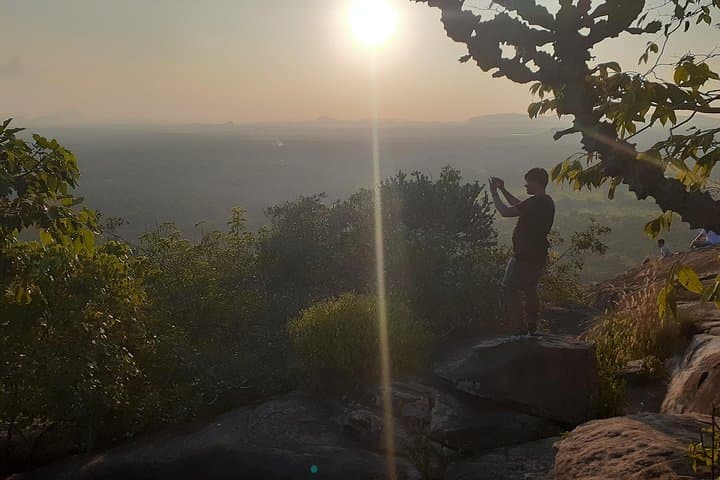
Timing and pacing make the difference. Move deliberately through Dambulla’s cool interiors to avoid crowds, save your energy for the metal stair ascent at Sigiriya, and finish with Pidurangala’s west-facing ledge for sunset-quality light. Keep a lightweight rain layer close: tropical squalls can appear without much warning. Above all, treat both sites with the cultural respect they command—your ascent is as much through history as it is through stone.
moderate.
6–10 hours.
Moderate fitness—comfortable with stair climbs and short steep scrambles; expect periods of standing and walking across uneven surfaces.
No, entrance fees for Sigiriya Rock and Dambulla Cave Temple are usually not included—confirm at booking and bring local currency (LKR) or check if the operator can buy tickets on your behalf.
The ascent gains about 200 m (≈650 ft) and follows a mix of rock path, stone steps and metal stairways—allow 45–90 minutes up and similar time down depending on pace.
Children and active older travelers can do the tour, but anyone with limited mobility or serious back/neck issues should avoid the climb; Dambulla’s caves have uneven floors and steps.
Yes—this private full-day tour typically includes a stop at a local herbal garden where you can learn about traditional Ayurvedic plants and remedies.
Photography is generally allowed, but flash may be restricted in some cave interiors; be respectful of worshippers and follow site signage.
Dress modestly—cover shoulders and knees; remove shoes before entering cave shrines and follow any requests from temple staff.
Sigiriya was fortified and landscaped by King Kasyapa in the 5th century AD; Dambulla’s caves contain Buddhist murals and statues dating back to the first century BCE.
Both sites are UNESCO-proximate and are managed to protect frescoes and rock faces—avoid touching painted surfaces and stick to marked paths to reduce erosion.
Travel with Hasith operates guided outdoor trips and adventures with an emphasis on safety, stewardship, and memorable experiences.
The minivan eases out of Kandy before sunrise, rice paddies sliding by like green pages. By mid-morning the road tightens into granite gullies and the first silhouette of Sigiriya rises—a squat, craggy dome flanked by flat plains. The day unfolds as a series of vertical encounters: cool, shadowed caves with painted Buddhas; a formal herbal garden where leaves steam with scent and cure; a climb up iron stairways to banked frescoes; and a final, windy view from Pidurangala that frames Sigiriya like a rival stone.
The minivan eases out of Kandy before sunrise, rice paddies sliding by like green pages. By mid-morning the road tightens into granite gullies and the first silhouette of Sigiriya rises—a squat, craggy dome flanked by flat plains. The day unfolds as a series of vertical encounters: cool, shadowed caves with painted Buddhas; a formal herbal garden where leaves steam with scent and cure; a climb up iron stairways to banked frescoes; and a final, windy view from Pidurangala that frames Sigiriya like a rival stone.
Dambulla’s cave temple complex predates much of Sri Lanka’s medieval court life. Carved into a basalt outcrop, its five main caves house hundreds of Buddha images and murals that trace changes in art from the first century BCE through later Kandyan refurbishments. Sigiriya itself is a hardened magma plug thrust from the plain and refined by human hands—King Kasyapa’s 5th-century palace-stronghold sits half-lifted above terraces, moats, and gardens imagined as a geometric counterpoint to the raw rock.
Culturally the route stitches together Buddhism, vernacular Ayurveda and local livelihoods: small shops sell jaggery and chama (cardamom tea), and roadside herbalists will explain how koththamalli (coriander) and gotu kola are used in poultices. Geologically, the climb is immediate—roughly 200 meters (≈650 ft) of vertical gain to Sigiriya’s summit across staircases, ramps and metal platforms; Pidurangala’s scramble is steeper but shorter, offering a quieter perch for photos.
Practical guidance: this is a full-day, private tour (6–10 hours) with hotel pickup in Kandy. Expect a fair amount of stair climbing—wear grippy shoes and bring at least 1–1.5 liters of water per person. Modest dress is required in temple areas (shoulders and knees covered) and shoes must be removed in cave sanctuaries. Peak clarity comes early—arrive before late morning clouds and the heat builds. The tour typically includes bottled water and air-conditioned transport but not entrance fees; check ticket arrangements in advance if you want skip-the-line access.
Timing and pacing make the difference. Move deliberately through Dambulla’s cool interiors to avoid crowds, save your energy for the metal stair ascent at Sigiriya, and finish with Pidurangala’s west-facing ledge for sunset-quality light. Keep a lightweight rain layer close: tropical squalls can appear without much warning. Above all, treat both sites with the cultural respect they command—your ascent is as much through history as it is through stone.