THE ADVENTURE COLLECTIVE® · Independent discovery and booking for outdoor travel

A private, Russian-speaking seven-day circuit from Zagreb to the Adriatic and Slovenia that balances historic towns, karst caves, and Plitvice’s lakes. Tailored pacing, comfortable transfers, and a guide who brings the region’s geology and culinary culture to life.
A private, Russian-speaking seven-day circuit from Zagreb to the Adriatic and Slovenia that balances historic towns, karst caves, and Plitvice’s lakes. Tailored pacing, comfortable transfers, and a guide who brings the region’s geology and culinary culture to life.
You step off the plane at Zagreb’s quiet arrival hall and a driver is waiting with a handwritten sign. The first breath of Croatian air tastes of Adriatic salt and pine as the Mercedes glides toward the coastal hills; within hours the city’s baroque roofs give way to vineyards and the glittering curve of the Kvarner Gulf. This is not a checklist tour — it’s a tailored seven-day circuit designed to move at the pace of your group, with a Russian-speaking guide translating both history and the small human details that make each stop feel lived-in.
Verified experiences and guided adventures in the surrounding area.
Operated by Croatia travel agency · Opatija, Primorje-Gorski Kotar
You step off the plane at Zagreb’s quiet arrival hall and a driver is waiting with a handwritten sign. The first breath of Croatian air tastes of Adriatic salt and pine as the Mercedes glides toward the coastal hills; within hours the city’s baroque roofs give way to vineyards and the glittering curve of the Kvarner Gulf. This is not a checklist tour — it’s a tailored seven-day circuit designed to move at the pace of your group, with a Russian-speaking guide translating both history and the small human details that make each stop feel lived-in.
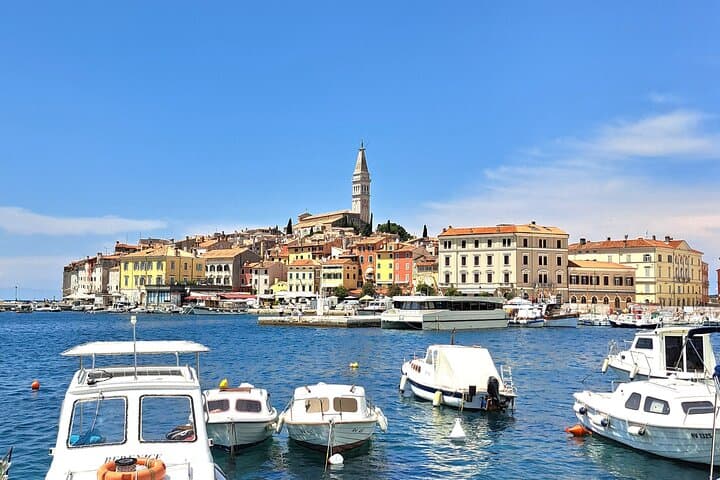
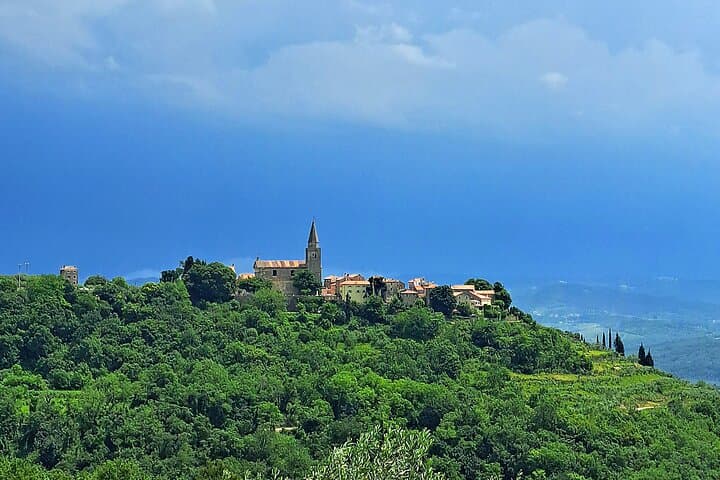
From the capital’s Lotrščak Tower and the mosaic-tiled roof of St. Mark’s Church, the itinerary arcs west into Istria where tiny Hum claims the title of the world’s smallest town and Grožnjan’s galleries spill into the lanes like paint. Rovinj’s seafront tugs like an old calendar image — narrow alleys, a bell tower watching the harbor — while the Lim Fjord folds the sea into green cliffs that seem to dare boats to explore. The route slips across borders to Slovenia: you’ll ride the electric silence of Postojna Cave and pause for a photo at the improbable fortress of Predjama, set into a vertical rock face.
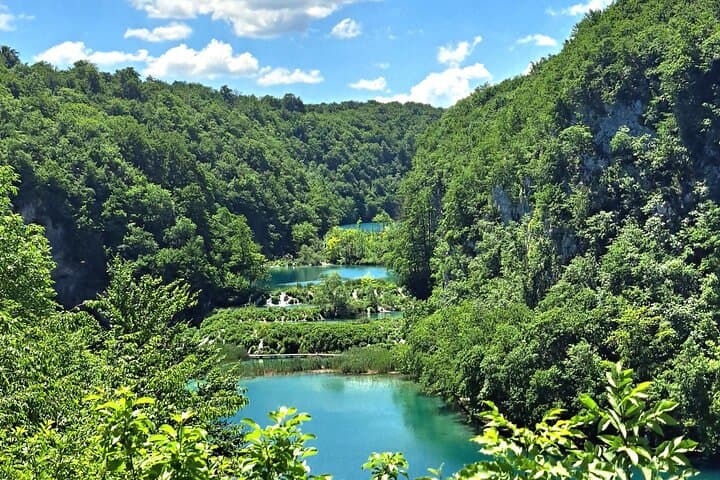
Geology is a quiet co-author on this trip. Karst limestone has been dissolving for millennia here, carving caves and canyons — Postojna and Škocjan are the region’s underground cathedrals, where rivers still shape the halls and low ceilings remind you the earth keeps working. Plitvice Lakes reads like water made concrete: 16 terraced lakes and a chain of falls whose colors shift from turquoise to deep green depending on light and mineral content.
Culture threads through the landscape: coastal Italianate architecture in Trieste and Miramare Castle, centuries-old Glagolitic inscriptions in Istria, and a food culture that shifts from Dalmatian seafood to inland truffles and cheeses. Guides here are as much interpreters of taste as of history — expect oysters at Lim, salt-amber pasta in Rovinj, and hearty mountain stews inland.
Practical matters: plan on 2–4 hours of light walking most days, with longer, easy hikes at Plitvice (allow 3–4 hours on boardwalks). Cave visits are cool (approximately 8–12°C) and require closed shoes and a light layer. Most transfers are by air-conditioned Mercedes; daily drives vary from 45 minutes to three hours. Bring cobblestone-ready shoes, a compact rain jacket, a daypack, and a travel adapter. Cash is handy for small markets; cards are widely accepted in towns.
For groups who want more control over pacing, the private format lets you shorten or extend time at key sites. Whether you want to linger over a seaside espresso in Rovinj or spend extra time photographing Plitvice’s terraces, this route is built to be reshaped — and to leave you with the sense that, for a week, the coast and caves belonged to you.
moderate.
7 days.
Suitable for travelers who can walk 2–4 hours a day over mixed terrain; no intense conditioning required but expect standing and stairs.
Yes; the private format is family-friendly and infant seats are available—many sites are stroller-unfriendly, so a carrier is recommended for caves and trails.
This package specifies a Russian-speaking guide; guides typically also speak English and local languages depending on availability.
The itinerary notes admission isn’t included for some parks; it’s advisable to book Plitvice and major caves in advance during high season to avoid queues.
Daily transfers vary—short city transfers of 30–60 minutes and longer drives of up to three hours when crossing regions; comfortable, air-conditioned vehicles are provided.
Drinking water is supplied on excursions; meals are generally not included so you can choose local restaurants and regional specialties along the route.
The tour crosses into Slovenia and Italy; carry your passport and any required travel documents—your guide will handle practicalities and inform you of any local requirements.
The region’s identity has been shaped by Roman, Venetian, Austro-Hungarian and Slavic influences; this layered past appears in Istrian stonework, Trieste’s grand squares, and Glagolitic inscriptions in Hum.
Plitvice and Škocjan are UNESCO sites with strict path and waste rules—stay on marked trails, avoid feeding wildlife, and favor locally run services to support sustainable tourism.
Croatia travel agency operates guided outdoor trips and adventures with an emphasis on safety, stewardship, and memorable experiences.
You step off the plane at Zagreb’s quiet arrival hall and a driver is waiting with a handwritten sign. The first breath of Croatian air tastes of Adriatic salt and pine as the Mercedes glides toward the coastal hills; within hours the city’s baroque roofs give way to vineyards and the glittering curve of the Kvarner Gulf. This is not a checklist tour — it’s a tailored seven-day circuit designed to move at the pace of your group, with a Russian-speaking guide translating both history and the small human details that make each stop feel lived-in.
You step off the plane at Zagreb’s quiet arrival hall and a driver is waiting with a handwritten sign. The first breath of Croatian air tastes of Adriatic salt and pine as the Mercedes glides toward the coastal hills; within hours the city’s baroque roofs give way to vineyards and the glittering curve of the Kvarner Gulf. This is not a checklist tour — it’s a tailored seven-day circuit designed to move at the pace of your group, with a Russian-speaking guide translating both history and the small human details that make each stop feel lived-in.
From the capital’s Lotrščak Tower and the mosaic-tiled roof of St. Mark’s Church, the itinerary arcs west into Istria where tiny Hum claims the title of the world’s smallest town and Grožnjan’s galleries spill into the lanes like paint. Rovinj’s seafront tugs like an old calendar image — narrow alleys, a bell tower watching the harbor — while the Lim Fjord folds the sea into green cliffs that seem to dare boats to explore. The route slips across borders to Slovenia: you’ll ride the electric silence of Postojna Cave and pause for a photo at the improbable fortress of Predjama, set into a vertical rock face.
Geology is a quiet co-author on this trip. Karst limestone has been dissolving for millennia here, carving caves and canyons — Postojna and Škocjan are the region’s underground cathedrals, where rivers still shape the halls and low ceilings remind you the earth keeps working. Plitvice Lakes reads like water made concrete: 16 terraced lakes and a chain of falls whose colors shift from turquoise to deep green depending on light and mineral content.
Culture threads through the landscape: coastal Italianate architecture in Trieste and Miramare Castle, centuries-old Glagolitic inscriptions in Istria, and a food culture that shifts from Dalmatian seafood to inland truffles and cheeses. Guides here are as much interpreters of taste as of history — expect oysters at Lim, salt-amber pasta in Rovinj, and hearty mountain stews inland.
Practical matters: plan on 2–4 hours of light walking most days, with longer, easy hikes at Plitvice (allow 3–4 hours on boardwalks). Cave visits are cool (approximately 8–12°C) and require closed shoes and a light layer. Most transfers are by air-conditioned Mercedes; daily drives vary from 45 minutes to three hours. Bring cobblestone-ready shoes, a compact rain jacket, a daypack, and a travel adapter. Cash is handy for small markets; cards are widely accepted in towns.
For groups who want more control over pacing, the private format lets you shorten or extend time at key sites. Whether you want to linger over a seaside espresso in Rovinj or spend extra time photographing Plitvice’s terraces, this route is built to be reshaped — and to leave you with the sense that, for a week, the coast and caves belonged to you.