THE ADVENTURE COLLECTIVE® · Independent discovery and booking for outdoor travel

Cathedral spires, riverside art, and a pink-walled castle shape this easy self-guided walk through Sweden’s historic university city. Move at your own pace from medieval grandeur to living gardens, with fika breaks and river views leading the way.
Cathedral spires, riverside art, and a pink-walled castle shape this easy self-guided walk through Sweden’s historic university city. Move at your own pace from medieval grandeur to living gardens, with fika breaks and river views leading the way.
The bells of Uppsala Cathedral roll across the old town as you step onto the cobblestones. Brick spires rake the sky, trampling clouds as if impatient for light. Cyclists whisper past, the River Fyrisån slides beside you, and the city invites you to follow its curve—past cafe windows fogged with steam and cinnamon, toward stories that still echo in stone.
Verified experiences and guided adventures in the surrounding area.
Operated by taysta ab · Uppsala, Uppsala County
The bells of Uppsala Cathedral roll across the old town as you step onto the cobblestones. Brick spires rake the sky, trampling clouds as if impatient for light. Cyclists whisper past, the River Fyrisån slides beside you, and the city invites you to follow its curve—past cafe windows fogged with steam and cinnamon, toward stories that still echo in stone.
This self-guided route moves at a human pace. Start at the cathedral’s south portal, where the Gothic façade throws long, angular shadows. The river pulls you onward to Bror Hjorth’s sculpture Näckens Polska, where water and music seem to argue in bronze. Fika isn’t a detour here; it’s part of the terrain. Pause at a bakery for kanelbulle and strong coffee, then angle through the Stadsträdgården (city park), where lawns open wide and the river’s current nudges you north.
Climb the short rise to the pink-walled Uppsala Castle, its bastions catching sun and wind. The castle was raised under Gustav Vasa in the 16th century and later rebuilt after the great fire of 1702—a blaze that reshaped the city’s rooflines. Across the way, the Uppsala Art Museum and the contemporary Cube of Art show the city still experiments, still asks questions in color and light. From here, the axis draws straight to the Botanical Garden, where symmetry meets wild ambition. Linnaeus once paced through Uppsala, and his spirit still briskly organizes the garden’s 7,000 plant species, even as petals refuse to follow rules.
Plan on 2–3 hours for 2–4 km of easy walking with one brief climb (25–30 m) to the castle. Surfaces are mostly paved or cobbled; strollers and wheelchairs can skirt steps via gentle ramps around the castle hill. The tour ends among the parterres and greenhouses of the Botaniska—linger for seasonal blooms or step inside when winds turn sharp. Entry to museums is separate; your walk includes a 20% discount at Cube of Art.
Uppsala runs year-round. Spring perks up with Walpurgis festivities; summer stretches into long, soft evenings; fall paints the riverbanks; winter hushes the squares and lets the cathedral’s interior feel warmer by contrast. Trains from Stockholm Central reach Uppsala in about 40 minutes; from the station it’s a 15-minute walk to the starting point.
The city’s pace is steady, its spaces generous. The river keeps urging forward, the gardens ask you to slow down, and somewhere between them the old and new share the same stride. That’s the rhythm of this walk: unhurried, aware, and quietly unforgettable.
easy.
2–3 hours.
Comfortable walking pace on mostly flat sidewalks with a brief hill to the castle; suitable for families and casual walkers.
Expect 2–4 km depending on detours and photo stops; most visitors spend 2–3 hours at an easy pace.
Yes—most surfaces are paved. Use ramped approaches around the castle hill and avoid a few short stair sections.
Entry fees are not included, but the experience includes a 20% discount at Cube of Art; the cathedral is generally free with optional donation.
Take a regional train (SJ or Mälartåg) about 40 minutes to Uppsala C; it’s a 10–15 minute walk to Uppsala Cathedral.
Yes—cafés, museums, and the city park have facilities. Plan to make a small purchase at cafés to use restrooms.
Absolutely. The route is family-friendly, with playgrounds in the city park and ample space in the botanical garden.
Uppsala has been Sweden’s ecclesiastical center since 1164. Gustav Vasa’s 16th‑century castle and the post‑1702 fire rebuild shaped today’s skyline, while Linnaeus’s 18th‑century work still anchors the city’s scientific legacy.
Stick to paved paths in the botanical garden and respect plant beds; seasonal closures protect sensitive collections. Carry a bottle and refill to cut single-use waste.
taysta ab operates guided outdoor trips and adventures with an emphasis on safety, stewardship, and memorable experiences.
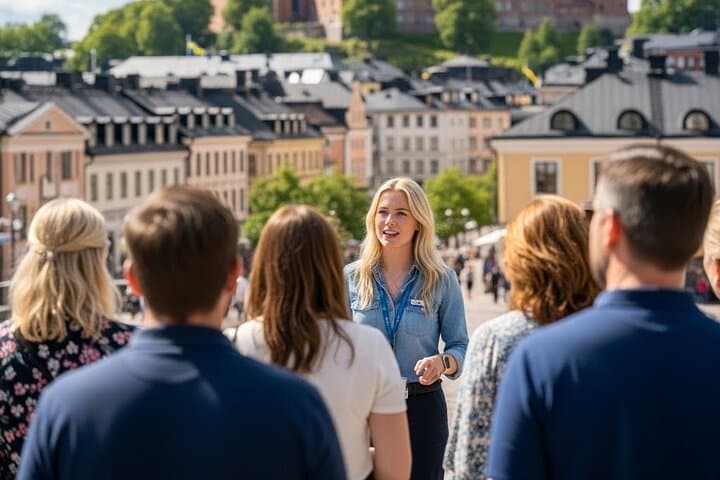
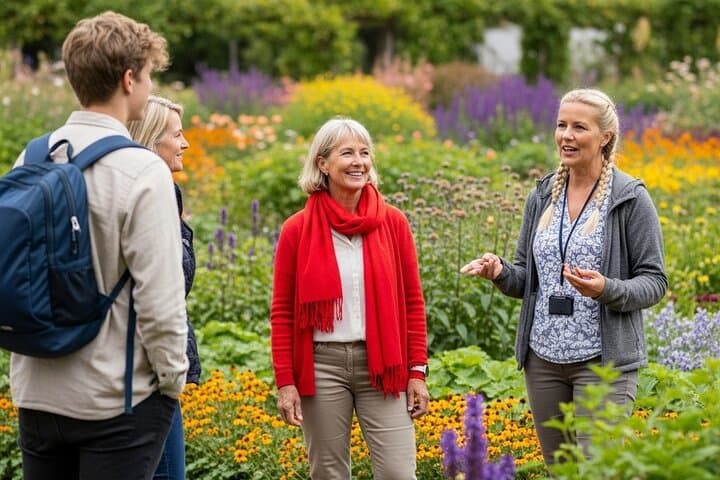

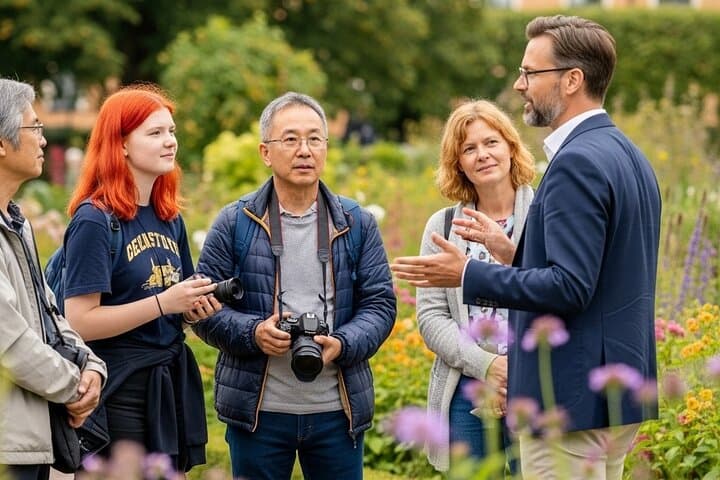
The bells of Uppsala Cathedral roll across the old town as you step onto the cobblestones. Brick spires rake the sky, trampling clouds as if impatient for light. Cyclists whisper past, the River Fyrisån slides beside you, and the city invites you to follow its curve—past cafe windows fogged with steam and cinnamon, toward stories that still echo in stone.
The bells of Uppsala Cathedral roll across the old town as you step onto the cobblestones. Brick spires rake the sky, trampling clouds as if impatient for light. Cyclists whisper past, the River Fyrisån slides beside you, and the city invites you to follow its curve—past cafe windows fogged with steam and cinnamon, toward stories that still echo in stone.
This self-guided route moves at a human pace. Start at the cathedral’s south portal, where the Gothic façade throws long, angular shadows. The river pulls you onward to Bror Hjorth’s sculpture Näckens Polska, where water and music seem to argue in bronze. Fika isn’t a detour here; it’s part of the terrain. Pause at a bakery for kanelbulle and strong coffee, then angle through the Stadsträdgården (city park), where lawns open wide and the river’s current nudges you north.
Climb the short rise to the pink-walled Uppsala Castle, its bastions catching sun and wind. The castle was raised under Gustav Vasa in the 16th century and later rebuilt after the great fire of 1702—a blaze that reshaped the city’s rooflines. Across the way, the Uppsala Art Museum and the contemporary Cube of Art show the city still experiments, still asks questions in color and light. From here, the axis draws straight to the Botanical Garden, where symmetry meets wild ambition. Linnaeus once paced through Uppsala, and his spirit still briskly organizes the garden’s 7,000 plant species, even as petals refuse to follow rules.
Plan on 2–3 hours for 2–4 km of easy walking with one brief climb (25–30 m) to the castle. Surfaces are mostly paved or cobbled; strollers and wheelchairs can skirt steps via gentle ramps around the castle hill. The tour ends among the parterres and greenhouses of the Botaniska—linger for seasonal blooms or step inside when winds turn sharp. Entry to museums is separate; your walk includes a 20% discount at Cube of Art.
Uppsala runs year-round. Spring perks up with Walpurgis festivities; summer stretches into long, soft evenings; fall paints the riverbanks; winter hushes the squares and lets the cathedral’s interior feel warmer by contrast. Trains from Stockholm Central reach Uppsala in about 40 minutes; from the station it’s a 15-minute walk to the starting point.
The city’s pace is steady, its spaces generous. The river keeps urging forward, the gardens ask you to slow down, and somewhere between them the old and new share the same stride. That’s the rhythm of this walk: unhurried, aware, and quietly unforgettable.