THE ADVENTURE COLLECTIVE® · Independent discovery and booking for outdoor travel

Walk Manhattan’s elevated park with a storyteller in your ear. This self-guided High Line audio tour combines urban history, design insight, and turn-by-turn directions so you can explore at your own pace.
Walk Manhattan’s elevated park with a storyteller in your ear. This self-guided High Line audio tour combines urban history, design insight, and turn-by-turn directions so you can explore at your own pace.
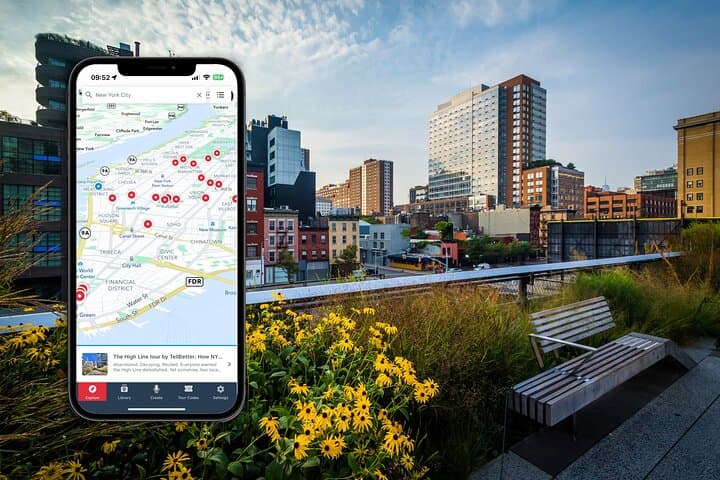
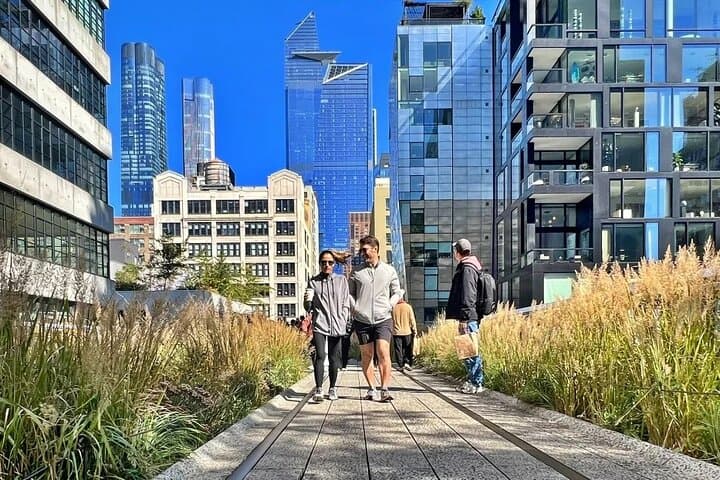
You step onto the iron ribbon of the High Line at Gansevoort Street and the city rearranges itself around the walkway: deliveries hum below, a distant tugboat plies the Hudson, and plantings nudge between rivets and concrete. The audio clicks on in your ear and a storyteller’s voice folds into the ambient city — not a lecture but a sequence of scenes: a railroad that once dragged freight along a deadly street, the grassroots fight to keep it from demolition, and the improbable run of design choices that turned a rusting relic into a public promenade.
Verified experiences and guided adventures in the surrounding area.
Operated by VoiceMap Audio Tours · New York, NY
You step onto the iron ribbon of the High Line at Gansevoort Street and the city rearranges itself around the walkway: deliveries hum below, a distant tugboat plies the Hudson, and plantings nudge between rivets and concrete. The audio clicks on in your ear and a storyteller’s voice folds into the ambient city — not a lecture but a sequence of scenes: a railroad that once dragged freight along a deadly street, the grassroots fight to keep it from demolition, and the improbable run of design choices that turned a rusting relic into a public promenade.
The route runs roughly 1.45 miles from the Meatpacking District up to Hudson Yards, threading former industrial yards, loading docks, and low-slung brick warehouses that once made up Manhattan’s West Side freight corridor. In the late 19th and early 20th centuries this stretch was called "Death Avenue" after street-level trains killed pedestrians; the elevated West Side Line solved that and later fell silent as rail declined. Friends of the High Line, landscape architects and designers reimagined the viaduct in the 2000s, keeping visible rail elements and planting native grasses and perennials that push through ballast stone — a nod to the line’s wild, post-industrial past.
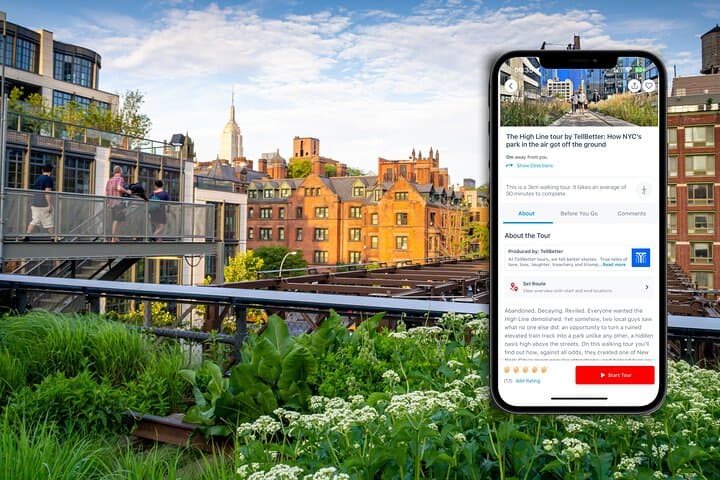
The VoiceMap audio tour is produced by an Emmy-nominated storyteller and timed for about 90 minutes, but it’s deliberately flexible: pause at benches, detour into Chelsea Market, or extend a stop at a public artwork. The narration layers local anecdotes — a near-miss plan to turn the line into a rollercoaster or pool — with practical urban history, so you’re not just seeing the park but understanding why it exists and how it shaped neighborhood change.
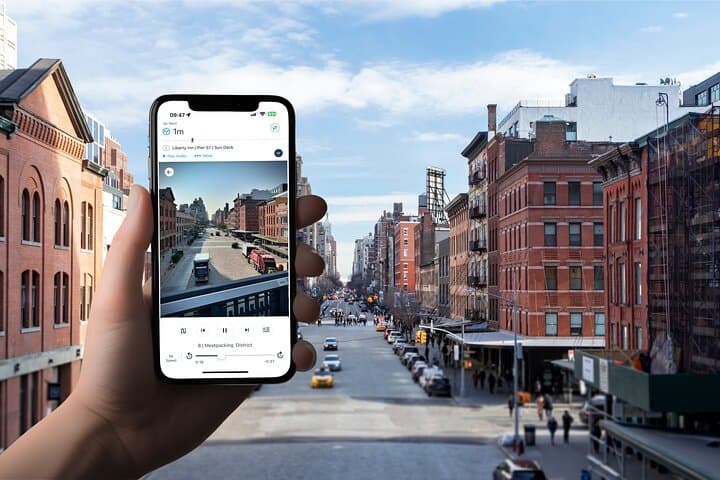
Plan to start early or late to avoid crowds; midday weekends are busy and the path narrows where the structure squeezes between buildings. The route is paved and gently graded, stroller-friendly and fully accessible, though sections can be windy near the Hudson. Bring good headphones and a charged phone — the tour auto-triggers with GPS — and download the file before you go to avoid cellular gaps.
Locals treat the High Line like a linear gallery: sculptural installations rotate, musicians set up near seating areas, and small groups drift in to take in sunset light on the river. Respect the plantings and stay on the path — the ecology here is curated and fragile. Whether you’re a first-time visitor or a city resident seeking new layers to familiar views, a narrated walk on the High Line turns a simple stroll into a history-rich, urban-ecology lesson with the city pressing in on both sides.
easy.
1.5 hours (90 minutes).
Suitable for most fitness levels; requires ability to walk 1.5 miles on paved surfaces
The tour is designed for about 90 minutes, but it’s self-paced — you can pause, extend stops, or complete segments over multiple visits.
No — download the tour in the VoiceMap app beforehand for offline audio, maps, and geodata to avoid cellular gaps.
It traditionally starts at Gansevoort Street in the Meatpacking District and ends at Hudson Yards; the app provides precise start-point photos and directions.
Yes; the route is paved and accessible, though elevator availability depends on entry points — check the High Line’s access map for current elevator locations.
Yes — the provided VoiceMap code can be used by everyone in your party to download the tour.
Pets are not permitted on the High Line except for service animals; plan accordingly before bringing a pet.
Originally the West Side freight line, this elevated railway solved street-level safety hazards known as 'Death Avenue' and was abandoned before being repurposed in the 2000s by community activists and designers.
The High Line’s planting design emphasizes native species and low-water maintenance; visitors are asked to stay on the path and avoid trampling plant beds to protect the fragile urban habitat.
VoiceMap Audio Tours operates guided outdoor trips and adventures with an emphasis on safety, stewardship, and memorable experiences.
You step onto the iron ribbon of the High Line at Gansevoort Street and the city rearranges itself around the walkway: deliveries hum below, a distant tugboat plies the Hudson, and plantings nudge between rivets and concrete. The audio clicks on in your ear and a storyteller’s voice folds into the ambient city — not a lecture but a sequence of scenes: a railroad that once dragged freight along a deadly street, the grassroots fight to keep it from demolition, and the improbable run of design choices that turned a rusting relic into a public promenade.
You step onto the iron ribbon of the High Line at Gansevoort Street and the city rearranges itself around the walkway: deliveries hum below, a distant tugboat plies the Hudson, and plantings nudge between rivets and concrete. The audio clicks on in your ear and a storyteller’s voice folds into the ambient city — not a lecture but a sequence of scenes: a railroad that once dragged freight along a deadly street, the grassroots fight to keep it from demolition, and the improbable run of design choices that turned a rusting relic into a public promenade.
The route runs roughly 1.45 miles from the Meatpacking District up to Hudson Yards, threading former industrial yards, loading docks, and low-slung brick warehouses that once made up Manhattan’s West Side freight corridor. In the late 19th and early 20th centuries this stretch was called "Death Avenue" after street-level trains killed pedestrians; the elevated West Side Line solved that and later fell silent as rail declined. Friends of the High Line, landscape architects and designers reimagined the viaduct in the 2000s, keeping visible rail elements and planting native grasses and perennials that push through ballast stone — a nod to the line’s wild, post-industrial past.
The VoiceMap audio tour is produced by an Emmy-nominated storyteller and timed for about 90 minutes, but it’s deliberately flexible: pause at benches, detour into Chelsea Market, or extend a stop at a public artwork. The narration layers local anecdotes — a near-miss plan to turn the line into a rollercoaster or pool — with practical urban history, so you’re not just seeing the park but understanding why it exists and how it shaped neighborhood change.
Plan to start early or late to avoid crowds; midday weekends are busy and the path narrows where the structure squeezes between buildings. The route is paved and gently graded, stroller-friendly and fully accessible, though sections can be windy near the Hudson. Bring good headphones and a charged phone — the tour auto-triggers with GPS — and download the file before you go to avoid cellular gaps.
Locals treat the High Line like a linear gallery: sculptural installations rotate, musicians set up near seating areas, and small groups drift in to take in sunset light on the river. Respect the plantings and stay on the path — the ecology here is curated and fragile. Whether you’re a first-time visitor or a city resident seeking new layers to familiar views, a narrated walk on the High Line turns a simple stroll into a history-rich, urban-ecology lesson with the city pressing in on both sides.