THE ADVENTURE COLLECTIVE® · Independent discovery and booking for outdoor travel

Spend a full day in Samaná Bay watching humpbacks in their breeding sanctuary, then cross to Cayo Levantado (Bacardi Island) for a Dominican-style beach lunch and afternoon swim. This catamaran excursion blends responsible wildlife viewing with simple island relaxation.
Spend a full day in Samaná Bay watching humpbacks in their breeding sanctuary, then cross to Cayo Levantado (Bacardi Island) for a Dominican-style beach lunch and afternoon swim. This catamaran excursion blends responsible wildlife viewing with simple island relaxation.
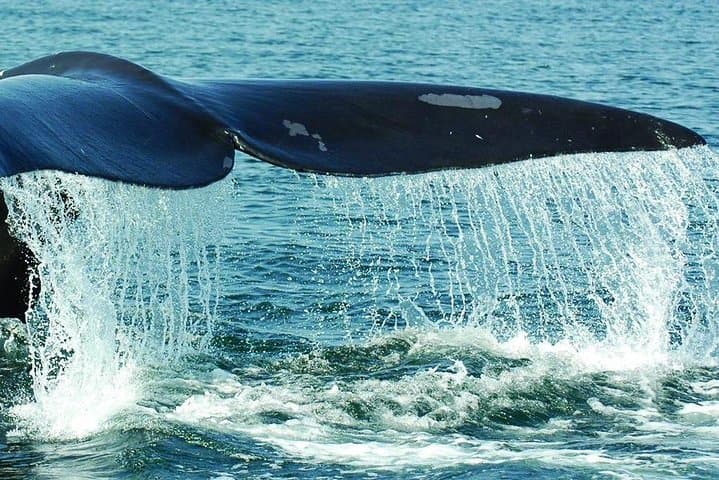
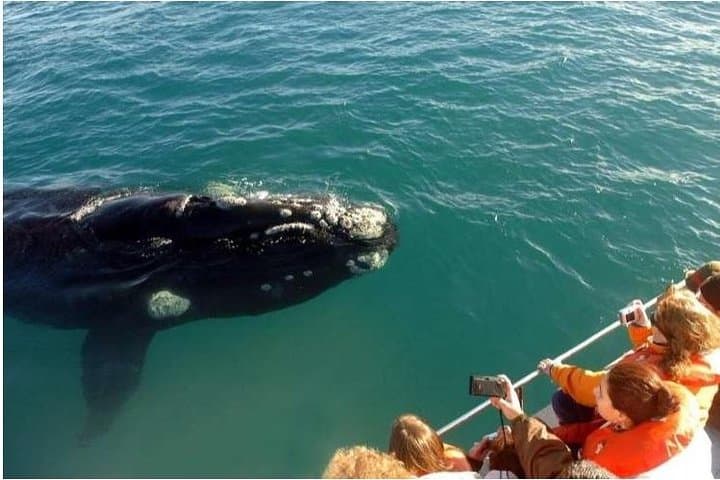
The catamaran slips out of the Samaná harbor just after first light, engines low and hull steady as the bay opens like a door. Salt pulls at your hair and the horizon is wide enough to make the ocean feel directional; every swell seems to search for the next rise. By mid-morning the guide scans the placid silver for telltale spouts and dorsal breaks — the humpbacks here are deliberate, curious, often approaching the boat with the easy confidence of long-distance travelers who own this water.
Verified experiences and guided adventures in the surrounding area.
Operated by The Whales Las Ballenas · Santa Bárbara de Samaná, Samaná Province
The catamaran slips out of the Samaná harbor just after first light, engines low and hull steady as the bay opens like a door. Salt pulls at your hair and the horizon is wide enough to make the ocean feel directional; every swell seems to search for the next rise. By mid-morning the guide scans the placid silver for telltale spouts and dorsal breaks — the humpbacks here are deliberate, curious, often approaching the boat with the easy confidence of long-distance travelers who own this water.
Samaná Bay has hosted seasonal migrations for centuries. Indigenous Taino people noted the whales before European records; later, Dominican fishermen learned the whales’ patterns and passages and turned them into a small, community-rooted tourism economy. Geologically the bay is shallow and protected, carved by tectonic folds and river outflow that create warm currents and abundant plankton — the exact recipe that draws humpbacks to breed and calve between January and April.
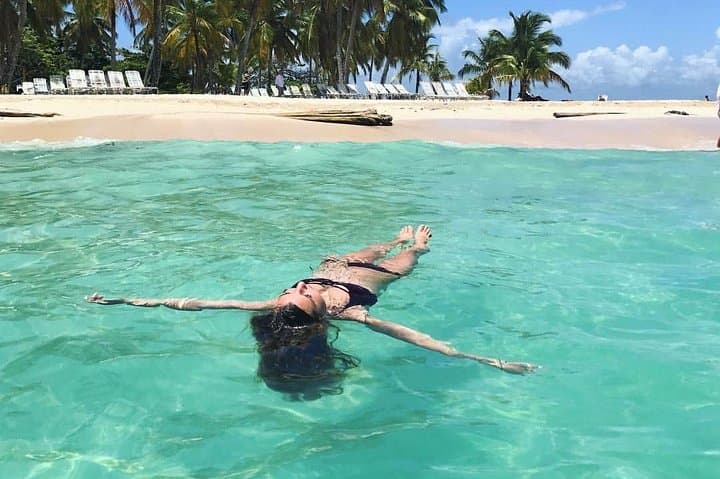
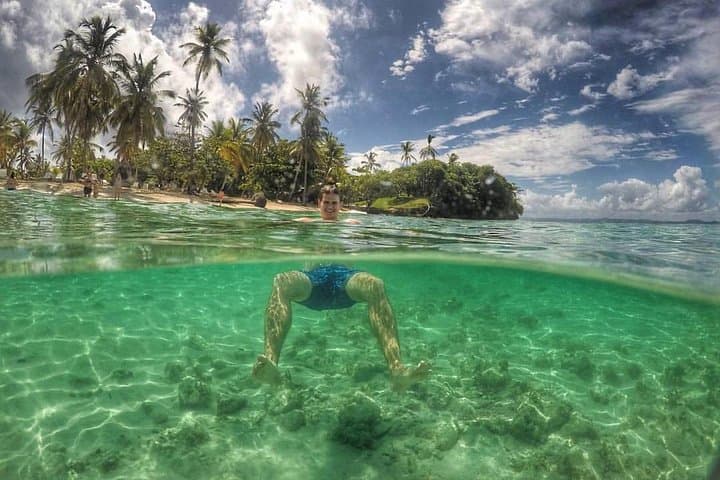
The day pairs attentive wildlife viewing with island relaxation. After a three-hour window on the water devoted to whale observation in the sanctuary — framed by regulations and an observatory point for safe viewing — the boat crosses to Cayo Levantado (commonly called Bacardi Island). A white-sand lunch buffet served under palm shade follows, and the rest of the afternoon is set aside for swimming, snorkeling off the beach, or just stretching out with the sea’s slow rhythm.
Practically: the tour runs roughly 9:00–17:00 and departs from Santa Bárbara de Samaná’s main pier. Expect binoculars to help with distant blows and a guide who alternates spotting duties with natural-history context. Bring motion-sickness prep if you’re prone; the catamarans are stable but open ocean can surprise. Sun protection is essential — the Caribbean sun chews through poor SPF — and a light windbreaker helps for the cooler, spray-laced return journey.
Local culture filters into the day in small ways: vendors on the island, the menu’s Dominican flavors, and the captains who pair whale lore with navigation knowledge. Conservation rules govern whale proximity, and operators often work with local observatories to ensure sightings are respectful. For photographers, bring a mid-range zoom and keep a faster shutter ready when the water moves; for families, the accessible pier and moderate pace make this a realistic full-day option.
Whether you come for the whales’ theatrical displays or the quiet arc of a beach afternoon, the trip balances wildlife ethics, local livelihoods, and uncomplicated beach time — a compact portrait of Samaná’s marine life and the island that waits nearby.
easy.
8 hours.
Light fitness—able to stand and board a small ladder; no strenuous hiking or swimming required beyond optional beach swim.
Peak season runs January through April, with the highest odds of sightings in February and March during breeding and calving.
The tour typically allocates the morning—about three hours—for whale searching within the sanctuary before heading to Cayo Levantado.
Yes, a Dominican-style buffet lunch on Cayo Levantado is included in the excursion price.
Yes—after lunch you’ll have free time to swim or snorkel until the scheduled departure back to Samaná.
The operator lists wheelchair-accessible services for main areas, but boarding boats may require assistance—contact the provider after booking for specifics.
Tours may be canceled for bad weather; the operator’s policy is all-sales-final, so confirm alternatives or insurance before booking.
Samaná Bay has long been a seasonal whale nursery; nearby communities shifted from subsistence fishing to regulated whale tourism in the late 20th century, blending conservation and livelihoods.
Operators follow sanctuary rules limiting vessel approach to whales; support local guides and avoid single-use plastics to reduce marine impact.
The Whales Las Ballenas operates guided outdoor trips and adventures with an emphasis on safety, stewardship, and memorable experiences.
The catamaran slips out of the Samaná harbor just after first light, engines low and hull steady as the bay opens like a door. Salt pulls at your hair and the horizon is wide enough to make the ocean feel directional; every swell seems to search for the next rise. By mid-morning the guide scans the placid silver for telltale spouts and dorsal breaks — the humpbacks here are deliberate, curious, often approaching the boat with the easy confidence of long-distance travelers who own this water.
The catamaran slips out of the Samaná harbor just after first light, engines low and hull steady as the bay opens like a door. Salt pulls at your hair and the horizon is wide enough to make the ocean feel directional; every swell seems to search for the next rise. By mid-morning the guide scans the placid silver for telltale spouts and dorsal breaks — the humpbacks here are deliberate, curious, often approaching the boat with the easy confidence of long-distance travelers who own this water.
Samaná Bay has hosted seasonal migrations for centuries. Indigenous Taino people noted the whales before European records; later, Dominican fishermen learned the whales’ patterns and passages and turned them into a small, community-rooted tourism economy. Geologically the bay is shallow and protected, carved by tectonic folds and river outflow that create warm currents and abundant plankton — the exact recipe that draws humpbacks to breed and calve between January and April.
The day pairs attentive wildlife viewing with island relaxation. After a three-hour window on the water devoted to whale observation in the sanctuary — framed by regulations and an observatory point for safe viewing — the boat crosses to Cayo Levantado (commonly called Bacardi Island). A white-sand lunch buffet served under palm shade follows, and the rest of the afternoon is set aside for swimming, snorkeling off the beach, or just stretching out with the sea’s slow rhythm.
Practically: the tour runs roughly 9:00–17:00 and departs from Santa Bárbara de Samaná’s main pier. Expect binoculars to help with distant blows and a guide who alternates spotting duties with natural-history context. Bring motion-sickness prep if you’re prone; the catamarans are stable but open ocean can surprise. Sun protection is essential — the Caribbean sun chews through poor SPF — and a light windbreaker helps for the cooler, spray-laced return journey.
Local culture filters into the day in small ways: vendors on the island, the menu’s Dominican flavors, and the captains who pair whale lore with navigation knowledge. Conservation rules govern whale proximity, and operators often work with local observatories to ensure sightings are respectful. For photographers, bring a mid-range zoom and keep a faster shutter ready when the water moves; for families, the accessible pier and moderate pace make this a realistic full-day option.
Whether you come for the whales’ theatrical displays or the quiet arc of a beach afternoon, the trip balances wildlife ethics, local livelihoods, and uncomplicated beach time — a compact portrait of Samaná’s marine life and the island that waits nearby.