THE ADVENTURE COLLECTIVE® · Independent discovery and booking for outdoor travel

See humpback whales up close in Samaná Bay, ride to the 50‑meter El Limón waterfall, and unwind on Cayo Levantado’s white sand in a single action-packed day. This full‑day tour balances marine spectacle with inland adventure and practical logistics for travelers.
See humpback whales up close in Samaná Bay, ride to the 50‑meter El Limón waterfall, and unwind on Cayo Levantado’s white sand in a single action-packed day. This full‑day tour balances marine spectacle with inland adventure and practical logistics for travelers.
Morning in Samaná Bay begins with a low coastal light that turns the water to brass and then to turquoise. Visitors gather at the marina, the ocean sighing against the hull as guides check equipment and hand out life vests. Within an hour the boat finds the slick of the bay and the horizon reconfigures itself — a dark roll, a spray, the broad white saddle of a humpback breaking the surface. For roughly 40 minutes the animals direct the show: tail slaps, pectoral waves, and the slow, balletic exhale that marks a mating-season residency of some 2,000 whales between December and March.
Verified experiences and guided adventures in the surrounding area.
Operated by M&E TOURS SRL · Samaná, Samaná Province
Morning in Samaná Bay begins with a low coastal light that turns the water to brass and then to turquoise. Visitors gather at the marina, the ocean sighing against the hull as guides check equipment and hand out life vests. Within an hour the boat finds the slick of the bay and the horizon reconfigures itself — a dark roll, a spray, the broad white saddle of a humpback breaking the surface. For roughly 40 minutes the animals direct the show: tail slaps, pectoral waves, and the slow, balletic exhale that marks a mating-season residency of some 2,000 whales between December and March.
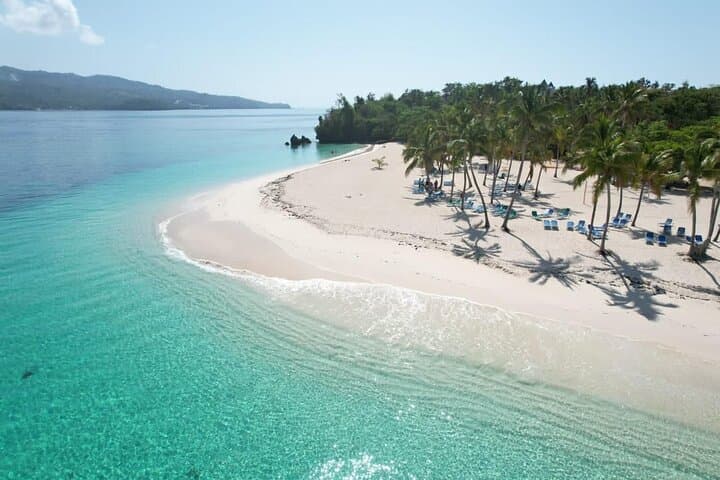
This full-day excursion threads together three contrasting Samaná experiences. After the whale encounter, the route rumbles inland: a horseback ride into a humid, green corridor that ends at El Limón waterfall. The cascade drops roughly 50 meters into a natural pool; water dares you in, cool and abrupt. A safari-truck tour through Samaná follows — a quick cultural orientation that recalls the peninsula’s colonial encounters since Columbus first sighted the bay in 1493. Finally, the boat swings to Cayo Levantado (Bacardi Island), a one-kilometer spit of sand and palms where lunch arrives under an open sky and the Atlantic reads like glass.
Geology here is straightforward: a shallow bay and offshore banks where warm Caribbean currents meet the deeper Atlantic, creating the calm, warm breeding grounds humpbacks seek. The peninsula’s limestone and volcanic soils feed the inland ridges and the freshwater streams that feed El Limón, so the contrasts — ocean, jungle, river — feel immediate.
Practical through the wonder: the day is long (about nine hours) and involves boat time, a short horse ride, a jungle trail, and some walking on uneven sand and rock. Transportation between sites can total up to three hours. The tour includes lunch and a morning snack; whale watching itself is limited by regulation and sea conditions to short windows. Expect a basic, well-organized itinerary rather than a wilderness expedition.
Plan for sun and motion: reef-safe sunscreen, seasickness prevention, a waterproof camera, and layered light clothing that dries fast. Footwear should handle slippery rock at the waterfall and hot sand on the island. Respect the animals: maintain distance, follow guides’ instructions, and keep noise low during marine encounters. If you go between December and March you’re likely to see at least one breach or tail-lob, but weather and animal behavior are the final arbiters.
For travelers who want a single, compact portrait of northeastern Dominican Republic — culture, rainforest, and a marine spectacle — this excursion delivers a curated day of contrast and clarity.
moderate.
9 hours.
Moderate fitness: able to handle short hikes, a horseback transfer, and periods of standing on a boat.
Humpback whales arrive to breed and calve roughly from December through March, with peak sightings between January and February.
Regulated viewing windows are short — expect about 40 minutes of direct whale observation during the tour.
Yes; the itinerary notes stroller access and family‑friendly activities, but children should be supervised near water and on horseback.
Wear closed‑toe water shoes or grippy sandals and quick‑dry clothes; the trail can be muddy and the rocks slippery.
Lunch and a morning snack are included, usually served on Cayo Levantado in a relaxed, beachside setting.
The tour lasts approximately nine hours door‑to‑door, with up to three hours of combined ground travel between points.
Samaná Bay was one of the first Caribbean contact zones after Columbus’s 1493 visit and later became a settlement area with strong Haitian and U.S. influences during the 19th century.
Respect vessel distance rules during whale encounters and use reef‑safe sunscreen; local operators follow seasonal protections for breeding humpbacks.
M&E TOURS SRL operates guided outdoor trips and adventures with an emphasis on safety, stewardship, and memorable experiences.
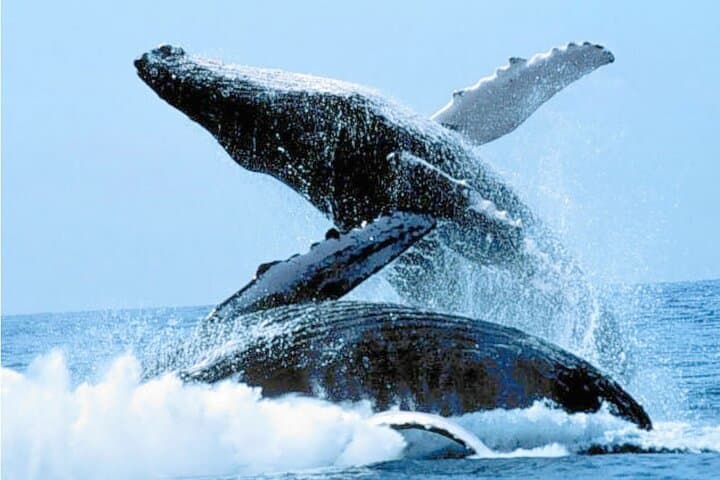
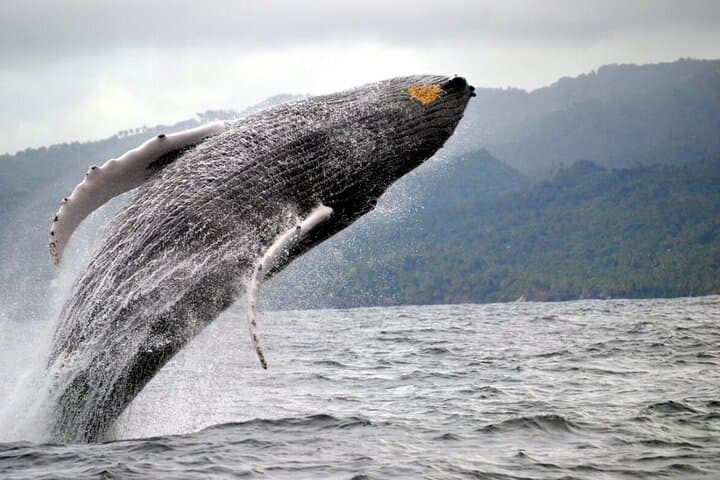
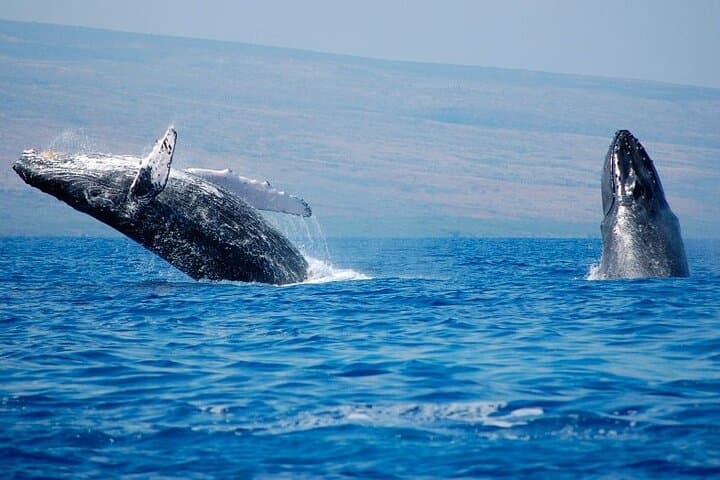
Morning in Samaná Bay begins with a low coastal light that turns the water to brass and then to turquoise. Visitors gather at the marina, the ocean sighing against the hull as guides check equipment and hand out life vests. Within an hour the boat finds the slick of the bay and the horizon reconfigures itself — a dark roll, a spray, the broad white saddle of a humpback breaking the surface. For roughly 40 minutes the animals direct the show: tail slaps, pectoral waves, and the slow, balletic exhale that marks a mating-season residency of some 2,000 whales between December and March.
Morning in Samaná Bay begins with a low coastal light that turns the water to brass and then to turquoise. Visitors gather at the marina, the ocean sighing against the hull as guides check equipment and hand out life vests. Within an hour the boat finds the slick of the bay and the horizon reconfigures itself — a dark roll, a spray, the broad white saddle of a humpback breaking the surface. For roughly 40 minutes the animals direct the show: tail slaps, pectoral waves, and the slow, balletic exhale that marks a mating-season residency of some 2,000 whales between December and March.
This full-day excursion threads together three contrasting Samaná experiences. After the whale encounter, the route rumbles inland: a horseback ride into a humid, green corridor that ends at El Limón waterfall. The cascade drops roughly 50 meters into a natural pool; water dares you in, cool and abrupt. A safari-truck tour through Samaná follows — a quick cultural orientation that recalls the peninsula’s colonial encounters since Columbus first sighted the bay in 1493. Finally, the boat swings to Cayo Levantado (Bacardi Island), a one-kilometer spit of sand and palms where lunch arrives under an open sky and the Atlantic reads like glass.
Geology here is straightforward: a shallow bay and offshore banks where warm Caribbean currents meet the deeper Atlantic, creating the calm, warm breeding grounds humpbacks seek. The peninsula’s limestone and volcanic soils feed the inland ridges and the freshwater streams that feed El Limón, so the contrasts — ocean, jungle, river — feel immediate.
Practical through the wonder: the day is long (about nine hours) and involves boat time, a short horse ride, a jungle trail, and some walking on uneven sand and rock. Transportation between sites can total up to three hours. The tour includes lunch and a morning snack; whale watching itself is limited by regulation and sea conditions to short windows. Expect a basic, well-organized itinerary rather than a wilderness expedition.
Plan for sun and motion: reef-safe sunscreen, seasickness prevention, a waterproof camera, and layered light clothing that dries fast. Footwear should handle slippery rock at the waterfall and hot sand on the island. Respect the animals: maintain distance, follow guides’ instructions, and keep noise low during marine encounters. If you go between December and March you’re likely to see at least one breach or tail-lob, but weather and animal behavior are the final arbiters.
For travelers who want a single, compact portrait of northeastern Dominican Republic — culture, rainforest, and a marine spectacle — this excursion delivers a curated day of contrast and clarity.