THE ADVENTURE COLLECTIVE® · Independent discovery and booking for outdoor travel

Spend a relaxed afternoon on a wind-powered catamaran from Flaxmill Bay to Cathedral Cove. Swim or snorkel in the marine reserve, sip locally produced beer or wine, and soak in Coromandel’s coastal geology on a low‑impact 3.5‑hour cruise.
Spend a relaxed afternoon on a wind-powered catamaran from Flaxmill Bay to Cathedral Cove. Swim or snorkel in the marine reserve, sip locally produced beer or wine, and soak in Coromandel’s coastal geology on a low‑impact 3.5‑hour cruise.
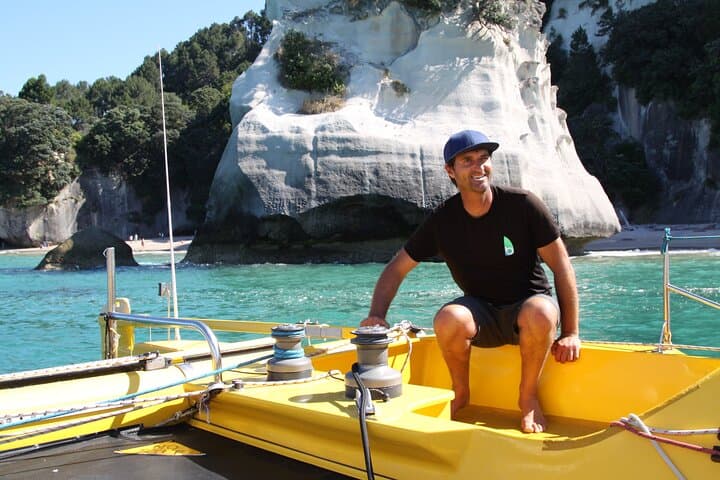
The catamaran rocks like a slow promise in Flaxmill Bay, its hull a bright fingerprint against the blue of Mercury Bay. Guests step into an afternoon that moves at wind’s pace: beanbags rigged on deck, a cooler of local beer and New Zealand wine within reach, and a crew who split their time between trimming sails and pointing out limestone fingers of coastline. Horizon and coastline trade places as the yacht slips away from the beach opposite 1039 Purangi Road, and within minutes the peninsula’s story—rock, reef, reef-girt coves—unfurls.
Verified experiences and guided adventures in the surrounding area.
Operated by Boom Sailing · Whitianga, Waikato
The catamaran rocks like a slow promise in Flaxmill Bay, its hull a bright fingerprint against the blue of Mercury Bay. Guests step into an afternoon that moves at wind’s pace: beanbags rigged on deck, a cooler of local beer and New Zealand wine within reach, and a crew who split their time between trimming sails and pointing out limestone fingers of coastline. Horizon and coastline trade places as the yacht slips away from the beach opposite 1039 Purangi Road, and within minutes the peninsula’s story—rock, reef, reef-girt coves—unfurls.
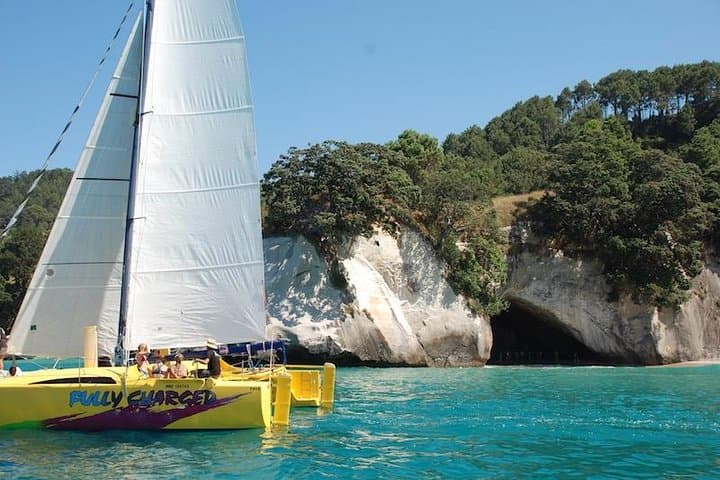
This is sailing with a purpose. The route threads past rugged islets and long swathes of surf-scarred shore to Cathedral Cove (Te Whanganui-A-Hei), whose sea-carved arch has been a waypoint for Māori travellers and later coastal explorers. The cove sits inside the Te Whanganui-A-Hei Marine Reserve, established to protect kelp forests and reef fish; the reserve’s clear water pushes you toward the railings, encouraging a shallow plunge at Gemstone Bay where the crew will anchor if conditions allow.
Geologically the Coromandel is still showing its youth—steep terrain and volcanic remnants where waves have gnawed arches and stacks from soft sandstone and harder rhyolite. Culturally, the region is a mix of Māori heritage and a century of coastal communities tied to fishing and small‑scale tourism; sail operators here emphasize low-impact trips, using wind power rather than long revving engines to keep the marine reserve calm.
Practically, the trip is an afternoon proposition: check-in is 1:30pm for a 1:45pm departure (winter/April schedule shifts to a morning run). Trips last roughly 3.5 hours and include snorkel gear, changing areas and a toilet onboard. Swimming at Gemstone Bay is optional—bring a towel and be honest about your swim ability. If you want to help hoist sails, the crew welcomes it; if not, the beanbags are purpose-built for looking outward.
Plan for sun and wind: a hat that won’t fly away and a light wind jacket make the difference between comfortable and chilled. The best photos come on the approach to Cathedral Cove, when the arch cuts a silhouette and the water shows bands of turquoise and indigo. Respect the marine reserve—no fishing, no touching reef life, and follow crew directions for snorkel boundaries. With careful timing and a calm sea, this short sail turns a classic Coromandel sight into an easy, restorative afternoon at sea.
moderate.
3.5 hours.
Light to moderate fitness—able to climb into a dinghy and move around a moving deck; swimmers should be comfortable in open water
Final check-in is 1:30pm (15 minutes before departure). The catamaran anchors in Flaxmill Bay and crew will transfer guests to the yacht using an inflatable dinghy from the beach opposite 1039 Purangi Road.
Yes—use of snorkelling equipment is included; you can swim at Gemstone Bay when the crew anchors, weather permitting.
No—this cruise passes Cathedral Cove to view the arch from the water but does not land; the itinerary explicitly notes no shore visits at Cathedral Cove.
Yes, vessels are equipped with a toilet and a changing area for passenger use.
Infants and small children can ride in a pram or stroller to the meeting point; non-swimmers can remain onboard while others snorkel—inform the crew of any concerns.
Trips may be canceled for bad weather or insufficient numbers; cancel at least 24 hours prior for a full refund per the operator’s policy.
Cathedral Cove sits within Te Whanganui‑A‑Hei Marine Reserve; the area has long been significant to local Māori and more recently protected to restore fish and kelp habitats.
The operator uses sail power to reduce fuel use and follows marine reserve rules—avoid touching or removing marine life and use reef-safe sunscreen.
Boom Sailing operates guided outdoor trips and adventures with an emphasis on safety, stewardship, and memorable experiences.
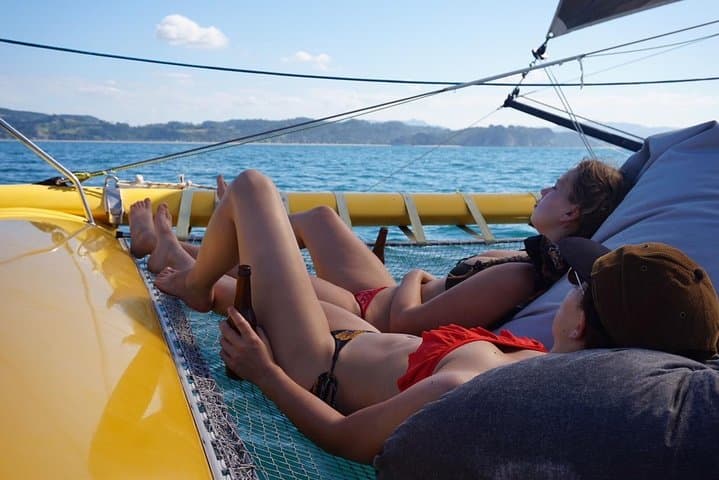
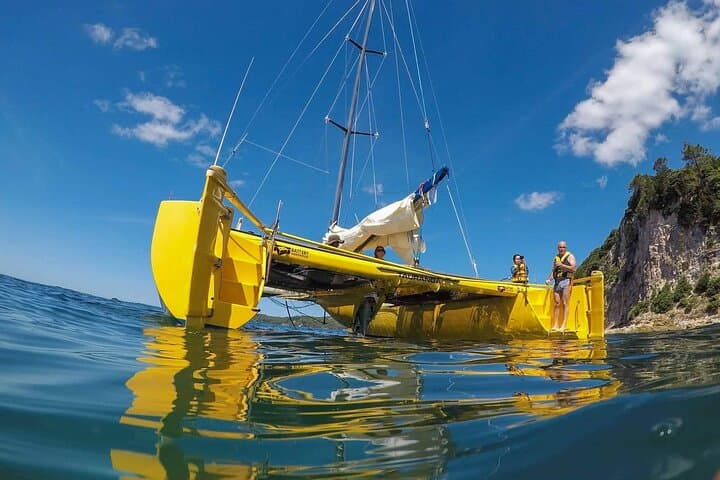
The catamaran rocks like a slow promise in Flaxmill Bay, its hull a bright fingerprint against the blue of Mercury Bay. Guests step into an afternoon that moves at wind’s pace: beanbags rigged on deck, a cooler of local beer and New Zealand wine within reach, and a crew who split their time between trimming sails and pointing out limestone fingers of coastline. Horizon and coastline trade places as the yacht slips away from the beach opposite 1039 Purangi Road, and within minutes the peninsula’s story—rock, reef, reef-girt coves—unfurls.
The catamaran rocks like a slow promise in Flaxmill Bay, its hull a bright fingerprint against the blue of Mercury Bay. Guests step into an afternoon that moves at wind’s pace: beanbags rigged on deck, a cooler of local beer and New Zealand wine within reach, and a crew who split their time between trimming sails and pointing out limestone fingers of coastline. Horizon and coastline trade places as the yacht slips away from the beach opposite 1039 Purangi Road, and within minutes the peninsula’s story—rock, reef, reef-girt coves—unfurls.
This is sailing with a purpose. The route threads past rugged islets and long swathes of surf-scarred shore to Cathedral Cove (Te Whanganui-A-Hei), whose sea-carved arch has been a waypoint for Māori travellers and later coastal explorers. The cove sits inside the Te Whanganui-A-Hei Marine Reserve, established to protect kelp forests and reef fish; the reserve’s clear water pushes you toward the railings, encouraging a shallow plunge at Gemstone Bay where the crew will anchor if conditions allow.
Geologically the Coromandel is still showing its youth—steep terrain and volcanic remnants where waves have gnawed arches and stacks from soft sandstone and harder rhyolite. Culturally, the region is a mix of Māori heritage and a century of coastal communities tied to fishing and small‑scale tourism; sail operators here emphasize low-impact trips, using wind power rather than long revving engines to keep the marine reserve calm.
Practically, the trip is an afternoon proposition: check-in is 1:30pm for a 1:45pm departure (winter/April schedule shifts to a morning run). Trips last roughly 3.5 hours and include snorkel gear, changing areas and a toilet onboard. Swimming at Gemstone Bay is optional—bring a towel and be honest about your swim ability. If you want to help hoist sails, the crew welcomes it; if not, the beanbags are purpose-built for looking outward.
Plan for sun and wind: a hat that won’t fly away and a light wind jacket make the difference between comfortable and chilled. The best photos come on the approach to Cathedral Cove, when the arch cuts a silhouette and the water shows bands of turquoise and indigo. Respect the marine reserve—no fishing, no touching reef life, and follow crew directions for snorkel boundaries. With careful timing and a calm sea, this short sail turns a classic Coromandel sight into an easy, restorative afternoon at sea.