THE ADVENTURE COLLECTIVE® · Independent discovery and booking for outdoor travel

Float above Kapalua Bay’s coral gardens in an Airtime Watertime flotation wetsuit—this guided, beginner-focused snorkel makes marine life accessible without the anxiety of treading water. Expect an educational, safety-first outing with turtle sightings and reef etiquette.
Float above Kapalua Bay’s coral gardens in an Airtime Watertime flotation wetsuit—this guided, beginner-focused snorkel makes marine life accessible without the anxiety of treading water. Expect an educational, safety-first outing with turtle sightings and reef etiquette.
A morning at Kapalua Bay begins with pale light sliding across a band of lava rock and sand, the ocean breathing slow and steady. Guides check masks and adjust the bright, buoyant Airtime Watertime flotation wetsuits—an immediately calming sight for first-time snorkelers. The suit’s lift makes the water less an obstacle and more a stage: faces hover at the surface while coral gardens, surgeonfish and the occasional honu (green sea turtle) go about their day below.
Verified experiences and guided adventures in the surrounding area.
Operated by Eco Tours Maui LLC · Kapalua, HI
A morning at Kapalua Bay begins with pale light sliding across a band of lava rock and sand, the ocean breathing slow and steady. Guides check masks and adjust the bright, buoyant Airtime Watertime flotation wetsuits—an immediately calming sight for first-time snorkelers. The suit’s lift makes the water less an obstacle and more a stage: faces hover at the surface while coral gardens, surgeonfish and the occasional honu (green sea turtle) go about their day below.
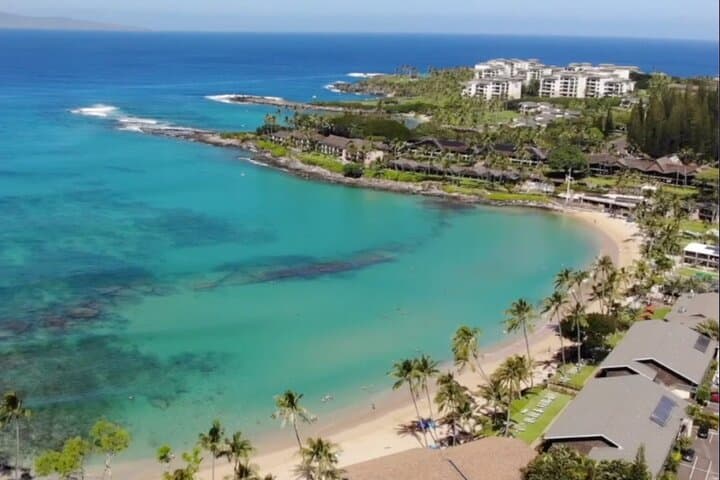
Kapalua Bay sits on Maui’s northwest shoreline, a pocket formed where cooling lava met the sea. The bay’s crescent reef grew in the sheltered shallows, building a mosaic of pockets and channels that collects colorful reef fish and small coral heads rather than deep drop-offs. Hawaiians knew these coves as fishing and resting places; today the small community around Kapalua still honors the reef by discouraging standing or touching coral and protecting nearby conservation areas.
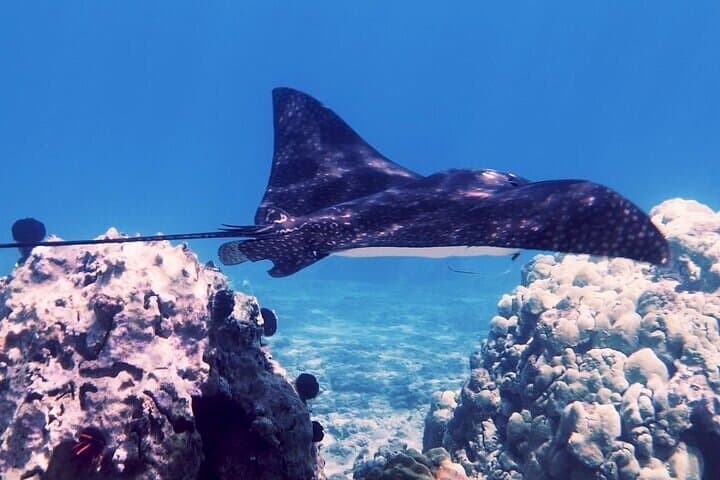
This guided tour leans into that responsibility. It’s educational and designed for absolute beginners and non-swimmers—flotation suits prevent sinking and the guides use Shark Band2 devices for added confidence. The group moves slowly: an easy sandy entry, a few strokes to the reef edge, then floating above coral gardens and sea grass. Guides point out feeding parrotfish, bright angelfish and sea turtles, and they’ll pause for moments of silence so you can watch marine life undisturbed. The tour lasts roughly 2–2.5 hours, with check-in 30 minutes before start and a maximum of 10 guests per outing.
Practicalities matter here as much as wonder. Morning departures offer the calmest water and the clearest visibility; trade winds commonly rise in the afternoon and can push surface chop into the bay. The operator requires disclosure of weight and certain health conditions—this is not recommended for people with serious heart or spinal issues, or for those who are pregnant. Guides will brief on reef etiquette: no standing on coral, maintain at least 10 feet from turtles, and report any marine debris to help with on-the-spot clean-ups.
Bring reef-safe sunscreen, a water bottle, and a lightweight cover-up for post-snorkel shade. Expect waist-to-20-foot depths near the reef—flotation does much of the work but basic comfort in water is helpful. The experience trades adrenaline for steady, clear-eyed marine observation: it’s an accessible, low-stress entry point to Hawai‘i’s underwater world, with safety equipment and local knowledge built in so visitors leave informed and lighter for having seen something fragile and worth protecting.
easy.
2–2.5 hours.
Suitable for most fitness levels; basic comfort in open water recommended but non-swimmers can participate thanks to flotation suits.
No—flotation wetsuits are designed to keep non-swimmers buoyant, but participants must be comfortable following a guide in open water.
Yes—Airtime Watertime flotation wetsuits and standard snorkel equipment are included for every guest.
The tour uses a sandy entry and typically stays within the bay’s reef areas, with depths ranging from waist-deep to about 15–20 feet near the coral edge.
Sea turtles are commonly sighted but not guaranteed; guides enforce a 10-foot buffer to avoid disturbing them.
Many children and some guests with limited mobility can participate thanks to flotation suits, but check specific age requirements and disclose mobility needs when booking.
Full refunds are available if canceled at least 24 hours before the start time; tours may be canceled for bad weather.
The northwest Maui coastline bears the mark of ancient lava flows and longstanding Hawaiian fishing practices; Kapalua Bay has long been a local gathering place for marine harvest and cultural access to the sea.
Guides prioritize reef protection—no standing on coral and a 10-foot rule for turtles—and will collect visible trash during ingress when possible to reduce local marine debris.
Eco Tours Maui LLC operates guided outdoor trips and adventures with an emphasis on safety, stewardship, and memorable experiences.
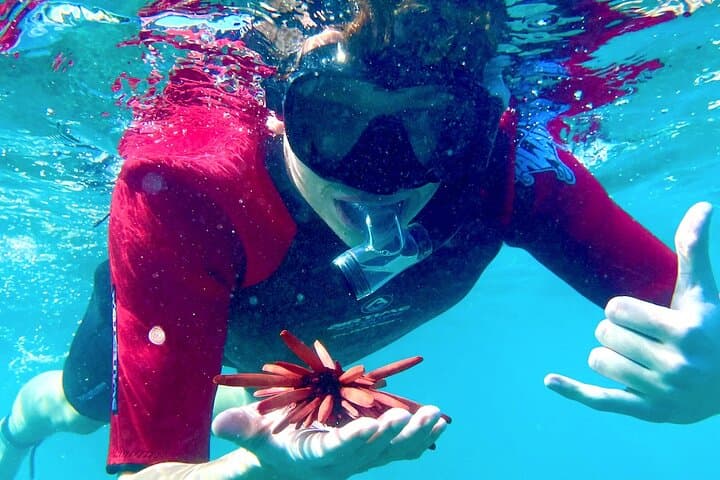
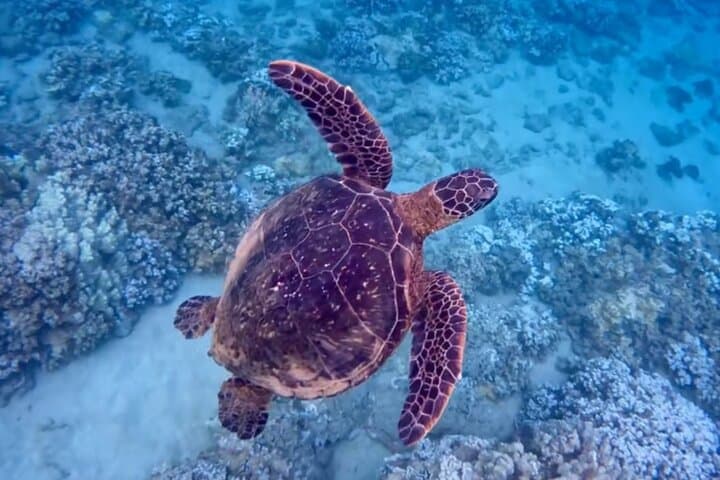
A morning at Kapalua Bay begins with pale light sliding across a band of lava rock and sand, the ocean breathing slow and steady. Guides check masks and adjust the bright, buoyant Airtime Watertime flotation wetsuits—an immediately calming sight for first-time snorkelers. The suit’s lift makes the water less an obstacle and more a stage: faces hover at the surface while coral gardens, surgeonfish and the occasional honu (green sea turtle) go about their day below.
A morning at Kapalua Bay begins with pale light sliding across a band of lava rock and sand, the ocean breathing slow and steady. Guides check masks and adjust the bright, buoyant Airtime Watertime flotation wetsuits—an immediately calming sight for first-time snorkelers. The suit’s lift makes the water less an obstacle and more a stage: faces hover at the surface while coral gardens, surgeonfish and the occasional honu (green sea turtle) go about their day below.
Kapalua Bay sits on Maui’s northwest shoreline, a pocket formed where cooling lava met the sea. The bay’s crescent reef grew in the sheltered shallows, building a mosaic of pockets and channels that collects colorful reef fish and small coral heads rather than deep drop-offs. Hawaiians knew these coves as fishing and resting places; today the small community around Kapalua still honors the reef by discouraging standing or touching coral and protecting nearby conservation areas.
This guided tour leans into that responsibility. It’s educational and designed for absolute beginners and non-swimmers—flotation suits prevent sinking and the guides use Shark Band2 devices for added confidence. The group moves slowly: an easy sandy entry, a few strokes to the reef edge, then floating above coral gardens and sea grass. Guides point out feeding parrotfish, bright angelfish and sea turtles, and they’ll pause for moments of silence so you can watch marine life undisturbed. The tour lasts roughly 2–2.5 hours, with check-in 30 minutes before start and a maximum of 10 guests per outing.
Practicalities matter here as much as wonder. Morning departures offer the calmest water and the clearest visibility; trade winds commonly rise in the afternoon and can push surface chop into the bay. The operator requires disclosure of weight and certain health conditions—this is not recommended for people with serious heart or spinal issues, or for those who are pregnant. Guides will brief on reef etiquette: no standing on coral, maintain at least 10 feet from turtles, and report any marine debris to help with on-the-spot clean-ups.
Bring reef-safe sunscreen, a water bottle, and a lightweight cover-up for post-snorkel shade. Expect waist-to-20-foot depths near the reef—flotation does much of the work but basic comfort in water is helpful. The experience trades adrenaline for steady, clear-eyed marine observation: it’s an accessible, low-stress entry point to Hawai‘i’s underwater world, with safety equipment and local knowledge built in so visitors leave informed and lighter for having seen something fragile and worth protecting.